Blood Sugar Monitoring Devices: Types and Features to Compare
hat looked way scarier than it actually was, and a YouTube tutorial paused at minute 3:14. I pricked my finger, winced way more than necessary, and then stared at the tiny screen like it was about to reveal the meaning of life.
It just showed a number. But that number changed how I ate, how I exercised, and honestly, how I thought about my body.
Over the past few years, I’ve tested multiple blood sugar monitoring devices on myself and helped friends and family compare their options. The tech has changed fast: we’ve gone from simple fingerstick meters to sensors you stick on your arm that beam data to your phone every few minutes.
If you’re trying to figure out what’s worth your money (and sanity), let’s walk through the main types of blood sugar monitoring devices and the features you really want to compare—without the marketing fluff.
The Big Three: Main Types of Blood Sugar Monitoring Devices
1. Traditional glucometers (fingerstick meters)
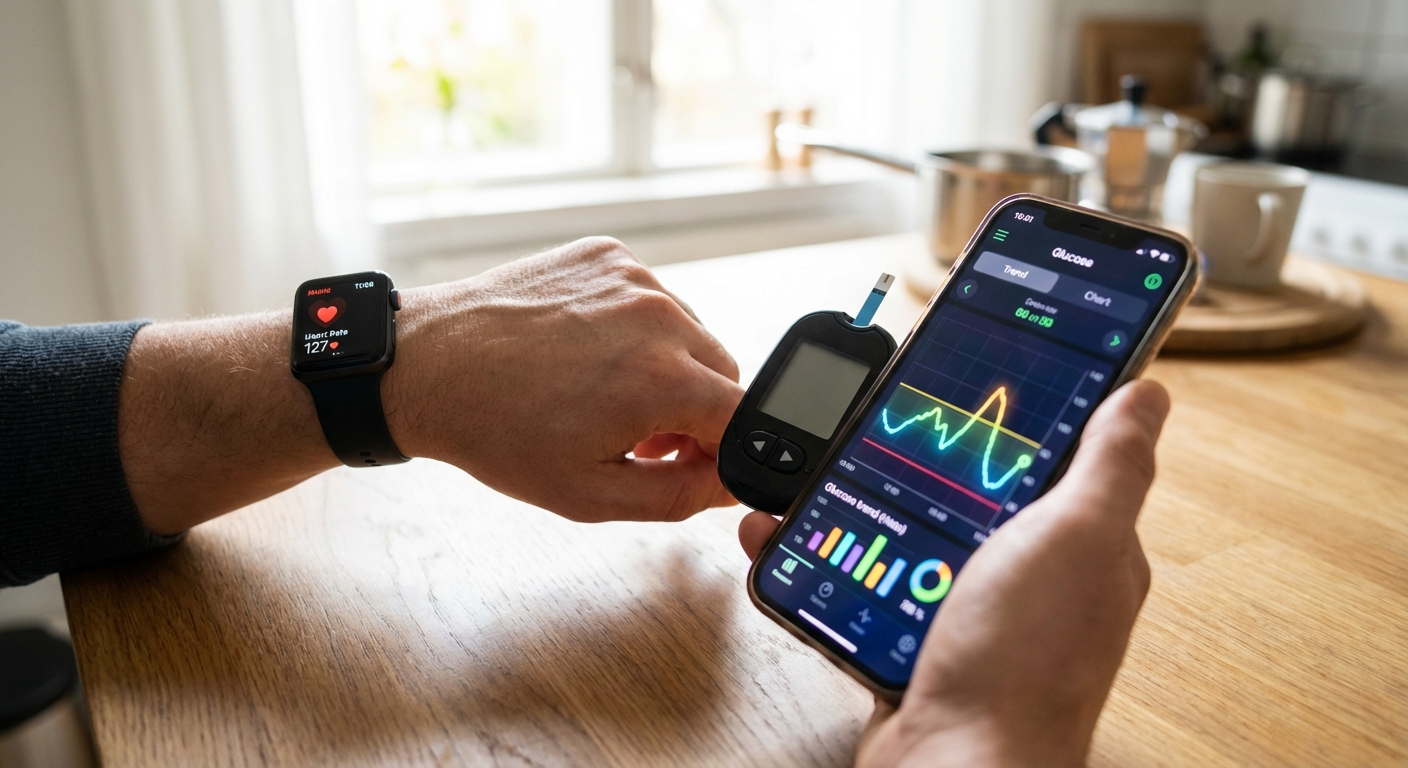
This is the classic setup I started with: a small handheld meter, test strips, a lancing device, and lancets.
How it works:You prick your fingertip, put a drop of blood on a test strip, and the meter measures your blood glucose in a few seconds.
- The first few pricks felt dramatic. After a week, it became as routine as brushing my teeth.
- I quickly realized my numbers before breakfast (fasting glucose) were very different from my numbers two hours after eating pasta.
- Usually the cheapest option upfront
- Very accurate when used correctly (many meet ISO 15197:2013 accuracy standards)
- Widely available at pharmacies and online
- You have to remember to test at the right times
- Requires finger pricks every time (and yes, your fingers may get sore)
- No continuous data, so you miss a lot of in‑between spikes and drops
For people with type 2 diabetes who test a few times a day, or anyone just starting to track, a simple meter can still do a solid job.
2. Continuous Glucose Monitors (CGMs)
CGMs were a game-changer when I tried one for the first time. I used a sensor on my arm that read my glucose every few minutes and sent it to my phone. Suddenly I could see exactly how a big bowl of ramen hit my blood sugar curve in real time.
How it works:A tiny sensor filament sits under your skin (usually on the upper arm or abdomen) and measures glucose in interstitial fluid every 1–5 minutes. A transmitter sends that data to a receiver or smartphone app.
Popular brands include:
- Dexcom G7
- Abbott FreeStyle Libre 2 & 3
- Medtronic Guardian (often used with insulin pumps)
- I caught nighttime lows I never would’ve known about with fingersticks.
- Sleep quality, stress, and even arguments (yes, really) showed up as shifts in my glucose.
- My snacking habits were not as “reasonable” as I thought.
- Near-continuous data (up to 288 readings per day)
- Trend arrows show where your glucose is heading, not just where it is
- Custom alerts for highs and lows (life-saving for many with type 1)
- Great for spotting patterns: food, exercise, medication timing
- More expensive: sensors must be replaced every 7–14 days (depending on brand)
- Accuracy can lag a bit during rapid changes (since it measures interstitial, not blood)
- Some people get skin irritation or adhesive allergies
- Insurance coverage can be hit-or-miss if you’re not on insulin
For people with type 1 diabetes or insulin-dependent type 2, CGMs can dramatically improve safety and control. For others (like me, using it mainly for insight), it’s a powerful but pricier tool.
3. Flash glucose monitoring (scan-based systems)
Flash systems are sort of a hybrid between fingersticks and full CGMs.
How it works:A sensor sits on your arm and collects data continuously, but you only see your readings when you scan it with a reader or smartphone.
The most well-known example is the Abbott FreeStyle Libre (earlier generations).
My experience with flash monitoring:- I loved the “scan when you want” feature—it felt less in-my-face than constant alerts.
- It still gave me a glucose curve over time, which is gold for pattern spotting.
- Often cheaper than traditional CGMs
- Fewer notifications and alarms if you don’t want to be “on alert” all day
- No fingersticks for calibration in most newer models
- You have to remember to scan, or you lose some data history
- Fewer real-time alarms (depending on model)
- Same issues with sensor adhesion and skin reactions
For users who want detailed data without constant alerts, flash monitoring can be a very comfortable middle ground.
Key Features to Compare (Beyond the Hype)
When I help friends pick a device, we don’t start with brand names. We start with use cases and then dig into features.
1. Accuracy and reliability
This is non‑negotiable.
What I look for:
- Devices that meet ISO 15197:2013 or FDA accuracy criteria
- Peer-reviewed comparisons (often available for major brands like Dexcom and Libre)
- Real-world reviews from people with diabetes using the device daily
Study-wise, for example, a 2020 paper in Diabetes Technology & Therapeutics reported high clinical accuracy for the Dexcom G6, with over 90% of readings in the clinically acceptable zone (Parkes Error Grid). That aligned with what people in diabetes forums were saying: “It’s not perfect, but it’s trustworthy.”
2. Cost: upfront and ongoing
When I first bought a meter, it was dirt cheap. Then I realized test strips were the real budget-killer.
Compare:
- Meters/receivers: often $0–$80 (sometimes free with promotions)
- Test strips: can range from $0.20 to $1+ per strip
- CGM sensors: often $35–$80 per sensor, replaced every 7–14 days
- Transmitters (Dexcom-style): replaced every 3 months or so
If you test 4 times a day, that’s 120+ strips per month. The monthly cost may narrow the price gap between “cheap” meters and CGMs more than you’d think, especially with insurance.
3. Invasiveness and comfort
My blunt take:
- Fingersticks: tiny but frequent pain
- CGMs/flash: one slightly bigger "ouch" every 7–14 days
Pay attention to:
- Sensor size and insertion method
- Adhesive strength (sweaty workouts or swimming can test this)
- Skin sensitivity (I had to switch tapes once because my skin rebelled)
4. Data and app experience
This is where the tech either feels magical or maddening.
Questions I ask when I test apps:
- Does it sync smoothly with my phone (iOS/Android)?
- Can I share data easily with a doctor, family member, or coach?
- Does it integrate with other tools like Apple Health, Fitbit, or insulin pumps?
- Are the graphs understandable, or do they look like airplane cockpit instrumentation?
Apps like Dexcom Clarity or LibreView can generate detailed reports, time-in-range stats, and daily patterns that doctors actually use during visits.
5. Alerts, alarms, and trend information
This is huge for safety.
With standard meters, you just see one number in time.
With CGMs/flash systems, you can get:
- High and low glucose alerts
- Predictive alerts when you’re heading toward trouble
- Trend arrows (e.g., ↗️ fast rising, ↘️ dropping)
I personally found low-glucose alerts at night incredibly reassuring. One friend with type 1 diabetes told me his Dexcom alarm has literally woken him before a serious nighttime low. That’s life-or-death territory.
On the flip side, some people experience alarm fatigue—constant beeping is stressful. Most systems let you customize thresholds and sounds so your phone doesn’t sound like a fire alarm every time you eat a cookie.
6. Calibration and maintenance
Older CGMs often required fingerstick calibration a couple of times per day. Newer systems like Dexcom G7 and Libre 3 are factory-calibrated.
What this means practically:
- Fewer fingersticks
- Less hassle, especially for kids or anyone with needle anxiety
Still, I like to keep a basic meter around even with a CGM—occasionally I’ll double-check a weird reading.
Matching Devices to Real-Life Scenarios
Here’s how I usually break it down when people ask me what to pick:
- Type 1 diabetes / insulin pump / frequent lows
A CGM (Dexcom, Libre, or Medtronic Guardian) is often worth every cent if you can get coverage. The safety net alone is massive.
- Type 2 diabetes on insulin or multiple meds
CGM or flash systems can help fine-tune doses, timing, and meals. Time-in-range metrics can be much more meaningful than one-off readings.
- Type 2 diabetes managed with lifestyle or oral meds
A good glucometer might be enough for daily management. An occasional 14‑day CGM trial (many clinics offer this) can provide pattern insight, then you go back to fingersticks.
- Pre-diabetes or health optimization nerds (I’m guilty)
Short-term CGM use can teach you a lot about how your body responds to carbs, sleep, and stress. But it’s easy to obsess over every little rise. If you’re prone to anxiety, consider whether you’ll use the data constructively.
What I’d Personally Compare Before Buying
If I had to boil it down to a quick pre-purchase checklist, it’d be this:
- What’s my goal? Safety (avoid lows), tighter A1C, weight loss, curiosity, or doctor-recommended monitoring.
- Budget + insurance: What does my plan cover? Call the pharmacy AND check the brand’s website—some offer discounts or savings cards.
- Data personality: Do I want constant feedback, or will that stress me out?
- Tech comfort level: Am I okay installing apps, troubleshooting Bluetooth, and updating firmware, or do I want dead-simple?
- Doctor alignment: Will my clinician actually look at the data? Some are great with CGM reports; some still prefer paper logs.
When I tested different devices over time, I realized there’s no universal “best.” There’s only best for your lifestyle, your body, and your tolerance for tech and tiny needles.
If you’re unsure, one practical move is to start with a quality glucometer, log consistently for a few weeks, and then ask your healthcare provider whether stepping up to a CGM or flash system could change your treatment decisions. If the answer is yes, that’s where continuous monitoring might be truly worth it—not just for cool graphs, but for better health.
Quick safety note
All this tech is powerful, but it doesn’t replace medical advice. Any device can misread, sensors can fail, and numbers always need to be interpreted in context: symptoms, medications, food, and your overall health. Whenever I’ve seen something off—like a scary low but I felt totally fine—I double-checked with a fingerstick and, when in doubt, called a professional.
Use the data as a tool, not a verdict.
Sources
- American Diabetes Association – Checking Your Blood Glucose - Overview of blood glucose monitoring methods and best practices.
- U.S. Food & Drug Administration – Blood Glucose Monitoring Devices - Regulatory guidance and device information.
- CDC – Diabetes Tests - Background on blood sugar, A1C, and diagnosis.
- Dexcom – Dexcom G7 Continuous Glucose Monitoring System - Official product details and features for a leading CGM.
- Abbott – FreeStyle Libre Continuous Glucose Monitoring - Overview of flash and CGM-style Libre systems and their capabilities.