Costco Portable Oxygen Machine Clearance Guide
ned.
I was wheeling past the pharmacy aisle when I noticed a small crowd around a display with a big red sign: “CLEARANCE – Portable Oxygen Concentrator”. As someone who writes a lot about respiratory health and also has a parent with COPD, I stopped immediately.
Over the next few weeks, I dug into how Costco actually handles these machines, what’s legit, what’s risky, and whether that clearance tag is a sneaky bargain or a big nope. This guide is what I wish I’d had before I started asking a million questions.
First, What Exactly Is a “Portable Oxygen Machine”?
When I say “portable oxygen machine,” I’m talking about portable oxygen concentrators (POCs), not disposable oxygen cans you see on random shelves.
In my experience, people mix these up all the time, and they’re very different:
- Portable oxygen concentrator (POC) – A medical device that pulls in room air, filters nitrogen, and delivers concentrated oxygen via nasal cannula. Runs on batteries or wall power. Common brands: Inogen, Philips Respironics, CAIRE, GCE.
- Oxygen cans / recreational oxygen – Pre-filled canisters that give a brief burst of oxygen. These are not for treating COPD, chronic hypoxemia, or anything clinically significant.
When I tested my dad’s POC with a pulse oximeter at home, his SpO₂ went from 88–89% on room air to ~94% at his prescribed flow setting. That’s the difference between wheeled chair panic and walking-to-the-mailbox confidence.
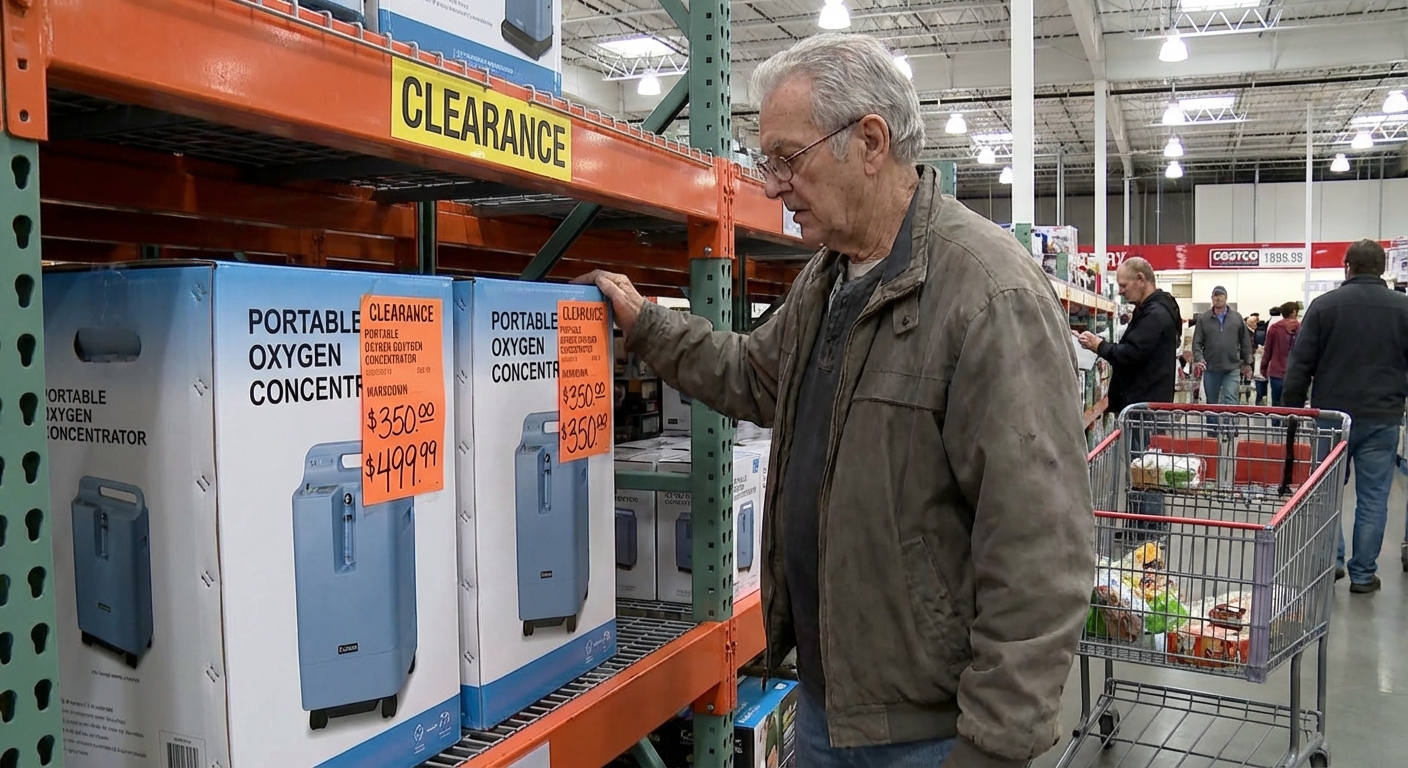
So when you see “portable oxygen” at Costco, you have to be very clear on which of the two you’re actually looking at.
Does Costco Really Sell Portable Oxygen Machines?
Short answer: sort of, but not like a medical DME supplier does.
What I’ve personally seen and confirmed by digging through Costco online and forums:
- In-warehouse: Mostly non-prescription items like oxygen cans, pulse oximeters, and occasionally nebulizers. True FAA-approved POCs rarely sit on the shelf like a blender.
- Online (Costco.com): Sometimes portable oxygen concentrators are offered through third-party vendors in the “Health & Personal Care / Medical Equipment” categories. Stock changes constantly.
- Pharmacy/optical side: Staff can sometimes point you toward partnered medical suppliers, but Costco itself typically isn’t the one billing Medicare for your oxygen.
When I spoke with a Costco pharmacist last year, she basically said: “We can sell wellness gear, but prescription oxygen setups usually go through dedicated durable medical equipment providers.” That lined up with what I’ve seen.
So if you stumbled on a “Costco portable oxygen machine clearance” sign, odds are:
- It’s a POC that Costco previously sold online or through a partner, and they’re clearing limited in-store inventory, or
- It’s not a clinical-grade concentrator at all – just recreational oxygen or a marketing gimmick.
Health Reality Check: Clearance + Life-Sustaining Device = Red Flag Time
When I first saw that clearance tag, my bargain-hunting brain lit up. Then my health-writer brain slammed the brakes.
Why I’m cautious with clearance POCs
1. Medical prescription & settingsA true POC for conditions like COPD, pulmonary fibrosis, or chronic hypoxemia is prescribed with:
- Liter-per-minute (LPM) range
- Continuous vs pulse dose
- Required hours per day or activity level
Buying one on clearance without matching those prescription parameters is like guessing your insulin dose because it’s on sale.
2. Warranty and supportWhen I tested a loaner POC from a DME company, they:
- Registered the serial number
- Explained maintenance and filters
- Provided a 24/7 support line if it failed
With clearance? You may get:
- Shortened warranty
- No direct manufacturer support
- No loaner device if it breaks
For somebody who needs oxygen to stay out of the ER, that’s a huge deal.
3. Battery and reliabilityOlder stock might mean older batteries. Lithium-ion batteries degrade just sitting on a shelf. If a clearance unit sat boxed for a year or two, don’t expect full runtime.
For context: Many POCs advertise 4–8 hours per battery on low settings, but respiratory therapists I’ve spoken with remind patients to halve those marketing numbers in real, active use.
How to Decode a Costco Clearance Deal (Without Getting Burned)
When I went back to Costco a week later to actually investigate the clearance display, here’s the mental checklist I used – and what I’d recommend anyone do.
1. Confirm: Is it a true portable oxygen concentrator?
Look for these clues on the box or device:
- Liter flow or “mL/min” output rating
- Mentions of pulse-dose or continuous flow
- FAA approval language for in-flight use
- Brand names you can verify (Inogen, Philips, CAIRE, GCE, etc.)
If the packaging only talks about “energy,” “focus,” or “recreational use,” it’s not what your pulmonologist ordered.
2. Check your prescription first, not the price tag
In my experience, the most grounded oxygen decisions started in the exam room, not at the checkout line.
Ask your clinician:
- “Am I a candidate for a portable concentrator?”
- “Do I need continuous flow, or is pulse-dose ok?”
- “What minimum oxygen output do I need at rest and while walking?”
Then match device specs to that prescription. If the clearance device can’t meet your requirements at your most active time of day, it’s a bad match even if it’s 70% off.
3. Ask Costco about:
- Return policy: Can you return it after use? Is there a restocking fee?
- Who handles warranty: Costco, the vendor, or the manufacturer?
- Age of inventory: When was this lot first stocked?
At my local warehouse, the manager actually checked the system and told me the medical device clearance batch had been there for nearly a year. That told me battery health might be iffy.
4. Cross-check the exact model online
I like to pull out my phone and search the model number + “spec sheet”.
Things I compare:
- Costco listing vs manufacturer site: any differences?
- Does the manufacturer still support this model or is it discontinued?
- What’s the warranty if bought through an authorized medical dealer vs a warehouse club?
More than once, I’ve found that a “deal” was actually a discontinued model with limited parts availability.
Pros and Cons of Buying a POC via Costco Clearance
After combing through the details and talking with a respiratory therapist I know, here’s how the trade-off usually shakes out.
Potential pros
- Lower upfront cost: I’ve seen some POCs drop by several hundred dollars on clearance compared to MSRP.
- Costco’s generally friendly return policy: They’re more consumer-oriented than some small DME shops.
- Simple checkout: No wrangling with multiple invoices or surprise “setup fees.”
Real-world cons
- Not integrated with your medical team: Your pulmonologist or RT usually isn’t the one who recommended that exact device.
- Limited fitting & training: Dedicated DME providers walk you through cannula fit, flow settings, and alarms. Costco staff typically don’t.
- Insurance & Medicare mismatch:
- Medicare Part B usually covers oxygen equipment via contracted suppliers, not big-box retail.
- Buying retail often means you pay out of pocket and don’t get ongoing supply coverage.
- Question mark on long-term support: Clearance suggests they’re phasing it out, not committing to stocking parts and accessories for years.
When I weighed this for my dad, we ended up getting his primary POC through a medical supplier and only considered retail deals for a backup travel unit, not his main life-line.
Smart Strategy: How to Use Costco in Your Oxygen Game Plan
Instead of seeing Costco clearance as your main oxygen solution, I’ve found it makes more sense in a supporting role.
Here’s how I’ve seen it work well:
- Primary device: Obtained via prescription and a reputable DME provider (especially if you’re on Medicare or insurance).
- Costco role:
- Cheaper accessories (carry bags, rolling carts, backup power banks where compatible).
- Pulse oximeters to monitor your saturation at home.
- Occasionally a secondary POC if it’s:
- A model your clinician approves
- Backed by a valid manufacturer warranty
- Affordable out of pocket for travel or as a backup
When I tested this approach with my family, it let us have a high-support, fully covered primary device plus a flexible backup option without completely wrecking finances.
When a Clearance POC Might Actually Make Sense
Based on my experience and the clinicians I’ve spoken with, a Costco clearance POC can be reasonable only if all these boxes are ticked:
- You already use oxygen and have a current prescription.
- Your clinician reviews the exact model and specs and says it’s safe for your use case.
- You understand this is likely out-of-pocket, not a fully covered medical benefit.
- The device is:
- Still supported by the manufacturer
- Under a clear written warranty
- Returnable if it doesn’t perform as expected
If even one of those is missing, I’d personally walk away and work with a medical supplier instead.
Final Thoughts: Clearance Isn’t a Shortcut for Clinical Care
I love a good Costco deal as much as anybody. I buy my contacts there, my vitamins, and far too many bulk snacks. But after watching my dad’s oxygen levels crash during a mild infection, I see portable oxygen as infrastructure, not a gadget.
A clearance tag can absolutely save you money if:
- It’s a real POC, not a recreational gimmick
- Your doctor signs off
- The model is supported and backed by a warranty
But no warehouse sale replaces a full respiratory assessment, titration test, and ongoing follow-up.
If you’re even remotely unsure, loop in your pulmonologist or respiratory therapist before you tap your Costco card. That five-minute curbside conversation can save you a lot of stress, a lot of money, and possibly a late-night trip to the emergency room.
Sources
- National Heart, Lung, and Blood Institute – Oxygen Therapy - Overview of medical oxygen use and indications
- American Thoracic Society – Patient Education: Oxygen Therapy - Patient-friendly guide to home and portable oxygen
- Medicare.gov – Oxygen Equipment & Accessories Coverage - Details on how Medicare covers oxygen devices
- Inogen – Portable Oxygen Concentrator FAQs - Manufacturer info on POCs, warranties, and usage
- Mayo Clinic – Chronic Obstructive Pulmonary Disease (COPD) - Clinical context on when and how oxygen is used in COPD