Crohn’s Disease: Symptoms, Treatment, and Daily Care
ling tiles to distract myself from the pain in my gut.
I’d brushed off the cramps for months. Stress, I thought. Too much coffee. Weird takeout. But when I realized I knew the layout of every public bathroom between my apartment and my office, I had to admit something else was going on.
Since then, I’ve spent years talking to gastroenterologists, digging through research papers, and (unfortunately) testing pretty much every daily-living hack you can imagine. What I’m sharing here blends that personal experience with what the evidence actually says.
What Crohn’s Disease Actually Is (No, It’s Not Just a “Stomach Issue”)
Crohn’s disease is a type of inflammatory bowel disease (IBD). Unlike IBS (irritable bowel syndrome), which affects how the gut works, Crohn’s is about chronic inflammation in the digestive tract.
A few key things that surprised me when I first started reading the research:
- Crohn’s can affect any part of the GI tract – from mouth to anus – but it most commonly hits the terminal ileum (the end of the small intestine) and the colon.
- The inflammation is often “transmural”, meaning it goes through the full thickness of the bowel wall. That’s why complications like fistulas and strictures happen.
- It tends to come in flares and remissions. You can feel totally fine for months, then suddenly be knocked flat.
The exact cause is still being unraveled, but most experts agree it’s a combo of:
- Genetic predisposition (over 200 risk loci identified in genome-wide association studies)
- Immune system overreacting to gut bacteria
- Environmental triggers (smoking, certain meds like NSAIDs, maybe diet, maybe stress)
When I dug into the science, one of the most cited explanations was that Crohn’s is basically your immune system going overboard on what should be regular gut housekeeping.
Common Symptoms (And the Ones Nobody Warned Me About)
Everyone’s Crohn’s looks a little different, but there’s a pattern I see over and over – and I lived most of these myself.
Classic GI Symptoms
- Abdominal pain and cramping – For me, it started as a dull ache after meals, then became sharp, right-lower-quadrant pain that woke me at night.
- Chronic diarrhea – Not just “loose stools.” We’re talking 5–10 urgent trips a day during bad flares.
- Rectal bleeding or blood in stool – Bright red or darker, tarry-looking stools.
- Unintended weight loss – I dropped 10 pounds without trying in a month.
- Nausea and reduced appetite – I’d look at food and just…no.
The Sneaky, Non-Gut Symptoms
These floored me once I realized they were connected to Crohn’s:
- Fatigue so heavy it felt like walking through wet cement
- Joint pain (especially knees and ankles)
- Mouth ulcers (those painful little canker sores)
- Skin issues like erythema nodosum (tender red bumps, usually on the shins)
- Eye inflammation (uveitis, episcleritis)
Crohn’s isn’t just a “stomach problem”; it’s a systemic inflammatory disease.
If you’re noticing a combo of gut issues + weird whole-body stuff, that’s when it’s worth pushing for a proper workup.
How Crohn’s Is Diagnosed (What Actually Happens)
When I finally caved and saw a gastroenterologist, here’s what the process looked like – and it matches what major guidelines recommend.
1. History, Exam, and Basic Labs
Your doctor asks about:
- Bowel patterns
- Pain (where, when, how intense)
- Weight changes
- Family history of IBD or autoimmune disease
Then they usually order blood tests:
- CBC – checking for anemia and elevated white cells
- CRP/ESR – markers of inflammation
- Chemistry panel – kidney, liver function
- Iron, B12, folate – malabsorption is common
Stool tests often include calprotectin, which helps distinguish IBD from IBS, and checks for infections.
2. Scopes and Imaging
This is where things get real.
- Colonoscopy with ileoscopy – A camera goes up through the colon and into the terminal ileum. Biopsies are taken. My first colonoscopy showed that classic “cobblestoning” pattern you’ll see in medical textbooks.
- Upper endoscopy – Sometimes done if upper GI involvement is suspected.
- MR enterography or CT enterography – Imaging to see the small intestine, strictures, fistulas, or abscesses.
Those biopsies are crucial. Pathologists look for features like granulomas (not always present, but pretty suggestive of Crohn’s when they are).
Treatment Options: What Actually Helps (Pros and Cons)
When I started treatment, I assumed there’d be one magic pill. There isn’t. Instead, Crohn’s management is about finding the right combo of therapies to get you into remission and keep you there with the fewest side effects.
1. Medications
#### Aminosalicylates (5-ASA)
Things like mesalamine. You’ll see them used more in ulcerative colitis than Crohn’s. My GI was very blunt: “For Crohn’s, these are… not our heavy hitters.”
Pros:- Generally well tolerated
- Limited benefit in most Crohn’s patients per multiple studies
#### Corticosteroids (Prednisone, Budesonide)
These are the fire extinguishers – great for short-term flares, terrible as a lifestyle.
Pros:- Fast symptom relief
- Weight gain, mood swings, insomnia
- Long-term risk: osteoporosis, diabetes, infections
I was on and off prednisone for months and felt like my body belonged to someone else. My GI pushed hard to get me onto steroid-sparing therapy ASAP.
#### Immunomodulators (Azathioprine, 6-MP, Methotrexate)
These calm the immune system more broadly.
Pros:- Can help maintain remission
- Oral options
- Take weeks to months to fully work
- Need regular blood monitoring (liver, bone marrow suppression)
- Small but real increased risk of some cancers and infections
When I tested azathioprine, my liver enzymes spiked, and that was the end of that experiment.
#### Biologics (Infliximab, Adalimumab, Ustekinumab, Vedolizumab, etc.)
These changed the game for me.
Biologics are lab-made antibodies targeting specific parts of the immune response. Common classes:
- Anti-TNF: infliximab (Remicade), adalimumab (Humira)
- Anti-integrin: vedolizumab (Entyvio)
- Anti-IL-12/23: ustekinumab (Stelara)
- High rates of clinical and endoscopic remission in moderate–severe Crohn’s
- Can heal the gut lining, not just reduce symptoms
- Injectable or IV infusions
- Risk of infections (TB, opportunistic infections)
- Expensive (though biosimilars are helping)
Once I started a biologic, I went from planning life around bathroom access to having actual normal days. Not perfect, but dramatically better.
#### Newer Small-Molecule Drugs
JAK inhibitors (like upadacitinib) and S1P modulators are emerging options, especially for people who fail multiple biologics.
2. Surgery
Surgery isn’t a “failure”; for a lot of people it’s a reset button.
Common procedures:
- Resection of strictured or severely damaged bowel
- Drainage of abscesses
- Fistula repair
The reality:
- Around 50% of Crohn’s patients will need at least one surgery in their lifetime according to large cohort data.
- Surgery doesn’t cure Crohn’s; inflammation can return at or near the resection site.
Daily Care: What I Actually Do To Stay Functional
Here’s where medicine meets lived reality. My GI cares about mucosal healing; I care about not having to sprint off a Zoom call.
Food: What Helps, What Backfires
I wish I could hand you a perfect “Crohn’s diet.” There isn’t one. But patterns absolutely matter.
In my experience (and backed up by research):
- Trigger foods during flares: greasy/fried foods, large amounts of dairy, high-fiber raw veggies, popcorn, alcohol.
- Gentler options: white rice, bananas, eggs, baked potatoes (no skin during bad flares), smooth nut butters, cooked carrots, bone broth.
Some structured approaches I’ve tried or seen work:
- Low-residue diet during flares – reduces fiber to lessen mechanical irritation.
- Exclusive enteral nutrition (EEN) – used more in kids; formulas as sole nutrition can induce remission and is strongly supported by pediatric studies.
- Mediterranean-style pattern in remission – more plants, healthy fats, fewer ultra-processed foods.
What didn’t work for me:
- Overly restrictive elimination diets with no medical guidance. I ended up undernourished and still inflamed.
What did help:
- Meeting with an IBD-savvy dietitian to build a flexible, realistic plan.
Supplements (With a Big Asterisk)
My rule: lab tests first, supplements second.
Common deficiencies in Crohn’s:
- Vitamin D
- B12 (especially with ileal disease or resections)
- Iron
- Folate
I take:
- Vitamin D (per lab-guided dose)
- B12 injections periodically
- Iron when my ferritin dips, often via IV because oral iron wrecks my gut
I’ve personally tested probiotics and fancy “gut health” powders. For me, results were…meh. Evidence for probiotics in Crohn’s is much weaker than in ulcerative colitis. There’s no miracle brand hiding out there.
Movement, Sleep, and Stress
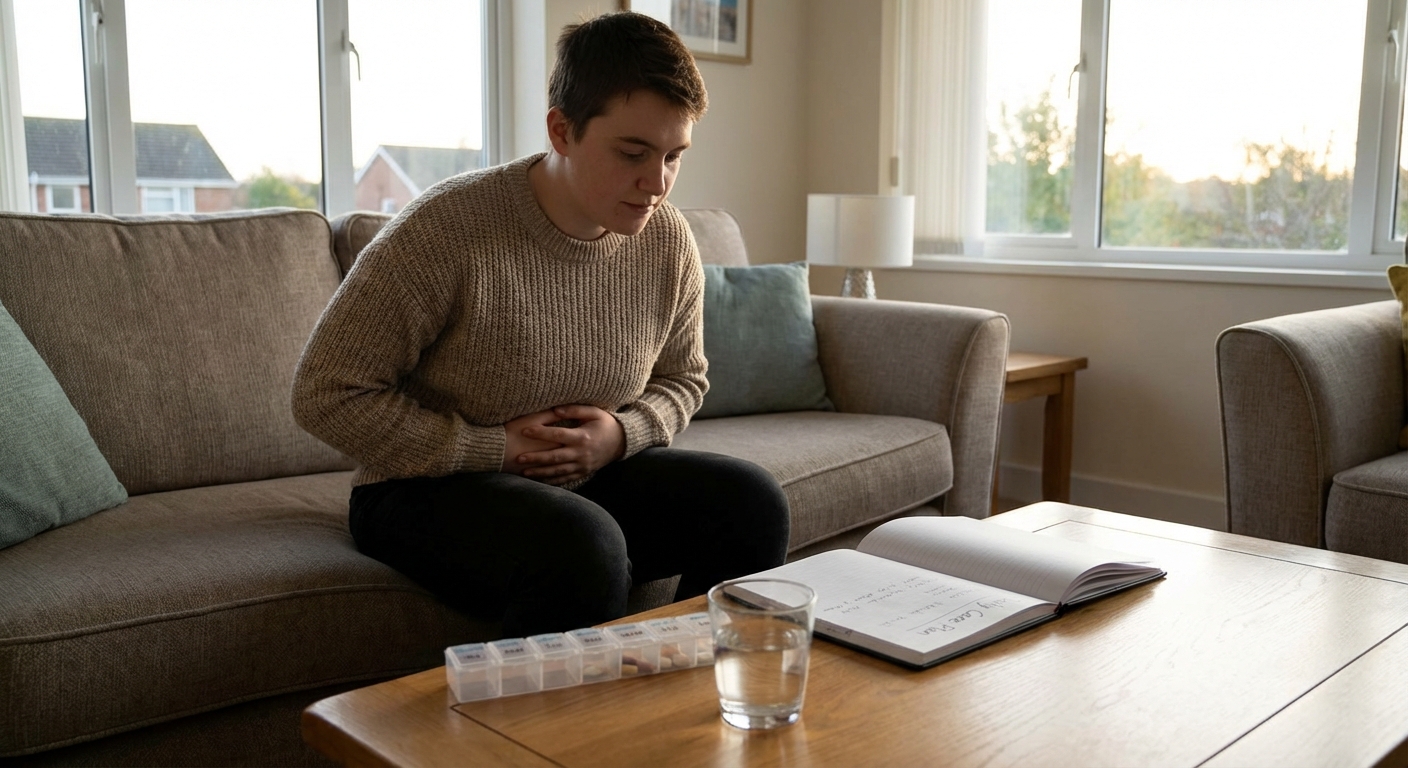
I used to roll my eyes at “reduce stress” advice. Then I tracked my flares and realized stress didn’t cause my Crohn’s, but it sure poured gasoline on it.
What’s actually helped:
- Gentle movement – walking, yoga, light strength work
- Sleep hygiene – regular schedule, dark room, screens off earlier than I’d like to admit
- Therapy – dealing with health anxiety and the grief of having a chronic illness was huge
When I tested short daily breathing exercises (5–10 minutes), my gut didn’t magically heal, but my pain perception dropped a notch, and that mattered.
Building a Practical “Crohn’s Kit”
Things I keep around that make daily life easier:
- A small bag with wipes, spare underwear, and a change of clothes in my car
- Electrolyte packets for days with lots of diarrhea
- Heating pad for abdominal cramping
- Med list and summary letter from my GI saved on my phone for ER visits
It’s not glamorous, but it cuts panic way down.
Mental Health, Work, and Relationships
Nobody warned me how much Crohn’s would mess with my head.
I’ve had to:
- Tell bosses why I sometimes vanish to the bathroom
- Cancel dates because of sudden flares
- Navigate friends thinking I “just have a sensitive stomach”
What helped:
- Being brutally honest with a few close people instead of pretending everything’s fine
- Joining an IBD support group – hearing “me too” from strangers was wildly validating
- Asking for workplace accommodations (flexible bathroom breaks, occasional remote work days)
Crohn’s is invisible until it’s very, very not. Giving myself permission to treat it as a real, serious disease – not a personality flaw – was a turning point.
What I’d Tell Someone Newly Diagnosed
If you’ve just gotten the Crohn’s label, here’s what I wish someone had told me:
- You didn’t cause this.
- The first treatment you try might not be the one that changes your life. That’s normal.
- Biologics and newer meds can feel scary, but untreated, raging inflammation is also scary. Discuss both risks honestly with your GI.
- Keep your own records – labs, scopes, imaging. You’ll see patterns your 10-minute appointments can’t cover.
- Flares happen, even when you’re “doing everything right.” That’s not failure; it’s the disease being the disease.
And most importantly: remission is absolutely possible. I’ve had stretches where I forgot I had Crohn’s at all – and I don’t say that lightly.
Sources
- Crohn’s disease – Mayo Clinic - Overview of causes, symptoms, and complications
- Inflammatory Bowel Disease (IBD) – National Institute of Diabetes and Digestive and Kidney Diseases - U.S. government resource on IBD, including Crohn’s
- Management of Crohn’s Disease in Adults – American College of Gastroenterology Guideline - Evidence-based treatment recommendations
- Crohn’s & Colitis Foundation - Patient-focused education and support resources
- Diet and Inflammatory Bowel Disease – Harvard T.H. Chan School of Public Health - Research-based insights on diet patterns and IBD