Daily Habits That Can Worsen Joint Pain and What to Change
ninety-year-old in my thirties, I got annoyed enough to actually track what I was doing each day.
What I found was humbling: it wasn’t just age or genetics. A lot of my everyday habits were quietly making my joint pain worse.
When I tested a few small changes for just four weeks, the difference shocked me. Not “I ran a marathon” dramatic, but “I can get up from the couch without groaning” dramatic. Let’s walk through the sneaky habits that might be sabotaging your joints—and what you can realistically change.
1. Sitting All Day (and Then Overdoing It)
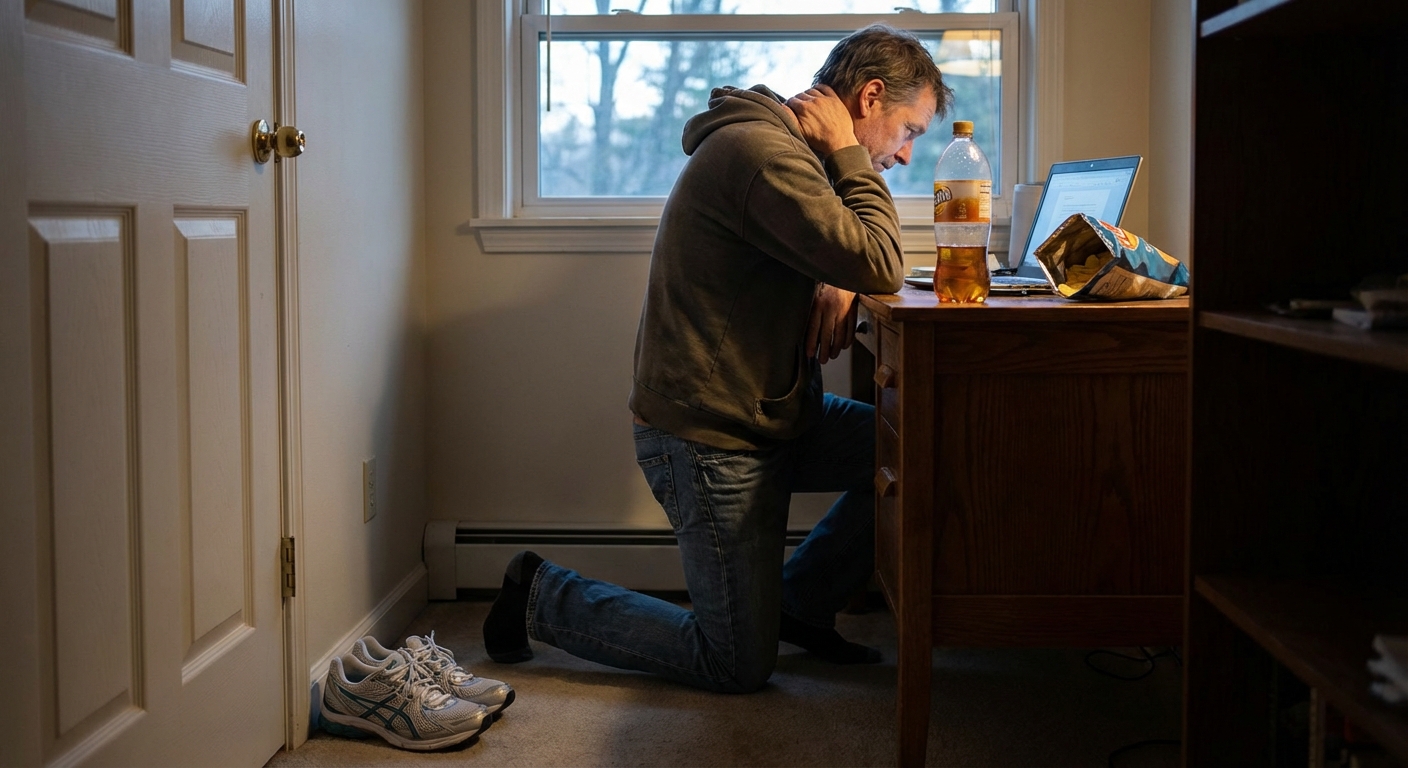
For years I’d sit 8–10 hours at my desk, then suddenly try to “make up for it” with a hard workout. My knees hated this combo.
Extended sitting reduces blood flow to the cartilage, tightens muscles around the joints, and can change how you walk and stand. Then when you suddenly load those stiff joints with a run or intense class, they complain. Loudly.
What helped my joints:- I set a 25–30 minute timer. When it goes off, I stand, walk for 60–90 seconds, or do 10 slow squats while holding the desk.
- I raised my laptop on a stack of books so I’m not hunched like a shrimp.
- On workout days, I now add 5–10 minutes of warm-up: leg swings, hip circles, light marching. When I skipped this, my knees would “catch” on stairs later.
Research from the journal Arthritis Care & Research has shown that breaking up sedentary time reduces joint stiffness and pain in people with osteoarthritis. It’s boring advice, but unfortunately, it actually works.
2. The “Healthy” Workouts That Hurt More Than Help
When my joints started hurting, I did exactly the wrong thing: I doubled down on high-impact cardio because I thought sweating more meant “getting healthier.”
In my case, that meant:
- Jump squats on hard floors
- Long runs with old shoes
- Zero strength training
Within a month, my knees felt like they were made of sandpaper.
High-impact workouts aren’t evil. But repeated pounding without proper strength and recovery can worsen joint pain, especially if you’ve got early arthritis, past injuries, or weaker stabilizing muscles.
What I changed:- Swapped two of my weekly runs for low-impact cardio: cycling, swimming, or incline treadmill walking.
- Added strength training twice a week focused on glutes, quads, hamstrings, and core. Strong muscles act like shock absorbers for joints.
- Started using a foam roller on quads and IT bands 3–4 times a week. The first week was brutal; by week three, my knees felt more “supported.”
Studies from the American College of Rheumatology show that strength training can reduce pain and improve function in knee osteoarthritis as much as some medications for certain people. That blew my mind when I first read it—and it matched what I felt in my own body.
3. Ignoring Your Weight (On Both Ends of the Spectrum)
This one’s touchy, but it’s real.
When I gained about 20 extra pounds during a stressful year, my knee and ankle pain went from annoying to constant. My doctor explained that:
- Every extra pound of body weight can add roughly four pounds of pressure on the knee joint when walking.
- Going downstairs can multiply that load even more.
I also learned the flip side: being underweight or losing weight too fast can weaken muscles and bone density, which also hurts joint stability.
What I actually did (rather than what I “should” have done):- I stopped obsessing over the scale and focused on protein intake and movement: about 20–30g of protein per meal, and 7–8k steps most days.
- Instead of a crash diet, I aimed for a slow loss of ~0.5 lb per week. It took a few months, but my knees noticed before my jeans did.
The CDC notes that even a 5–10% reduction in body weight can significantly reduce joint pain in people with knee osteoarthritis. It’s not about being thin; it’s about unloading stressed joints just enough that they can function better.
4. Living on Ultra-Processed Food and Sugar
This one hurt my feelings because I love pastries.
When my joint pain peaked, my diet was a highlight reel of:
- Sugary coffee drinks
- Refined carbs (white bread, crackers, instant noodles)
- Processed meats and takeout
When I finally dug into the research, I found that highly processed foods and excess sugar can promote systemic inflammation, which may aggravate inflammatory joint conditions like rheumatoid arthritis and make osteoarthritis pain worse.
What changed when I experimented with food:For four weeks, I:
- Cut sugary drinks except once a week.
- Swapped my usual snacks for nuts, yogurt, or fruit.
- Added omega‑3-rich foods like salmon and chia seeds twice a week.
I didn’t go “perfectly clean” or gluten-free or anything dramatic. But about two weeks in, I noticed my morning stiffness shortened from 30–40 minutes to about 10–15. Was it only diet? Probably not. But it was a noticeable shift.
Large studies, like those reported by Harvard Health, have linked Mediterranean-style eating patterns (vegetables, olive oil, nuts, fish) with lower inflammatory markers. It’s not magic—but it nudges your body away from chronic inflammation.
5. Terrible Sleep and “I’ll Just Push Through It” Mode
For a while, I wore poor sleep like a weird badge of honor. I’d get 5–6 hours, drag myself up, then complain about my body hurting.
Sleep deprivation raises levels of pro-inflammatory cytokines and lowers your pain threshold. In plain English: bad sleep turns up the volume on pain signals.
I noticed that on nights I went to bed after midnight, my hands and knees throbbed the next day, even if I hadn’t worked out.
What actually helped:- Setting a non-negotiable wind-down time: screens off 30–45 minutes before bed.
- Keeping my bedroom cool and dark. It sounds like cheesy wellness advice, but it changed the quality of my sleep.
- On high-pain nights, I used a combination of gentle stretching and a heat pack instead of just scrolling and hoping it’d go away.
There’s a bi-directional relationship here: pain disrupts sleep, and poor sleep amplifies pain. I didn’t fix either overnight, but treating sleep as “joint therapy” instead of optional self-care made me commit harder.
6. Wearing the Wrong Shoes (Even at Home)
When I finally saw a physio, the first thing she did was look at my shoes. I was expecting some fancy test; instead, she turned my sneakers over and showed me how one side of the heel was worn down more than the other.
Poor footwear can:
- Alter your gait
- Change how your knees and hips track
- Stress certain joints more than others
My worst habit? Going barefoot on hard floors for hours while working from home.
What I swapped:- I replaced my ancient running shoes with a fresh pair after getting my gait checked at a running store.
- At home, I started wearing supportive slippers with arch support instead of going barefoot.
- I avoided living in completely flat, unsupportive shoes (sorry, old flip-flops).
The American Academy of Orthopaedic Surgeons notes that proper footwear and inserts can significantly reduce knee and foot pain in many people. For me, this change alone didn’t fix everything, but it took a background ache down a notch.
7. Ignoring Early Signs and Skipping Professional Help
I used to think, “It’s just a bit of soreness, it’ll go away,” right up until it didn’t.
Waiting until pain is severe can mean you’ve missed a critical window where simple interventions—like physical therapy, targeted exercises, or medication adjustments—could’ve slowed the progression.
When I finally saw a rheumatologist to rule out autoimmune issues, and a physical therapist to assess my movement, I got:
- A proper diagnosis (mild early osteoarthritis + old injury flare-ups)
- A custom exercise plan
- A clear explanation of what movements to avoid for now, not forever
- You stop guessing.
- You learn which pain is “normal discomfort” and which is a legit red flag.
- You get specific, not generic, advice.
- Not every doctor listens well; I had to switch once.
- Access and cost can be real barriers.
- You still have to do the boring daily work yourself.
But in my experience, that first honest, detailed conversation with a specialist changed how I saw my joint pain—from random curse to something I could influence.
What You Can Start Changing This Week
You don’t need a complete life overhaul to help your joints. If you’re feeling overwhelmed, try this:
- Pick two habits from this list that feel doable for you.
- Commit to four weeks, not forever. Treat it like an experiment.
- Track your pain once a day on a 0–10 scale and note what you did.
Here’s a simple starter combo that worked well when I tested it on myself:
- Movement snack rule: 1–2 minutes of movement every 30–45 minutes of sitting.
- Food swap rule: One processed/sugary thing you eat regularly gets swapped for a less processed option.
- Sleep window rule: Aim for the same 7–8 hour window every night for two weeks.
You won’t wake up with brand-new knees, but you may notice: stairs feel a bit easier, mornings are less stiff, and that constant dull ache dials down one or two notches.
And that’s the real goal—not perfection, but a life where your joints aren’t running the show.
If your pain is severe, rapidly getting worse, or associated with swelling, redness, fever, or unexplained weight loss, please don’t self-diagnose like I tried to at first. Get a proper evaluation from a healthcare professional and use these habit tweaks as support, not a substitute.
Sources
- Harvard Health Publishing – Foods that fight inflammation - Overview of anti-inflammatory dietary patterns and their impact on chronic conditions.
- CDC – Osteoarthritis: Risk factors and management - Evidence-based information on osteoarthritis, weight, and physical activity.
- Arthritis Foundation – The role of strength training in arthritis - How resistance training helps support joint health.
- American College of Rheumatology – Exercise in the management of osteoarthritis - Clinical guidance on activity, pain, and function.
- NIH – Sleep and pain relationship - Research review on how sleep disturbance and chronic pain interact.