Do Prostate Supplements Really Work Overview
A couple of years ago, a close friend messaged me: “Dude, I’m up three times a night to pee. My doctor says my prostate’s a bit enlarged. Have you heard of saw palmetto?” I’d seen the ads, the bold promises, the too-good-to-be-true reviews. So I did what I always do: I went down the research rabbit hole and then started testing some of these supplements myself.
What I found was… complicated. Some things work a bit, some don’t work at all, and the marketing is way louder than the science.
Let me walk you through what I’ve learned, what I tried, and what the research actually says.
What Prostate Supplements Claim To Do
Most prostate supplements target guys over 40 who are dealing with:
- Frequent urination (especially at night)
- Weak urine stream
- Feeling like the bladder never fully empties
- Hesitation or dribbling
These symptoms often trace back to BPH – benign prostatic hyperplasia, aka non-cancerous prostate enlargement.
When I started looking at labels, I saw the same greatest hits over and over:
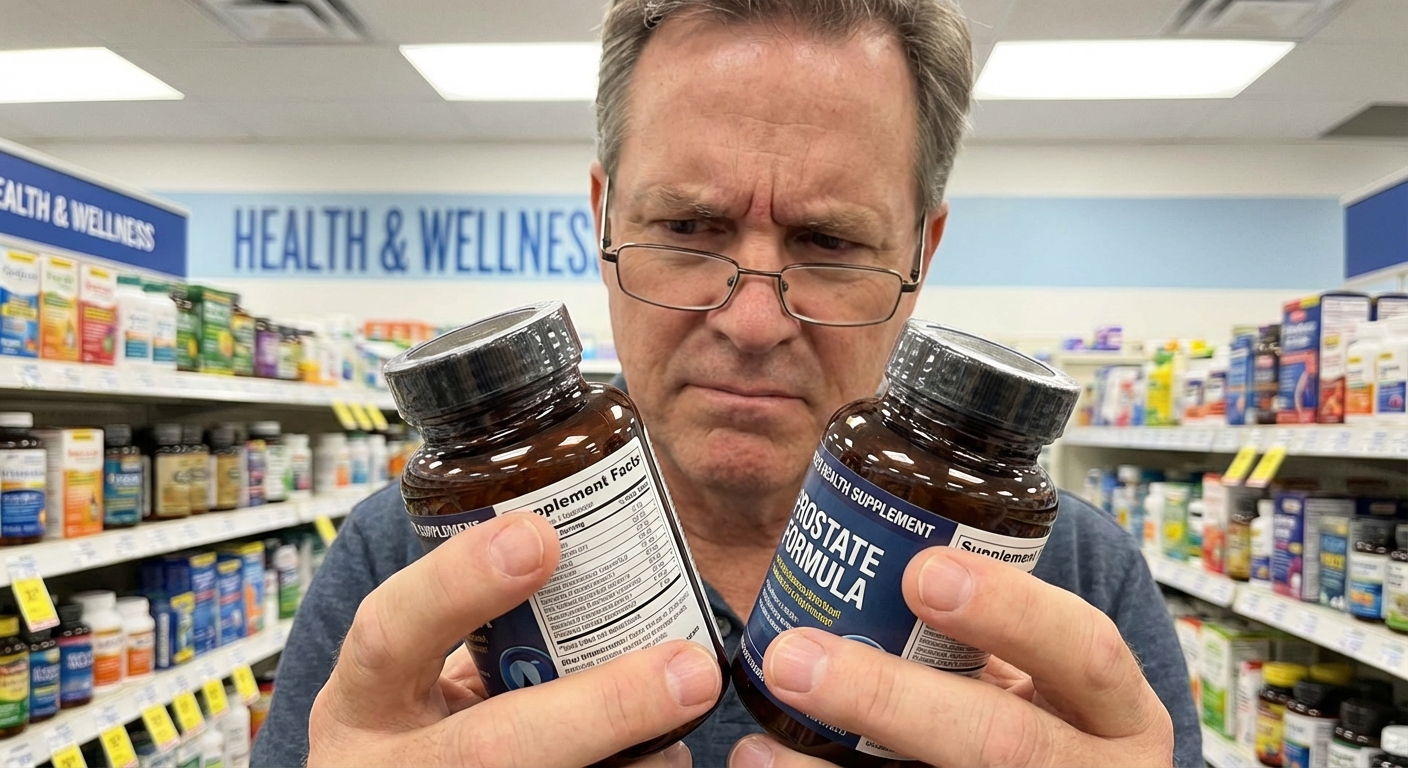
- Saw palmetto
- Beta-sitosterol
- Pygeum africanum (African plum bark)
- Pumpkin seed oil
- Stinging nettle root
- Zinc and other minerals
- Sometimes lycopene, vitamin D, or selenium
The promise: “Shrink” the prostate, improve flow, cut down on nighttime bathroom trips, and maybe even boost sexual function.
So… does any of this actually happen outside of marketing copy?
When I Tested These Supplements Myself
I’m in my early 40s. No major prostate issues yet, but I was getting up once a night to pee and my stream wasn’t exactly firehose-level. My doctor did a PSA test (normal) and a digital rectal exam (slightly enlarged but nothing scary). He told me, “You’re fine. Lifestyle first. Supplements if you really want, but don’t expect miracles.”
That was my green light.
Round 1: Saw Palmetto
I grabbed a well-reviewed saw palmetto supplement from a reputable brand, standardized to 160 mg twice daily. I took it for about 8 weeks.
What I noticed:- Week 1–2: Nothing.
- Week 3–4: Maybe slightly less urgency, but honestly could’ve been placebo.
- Week 5–8: Nighttime urination went from once per night to… still once per night.
Side effects? Mild stomach discomfort if I took it on an empty stomach. That’s it.
When I dug into the research later, my experience made sense.
Round 2: A Combo Formula (Beta-Sitosterol Heavy)
Next I tried a “prostate complex” with beta-sitosterol, pumpkin seed, stinging nettle root, zinc, and a small amount of saw palmetto. I ran it for 3 months.
What I noticed:- By the end of month 1, I was waking up at night less often – some nights not at all.
- My flow felt a bit stronger and I had less of that “did I really finish?” feeling.
- No major side effects except slightly softer stools.
Was it a transformation? No. But it was enough that I kept it in my routine for a while. The interesting part is: the research kind of backs this combo up, especially the beta-sitosterol.
What The Science Actually Says (Not The Ads)
I’m going to break down a few of the big ingredients you’ll see.
Saw Palmetto: Overhyped, Mixed Evidence
Saw palmetto used to be the star of the show. Early small studies from the 1990s suggested it helped urinary symptoms in BPH.
But then larger, better-designed trials happened.
- The NEJM 2006 STEP trial (Platz et al., 225 men, 1 year) found no significant difference between saw palmetto and placebo in urinary symptoms or flow.
- A 2011 study in JAMA even pushed the dose up to 960 mg/day and still found no benefit over placebo.
This matches my own test: not useless for everyone, but nowhere near the miracle the labels suggest.
Beta-Sitosterol: Quietly The Most Interesting
Beta-sitosterol is a plant sterol found in many prostate blends. The research here is more promising:
- A Cochrane review (Wilt et al.) of men with BPH found that beta-sitosterol improved urinary symptom scores and peak urinary flow rate compared with placebo.
- Improvements weren’t massive, but they were statistically meaningful.
This lines up with my experience using a beta-sitosterol–based formula: not life-changing, but noticeably better.
Pygeum, Pumpkin Seed, Nettle Root
These are the “supporting actors.”
- Pygeum africanum has some smaller European studies suggesting it can reduce nocturia and improve flow, but the data is older and not as robust.
- Pumpkin seed oil has mild evidence for urinary symptoms and overactive bladder, especially combined with saw palmetto.
- Stinging nettle root seems to have mild anti-inflammatory and anti-androgen effects, often used in combination formulas.
None of these have the slam-dunk evidence of a drug like tamsulosin, but together they may provide a small, additive benefit.
Vitamins & Minerals (Zinc, Selenium, Vitamin D, Lycopene)
Here’s where a lot of marketing wanders way ahead of the science.
- Zinc: Deficiency can harm prostate health, but more isn’t always better. Very high doses over time can mess with copper levels and the immune system.
- Selenium & Vitamin E: The big SELECT trial (NIH) actually found no reduction in prostate cancer risk, and in some groups, a potential increased risk.
- Vitamin D & Lycopene: Interesting in observational studies, but supplements haven’t clearly shown they prevent or treat prostate disease.
So yes, general micronutrient sufficiency matters. But swallowing megadoses because a label says “prostate defense” isn’t a smart play.
The Part Supplement Companies Don’t Emphasize
There are real limitations:
- No supplement reverses a seriously enlarged prostate.
They might ease symptoms a bit; they don’t “shrink it back to age 20.”
- Most studies are short term.
We’re talking months, not years. Long-term efficacy and safety data is patchy.
- Quality varies wildly.
When I compared labels and independent lab tests, some products had far less active ingredient than stated or were contaminated.
- They’re not a cancer shield.
Having fewer BPH symptoms does not mean you’re safe from prostate cancer. I’ve seen guys delay a PSA test because they “felt fine” on supplements. That’s risky.
How I’d Approach Prostate Supplements (If You’re Considering Them)
Here’s the framework I’ve ended up using for myself and recommending to friends:
1. See a doctor first
When I first started waking at night, my doctor:
- Checked my PSA
- Did a digital rectal exam
- Reviewed family history, meds, and lifestyle
You want to rule out cancer, infections, stones, or medication side effects before assuming “just BPH.”
2. Focus on lifestyle first
Boring but huge impact. Things that made a bigger difference for me than any pill:
- Cutting back fluids 2–3 hours before bed, especially alcohol and caffeine
- Losing a few kilos – abdominal fat is metabolically active and can worsen BPH
- Regular exercise (even brisk walking) – lowers inflammation and improves hormone balance
- Managing constipation – a packed rectum can worsen urinary symptoms
3. If you try supplements, be strategic
In my experience and based on the data:
- Look for a product that clearly lists standardized amounts of ingredients like beta-sitosterol (often 60–130 mg per day in studies).
- Avoid “kitchen sink” formulas with 25 ingredients at fairy-dust doses.
- Give it 8–12 weeks before judging.
- Track changes: nighttime wakes, flow, urgency, and any side effects.
If nothing changes by 3 months, I’d stop rather than collecting an expensive urine donation habit.
4. Combine with medical care, don’t replace it
One friend of mine got decent relief from a beta-sitosterol blend plus a low-dose tamsulosin prescribed by his urologist. The combo was far more effective than either alone.
On the flip side, another friend tried to “go natural only,” ignored worsening symptoms, and ended up in the ER unable to pee, needing a catheter. Not fun.
So… Do Prostate Supplements Really Work?
Based on my own experiments, the clinical research, and what I’ve seen in other men:
- Some prostate supplements can help mild to moderate urinary symptoms, especially those containing decent doses of beta-sitosterol, sometimes in combination with pygeum, pumpkin seed, and nettle root.
- Saw palmetto alone is probably overrated, especially given the larger negative trials.
- None of them are cures, none replace proper evaluation, and none should be treated as cancer prevention.
What they can be is one tool among many – along with better sleep habits, smarter fluid timing, exercise, weight management, and, when needed, evidence-based medications.
That mix – not a magic capsule – is what’s given me the best urinary comfort so far.
Sources
- National Institute of Diabetes and Digestive and Kidney Diseases – Prostate Enlargement (BPH) - Clear overview of BPH and standard treatments
- New England Journal of Medicine – Saw Palmetto for Benign Prostatic Hyperplasia (STEP Trial) - Large randomized trial finding no benefit vs placebo
- JAMA – Effect of Increasing Doses of Saw Palmetto on Lower Urinary Tract Symptoms - High-dose saw palmetto trial with negative results
- Cochrane Review – Beta-sitosterols for Benign Prostatic Hyperplasia - Systematic review showing symptomatic improvement with beta-sitosterol
- NIH – Selenium and Vitamin E Cancer Prevention Trial (SELECT) - Large trial on selenium/vitamin E and prostate cancer risk