Glucose Smartwatch Guide
rrowed a continuous glucose monitor (CGM) for a month as part of a work project… and it completely changed how I looked at my watch, my food, and honestly my energy levels.
That’s when I started diving deep into the world of glucose smartwatches. And wow, there’s a lot of hype, a lot of promise, and also a lot of misleading marketing.
This guide is everything I wish I’d had before I started: real experience, real science, and a reality check on what your smartwatch can and cannot do for glucose.
The Big Question: Can a Smartwatch Actually Measure Blood Glucose?
Short answer: not directly, not yet – at least not in a clinically reliable way.
Most mainstream smartwatches today (Apple Watch, Samsung Galaxy Watch, Fitbit, Garmin, etc.) don’t have FDA‑approved non‑invasive glucose sensors built in. When I first started researching, I kept seeing phrases like “blood sugar insights” or “glucose tracking” on product pages — and it’s easy to assume that means the watch itself is measuring glucose like a CGM. It’s not.
Here’s what’s really going on:
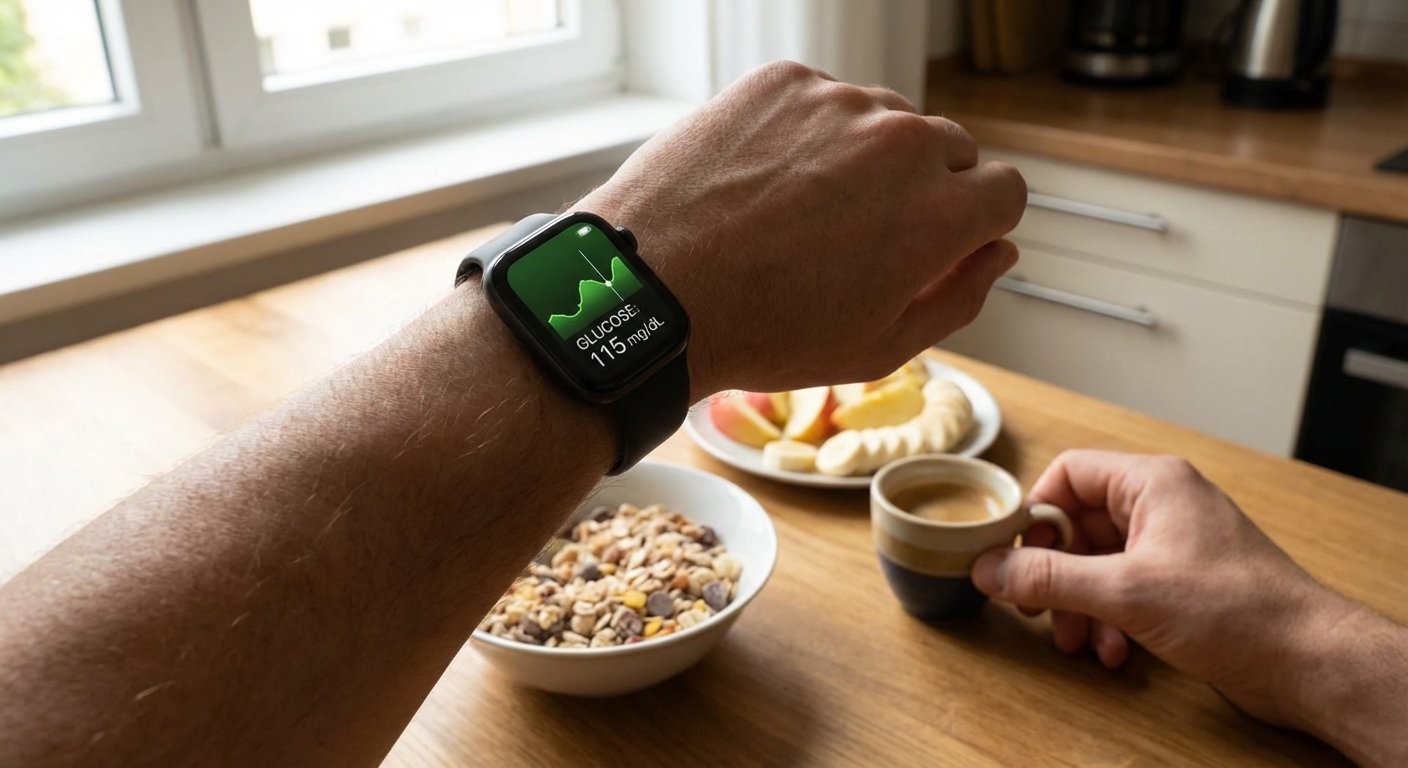
- Your smartwatch can connect to a CGM (like Dexcom or Abbott FreeStyle Libre) and display glucose readings.
- Some apps combine heart rate, activity, sleep, and food logs to give “glucose predictions” or “metabolic scores,” but those are models, not actual blood sugar readings.
- A few experimental and startup devices claim non‑invasive glucose sensing via light (near‑infrared, Raman spectroscopy), but they’re not mainstream or widely validated yet.
When I tested this myself, my Apple Watch wasn’t reading my glucose; it was just being a very fancy external screen for the CGM on my arm.
How Smartwatches and CGMs Work Together
In my experience, the best “glucose smartwatch” setup right now is actually a combo:
- A CGM sensor on your arm or abdomen (Dexcom G6/G7, FreeStyle Libre 3, etc.).
- A smartwatch that connects to the CGM via your phone or directly over Bluetooth.
The CGM does the actual work by reading interstitial glucose every few minutes. The watch is the always‑with‑you dashboard.
When I wore a Dexcom G6, here’s what my day looked like:
- I’d glance at my watch while making coffee and see my glucose trend arrow.
- During a run, I’d get a gentle vibration on my wrist if I started heading low.
- At dinner, I’d watch the spike in real time (slightly addictive, slightly horrifying after a big bowl of pasta).
That wrist‑level feedback made me change two things:
- I started walking 10–15 minutes after bigger meals.
- I experimented with eating protein first, carbs second. The spike difference was dramatic.
And this isn’t just anecdotal. CGM + behavioral feedback has been shown to improve time‑in‑range and glycemic control for people with diabetes. For example, a 2017 study in JAMA on the Dexcom G4 system found significant reductions in HbA1c and hypoglycemia in adults with type 1 diabetes who used real‑time CGM regularly.
Types of “Glucose Smartwatch” Setups
When people say “glucose smartwatch,” they’re usually talking about one of three things. I’ve tried or tested each type to some degree.
1. Smartwatch + Medical‑Grade CGM (Most Accurate)
This is the gold standard for people with type 1, type 2 on insulin, or gestational diabetes.
Typical setups:- Apple Watch + iPhone + Dexcom G6/G7 app
- Samsung Galaxy Watch + Android + Dexcom or LibreLink (for FreeStyle Libre)
- Real‑time readings every 5 minutes
- Alarms on your wrist for highs and lows (huge for safety at night)
- Solid clinical data and FDA/CE approvals
- Sensors are expensive and usually require a prescription
- You still have a device stuck to your body
- Occasional calibration or signal dropouts
When I wore a CGM plus Apple Watch for a month, it felt like flying with instruments instead of guessing. But it also made me a bit neurotic the first week — constantly checking numbers. That calmed down once I got used to what “normal” looked like for me.
2. Smartwatch + Wellness Glucose Programs (For Metabolic Optimization)
This is where you see brands like Levels, Nutrisense, and Signos: they ship you a CGM, pair it with an app, and (sometimes) integrate with your watch for extra context.
I tried a 2‑week program aimed at non‑diabetics. The watch wasn’t measuring glucose; it was tracking:
- My steps
- My heart rate and HRV
- My workouts and sleep
The app then layered glucose readings on top of that to show how my lifestyle affected my blood sugar.
For example, I learned:
- A late, heavy dinner wrecked both my sleep and my overnight glucose.
- The same pizza at lunch plus a 20‑minute walk afterward created a much smaller glucose spike.
For someone without diagnosed diabetes, this kind of “metabolic coaching” can be interesting, even motivating. But it’s not a replacement for clinical care.
3. Experimental / Non‑Invasive Glucose Watches (Proceed with Caution)
Every few months, I see headlines like “New smartwatch reads blood sugar without needles!” and I click every time. So far, the reality:
- Apple has reportedly been working on non‑invasive glucose tech for years (Bloomberg reported major progress in 2023), but it’s not in any current Apple Watch.
- Some smaller brands and crowdfunding projects claim non‑invasive glucose sensing via optical methods. The data is usually thin, unpublished, or based on tiny internal tests.
From the devices I’ve seen and the engineers I’ve spoken with, we’re not yet at hospital‑grade accuracy for needle‑free watches. And for someone making insulin dosing decisions, “close enough” is not good enough.
If a company can’t show:
- Peer‑reviewed data
- Regulatory clearance (FDA, CE)
- Transparent accuracy metrics (MARD, error grids)
…I stay skeptical.
Who Actually Benefits from a Glucose‑Enabled Smartwatch?
From my experience (and a lot of late‑night reading), these groups tend to benefit most:
1. People with Diabetes Using CGM
For type 1 and insulin‑treated type 2 especially, having glucose on the wrist is almost a no‑brainer.
Why it helps:- Discreet checks without pulling out your phone
- Quick safety checks during driving, workouts, meetings
- Pattern recognition: you see how mornings vs. evenings behave over time
The American Diabetes Association and Endocrine Society increasingly reference CGM as a standard tool in managing diabetes, especially for those on intensive insulin therapy.
2. People at High Risk for Metabolic Issues
If you have prediabetes, PCOS, a strong family history of type 2 diabetes, or metabolic syndrome, using a CGM temporarily with your smartwatch can be like running a full diagnostic on your daily habits.
I don’t think everyone needs to wear a CGM forever, but 2–4 weeks can be eye‑opening. I discovered my “healthy” smoothie (banana + oats + juice) was basically a glucose firework for me.
3. Data Nerds Optimizing Performance
Athletes, biohackers, or anyone obsessed with performance sometimes use glucose wearables to tune:
- Fueling strategies for endurance events
- Carb timing around workouts
- Recovery windows
Personally, I found this level of tweaking fun for a while, then a bit exhausting. But if you love data, having your watch buzz when you’re crashing mid‑afternoon can be strangely motivating.
The Pros and Cons (No Hype Version)
What’s Awesome
- Instant feedback: Eat something, watch the effect. You learn fast.
- Early warning: For people with diabetes, low‑glucose alerts on the wrist can be lifesaving.
- Behavior change: I walk more after meals now, because I’ve seen what it does to my curve.
- Holistic view: Pairing glucose with heart rate, sleep, and activity gives a fuller metabolic picture.
What’s Not So Awesome
- Cost: CGMs aren’t cheap, and wellness programs can be pricey subscriptions.
- Data overwhelm: It’s easy to obsess over every spike and forget the big picture.
- False reassurance: Non‑invasive or “AI‑estimated” glucose without strong validation can give a dangerous sense of security.
- Privacy: You’re sharing highly sensitive health data with multiple apps and companies. That deserves real thought.
How to Choose a Glucose‑Friendly Smartwatch Setup
If you’re considering this, here’s the practical checklist I use when helping friends:
- Start with your medical situation.
- Diabetes or on glucose‑affecting meds? Talk to your doctor or endocrinologist first.
- Just curious about health? A short‑term CGM program + your existing watch might be enough.
- Check device compatibility.
- Dexcom and FreeStyle Libre list compatible phones and watches on their official sites.
- Apple Watch tends to have the strongest third‑party app ecosystem for health.
- Look for real approvals, not buzzwords.
- "FDA‑cleared for adjunctive use" or "CE‑marked" means something.
- "Wellness only, not for medical use" on a supposed “glucose watch” is a yellow flag.
- Decide what you’ll actually use.
- If you won’t look at the data, don’t pay for tricks you’ll ignore.
- If alarms will stress you out, adjust thresholds or consider shorter experiments.
When I recommend a setup to someone with type 2 diabetes on insulin, it’s usually:
> CGM prescribed by their clinician + whatever smartwatch they’ll genuinely wear every day.
For health‑curious friends without diabetes, I usually say:
> Do a 2–4 week CGM experiment once, learn your big triggers, then use a regular smartwatch to reinforce good habits (steps, sleep, workouts) long‑term.
What the Future Might Look Like
Based on everything I’ve read and the engineers I’ve hassled, here’s my honest take on where this is heading:
- Non‑invasive glucose sensing (no needles) will likely arrive in consumer devices in some form, but hitting clinical‑grade accuracy for insulin dosing is a massive technical and regulatory hurdle.
- Big players (Apple, Samsung, Google) are clearly interested. Bloomberg reported in 2023 that Apple’s non‑invasive glucose project reached a major proof‑of‑concept milestone, but they’re still years from shipping.
- Hybrid models might appear first: watches that give rough glucose trend estimates for wellness, while people with diabetes still rely on CGMs for precise decisions.
I’d love a future where my watch quietly keeps an eye on my glucose the way it does on my heart rate. But until the data is strong and regulators are convinced, I’d rather my devices be honest about their limits than pretend to be something they’re not.
The Takeaway
From my own experiments, here’s the simplest way I’d sum up glucose smartwatches:
- Your watch right now is usually a glucose viewer, not a glucose sensor.
- Paired with a CGM, it can be a game‑changer for people with diabetes and a powerful learning tool for everyone else.
- Beware of devices that overpromise non‑invasive magic without real, public data.
- The real superpower isn’t the number on your wrist. It’s the tiny behavior changes that number nudges you into — walking after dinner, rethinking that “healthy” snack, or finally seeing the connection between your sleep and your cravings.
And honestly? Once you’ve watched your glucose response to a giant cinnamon roll on your wrist in real time… you’ll never look at breakfast the same way again.
Sources
- American Diabetes Association – Standards of Care - Official guidelines on CGM and glucose monitoring in diabetes management.
- JAMA: Effect of Continuous Glucose Monitoring on Glycemic Control in Adults With Type 1 Diabetes - Clinical trial showing benefits of real‑time CGM.
- Dexcom Official Site – CGM Systems - Technical details, compatibility, and regulatory status of Dexcom CGMs.
- Harvard T.H. Chan School of Public Health – Carbohydrates and Blood Sugar - Educational overview of how foods affect glucose.
- FDA – General Information about Continuous Glucose Monitoring (CGM) - Regulatory perspective and explanations of CGM devices.