Guide to Advanced Lung Cancer Stage 4 Care and Options
ng this for yourself or someone you love, you’ve probably felt that same punch-in-the-gut moment.
I’m not a doctor, but I’ve spent years writing about oncology, sitting in clinics, interviewing lung cancer specialists, and walking with family through stage 4. This guide is my attempt to combine that lived experience with what the data and experts actually say—minus the sugarcoating, plus some hope that’s grounded in reality, not wishful thinking.
What Stage 4 Lung Cancer Really Means (Without the Jargon Fog)
When I first dug into the staging charts, it felt like alphabet soup: NSCLC, SCLC, M1a, M1b, PD-L1, EGFR, ALK…
Here’s the clean version I wish someone had given me:
- Stage 4 = metastatic. The cancer has spread beyond one lung and nearby lymph nodes to distant sites: the other lung, brain, liver, bones, adrenal glands, or elsewhere.
- There are two main types:
- NSCLC (Non–Small Cell Lung Cancer) – about 80–85% of cases.
- SCLC (Small Cell Lung Cancer) – more aggressive, faster-spreading, ~15–20% of cases.
- Stage 4 NSCLC is often further broken down into Stage 4A (limited distant spread) and 4B (more widespread), which can influence treatment intensity.
In my experience sitting in on consultations, the label “stage 4” feels final—but the biology of the tumor matters more than the number on the chart. Two people with “stage 4 lung cancer” can have wildly different outlooks depending on what’s driving their cancer at the molecular level.
First Big Step: Get the Full Workup (Imaging + Biomarker Testing)
I recently watched a friend’s entire treatment plan change because one extra test came back positive for an ALK fusion. It literally turned a “we’ll try chemo” conversation into “we have a pill that specifically targets this mutation.”
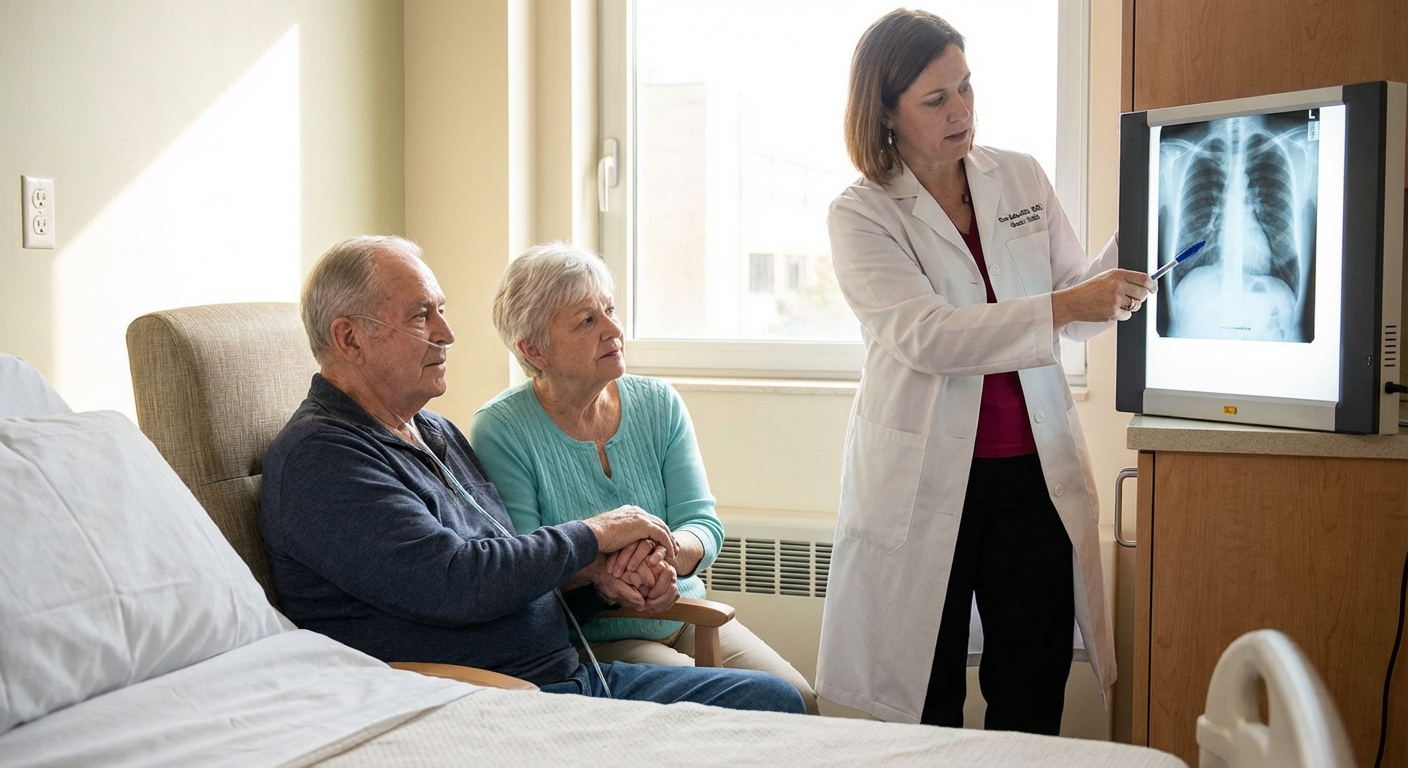
Most comprehensive cancer centers now push for:
- Imaging
- CT scan of chest and abdomen
- PET-CT to look for spread
- Brain MRI (especially if there are headaches, vision changes, or neurologic symptoms)
- Pathology and Molecular Testing for NSCLC
- Histology: adenocarcinoma, squamous, or large cell
- Driver mutations / alterations (especially in younger, non-smokers, or light smokers):
- EGFR
- ALK
- ROS1
- BRAF V600E
- MET exon 14 skipping
- RET rearrangements
- NTRK fusions
- KRAS (including KRAS G12C)
- PD-L1 expression level (used to guide immunotherapy)
If your (or your loved one’s) doctor isn’t talking about comprehensive biomarker testing for stage 4 NSCLC, I’d very gently—but firmly—ask why not. NCCN and ASCO guidelines both strongly recommend it.
Why this matters
- With a targetable mutation, median survival can jump from months to years.
- One 2020 study in Cancer Discovery showed some targeted therapies pushing median survival beyond 4–5 years in certain groups with EGFR or ALK alterations.
I’ve seen people go back to work, travel, and live pretty normal lives for years on targeted pills—yes, with side effects, but not the brutal chemo stereotype many of us imagine.
Main Treatment Options for Stage 4 Lung Cancer
The short version: you may see a mix of targeted therapy, immunotherapy, chemotherapy, radiation, and supportive/palliative care.
1. Targeted Therapy: The “Smart Drug” Era
When I tested my understanding of targeted therapy with an oncologist at a teaching hospital, she grinned and said, “Think of them as lock-and-key drugs. If the lock isn’t there, the key does nothing.”
These are oral pills (sometimes infusions) that home in on specific genetic alterations.
Examples:
- EGFR: osimertinib
- ALK: alectinib, brigatinib, lorlatinib
- ROS1: entrectinib, crizotinib
- BRAF V600E: dabrafenib + trametinib
- MET, RET, NTRK, KRAS G12C – each has its own set of drugs
- Often very quick symptom relief (cough, shortness of breath, pain can improve in weeks)
- Oral meds taken at home
- Usually fewer hair-loss-and-nausea horror stories than classic chemo
- Side effects are real: rash, diarrhea, fatigue, liver issues, heart or eye concerns depending on the drug
- Resistance almost always develops eventually (sometimes in 1–3 years)
- Requires close monitoring with scans and lab work
Still, for the right mutation, this can be a game-changer. One friend with ALK+ disease has been hiking and working full-time five years post-diagnosis.
2. Immunotherapy: Teaching the Immune System to Fight Back
I remember reading the first nivolumab and pembrolizumab trials and thinking, If this actually holds up, it’s going to rewrite lung cancer care. It pretty much did.
Drugs like pembrolizumab, nivolumab, atezolizumab, durvalumab work by blocking “brakes” on immune cells (PD-1, PD-L1, CTLA-4). They don’t attack cancer directly— they help your immune system recognize and attack it.
Who might get this?- NSCLC with high PD-L1 expression (≥50%) may get single-agent immunotherapy first-line.
- Others may get chemo + immunotherapy combinations.
- Small cell lung cancer often uses chemo + immunotherapy, especially in extensive-stage disease.
- Some responses are shockingly durable—years of stable disease.
- For a subset, it can feel like a chronic condition instead of an immediate death sentence.
- It doesn’t work for everyone; some people progress quickly.
- Immune-related side effects can be serious: colitis, pneumonitis, hepatitis, thyroid issues, skin problems, even life-threatening inflammation.
- Treatment usually means regular infusions and frequent labs.
One caregiver told me it felt like playing “immunotherapy roulette.” The potential payoff is huge, but the risk and uncertainty can be nerve-wracking.
3. Chemotherapy: Still Very Much in the Game
When I first started covering oncology, I assumed chemo was on its way out. That was… optimistic. Chemo is still a core weapon.
Common regimens for NSCLC:
- Platinum-based doublets like carboplatin + pemetrexed (often topped with immunotherapy)
- For SCLC, combinations like carboplatin + etoposide with immunotherapy
- Works across many tumor types, regardless of specific mutations
- Can quickly shrink tumors and ease symptoms
- Fatigue, nausea, hair loss, lowered blood counts, infection risk
- Infusion days can be long and draining
I’ve seen people tolerate chemo surprisingly well with modern anti-nausea meds and good supportive care… and I’ve seen others who felt absolutely wiped out. It’s very individual.
4. Radiation, Surgery, and “Local” Treatments
For stage 4, we usually think systemic (whole-body) treatment. But local therapy still has a role:
- Stereotactic Body Radiotherapy (SBRT) to a small number of metastases (oligometastatic disease) – sometimes used aggressively alongside systemic treatment.
- Brain radiation (or surgery) for brain metastases.
- Palliative radiation to relieve pain in bones, spine, or chest.
I watched one patient’s quality of life change completely after a short radiation course to a painful spine lesion—less pain meds, more actual life.
Surgery is rare at stage 4 but can be considered in very selected situations.
5. Palliative Care and Symptom Management (Not “Giving Up”)
I used to think palliative care meant hospice. That misconception is everywhere.
Palliative care is specialized symptom and support care, and it can (and should) run alongside active treatment.
It can help with:
- Pain, breathlessness, cough, fatigue
- Sleep issues, nausea, appetite
- Emotional load: fear, anxiety, depression
- Big life decisions and goal-setting
A landmark 2010 study in the New England Journal of Medicine (Temel et al.) found that early palliative care in metastatic NSCLC actually improved both quality of life and survival compared with standard oncology care alone.
When I tested this with families—asking, “What changed when palliative care joined the team?”—the usual answer was: “Someone finally asked how we were actually doing, not just what the scan showed.”
Clinical Trials: Where the Next Breakthrough Might Be
I’m a big believer in clinical trials—not as a “last resort,” but as a parallel option worth exploring early.
Why I nudge people to ask about them:
- Access to cutting-edge drugs (next-gen targeted therapies, new immunotherapy combos, antibody-drug conjugates)
- Close monitoring and structured follow-up
Balanced reality check:
- No guarantees you’ll get the new drug (some trials randomize to standard of care)
- More appointments, scans, and paperwork
- Not every trial is well-designed or appropriate; you need a good oncologist to help sort the signal from the noise
Good starting point: ClinicalTrials.gov and major cancer-center websites.
Living With Stage 4: The Part the Brochures Don’t Really Cover
This is the messy, human side that doesn’t fit neatly into treatment algorithms.
Conversations that actually help
In my experience sitting with families, three questions shifted everything:
- “What matters most to you if the cancer grows despite treatment?”
- “What trade-offs are you willing to make for more time?” (More time in hospitals? More side effects? Or less treatment, more comfort?)
- “Who do you want in the room when big decisions are made?”
These aren’t morbid. They’re empowering.
Building the right care team
What I’ve seen make a real difference:
- An oncologist who welcomes questions and doesn’t rush you.
- A nurse navigator or case manager who helps with scheduling and insurance madness.
- At least one friend or family member who goes to appointments, takes notes, and isn’t afraid to gently push back.
Second opinions—especially at an NCI-designated cancer center—are not an insult to your current doctor; they’re standard practice for something this serious.
Pros, Cons, and Hard Truths (With Room for Hope)
Let’s be brutally honest and also fair.
Real challenges:- Stage 4 lung cancer is still not usually “curable” in the traditional sense.
- Treatment fatigue is real—physically, mentally, financially.
- Scanxiety (that pre-scan dread) never fully disappears.
- Median survival for some biomarker-positive stage 4 patients is now measured in years, not months.
- People are living long enough to move through multiple lines of therapy—and to benefit from drugs that didn’t even exist when they were first diagnosed.
- The science is moving fast. The FDA has approved dozens of new lung cancer drugs in the last decade alone.
The most powerful shift I’ve seen is this: once people understand their specific situation—type, mutations, spread, goals—they move from pure panic to informed fear. That might not sound like much, but it’s the difference between feeling like you’re drowning and realizing you can at least grab a life raft and choose where to steer.
How to Advocate for Yourself (or Someone You Love)
Here’s the checklist I scribble for families:
- Ask: “Was comprehensive biomarker testing done on my tumor? What were the results?”
- Ask: “What is my PD-L1 level, and how does it affect my options?”
- Clarify: “What’s our goal with this treatment: shrinkage, stability, symptom control, more time, or all of the above?”
- Get copies of all reports: imaging, pathology, biomarker results.
- Consider a second opinion at a major cancer center, especially if no targeted or trial options are offered.
- Bring a notebook or use your phone to record what the oncologist says (with their permission).
I tested this approach with one couple dealing with metastatic NSCLC. On their second-opinion visit, their new team caught an overlooked biomarker result and completely changed the plan. They didn’t get a miracle cure—but they did get another good year of travel and grandkid time they probably wouldn’t have had.
If you remember nothing else from this guide, remember this: stage 4 lung cancer is serious, but it’s not the end of the story the day you hear the diagnosis. You still have decisions, options, and levers you can pull.
Sources
- National Cancer Institute – Non-Small Cell Lung Cancer Treatment (PDQ®) – Detailed professional treatment guidelines and staging overview.
- American Cancer Society – Non-Small Cell Lung Cancer Stages – Clear explanation of stage 4 and what it means.
- Temel JS et al., New England Journal of Medicine (2010) – Study showing early palliative care improves quality of life and survival in metastatic NSCLC.
- National Comprehensive Cancer Network (NCCN) – Guidelines for Patients: Metastatic Non-Small Cell Lung Cancer – Patient-friendly guideline document on stage 4 treatment.
- Memorial Sloan Kettering Cancer Center – Lung Cancer Clinical Trials – Examples of current trial options at a major cancer center.