Guide to Choosing Comfortable Mobility Scooters for Seniors
’t just getting her a mobility scooter – it was getting her a comfortable one. The first scooter we chose looked great on paper, but after 20 minutes she’d be fidgeting and begging to get off. When we finally dialed in the right features, her world opened back up.
That’s why I’m oddly passionate about this topic. A mobility scooter isn’t just a piece of equipment; it’s a moving chair you might spend hours in. Comfort is everything.
Step 1: Start With Real-Life Needs, Not Just Specs
When I tested different scooters with my aunt, I realized the brochures all screamed about range and top speed. But she didn’t care about going 8 mph. She cared about not feeling like she’d sat on a park bench made of bricks.
Before you look at models and brands, ask a few brutally honest questions:
- How long will the senior actually sit on it per day? 10–15 minutes at a time is very different from 2–3 hours.
- Where will it be used most? Indoors at home, in stores, on sidewalks, or on rough outdoor paths?
- Who will be transporting it? A caregiver lifting it into a car trunk, or will it stay in the garage?
- Any medical conditions that affect comfort? Back pain, neuropathy, arthritis, poor circulation, balance issues.
In my experience, the people who end up uncomfortable are usually the ones who skipped this self-audit and went straight to, “What’s on sale?”
The Big Comfort Factor: The Seat (Don’t Skimp Here)
When I sit in a scooter, I do the “movie test”: would I watch a two-hour movie in this seat without wanting to scream? That’s the bar.
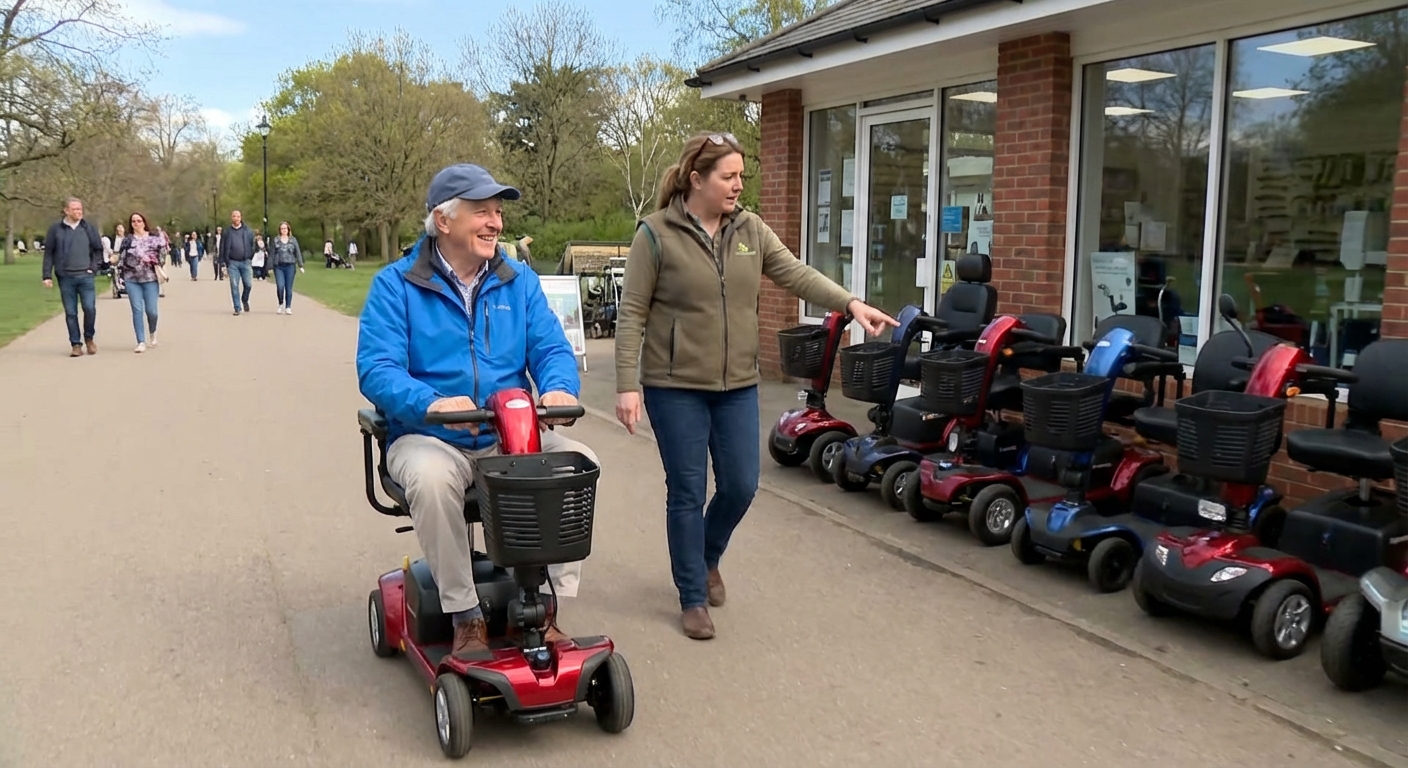
What a truly comfortable seat looks like
- Width and depth match the body
If the seat is too narrow, hips get squeezed. Too wide, and there’s no side support, so the senior leans, which leads to back strain. A rough guide: measure hip width while seated and add about 2 inches. I once made the mistake of choosing a “big comfy” seat for a small-framed relative – she slid around like she was on a barstool.
- Good cushioning and foam quality
Cheap foam feels okay for five minutes, then slowly turns into a pancake. Look for high-density foam or at least a seat that feels supportive, not bouncy or rock-hard. Some premium scooters use memory foam or gel inserts, which can really help with pressure points.
- Adjustable armrests
Armrests that flip up or adjust in width make huge difference. My aunt’s shoulders stopped hurting once we narrowed the armrests so her arms didn’t hang out awkwardly.
- High back vs. low back
- High-back, captain’s-style seats: Better for those with back pain or who ride longer distances.
- Low-back seats: Lighter and more portable, but not as supportive.
If I’m helping someone who has any history of back issues, I lean very hard toward a captain’s chair–style seat.
Suspension, Wheels, and Why the Ride Can Feel Like a Taxi or a Tractor
The first scooter my aunt tried had no suspension and tiny wheels. On smooth shop floors? Fine. On sidewalk cracks? It felt like a shopping cart with a grudge.
Suspension
Many entry-level scooters skip real suspension to cut costs. For seniors with joint pain, that’s a problem.
- Front and rear suspension helps absorb bumps from uneven sidewalks and door thresholds.
- Scooters marketed as “comfort” or “luxury” models usually highlight their suspension systems.
Research supports how vibration and jolting can affect older adults. Studies in ergonomics show that whole-body vibration can worsen back pain and fatigue over time, especially in people with pre-existing conditions.
Wheel size and type
- Small wheels (6–8 inches): Easier for compact indoor scooters, but they struggle with curbs, potholes, and grass.
- Larger wheels (9–13+ inches): Better for outdoor comfort and stability. They roll over cracks and gravel much more smoothly.
When I tested a mid-size scooter on a brick path, the difference between 8-inch and 10-inch wheels was honestly night-and-day. Same path, far less “rattle.”
Ergonomics: How the Body Actually Sits and Steers
Comfort isn’t just about a soft seat. It’s also about how the body lines up with the controls.
Adjustable tiller (steering column)
If the tiller is too far away, the senior leans forward. Too close, and elbows are jammed.
Look for:
- Tiller angle adjustment – usually a lever to bring the steering closer or farther.
- If arthritis in hands or shoulders is an issue, make sure the tiller can be positioned so the arms are relaxed and elbows slightly bent.
When I tested a scooter with a non-adjustable tiller, my shoulders were burning after 20 minutes, and I don’t even have arthritis.
Controls and hand comfort
Most scooters use a “wig-wag” throttle – you push with one thumb or pull with fingers.
Ask:
- Are the controls too stiff for weaker hands?
- Is there enough room to rest wrists on the tiller?
- Are the buttons/switches big enough to see and press?
I’ve seen seniors stop using a perfectly good scooter just because the throttle was too hard to hold down for more than a minute.
Stability, Weight Capacity, and Why Bigger Isn’t Always Better
You want comfort and safety. A tippy scooter is never comfortable.
Three wheels vs. four wheels
- 3-wheel scooters: Better legroom, tighter turning radius, often more comfortable indoors. Slightly less stable on rough terrain.
- 4-wheel scooters: More stable, especially outdoors and on inclines. Slightly wider turning circle.
For my aunt, who uses it mostly in stores and at home, a 3-wheel model with a good stability track record worked well. For someone going over outdoor paths or hilly neighborhoods, I’d push strongly toward 4-wheel.
Weight capacity
Every scooter has a maximum user weight rating. Exceeding it isn’t just unsafe—it affects comfort and suspension.
It’s usually wise to:
- Choose a scooter with a capacity at least 20–30 lb higher than the user’s weight.
I’ve seen scooters that technically “worked” for someone near the limit, but the seat and shocks bottomed out over bumps, making the ride pretty miserable.
Transportability vs. Comfort: The Tradeoff No One Tells You About
Here’s where I had my biggest “oh… that explains it” moment.
- Lightweight, easily foldable scooters are amazing for travel and car trunks.
- But to make them light, manufacturers often shrink the seat, ditch suspension, and use smaller batteries.
So you get portability at the cost of long-term comfort.
If the senior:
- Mostly uses the scooter for short errands and travel, a compact folding model can be fine.
- Uses it like a “daily chair on wheels” for hours, a heavier, mid-size or full-size scooter is usually far more comfortable.
When I tried a popular travel scooter at a medical equipment store, I remember thinking: “Great for airports. Terrible for a day at the zoo.”
Test Rides: The Single Best Thing You Can Do
I can’t stress this enough: sit in the scooter before you buy it, whenever possible.
Here’s what I do in a good test ride:
- Sit for at least 10–15 minutes in-store, not just a quick minute.
- Drive over thresholds, carpet edges, and small bumps if the store allows.
- Check: are my hips supported, is my back relaxed, and can I reach the tiller without leaning?
- Try getting on and off. If that’s awkward now, it’ll be worse at home.
If you’re buying online, I look for:
- Generous return policy (some companies offer 30 days, but read the fine print on restocking fees).
- Detailed seat dimensions and photos of real people using the scooter.
I’ve also found it helpful to watch YouTube reviews from real users, especially seniors or caregivers who show how the scooter actually fits in real life.
Comfort Add-Ons That Actually Help (And a Few That Don’t)
Some accessories genuinely improve comfort; others are just cute add-ons.
Usually worth it:- Gel or memory foam seat cushions – especially for those with pressure issues or who sit for long periods.
- Sheepskin or breathable seat covers – can help with sweating and skin irritation.
- Back support/lumbar cushions – for seniors with chronic back pain.
- Cup holders, bags, phone holders – convenient, but they don’t change the comfort equation.
In my experience, spending a little extra on a quality cushion has a bigger impact than upgrading to the next model up with fancier lights or a bigger basket.
Pros and Cons: Not Every Senior Needs the Same Scooter
There’s no universally “best” scooter, just a best fit.
Heavier, comfort-focused scooters- Pros: Better suspension, larger seats, smoother ride, more stability.
- Cons: Harder to transport, may need a vehicle lift, more expensive.
- Pros: Easy to fold or disassemble, great for short trips and travel.
- Cons: Smaller seats, less padding, harsher ride, weaker suspension.
Being honest about those tradeoffs builds trust—not just between you and the senior, but between expectations and reality. A “travel scooter” won’t magically feel like a recliner.
When to Involve a Professional
For seniors with more complex medical needs—spinal issues, severe arthritis, or past falls—I always suggest bringing in a pro:
- Physical or occupational therapists can assess posture, strength, and balance, then recommend features.
- Many rehab clinics and medical equipment stores have ATPs (Assistive Technology Professionals) who specialize in matching people to mobility devices.
The Centers for Medicare & Medicaid Services (CMS) also has guidance on when mobility devices are medically necessary and how they’re evaluated, which can be helpful if you’re dealing with insurance.
When I looped in a physical therapist for my aunt, she pointed out that a slightly higher seat height would make standing up easier and less painful. I hadn’t even thought about that—but it changed everything for her.
Final Thoughts: Comfort = Freedom (If You Get It Right)
When a scooter is comfortable, seniors actually want to use it. That means:
- More trips out of the house
- Less pain after errands
- More independence, fewer “No, I’ll just stay home” moments
Whenever I help someone pick a scooter now, I don’t start with top speed or battery range. I start with one question:
> Could you happily sit in this for an afternoon?
If the answer is no, keep looking.
Sources
- Mayo Clinic – Mobility aids: Tips for choosing - Overview of choosing mobility aids and factors affecting safety and independence
- National Institute on Aging (NIA) – Aging in Place: Growing Older at Home - Government guidance on supports and devices that help older adults stay independent
- U.S. Centers for Medicare & Medicaid Services (CMS) – Mobility Assistive Equipment - Coverage and evaluation criteria for mobility devices including scooters
- Cleveland Clinic – Assistive Devices for People with Arthritis - Clinical advice on choosing devices for people with arthritis and joint pain
- Harvard Health – Preventing falls in older adults - Discusses stability, balance, and mobility considerations for seniors