Guide to Dental Implant Clinics in California: Choosing and Comparing Options
up. Yeah… no. Within 48 hours, I had 15 tabs open, 6 wildly different price quotes, and one dentist’s website that looked like it hadn’t been updated since dial‑up internet.
If you’re in that same swirl of confusion, you’re not alone. I’ve been through consultations from San Diego to the Bay Area — sat in the chairs, asked the awkward money questions, compared 3D scans — and I’m going to walk you through what actually matters when choosing a dental implant clinic in California.
This isn’t theory. This is all the stuff I wish someone had told me before I took three half‑days off work just to figure out if I was being overcharged.
First, what you’re really buying with an implant
The biggest mental shift I had? You’re not just paying for a titanium screw and a pretty crown. You’re paying for:
- Diagnosis and planning – CT scan, digital impressions, bone evaluation, treatment roadmap.
- Surgical skill – placing the implant at the right angle, depth, and position.
- Restorative work – the abutment and crown that make the tooth actually look and function like… well, a tooth.
- Follow-up – healing checks, occlusion adjustments, long‑term maintenance.
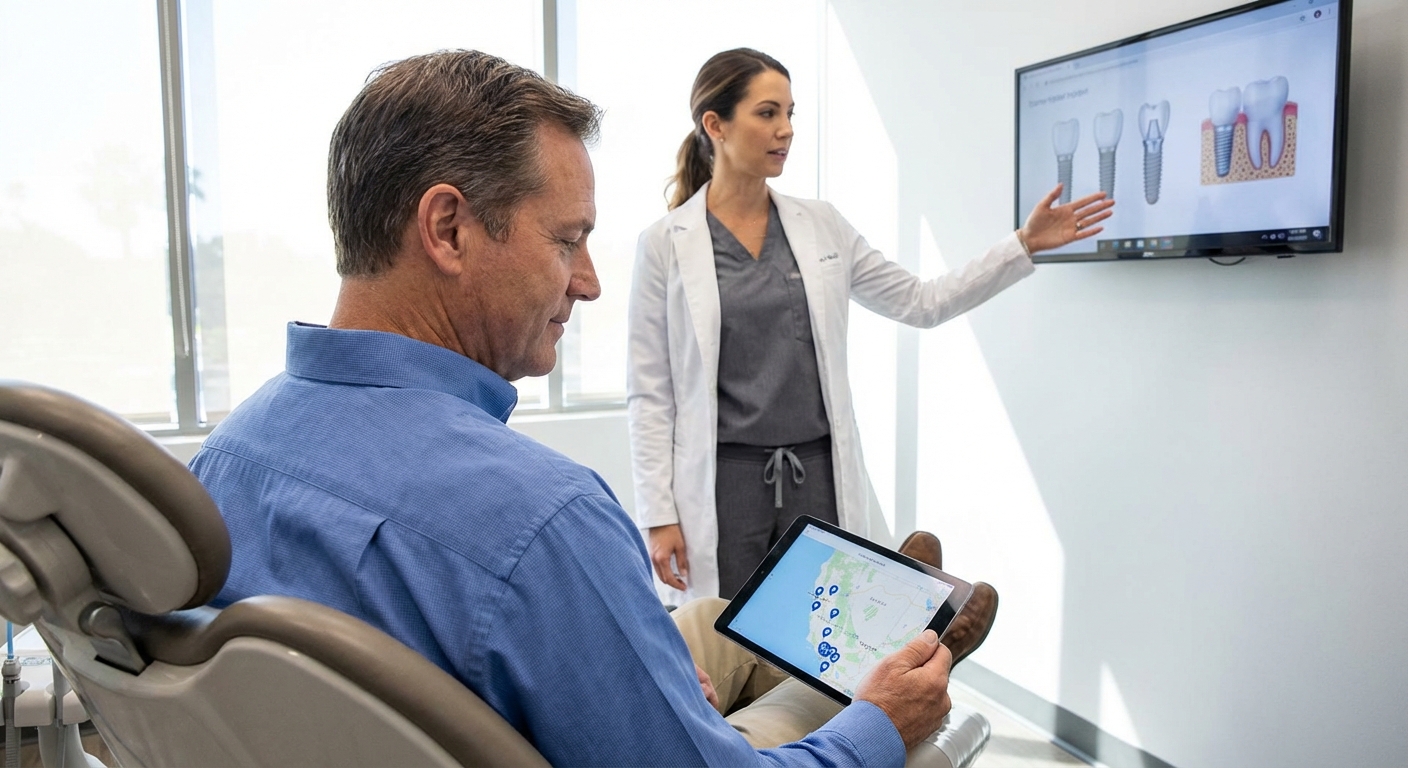
When I tested a “cheap” clinic versus a higher‑end one, the first difference showed up before anyone even touched my mouth: the detailed treatment planning. The more thorough clinic pulled up a 3D cone‑beam CT scan, rotated my jaw on screen, and explained my bone density in my upper jaw by millimeter. The budget clinic did two 2D X‑rays and said, “Yeah, we can probably do it.” That word probably stuck with me.
Types of dental implant providers you’ll see in California
In my experience, clinics tend to fall into a few buckets:
1. Solo private practices (general dentist + implants)
This is your neighborhood dentist who also places implants.
Pros:- More personal, you’re not just “patient #47” that day
- Often easier follow‑up, same office for general cleanings and implant checks
- Skill level varies a LOT; some have extensive implant training, some did a weekend course
- May not have in‑house 3D imaging or an on‑site lab
When I asked one solo dentist how many implants he places per month, he said, “Maybe two or three.” Another said, “Twenty to twenty‑five, plus full arches.” Same job title, wildly different experience. That question alone changed how I filtered clinics.
2. Multi‑specialty or group practices
These are offices where you’ll see a periodontist or oral surgeon doing the surgery and a prosthodontist or experienced general dentist doing the crown.
Pros:- Team‑based care, more eyes on your case
- Often have cone‑beam CT, digital scanners, better tech
- Can feel a bit more “medical” and less cozy
- Schedules may be harder to coordinate between specialists
In one Orange County group practice I visited, the periodontist and prosthodontist literally argued (in a friendly way) in front of me about the best implant diameter for my case. That might sound stressful, but it actually made me trust them more — they cared enough to debate details.
3. Corporate chains and “All‑on‑4” centers
Think branded implant centers that advertise on the radio or freeway.
Pros:- Streamlined process, especially for full‑arch / All‑on‑4 treatment
- Often clear, package pricing
- High‑pressure sales scripts are common (I personally sat through one that felt like a timeshare pitch)
- Less individualized philosophy; more volume‑driven
For full‑mouth cases, these centers can be life‑changing. But if you only need one or two implants, sometimes you’re being pushed into a bigger (and pricier) solution than you actually need.
Red flags and green flags I learned to spot quickly
After a handful of consults, patterns started jumping out at me.
Green flags
- They show you your scans and explain them in plain language. One surgeon actually drew on the screen to show my sinus floor and why I didn’t need a sinus lift. That clarity was gold.
- They talk about failure rates honestly. Long‑term implant survival rates in healthy, non‑smoking patients are often around 90–95% at 10 years according to multiple studies, but no legitimate clinician will promise 100%.
- They give options, not ultimatums. Bone graft vs. shorter implant, staged vs. immediate, different materials for crowns.
- They discuss maintenance and your role. One periodontist looked me straight in the eye and said, “If you don’t floss around this implant, you can absolutely lose it. I’m not selling you a bionic miracle tooth.” That bluntness felt oddly reassuring.
Red flags
- “Same‑day implants for everyone!” Immediate loading can be great for selected cases, but not everyone has the bone quality for it.
- No mention of medical history, medications, or smoking. If nobody asked about your diabetes control, bisphosphonate use, or smoking, that’s a problem.
- Refusal to share brand or system of implant. Reputable systems (Nobel Biocare, Straumann, Zimmer Biomet, etc.) have strong research behind them.
- Everything is decided in 10 minutes. One clinic tried to sell me a full‑arch solution in under 15 minutes based on a quick panoramic X‑ray. Hard pass.
What implants actually cost in California (and why quotes vary so much)
When I started calling around, I got quotes for a single implant + crown ranging from $2,800 to over $7,000. Same tooth. Same state.
Here’s what tends to drive the price:
- Region: San Francisco and parts of LA usually run higher than, say, Sacramento or Inland Empire.
- Complexity: Bone grafting, sinus lifts, or extractions add cost.
- Who’s doing it: Board‑certified periodontists and oral surgeons often charge more than general dentists.
- Materials and lab: High‑end zirconia or custom abutments cost more than generic parts.
For context, the American Dental Association’s data and various industry surveys typically place average costs for a single implant + crown in the U.S. somewhere around $3,000–$5,000 per tooth, depending on region and complexity.
What surprised me was how different the breakdowns looked. A trustworthy clinic had no issue showing line items:
- Implant placement surgery
- Abutment
- Crown
- Bone graft (if needed)
- Imaging and consult fees
One less‑transparent office gave me a single number and wouldn’t explain what was included. When I pushed, I found out the crown was not part of the advertised price. That’s like selling you a car “without the wheels” and hoping you don’t notice.
How I compared clinics in a way that actually worked
After my third consultation, I made a simple comparison checklist that made decisions way easier. Here’s more or less what I used:
1. Training & volume
I started asking every dentist:
- What’s your specialty and implant training?
- How many implants do you place per month?
- Do you do both surgical and restorative, or is it a team?
One San Diego periodontist told me he places around 300 implants a year and does regular continuing education with the American Academy of Periodontology. That track record gave me a lot more confidence than “oh yeah, I do them sometimes.”
2. Technology
Clinics that consistently impressed me had:
- Cone‑beam CT (CBCT) scanners
- Digital impressions (way more comfortable than trays of goop)
- Software for digital implant planning
When I tested a clinic that still relied only on 2D X‑rays, I noticed their estimate for bone grafting was way more “guessy” compared to the CBCT‑based plan from another office.
3. Communication style
This sounds soft, but it mattered more than I expected. Did they:
- Sit down and actually listen to my concerns (cost, fear of surgery, timeline)?
- Explain risks, not just benefits?
- Encourage a second opinion rather than pressure me to sign the same day?
My eventual choice was largely based on this. The dentist literally said, “I want you to talk to at least one other provider before committing. If you still feel best here, great. If not, that’s okay too.” That screamed confidence and ethics.
4. Policies, warranties, and logistics
I learned to ask:
- Do you offer any warranty on the implant or crown?
- What happens if the implant fails to integrate?
- How many follow‑up visits are included?
- How do you handle emergencies or complications?
One Bay Area clinic covered implant failure within the first year at no additional surgical fee (I’d still pay for certain materials), while another said, “If it fails, you start over and pay again.” That was a clear differentiator.
Pros and cons of going local vs. traveling within California
Some of you might be debating: do I pick the closest dentist, or drive an hour or two for someone who seems better?
Staying local (same city or neighborhood)- Pros: Easier follow‑up, fewer missed work hours, quick access if anything feels off.
- Cons: You might be limited to whoever’s nearby, not necessarily the best fit.
- Pros: Wider pool of specialists, especially in major hubs like LA, Orange County, San Diego, and the Bay Area.
- Cons: More logistics, especially if your surgery and follow‑ups are spread over months.
In my case, I chose a clinic about 45 minutes away. Driving wasn’t fun after surgery (get someone to drive you), but the extra distance was worth it for a team I trusted and a clear treatment plan.
How to sanity‑check a clinic before you ever sit in the chair
Here’s the quick pre‑visit filter I use now and recommend to friends:
- Check the California license via the Dental Board of California and verify any advertised specialties.
- Look beyond star ratings. Read the 3‑star and 4‑star reviews — those often have the most nuanced, honest feedback.
- Stalk their website (a little). Look for real case photos (with clear disclosures), not stock images, and evidence of continuing education in implants.
- Call and ask upfront:
- Do you use a CBCT scan for planning?
- Which implant systems do you typically place?
- Do you provide written treatment plans with all fees before I commit?
If the front desk gets defensive or vague about any of that, I move on.
The honest truth: implants are amazing… but not magic
From everything I’ve seen and everyone I’ve talked to — including specialists, patients, and one very honest hygienist — dental implants can be life‑changing when done right. They protect bone, restore your bite, and feel remarkably natural once healed.
But they’re not a “set it and forget it” device. You still need:
- Excellent oral hygiene (hello floss and interdental brushes)
- Regular cleanings with a hygienist who understands implants
- Periodic X‑rays or scans to monitor bone levels
And yes, even in the best hands, complications happen: peri‑implantitis (gum inflammation around implants), screw loosening, crown fractures. Any clinic that skips that part of the conversation is selling you a fantasy, not healthcare.
If there’s one thing I’d pass on from my own search: don’t rush, even if your missing tooth is driving you crazy in selfies. Take two or three consultations, compare calmly, and choose the team that makes you feel informed, respected, and never pressured.
That combination — competence + transparency + good communication — matters just as much as the titanium.
Sources
- American Dental Association – Implants - Overview of implant success, considerations, and evidence-based info
- National Institute of Dental and Craniofacial Research – Dental Implants - U.S. government resource on what implants are and who they’re for
- Misch CE. Dental Implant Prosthetics (Mosby/Elsevier) - Widely cited professional reference on implant planning and restoration
- UCLA School of Dentistry – Dental Implant Center - Example of academic implant center services and approach
- Harvard Health Publishing – The pros and cons of dental implants - Balanced overview of benefits and risks