Guide to Diaper and Baby Formula Assistance Programs for Families
I was standing in the baby aisle, holding a jumbo box of diapers in one hand and a can of formula in the other, doing mental math I really didn’t want to do. I’d just gone back to work part-time, our budget was tight, and I thought, There’s no way this much money is leaving my bank account for something that’s literally going in the trash.
That’s when I started digging into assistance programs. I assumed they were only for “other people” or that the paperwork would be a nightmare. I was wrong on both counts.
This guide is everything I wish I’d had on my phone at 11 p.m. when I was panic-Googling, “help paying for formula” with a crying baby on my shoulder.
Why Diaper and Formula Costs Hit So Hard
In my experience, the costs creep up faster than anyone expects.
- Newborns can go through 8–12 diapers a day. That’s 240–360 diapers a month.
- A typical can of infant formula might last 3–5 days, depending on your baby’s age and appetite.
The National Diaper Bank Network estimates that families can spend $80–$100 per month on diapers alone per child. Add formula, and some families are suddenly staring at $200–$400 extra per month, which is brutal if your income has dropped during maternity leave or you’re already on a tight budget.
I’ve talked with parents who started quietly skipping meals so their kids wouldn’t run out of formula, or stretching diapers longer than they should. That’s not just stressful; it’s a health issue. Prolonged diaper use can lead to rashes and infections, and watered-down formula can be dangerous because it messes with a baby’s electrolytes and nutrition.
The good news? There are programs designed specifically to help with this. A lot of families just don’t know they exist.
WIC: The Big One for Formula Support
When I tested different options for formula help, WIC (the Special Supplemental Nutrition Program for Women, Infants, and Children) turned out to be the game-changer.
How WIC Helps
WIC provides:
- Infant formula (for those who aren’t exclusively breastfeeding)
- Nutrition counseling
- Support for breastfeeding parents (including pumps in some states)
Each state runs WIC a little differently, but if you qualify, you’ll generally get a monthly food package that includes formula or, if you’re nursing, extra food for you.
Who Typically Qualifies
Eligibility is based on:
- Income (usually at or below 185% of the federal poverty level)
- Category (pregnant, postpartum, breastfeeding parent, infant, or child under 5)
- Residency in the state
- A health or nutrition risk (which is often broadly defined, so don’t assume you won’t qualify)
In my experience helping a friend apply, the process was way less scary than she imagined. She filled out an online form, uploaded pay stubs and ID, then had a short phone appointment with a WIC nutritionist.
Pros and Cons
Pros:- Consistent access to formula
- Real humans to ask questions about feeding and nutrition
- Can be paired with SNAP and Medicaid
- Brand of formula is often limited to the state contract (switching brands can cause some babies tummy drama)
- Appointments and paperwork can feel like one more thing on your already overflowing plate
If you’re even thinking you might qualify, I’d check your state WIC page. I’ve yet to meet a parent who regretted applying.
SNAP and TANF: Indirect Help That Still Matters
SNAP (Supplemental Nutrition Assistance Program) isn’t designed just for babies—but it can absolutely help cover formula.
SNAP
SNAP benefits are loaded onto an EBT card you can use like a debit card at grocery stores and many big-box retailers.
- You can buy infant formula and baby food with SNAP.
- You cannot buy diapers with SNAP (this trips a lot of parents up and leads to some pretty understandable frustration).
When I walked through SNAP options with a cousin of mine, the key strategy was: let SNAP handle as much of the food spending as possible, and free up cash for diapers and other essentials.
TANF
Temporary Assistance for Needy Families (TANF) works differently. It’s more flexible cash assistance for families with very low incomes.- You may receive a monthly cash benefit.
- This cash can be used on diapers, formula, transportation, utilities, and more.
The catch? TANF eligibility is stricter, varies a lot by state, and sometimes comes with work requirements.
If you’re really in a financial crisis, though, I’ve seen TANF make the difference between “barely hanging on” and “actually okay for now.”
Diaper Banks: The Hidden Lifeline No One Tells You About
I’ll be honest—before having a baby, I’d never heard the term “diaper bank.” It sounds made up, like something from a parenting meme.
Then I discovered the National Diaper Bank Network (NDBN). When I tested their locator tool for my own area, I found three nearby partners I’d driven past without realizing they offered diapers.
How Diaper Banks Work
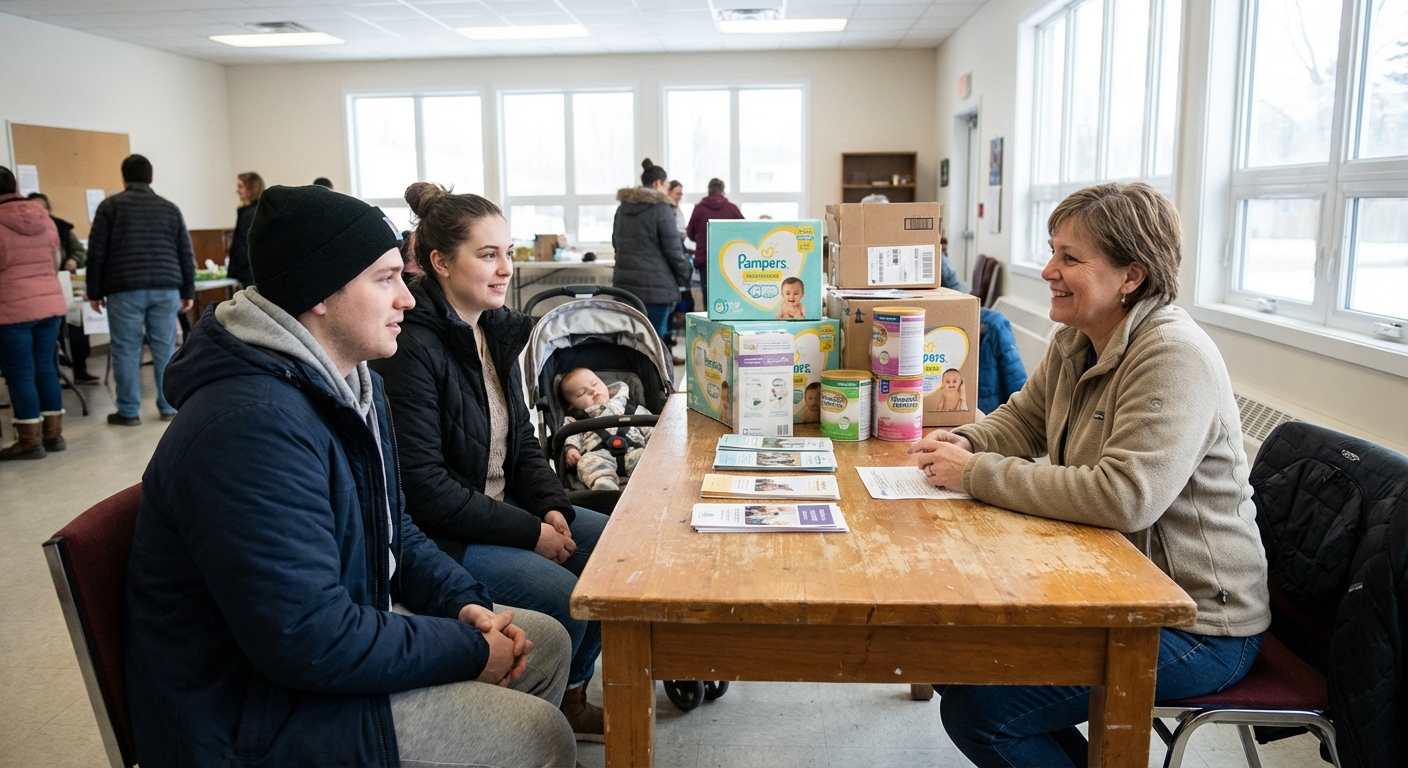
- They’re usually nonprofits that collect and distribute free diapers through local partners.
- Distribution often happens via:
- Food pantries
- Churches
- Community centers
- Social service agencies
Most diaper banks give out a set number of diapers per child per month—maybe enough for a few days to a week. It doesn’t fully replace buying diapers, but it can absolutely bridge that terrifying “payday is in 5 days and we’re down to four diapers” gap.
What I’ve Seen in Practice
Parents I’ve spoken with say:
- Staff are generally kind and nonjudgmental.
- There might be simple forms to track how many kids you have and what sizes you need.
- Some places also offer wipes, baby clothes, or hygiene products.
The only real downside is availability: if you live in a rural area, there may not be a diaper bank nearby, or distribution days might be limited.
But it’s worth checking at least once—you might be pleasantly surprised.
Formula Assistance from Brands and Pharmacies
This is the category I stumbled into accidentally, and I still kick myself for not starting sooner.
Formula Brand Programs
Most major formula brands run loyalty programs, coupons, or sample programs. For example:
- Similac® StrongMoms Rewards
- Enfamil Family Beginnings®
When I signed up a friend for one of these, she ended up with:
- Free formula samples in the mail
- High-value coupons ($5–$10 off per can)
- Occasional checks that worked like store cash
- Easy online sign-up
- Discounts stack with store sales
- No income requirements
- Your data is used for marketing (expect a flooded inbox)
- Sometimes pushes you to stick to one brand, even if baby might do fine on a generic
Pharmacy and Store Programs
I’ve personally seen decent savings with:
- Store-brand formula (often nutritionally equivalent to brand-name versions)
- Reward programs (Target Circle, CVS ExtraCare, Walgreens rewards)
If you consistently buy from one store, those rewards can quietly add up, especially when combined with manufacturer coupons.
Local Programs Most People Overlook
This is the part of the story where community really shows up.
When I started asking around more openly—“Do you know anyone who helps with baby supplies?”—I kept getting the same answer: “Ask at the community center or local church.” Even if you’re not religious, many faith-based groups run nonjudgmental outreach programs.
Common local sources:
- Community action agencies: Sometimes have emergency funds or baby pantries.
- Pregnancy resource centers: Mixed reputation, but some offer diapers and formula regardless of your beliefs.
- Hospitals and pediatricians: Occasionally give out formula samples, especially if you ask.
I’ve watched a mom walk out of a church “baby boutique” with a stroller, a pack of diapers, and formula she didn’t think she’d be able to afford that month. It wasn’t fancy, but it was exactly what she needed.
What About Cloth Diapers?
Here’s the part where the internet loves to say, “Just switch to cloth, you’ll save so much!”
In theory, yes. Over time, cloth can be cheaper. But in my experience:
Pros:- Long-term savings
- Less waste
- Some cloth diaper banks lend out starter stashes
- Upfront cost is high if you don’t get donated supplies
- Requires reliable access to laundry
- Daycares might not accept cloth
If you’re curious, check if your area has a cloth diaper loan program. I’ve seen families use cloth at home and disposables at daycare to strike a balance.
How to Start If You’re Overwhelmed
If you’re reading all of this with a baby on your chest and your brain is mush from sleep deprivation, here’s the step-by-step version I usually share with parents:
- Check WIC eligibility first.
- Look up your state’s WIC program online.
- Even if you’re unsure, apply. Let them decide.
- Apply for SNAP and/or TANF if income is very tight.
- Use your state’s benefits portal or local social services office.
- Search the National Diaper Bank Network.
- Plug in your ZIP code and see what pops up.
- Sign up for formula brand and store rewards programs.
- Do it once, then let the coupons roll in.
- Ask locally—out loud.
- Pediatrician, hospital social worker, community center, or church.
And if you’ve ever stretched a diaper longer than you should’ve or watered down formula because payday was too far away: you’re not alone, and you’re not a bad parent. You’re a parent trying to solve an impossible math problem with love and not quite enough cash. These programs exist to help with exactly that.
Sources
- National Diaper Bank Network – Diaper Need and Program Locator – Stats on diaper need and searchable directory of local diaper banks.
- U.S. Department of Agriculture – WIC Program Overview – Official information on eligibility, benefits, and how WIC supports formula and nutrition.
- U.S. Department of Agriculture – SNAP Eligible Food Items – Details on what SNAP can and can’t buy, including infant formula.
- U.S. Department of Health & Human Services – TANF Program – Federal overview of TANF cash assistance for families.
- CNN – ‘Diaper Deserts’ and the Rising Cost of Diapers – Reporting on diaper need and financial strain on families.