Guide to Knee Joint Pain Causes and Relief Options
ht knee decided to sound like a bowl of Rice Krispies every time I climbed the stairs. Walking to the coffee machine felt like an Olympic event.
That little crisis pushed me deep into the rabbit hole of knee joint pain: imaging reports, nerdy orthopedics podcasts, PubMed articles at 1 a.m., and yes, a lot of trial-and-error with treatments. What you’ll read here is a mix of that research, conversations with orthopedic specialists and physical therapists, plus what actually helped my knee calm down.
This isn’t a substitute for a doctor (I’m not yours), but it is the guide I wish I’d had when my knees first started complaining.
Why Your Knee Joint Hurts: The Real Culprits
Knee pain isn’t one single diagnosis; it’s a symptom with dozens of potential causes. When I finally saw a sports-medicine doc, the first thing he said was, “We’re not chasing pain, we’re chasing patterns.”
Here are the big categories he walked me through:
1. Mechanical/Overuse Problems
These are the “I did too much or moved wrong” causes.
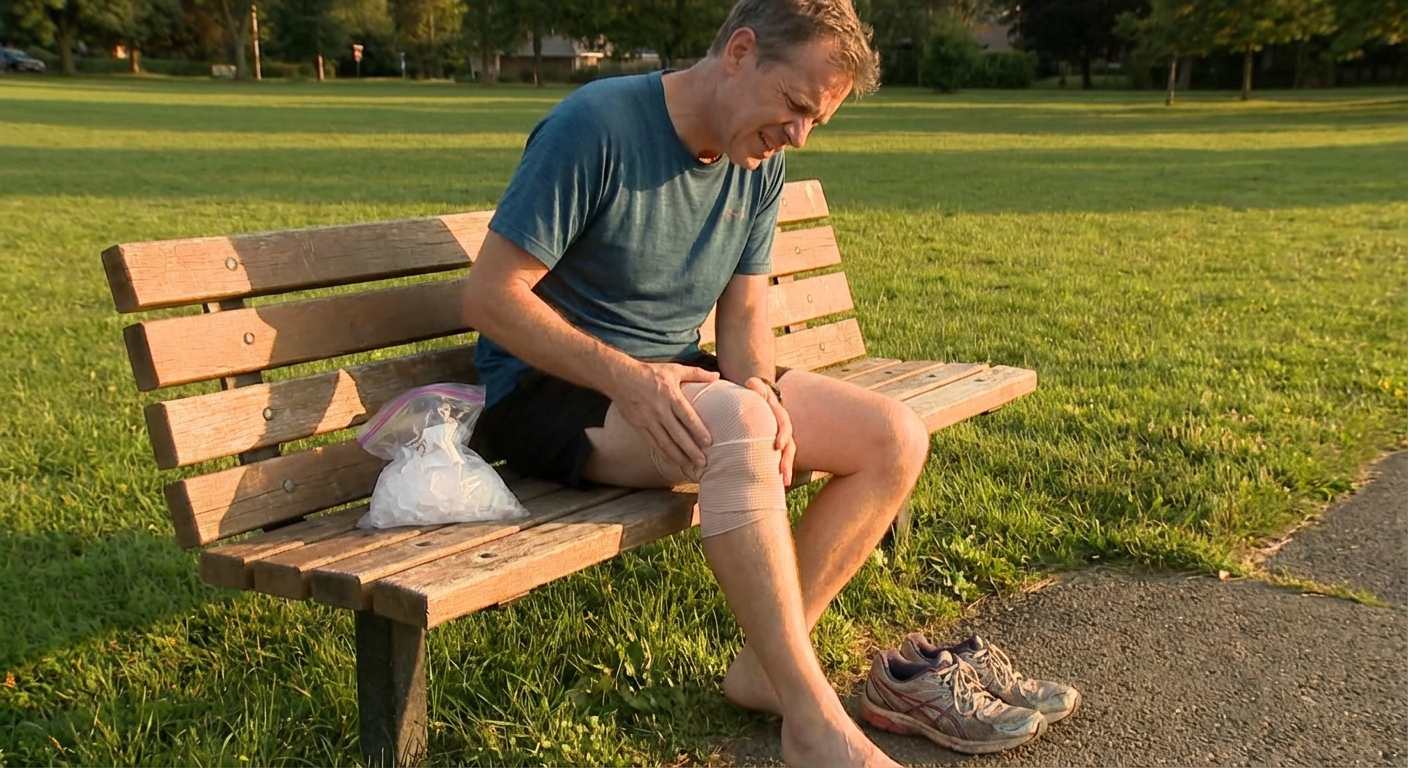
- Patellofemoral pain syndrome (PFPS) – Often called “runner’s knee.” The pain is usually around or behind the kneecap. I had this. My pain was worse going downstairs, squatting, and sitting too long with knees bent (the “movie theater sign”).
- Iliotibial band syndrome (ITBS) – Pain on the outer side of the knee, common in runners and cyclists. You’ll sometimes feel it like a tight band snapping over the knee.
- Tendinopathies – Such as patellar tendinopathy (“jumper’s knee”). Pain is often just below the kneecap, especially with jumping, sprinting, or suddenly increasing activity.
Mechanically, these often come from muscle imbalances, poor movement patterns, rapid training changes, or just…being human and sitting too much.
2. Degenerative Changes (a.k.a. Osteoarthritis)
Osteoarthritis (OA) is basically wear-and-tear plus low-grade inflammation.
- The cartilage covering the ends of the bones gets thinner.
- The joint space can narrow.
- Bone spurs (osteophytes) may form.
The CDC estimates that knee osteoarthritis affects about 14 million Americans alone. Pain tends to be worse with weight-bearing (standing, walking, stairs) and may ease with rest. Morning stiffness that improves after 10–30 minutes is another classic sign.
I remember reading a 2017 study in Annals of Internal Medicine showing that exercise and weight loss in people with knee OA significantly reduced pain and improved function, sometimes more than meds. That’s when I stopped looking for the “magic pill” and started looking at my daily habits.
3. Acute Injuries
These are the “ouch, that twist/pop was not normal” situations:
- Meniscus tears – Can cause sharp pain, catching, locking, or a feeling the knee might give way.
- Ligament injuries – ACL, MCL, PCL, LCL. Often from sports, sudden pivots, or awkward landings.
- Fractures or dislocations – Usually obvious and urgent.
Red flags I was told not to ignore:
- Sudden inability to bear weight
- Large, fast swelling after an injury
- Knee locked and can’t straighten
- Fever plus a red, hot, swollen knee
That’s ER/urgent-care territory, not “let’s wait a few weeks and see.”
4. Inflammatory and Systemic Conditions
Not all knee pain is local.
- Rheumatoid arthritis (RA) – An autoimmune disease that often affects multiple joints, frequently both knees, with prolonged morning stiffness.
- Gout or pseudogout – Crystal deposits in the joint cause intense pain and swelling.
- Infection (septic arthritis) – A true emergency requiring immediate medical care.
When my doctor asked if I had other joint pain, rashes, fatigue, or recent infections, I realized how much knee pain can be just one tile in a bigger health mosaic.
How Pros Figure Out What’s Actually Wrong
When I finally stopped self-diagnosing on forums and saw a specialist, the process felt surprisingly structured.
1. History and Story
They didn’t start with an MRI. They started with questions:
- Where exactly does it hurt? Front, back, inside, outside?
- When did you first notice it? After a specific event or gradually?
- What makes it better or worse?
- Any popping, locking, giving way?
- Other medical conditions? Meds? Past injuries?
My pain pattern (around the kneecap, worse with stairs and sitting) screamed patellofemoral pain to him before I’d even stood up.
2. Physical Exam
Then came the hands-on detective work:
- Watching me walk and squat
- Checking alignment (hip, knee, foot)
- Testing ligaments, meniscus, and range of motion
- Prodding around to find the exact tender spots
He caught my weak hip abductors and tight quads immediately—something I didn’t feel but my knees clearly did.
3. Imaging (When Needed)
Here’s what I learned:
- X-rays – Best for bones, joint space, and osteoarthritis.
- MRI – Great for soft tissues: meniscus, ligaments, cartilage.
- Ultrasound – Helpful for some soft-tissue and guided injections.
Not everyone needs an MRI. For many overuse or mild degenerative issues, a good history + exam is enough. My doctor literally said, “We don’t treat pictures, we treat people.”
Real-World Relief Options: What Helped (and What Meh-Didn’t)
This is where things got personal. I tried a lot. Some things were game-changers. Some were…expensive disappointments.
1. Movement & Strength: The Unsexy MVP
When I tested a structured physical therapy program focused on my hips, glutes, and quads, the results were wild. Not overnight, but within 6–8 weeks:
- My stairs pain dropped from a 7/10 to about 2–3/10.
- I could sit through a full movie without constantly shifting.
Key pieces my PT drilled into me:
- Strengthening: especially quadriceps, hip abductors, and glute medius
- Mobility: gentle stretching for hip flexors, calves, hamstrings
- Form: no collapsing knees when squatting or going downstairs
The American College of Rheumatology and Arthritis Foundation both recommend exercise as first-line therapy for knee osteoarthritis. From what I’ve seen (and felt), that advice is gold.
Pros: Evidence-backed, improves long-term function, low risk, helps more than just your knees. Cons: Takes discipline, consistency, and time. No instant gratification.2. Weight Management (The “Every Pound” Wake-Up Call)
One orthopedist told me, “Every extra pound of body weight can translate to roughly four extra pounds of pressure on the knee with each step.” That number haunted me in the grocery store.
When I very slowly lost about 10–12 pounds through boring basics (mostly eating slightly less and walking more), my knees absolutely noticed. Less ache after long days, easier stairs.
Not everyone needs to lose weight, obviously. But for those of us who had some room to work with, the payoff at the knee joint can be surprisingly big.
3. Medications: Helpful, but Not a Long-Term Solo Plan
What I’ve personally used and what research tends to back:
- Topical NSAIDs (like diclofenac gel): My go-to. Multiple studies show they can work almost as well as oral NSAIDs for knee OA with fewer systemic side effects.
- Oral NSAIDs (ibuprofen, naproxen): Very effective for many people, but I’m cautious with these given the known risks (stomach, kidney, heart) if used long-term.
- Acetaminophen (paracetamol): Mildly helpful at best for me. And major guidelines now say it’s not as effective for knee OA as once thought.
4. Braces, Taping, and Footwear
I was skeptical about braces until my PT had me test a simple neoprene sleeve during a week of lots of walking.
Result: Less “wobbly” feeling, modest pain reduction. Not a miracle, but useful.
- Soft sleeves – Can offer compression and proprioceptive support.
- Unloader braces – For certain types of knee OA, they can shift load away from damaged compartments.
- Taping – Kinesio or McConnell taping sometimes reduced my patellofemoral pain during heavy activity.
- Shoes and insoles – Swapping my ancient, flattened sneakers for proper support was embarrassingly effective.
5. Injections: What the Evidence (and My Knees) Said
I didn’t jump to injections, but I dug into them hard.
- Corticosteroid injections: These can provide short-term relief (weeks to a few months) for some people with OA or inflammatory flares. The downside: repeated injections may have potential cartilage downsides, and they don’t fix the underlying mechanics.
- Hyaluronic acid (viscosupplementation): The evidence is mixed. Some feel real relief; large analyses suggest only modest benefit for many, and some guidelines don’t strongly recommend them.
- Platelet-rich plasma (PRP): Super trendy. Some studies show improvement in knee OA symptoms; others are less enthusiastic. It’s usually out-of-pocket and not standardized.
Personally, I delayed injections until I’d maxed out exercise, weight management, and footwear. By then, I didn’t feel I needed them—but I’ve met people who swear a single steroid shot got them through a brutal work season.
6. Surgery: Last Resort, Not First Option
For many people, especially with severe osteoarthritis or major structural damage (like big meniscal tears, ligament ruptures), surgery can be life-changing. Things like total knee replacement, meniscus repair, or ligament reconstruction are serious but sometimes necessary.
The orthopedic surgeon I spoke with had a line that stuck with me: “We operate on people, not X-rays. If your function and quality of life are wrecked despite conservative options, that’s when we talk surgery.”
What Actually Worked Best (For Me)
If I boil my own experience down, my knees calmed down most when I:
- Strength trained my legs and hips 2–3 times per week
- Walked regularly instead of having big “weekend warrior” spikes
- Used topical NSAID gel during bad weeks
- Upgraded to supportive shoes and stopped pretending my 5-year-old running shoes were “fine”
- Got over my ego and did the “easy” exercises faithfully
No single hack fixed everything. It was the stack of small, boring, evidence-based moves that gradually changed the game.
When You Should Stop Googling and See Someone
From what I’ve learned and been told, it’s smart to get professional help if:
- You can’t bear weight or your knee gives out repeatedly
- Pain or swelling is severe or sudden
- The knee is hot, red, and you have a fever
- The pain lasts more than a few weeks without clear improvement
- You’ve had a significant fall, twist, or sports injury
A good primary-care doctor, sports-medicine physician, or physical therapist can usually get you pointed in the right direction.
Your knees carry you through literally thousands of steps a day. Treating them like replaceable parts doesn’t work well. Treating them like teammates does.
Sources
- CDC – Osteoarthritis: Knee Pain and Treatment - Overview of osteoarthritis, including prevalence and management
- American College of Rheumatology/Arthritis Foundation Guideline for Osteoarthritis of the Hand, Hip, and Knee (2019) - Evidence-based recommendations on knee OA treatment
- NIH – Knee Pain and Problems - MedlinePlus summary of common knee conditions and treatments
- Mayo Clinic – Knee Pain - Causes, diagnosis, and treatment options for knee pain
- Harvard Health – Exercise Is Good Medicine for Knee Osteoarthritis - Discussion of why exercise is first-line therapy for knee OA