Guide to Knee Swelling Relief Strategies
soreness to limping up stairs and Googling “why is my knee huge?” at 2 a.m.
If you’re here, you probably know that strange combo of stiffness, throbbing, and the unsettling feeling that your knee is full of water. Let’s walk through (pun half-intended) what I’ve learned from dealing with my own swollen knee and from digging into the science and expert advice behind real knee swelling relief strategies.
What’s Actually Happening When Your Knee Swells?
When my doctor first drained my knee (yes, with a needle; yes, it was as weird as it sounds), she explained that knee swelling is basically your body yelling, “Something’s wrong here!”
In more medical terms, swelling around the knee is often from:
- Effusion – extra fluid inside the joint (often called “water on the knee”).
- Inflammation – the synovial lining (the joint’s inner layer) gets irritated and produces more fluid.
- Bleeding – from ligament tears or fractures, especially after trauma.
Common culprits include:
- Overuse (too many squats, runs, or sudden increases in activity)
- Arthritis (osteoarthritis, rheumatoid arthritis, gout, etc.)
- Meniscus tears
- Ligament injuries (like ACL or MCL tears)
- Bursitis (inflamed fluid-filled sacks around the joint)
The tricky part? The swelling itself often becomes a problem: it reduces range of motion, weakens the muscles around the knee, and changes how you walk—sometimes creating a nasty feedback loop.
When Knee Swelling Is a 911 Situation
Let me be blunt: some knee swelling you can baby at home; some you absolutely should not mess with.
From my orthopedic’s very clear instructions, here are red flags that mean see a doctor or ER ASAP:
- Sudden, severe swelling after a fall or twist, especially if you heard a pop
- You can't bear weight on the leg at all
- The knee is red, hot, and you have a fever (could be a joint infection)
- History of gout with intense pain and swelling that came on rapidly
- Recent surgery or injection in that knee followed by big swelling and pain
I once tried to “walk off” a painfully swollen knee after a collision in a pickup game. Bad idea. Turned out to be a partial ligament tear—delaying treatment made rehab weeks longer.
So yes, listening to your knee early can actually save you time.
Short-Term Relief: What Actually Helped Me in the First 72 Hours
When my knee first blew up, I tested every acronym the internet threw at me: RICE, PRICE, POLICE… it started to feel like a word game.
1. Rest (but not bed-lock)
Rest helped, but not full-on couch imprisonment. My sports med doc recommended what’s now widely suggested in the literature: relative rest. That meant:
- No running, jumping, squatting, or kneeling
- Short, flat-distance walking only
- Gentle straight-leg raises while lying down to keep the quad from turning to mush
Too much total rest, she warned, can weaken the muscles stabilizing the knee and actually prolong swelling.
2. Ice – Helpful, but Overrated
I recently discovered that icing feels better than it actually heals. Research is mixed, but short-term icing can reduce pain and swelling by constricting blood vessels.
What worked best for me:
- 10–15 minutes of ice
- Thin cloth between ice and skin
- 3–4 times a day in the first couple of days
I tried 30-minute marathon icing sessions at first; my skin hated me and the benefits didn’t increase.
3. Compression – The Unsung Hero
When I tested different strategies, compression consistently made the biggest difference in how my knee felt.
- A simple elastic knee sleeve kept swelling from “pooling” around the joint.
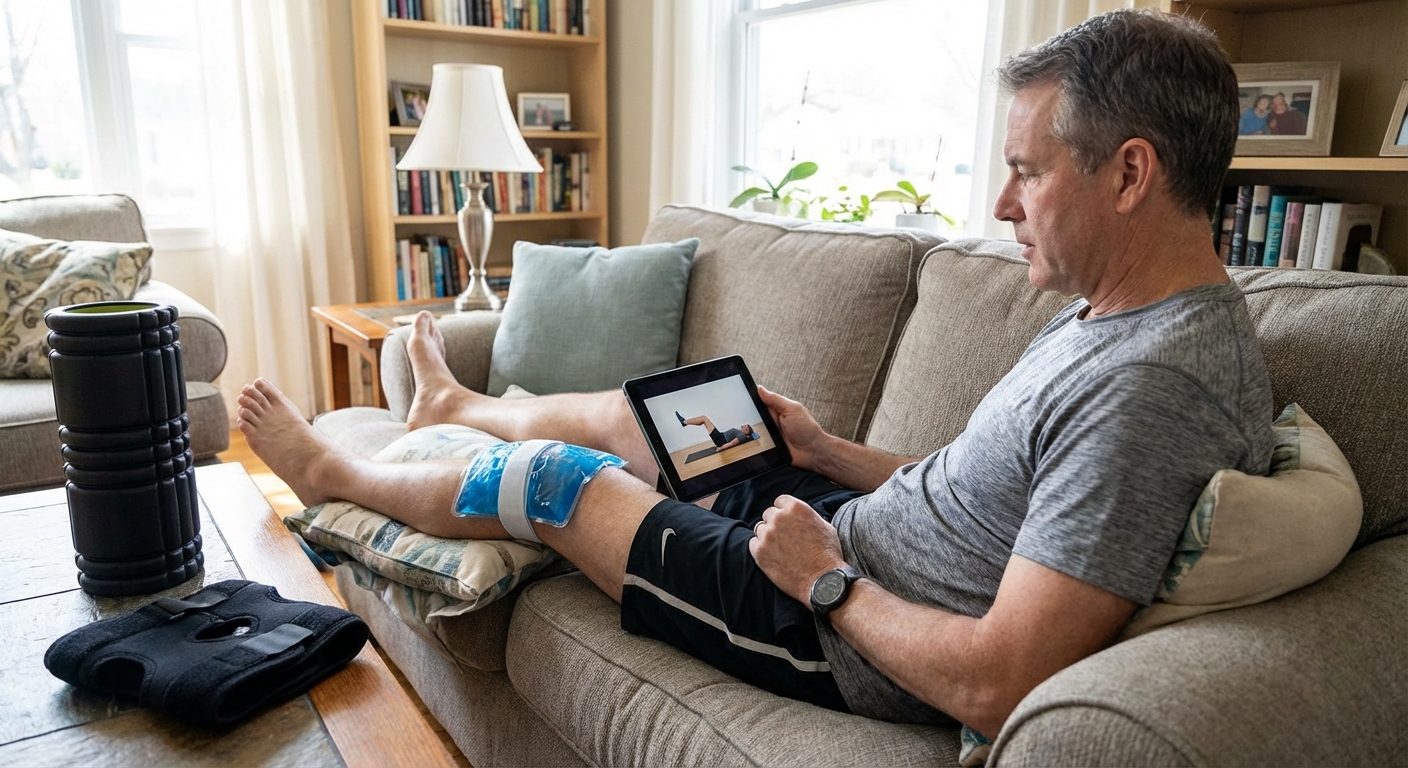
- A properly fitted compression wrap (my PT showed me how) helped especially after walking.
Pro tip from experience: if your toes are turning purple, your wrap is way too tight. I learned that the awkward way.
4. Elevation – Higher Than You Think
I used to toss my leg on a coffee table and call it elevation. My PT laughed.
For actual swelling reduction:
- Lie down and prop your leg so your knee is above the level of your heart
- 20–30 minutes at a time
When I finally did this correctly with a couple of pillows, I could literally see the swelling go down.
Medications: What’s Worth Considering (With Caveats)
I’m not a fan of popping pills for every ache, but knee swelling pushed me into the land of NSAIDs.
NSAIDs (Ibuprofen, Naproxen, etc.)
Nonsteroidal anti-inflammatory drugs (NSAIDs) can:
- Reduce inflammation
- Decrease pain
There’s solid evidence behind them for short-term use in musculoskeletal injuries. But there are catches:
Pros- Work fairly quickly
- Easily available over the counter
- Can irritate the stomach lining
- Not great for people with kidney issues, ulcers, or certain heart conditions
- Long-term use can mess with blood pressure and kidney function
My strategy, with my doctor’s blessing:
- Lowest effective dose
- Shortest possible duration
- Always with food
Acetaminophen (paracetamol) helped pain but didn’t noticeably reduce swelling for me. It’s more of a pain-helper than an inflammation-fighter.
Always, always check with a healthcare professional if you have other medical conditions or are on meds.
Movement That Helped My Knees Heal Instead of Hiding on the Sofa
Once the initial “my knee is a balloon” phase calmed down, my physical therapist shifted me from protection to controlled movement.
Here’s what made a difference.
Gentle Range-of-Motion Work
When I tested very slight bending and straightening exercises (within pain-free limits), something interesting happened: my knee felt less stiff after.
- Heel slides on the bed (bending the knee slowly)
- Sitting and gently straightening the knee
This matches what a lot of rehab research shows: early, gentle movement helps reduce joint effusion and stiffness.
Quad Activation (The Muscle That Forgot How to Work)
Swelling around the knee literally inhibits the quadriceps muscle—your brain stops fully activating it to protect the joint.
My PT gave me:
- Quad sets: pressing the back of the knee into the bed and tightening the thigh
- Straight-leg raises: once the quad could actually lift the leg without cheating
When I committed to these twice daily, I noticed less wobbling when walking and, surprisingly, less swelling by the end of the day.
The Bigger Picture: What If Your Knee Keeps Swelling?
Here’s where I had to swallow my pride: recurring swelling usually means there’s an underlying issue.
Common Long-Term Triggers
From my orthopedic visit and the imaging:
- Osteoarthritis – cartilage wear and tear; fluid builds up as the joint gets irritated.
- Meniscus tears – that “catching” or “locking” feeling with periodic swelling.
- Ligament instability – if the ACL or other ligaments are damaged, the knee may move too much and swell frequently.
My MRI showed a mild meniscus tear and early cartilage wear—nothing dramatic, but enough to explain the cycle.
What Helped Long-Term (Beyond Just “Rest More”)
- Strength training for the muscles around the knee: quads, hamstrings, glutes. Once I got serious about hip and glute strength, my knee stopped doing all the work.
- Weight management: This one is brutally honest. Research from the Framingham Osteoarthritis Study showed that each pound of body weight adds about 4 pounds of pressure on the knee joint when walking. Dropping even a small amount of weight reduced my day-to-day soreness noticeably.
- Activity modifications: I didn’t quit moving; I swapped impact. More cycling and swimming, fewer hard-court basketball marathons.
- Footwear and alignment: A running store analyzed my gait; supportive shoes with mild stability reduced the side-to-side wobble that aggravated my knee.
Treatments I Considered (and What I Learned About Each)
As I went down the rabbit hole, I ran into injections, braces, supplements, and more. Here’s the quick, honest rundown from my experience and the evidence I found.
Corticosteroid Injections
I seriously considered a cortisone shot when the swelling wouldn’t quit.
Pros:- Can quickly reduce inflammation and pain in some cases
- Helpful for flares of arthritis or severe bursitis
- Effects can be temporary (weeks to a few months)
- Too frequent injections may damage cartilage
My ortho suggested saving this for major flares, not using it like a monthly oil change.
Hyaluronic Acid Injections (Viscosupplementation)
These are “lubricant” injections often used for osteoarthritis.
Research is mixed:
- Some patients feel less pain and stiffness
- Others feel little to no difference
I skipped these for now based on my age and relatively mild joint changes.
Supplements (Glucosamine, Chondroitin, Turmeric)
I tried glucosamine/chondroitin for three months.
My verdict: maybe a tiny improvement, maybe placebo. Large, well-done studies show inconsistent benefit. Turmeric (curcumin) seemed to help a bit with generalized soreness, but again, not a miracle.
I treat supplements as “possible +1% help,” not core treatment.
What Actually Became My Go-To Knee Swelling Strategy
After the trial-and-error phase, this is the basic playbook I personally use when my knee starts to puff up:
- Immediate:
- Scale back impact activities
- 10–15 min ice + compression sleeve
- Elevate properly in the evening
- Next few days:
- Gentle range-of-motion work
- Quad sets and easy straight-leg raises
- Short course of NSAIDs if needed and cleared by my doctor
- Ongoing:
- Twice-weekly leg strength sessions (squats, deadlifts, step-ups, but modified for pain-free range)
- Mix of low-impact cardio (cycling, walking, rowing)
- Quick check-in with a PT or ortho if swelling keeps coming back or gets worse
This isn’t perfect—my knee still complains when I push it too hard—but the massive balloon days are rare now.
When To Stop DIY and Call a Pro
My rule of thumb now:
- If swelling lasts more than 7–10 days despite rest and basic care
- If the knee keeps swelling after similar activities
- If I notice buckling, locking, or a sense that the knee might “give way”
…I make an appointment. Imaging (like X-ray or MRI) and a proper exam can reveal things no YouTube video can.
And yes, I get the temptation to avoid doctors. But early diagnosis for things like meniscus tears, ligament injuries, or inflammatory arthritis can literally change the trajectory of your knee health.
One Last Thing I Wish Someone Had Told Me Sooner
My biggest surprise was this: you don’t fix a swollen knee only by doing less. You fix it by doing the right things more consistently.
Rest helped, but targeted movement, strength, and smarter choices helped way more over time.
If your knee is shouting at you right now, you don’t have to white-knuckle it or pretend it’s fine. Calm the inflammation, figure out the “why,” and then build it back up stronger and smarter. Your future self will be very grateful every time you climb stairs without thinking about it.
Sources
- Mayo Clinic – Knee pain: Symptoms & causes – Overview of knee pain and common causes of swelling
- Cleveland Clinic – Water on the Knee (Knee Effusion) – Detailed explanation of knee effusion and treatment options
- NIH / MedlinePlus – Knee Injuries and Disorders – Government-backed information on types of knee problems
- Harvard Health Publishing – Osteoarthritis of the knee – Discussion of arthritis-related swelling and management
- NYU Langone Health – Nonsurgical Treatment for Knee Injuries – Evidence-based non-surgical strategies for knee injury care