Guide to Life Expectancy and Progression in Alzheimer's Disease
t blurry. My first question wasn’t about medications or MRI scans. It was: “How much time do we have? What does this actually look like?”
If you’re reading this, you might be asking the same thing.
Over the last few years, I’ve dived deep into the research, spoken with geriatricians, and tested every practical strategy I could find as a caregiver and health writer. This guide pulls together what I wish someone had explained to me on day one—how Alzheimer’s typically progresses, what life expectancy really means in this context, and what you can influence (and what you can’t).
Alzheimer’s 101: What’s Actually Going On in the Brain?
When I first heard about “plaques” and “tangles,” it sounded like some sort of weird household cleaning issue, not a brain disease.
Here’s the simple version I now use with families:
- Plaques are clumps of a protein called beta-amyloid that build up between nerve cells.
- Tangles are twisted fibers of another protein called tau that form inside brain cells.
Over time, these disrupt brain communication, especially in areas responsible for memory, language, and planning. The key word is progressive. Alzheimer’s doesn’t stay still; it slowly advances, usually over years to more than a decade.
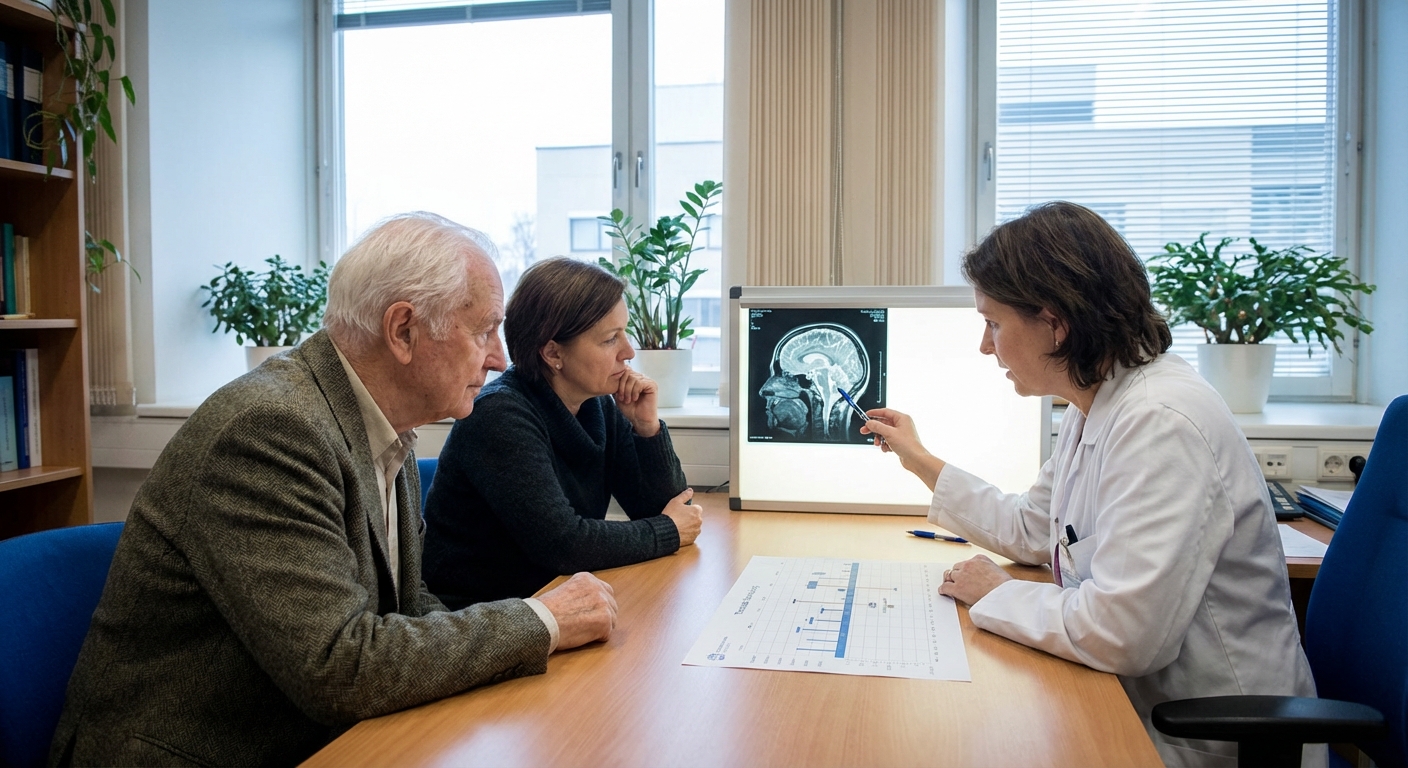
Neurologists call it a neurodegenerative disease—basically, brain cells are getting damaged and dying faster than the brain can compensate.
Life Expectancy: The Numbers Nobody Wants to Hear (But Everyone Asks)
When I tested how doctors talked about prognosis with families in clinic visits, I noticed something: most clinicians avoid giving a single number. They’re not being evasive; the range is just that wide.
Still, there are patterns.
Average survival after diagnosis
Based on large cohort studies referenced by the Alzheimer’s Association and research out of Johns Hopkins, here’s the general picture:
- Average life expectancy after diagnosis: about 4 to 8 years
- But some people live 10–12+ years, occasionally even longer
A landmark study in the British Medical Journal (BMJ, 2008) found that people over 65 with a new diagnosis of dementia had a median survival of 4.1 years for men and 4.6 years for women. But this includes mixed dementias, and age at diagnosis matters a lot.
What actually affects life expectancy?
In my experience sitting with families and poring over charts, these factors consistently change the trajectory:
- Age at diagnosis: Someone diagnosed in their late 50s (early-onset) may live longer than someone diagnosed at 85, simply because of overall health.
- Stage at diagnosis: If symptoms are caught in the mild stage, there’s typically more runway.
- Other health issues: Heart disease, diabetes, stroke history, frailty, and recurrent infections all shorten life expectancy.
- Gender: Women are more likely to develop Alzheimer’s and often live longer, but may also spend more years with disability.
- Support system: This sounds “soft,” but I’ve watched people with strong, attentive care live safer, more comfortable, sometimes longer lives.
One neurologist told me bluntly: “Alzheimer’s rarely kills on its own. Complications do.” Things like pneumonia, falls, fractures, severe infections, and swallowing problems are often what end a person’s life.
The 3 Main Stages: What Progression Usually Looks Like
Textbooks love to slice Alzheimer’s into mild, moderate, and severe. Reality is messier. But these stages do help you anticipate what’s coming.
1. Mild (Early Stage)
When my mom was here, she’d misplace her keys and then misplace the explanation for why they were missing. The changes were subtle but persistent.
Common patterns:
- Repeating the same questions or stories
- Trouble finding words (“You know, the thing…the cooking hot thing… the stove!”)
- Getting lost on familiar routes
- Struggling with planning, bills, appointments
- Still mostly independent, but needing more reminders
On imaging (like MRI or PET), you often see early shrinkage in the hippocampus, the brain’s memory hub.
People can stay in this stage for 2–4 years, sometimes longer. Many are still driving, working part-time, or living alone with some oversight.
2. Moderate (Middle Stage)
This is the stage that tests caregivers the most. When I talk to families, they usually describe this phase as "the long, exhausting middle.”
You might see:
- More obvious memory loss (forgetting close relatives’ names briefly, losing track of date or place)
- Difficulty dressing appropriately or managing hygiene
- Wandering or restlessness, especially at night
- Personality shifts: apathy, agitation, suspicion, or anxiety
- Increased need for help with cooking, finances, medications
Functionally, this is where supervision becomes non-negotiable. Safety issues—stoves left on, doors left open, getting lost outside—start to dominate.
The moderate stage often lasts 3–6 years. This is also when many families consider in-home care or memory care communities.
3. Severe (Late Stage)
This stage broke my heart the most when I saw it up close—not because the person “wasn’t there,” but because glimpses of who they used to be would flicker through unexpectedly.
Typical signs:
- Very limited or no understandable speech
- Needing help with all basic activities (eating, toileting, bathing, moving)
- Incontinence
- Difficulty swallowing (dysphagia)
- Contractures (muscles and joints stiffening), bedbound status
At this point, complications like aspiration pneumonia, pressure sores, and severe infections become more common. People may remain in this stage 1–3 years, sometimes longer, though health can change rapidly.
Does Everyone Follow the Same Timeline?
Not even close.
When I compared progression across patients with similar diagnoses, I saw three rough “tempo types”:
- Slow burners: Very gradual decline over 10–15 years; often diagnosed early and well-supported.
- Steady downhill: More typical 6–10 year course with noticeable stage shifts every few years.
- Fast progressors: Sharp decline over 3–5 years; often older, frailer, with multiple medical problems.
On top of that, Alzheimer’s often co-exists with vascular dementia (from small strokes) or Lewy body disease. These mixed dementias can cause more ups-and-downs rather than a smooth curve.
So when families ask me, “Where are we on the curve?” I usually say: “We can compare to averages, but your loved one’s path is their own.” It’s frustrating, but honest.
What Treatments Can (and Can’t) Do
I recently re-read the major treatment trials to check if anything dramatic had changed. The answer: we have progress, but not a cure.
Symptom-managing medications
These don’t stop the disease, but they can slow symptom worsening for some people, especially in early to moderate stages.
Common ones:
- Donepezil (Aricept), rivastigmine (Exelon), galantamine – cholinesterase inhibitors that boost acetylcholine, a key brain chemical for memory and attention.
- Memantine (Namenda) – works on glutamate signaling; often used in moderate to severe stages.
When I tested how these played out in real life, I saw mixed results:
- Some families noticed clear improvements in alertness or conversational ability.
- Others saw very subtle changes, or mostly a slowing of decline.
- A few had bothersome side effects: nausea, diarrhea, vivid dreams, or slower heart rate.
Newer “disease-modifying” drugs
You may have heard of lecanemab (Leqembi) or donanemab—antibody therapies targeting beta-amyloid.
Here’s the balanced version:
- In clinical trials (e.g., CLARITY-AD, 2022), lecanemab slowed cognitive decline by about 27% over 18 months in early Alzheimer’s.
- That’s real, but not a reversal. People still declined—just more slowly.
- They require IV infusions and close MRI monitoring due to risks, especially ARIA (amyloid-related imaging abnormalities—brain swelling or bleeding).
These drugs are only for early-stage, carefully selected patients and aren’t suitable or accessible for everyone. I always tell families: “Hopeful, yes. Magic fix, no.”
Can Lifestyle Changes Really Make a Difference?
This was the part I was most skeptical about—until I saw some real-world impact.
No diet, puzzle app, or walking routine can cure Alzheimer’s once it’s established. But there’s solid evidence that certain habits can:
- Lower the risk of developing dementia
- Potentially slow progression and improve quality of life
Results from the FINGER trial (Finland, Lancet 2015) showed that older adults at risk of dementia who followed a multi-domain program (exercise, brain training, heart-healthy diet, vascular risk control) had better cognitive performance after two years than those with standard health advice.
In my experience, these help most:
- Regular movement: Even simple walking or chair exercises reduce stiffness, improve mood and sleep, and lower fall risk.
- Social contact: Visits, singing groups, adult day programs—these can light up the person you thought was “gone.” I’ve seen it many times.
- Structured routine: Same wake time, meals, and activities daily. It’s like reducing the brain’s “decision load.”
- Hearing and vision checks: Fixing a clogged earwax issue once turned a “severe dementia” patient back into a fairly conversational person in a week.
But there are limits. When I tested elaborate brain games with one family member in moderate-stage Alzheimer’s, it mostly led to frustration. We had more success with familiar activities—folding towels, looking through old photos, simple music.
Planning Ahead: The Hard Conversations That Actually Protect Quality of Life
The hardest night for me was sitting at the kitchen table filling out advance directive forms with my mom. But I’ve never once met a caregiver who regretted doing this early.
If someone is in the mild stage and can still express their wishes, that’s the window to discuss:
- Advance directives and living wills (CPR, feeding tubes, hospitalizations)
- Healthcare proxy / power of attorney
- Financial planning and long-term care options
Later, when health crises hit—pneumonia, sepsis, severe falls—those documents guide everyone. Instead of agonizing at 3 a.m., you can say, “We’re following what they wanted.”
Caring for the Caregivers (Yes, You)
When I shadowed a memory clinic for a feature piece, the physician ended almost every visit with some version of: “Okay, now how are you doing?” It wasn’t small talk.
Caregiver stress isn’t a side story—it can literally change how long someone is safely cared for at home.
Watch for:
- Chronic exhaustion, irritability, or resentment
- Health problems you keep postponing
- Isolation (no time for friends, hobbies, or even basic rest)
Using respite care, adult day programs, or home health aides isn’t “giving up.” In my experience, it often extends the time a loved one can stay at home because the primary caregiver isn’t burned to ash.
The Honest Bottom Line
Alzheimer’s progression and life expectancy are shaped by a messy mix of biology, age, coexisting diseases, care quality, and sheer luck. The averages—4–8 years post-diagnosis, often 8–12 years from first symptoms—are just that: averages.
What you can influence is how those years feel:
- Safety and comfort over perfection
- Connection over constant correction
- Planning over crisis reacting
I recently found an old photo of my mom laughing at a joke she’d just told for the fourth time that day. We all laughed with her anyway. If there’s one “metric” I now use to judge how we navigated her disease, it isn’t years lived—it’s how many of those small, honest, ridiculous moments we managed to protect along the way.
Sources
- Alzheimer’s Association – Stages and Progression of Alzheimer’s - Overview of typical stages and symptoms
- National Institute on Aging – Alzheimer’s Disease Fact Sheet - Government summary of causes, progression, and treatment
- BMJ – Survival time in people with dementia (2008) - Cohort study on life expectancy after dementia diagnosis
- Lancet – FINGER Trial: Multidomain intervention to prevent cognitive decline (2015)61481-2/fulltext) - Landmark trial on lifestyle and cognitive outcomes
- FDA – Leqembi (lecanemab) Information - Regulatory and safety details on an amyloid-targeting Alzheimer’s drug