Guide to Long-Term Knee Pain Management
If you’re reading this, I’m guessing you’ve had your own “oh no, my knee” moment. Maybe it’s a dull ache that never quite disappears. Maybe it’s a sharp pain when you squat, run, or even just stand up from the couch. I’ve been there, and honestly, I tried a bunch of things that did nothing before I found what actually helped.
This guide is everything I wish I’d known earlier about long-term knee pain management—less hype, more reality.
My First Wake-Up Call: When Rest Wasn’t Enough
A few years ago, my right knee started bothering me after a weekend of hiking and “I’m-still-20” style sprinting. I assumed it just needed a few days of rest. Two weeks later, I was still limping.
I did what a lot of us do:
- I iced it… sometimes.
- I randomly stretched whatever felt tight.
- I Googled way too many horror stories.
When I finally saw a sports medicine doctor, she said something that completely shifted how I thought about knee pain:
> “Knee pain is rarely just a knee problem. It’s usually a system problem.”
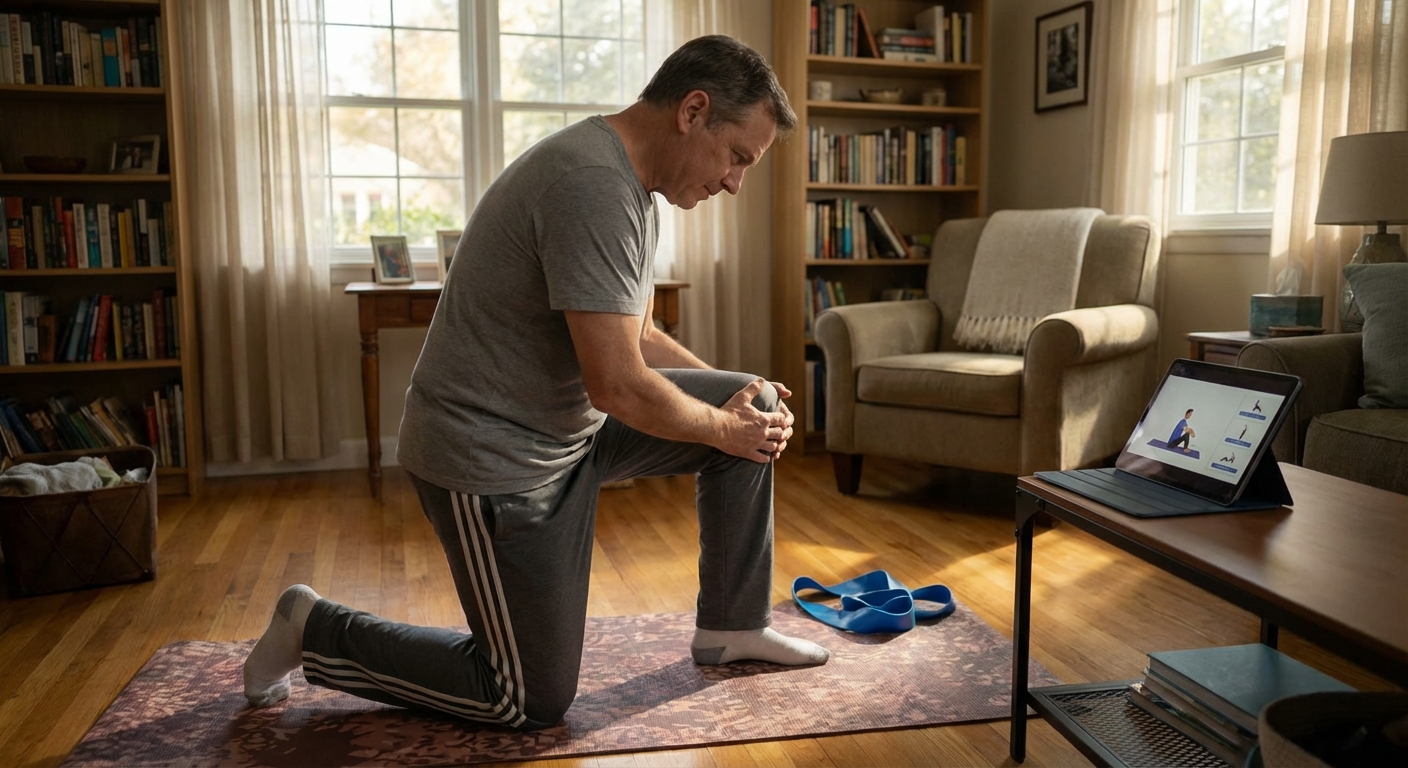
And in my case, she was absolutely right. Weak glutes, tight quads, a bit of early cartilage wear, and a running form that can only be described as “aggressively inefficient.”
That’s when I started learning how long-term knee pain management actually works.
Step 1: Get a Real Diagnosis (Not Just a Guess)
In my experience, the fastest way to waste months with knee pain is to assume you know what it is without getting it checked.
When I finally went in, here’s what my process looked like:
- History & exam: The doctor asked about my activities, previous injuries, and what exact movements hurt (stairs down, deep squats, sitting too long, etc.). Those details matter more than I thought.
- Physical tests: She did things like the McMurray test (for meniscus tears), patellar grind (checking for patellofemoral pain), and ligament stability tests.
- Imaging: I didn’t get an MRI right away. We started with X-rays to rule out obvious structural issues and early osteoarthritis. MRI only came up later as a “maybe” if symptoms didn’t improve.
What surprised me: many long-term knee issues are not dramatic tears. They’re things like:
- Patellofemoral pain syndrome (pain around/behind the kneecap)
- Early osteoarthritis
- Tendinopathy (patellar or quadriceps tendon)
- Iliotibial band-related pain
Each of those has slightly different best practices. That’s why a proper workup matters.
Reality check: Self-diagnosing from a TikTok video is a fantastic way to end up treating the wrong thing.Step 2: Pain Isn’t Just About Damage
This was mind-blowing to me: pain level doesn’t always equal injury severity.
There’s a great 2017 review in The BMJ showing that many people with scary-looking MRIs (meniscal tears, cartilage wear) have little or no pain, while others with “clean” imaging still hurt a lot. The brain, inflammation, sleep, stress, and past injuries all affect how we perceive pain.
When I tested this on myself—by tracking my pain against my sleep, stress, and activity—I saw a pattern:
- Bad sleep + lots of sitting = more pain
- Short walks + strength work + decent sleep = less pain
Same knee, totally different experience.
This doesn’t mean your pain is “in your head.” It means there are more levers you can pull than just “rest” or “surgery.”
Step 3: The Exercise That Changed Everything (and Hurt at First)
The first time my physical therapist had me do slow, controlled step-downs from a low box, my knee absolutely hated it.
But this is where expert guidance matters.
He explained that for long-term knee pain, especially patellofemoral pain and mild osteoarthritis, the evidence strongly supports progressive strengthening, not avoiding movement. The American College of Rheumatology and the Osteoarthritis Research Society International both heavily emphasize strengthening as core treatment.
In my program, we focused on:
1. Quad strength
- Wall sits
- Spanish squats (these look weird but work incredibly well)
- Leg extensions with slow eccentrics (slowly lowering the weight)
2. Hip and glute strength
- Side-lying leg raises with bands
- Monster walks
- Hip thrusts/bridges
3. Calf and hamstring
- Calf raises (bent and straight knee)
- Romanian deadlifts with light weights at first
At the start, I worked at a pain level of about 2–3/10—uncomfortable but not sharp or worsening later. My physio emphasized this: some discomfort is normal, spiking pain or swelling that lingers isn’t.
After about 4–6 weeks of consistent training (3x per week), I noticed:
- Less pain walking down stairs
- Less stiffness after sitting
- More trust in my knee when changing direction
It wasn’t magic. It was adaptation.
Step 4: Daily Habits That Quietly Sabotage (or Support) Your Knees
I used to think only my workouts mattered. Then I looked at the other 23 hours of my day.
Sitting vs. moving
On days when I sat and worked for hours straight, my knee felt like someone had injected cement into it. Just standing up every 45–60 minutes and walking for 2–3 minutes made a huge difference.
Weight and load
This is a sensitive topic, but the data is pretty clear. Studies from the Framingham Osteoarthritis Study found that every 1 pound of body weight puts roughly 4 pounds of pressure across the knee during daily activities like walking.
When I dropped just 6–7 pounds (not a dramatic change), my knees felt different. Climbing stairs suddenly felt… less negotiable with gravity.
Shoes and surfaces
When I tested different shoes, I was shocked by how much knee load changed just by switching from my old worn-out sneakers to slightly more supportive ones. Research in Arthritis & Rheumatology has shown that footwear can affect knee joint loading, especially in people with osteoarthritis.
Do shoes fix everything? No. But they’re one of the easier knobs to adjust.
Step 5: What Actually Helped Me (and What Was Overhyped)
Here’s my personal scoreboard, backed by what the research generally supports.
Things that helped long-term
- Targeted strength training (quads, hips, calves) – backed by multiple clinical guidelines for chronic knee pain and osteoarthritis.
- Regular low-impact cardio – cycling, walking, and swimming helped my circulation, mood, and stiffness.
- Weight management – even mild loss lowered symptom days for me.
- Education – once I understood that controlled pain during exercise wasn’t “destroying my knee,” I stuck with the plan.
Things that were… meh
- Random stretching – stretching tight quads and hip flexors helped some, but on its own, it didn’t fix anything.
- Knee braces – a simple sleeve felt supportive and warm, which I liked, but it didn’t change the underlying issue.
Things I’m cautious about
- Repeated cortisone injections: They can reduce pain short-term, but studies (like a 2017 JAMA trial) have shown that repeated injections may accelerate cartilage loss in osteoarthritis.
- Surgery as a first line: For many people with degenerative meniscal tears or mild osteoarthritis, high-quality trials show structured physical therapy often works as well as arthroscopic surgery over the long term.
- Supplements: I tried glucosamine and chondroitin. I can’t honestly say I noticed a difference. Large meta-analyses are mixed at best. Some people swear by them; my wallet disagreed.
When I Knew I Needed More Than Just Exercise
There was a point when my pain flared badly after an over-enthusiastic return to running. That’s when I checked back in with my doctor.
Red flags that should send you to a professional, fast:
- Sudden knee injury with a pop, immediate swelling, and inability to bear weight
- Knee locking (you literally can’t straighten or bend it fully)
- Fever, redness, and severe pain (possible infection)
- History of cancer with new, unexplained knee pain
My case wasn’t that dramatic—just an angry patellofemoral joint—but we still adjusted the plan. We dialed back impact, focused more on tempo strength, and only eased back into running once baseline pain was consistently low.
The lesson: long-term management isn’t linear. You’ll have flare-ups. What matters is whether you have a framework to respond, not panic.
Building Your Own Long-Term Knee Plan
If I were starting from scratch again with persistent knee pain, here’s exactly how I’d structure the first 8–12 weeks:
- Get assessed by a sports med doctor, orthopedist, or physical therapist.
- Clarify the goal: walking pain-free? Returning to running? Playing with kids on the floor?
- Start a 2–3x/week strength program focused on quads, hips, and calves, working at a mild, tolerable pain level.
- Add 3–5 days/week of low-impact movement: brisk walking, cycling, or swimming.
- Track symptoms (pain 0–10, stiffness, activity, sleep) in a quick daily note.
- Adjust load, not quit when a flare happens: reduce intensity/volume by ~30–50% for a week, then rebuild.
- Review progress every 4–6 weeks with your clinician and tweak the plan.
Is it work? Yes. Does it beat feeling 20 years older every time you stand up? Also yes.
The Honest Bottom Line
Long-term knee pain management isn’t about finding the one miracle exercise, magic brace, or “secret” supplement. In my experience—both personally and from digging into the research—it’s about stacking a bunch of solid, unsexy habits:
- Strengthen what supports the knee
- Move regularly, even when you don’t feel like an athlete
- Manage load, not just pain
- Use medical tools (meds, injections, braces, surgery) thoughtfully—not as shortcuts, but as part of a bigger plan
My own knee still isn’t perfect. It occasionally reminds me who’s boss after a long run or a reckless basketball game. But it no longer dictates what I can or can’t do every day.
If your knee pain has been hanging around like that one guest who never leaves the party, you’re not stuck with it forever. With the right mix of diagnosis, strength, movement, and patience, your knee can absolutely become a teammate again—not just a liability.
Sources
- Osteoarthritis of the Knee – Treatment Guidelines (American College of Rheumatology) - Overview of evidence-based approaches for knee OA
- Arthritis of the Knee – National Institute of Arthritis and Musculoskeletal and Skin Diseases (NIH) - Government-backed information on knee problems and treatments
- Arthroscopic Partial Meniscectomy vs. Physical Therapy for Degenerative Meniscal Tear – NEJM - Landmark trial comparing surgery with PT
- Corticosteroid Injections for Knee Osteoarthritis – JAMA 2017 Study - Research on long-term effects of steroid injections
- Knee Pain and Osteoarthritis – Mayo Clinic - Clinical overview of causes, risk factors, and management