Guide to Low Vitamin D and Hair Loss Concerns
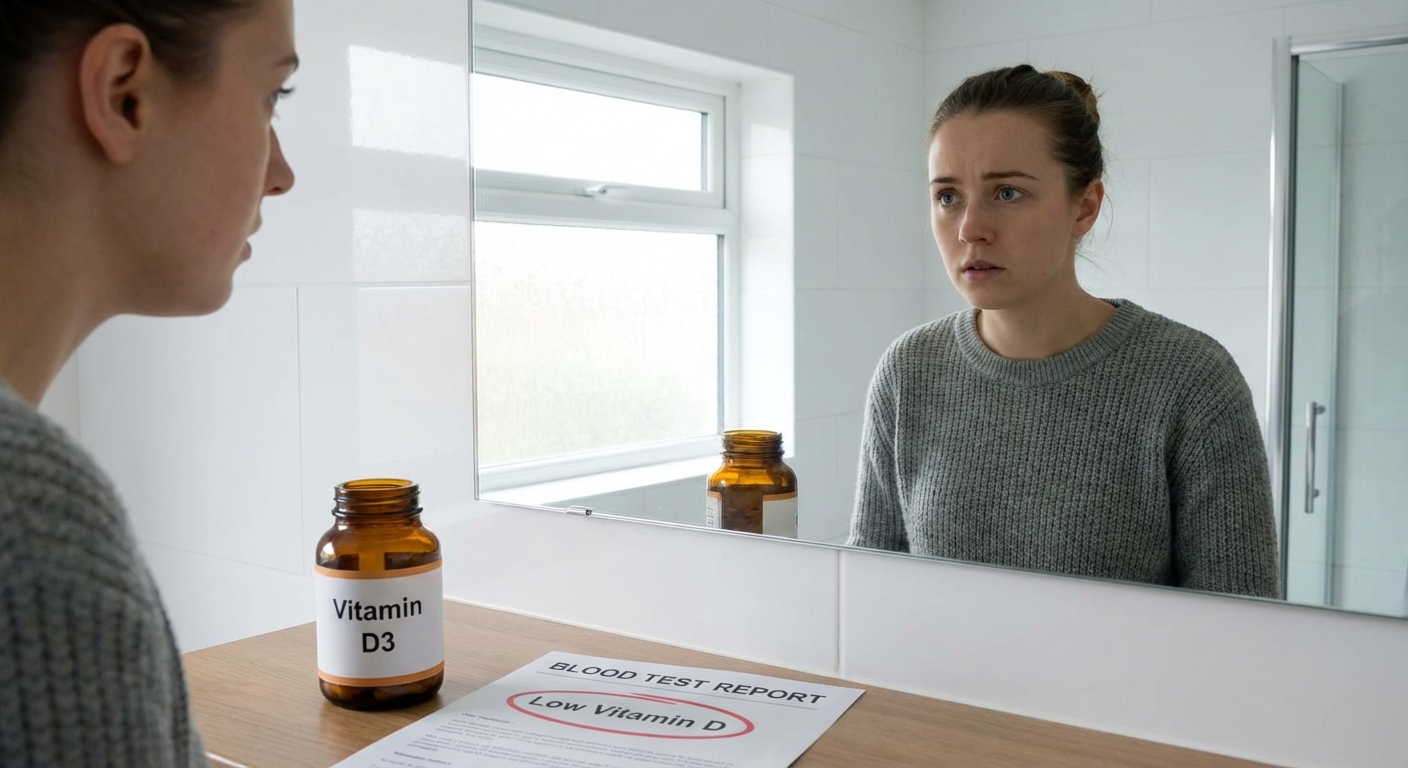
I blamed stress, age, terrible sleep, that one break-up… basically everything except a nutrient I thought you only worried about for bone health. Then I got bloodwork done and my vitamin D level came back at 17 ng/mL (most labs flag anything under 20 as deficient).
When my doctor looked at the results and casually said, “This could be part of why your hair is shedding,” I went down the deepest research rabbit hole of my life.
Here’s what I’ve learned—both from the science and from testing this on my own weirdly stubborn hair.
How Vitamin D Connects to Hair (Without the Boring Lecture)
Hair growth isn’t random—it follows a cycle:
- Anagen – growth phase
- Catagen – transition phase
- Telogen – resting phase (this is when hairs eventually fall out)
Vitamin D interacts with this cycle through vitamin D receptors (VDRs) in hair follicles. Those receptors help kick follicles into and maintain the anagen (growth) phase.
Researchers have found:
- People with vitamin D deficiency are more likely to have certain types of hair loss, especially telogen effluvium (diffuse shedding) and alopecia areata (patchy hair loss).
- A 2013 study in the British Journal of Dermatology showed that mice without functioning vitamin D receptors developed hair loss and failed to regrow hair.
- Human studies, like a 2014 paper in the Journal of Dermatology, have consistently shown lower vitamin D levels in people with various hair-loss conditions compared to controls.
Does that mean low vitamin D automatically equals hair loss? No. But it does mean vitamin D is one of the important players in the hair game.
When I finally saw my levels on paper, the “why is my hair all over the floor” mystery suddenly felt a lot less mysterious.
What Low Vitamin D Actually Looks Like (Beyond Hair)
When my vitamin D was very low, hair loss was just the most visible symptom. Looking back, I also had:
- Weird, low energy that coffee didn’t fix
- Mild muscle aches and stiffness
- A constant low mood, like everything felt slightly heavier
Common signs of low vitamin D can include:
- Fatigue and low stamina
- Frequent colds or infections
- Bone or joint aches
- Slow wound healing
- Diffuse hair thinning or increased shedding
The annoying part? Many of these feel like “normal life” until you see your labs.
Getting Tested: The Step I Wish I’d Taken Sooner
I’m not a fan of blindly popping supplements, so I started with a 25-hydroxy vitamin D blood test (often written as 25(OH)D). That’s the standard test used pretty much everywhere.
Most labs use these reference ranges (they can vary slightly):
- Deficient: < 20 ng/mL (50 nmol/L)
- Insufficient: 20–29 ng/mL (50–75 nmol/L)
- Sufficient: 30–50 ng/mL (75–125 nmol/L) for general health
Some hair specialists aim for 40–60 ng/mL when treating hair issues, but there’s no universal consensus.
When I tested, I was sitting at 17 ng/mL—squarely in the “yep, this is a problem” zone.
If you’re noticing more hair on your pillow and you haven’t had your vitamin D checked in the last year, getting that lab done is honestly one of the easiest starting points.
Types of Hair Loss Most Tied to Vitamin D
From the research (and what dermatologists are seeing in clinics), low vitamin D has the strongest links with:
1. Telogen Effluvium (Stress-Triggered Shedding)
This is when your hair suddenly starts shedding a lot—like handfuls in the shower. It often shows up 2–3 months after a trigger:
- Major illness
- Surgery or rapid weight loss
- Big life stressors
- Nutrient deficiencies (including vitamin D, iron, protein)
Several studies have found significantly lower vitamin D levels in patients with telogen effluvium compared to healthy controls. In some cases, levels improved alongside hair density once vitamin D was corrected.
2. Alopecia Areata
This is an autoimmune condition where your immune system attacks hair follicles, causing round bald patches.
Multiple studies show people with alopecia areata often have lower vitamin D levels and sometimes more severe disease when vitamin D is very low. Some dermatologists now routinely test vitamin D when they see patchy hair loss.
3. Pattern Hair Loss (Male/Female)
This one’s trickier.
Androgenetic alopecia (receding hairline, thinning at the crown, widening part) is mostly driven by hormones and genetics. Vitamin D probably isn’t the main villain here, but low levels might exacerbate thinning or slow regrowth.
When I asked a dermatologist whether vitamin D alone would fix pattern thinning, she literally laughed and said, “I wish. It’s a piece of the puzzle, not the whole picture.”
Can Fixing Low Vitamin D Actually Regrow Hair?
Here’s where I’m going to be very honest.
For me, correcting vitamin D reduced shedding and seemed to make my hair feel fuller over several months—but it did not magically bring back the volume I had at 18.
What the evidence and real-world experience suggest:
Potential upsides:- Shedding from telogen effluvium often improves once deficiencies (vitamin D, iron, etc.) are corrected.
- Some alopecia areata patients show better response to treatment when vitamin D is optimized.
- Hair texture and density may gradually improve when your body isn’t running on empty.
- If your hair loss is mostly genetic/pattern-based, vitamin D alone probably won’t reverse it.
- Regrowth takes time—we’re talking 3–6 months to see meaningful changes, because hair cycles are slow.
- Some people normalize their vitamin D and still have hair loss from other causes (thyroid, autoimmune, hormonal, or just genetics).
When I tested this on myself, I treated it like an experiment: fix the deficiency, track shedding, and not expect a Disney-level “and then all my hair came back” moment.
How I Raised My Vitamin D (Without Going Overboard)
My doctor put me on a personalized plan based on my levels, so this isn’t a one-size-fits-all prescription—but here’s roughly what it looked like.
1. Supplement Strategy
I was prescribed:
- Vitamin D3 (cholecalciferol) – 4,000 IU daily for 8–12 weeks, then 2,000 IU daily as a maintenance dose.
Some people with very low levels get high-dose weekly prescriptions (like 50,000 IU once a week), but that should only be done under medical supervision.
We re-tested after 3 months. My level climbed from 17 to 38 ng/mL, which is a solid improvement.
2. Sun, But Smarter
I’m pretty pale and burn if I look at the sun for too long, so I’ve always been a sunscreen maximalist. My dermatologist recommended a middle ground:
- 10–15 minutes of sun exposure on arms/legs a few times a week
- Before 10 a.m. or after 4 p.m., depending on season and location
After that, sunscreen back on. Skin cancer isn’t a fair trade for better hair.
3. Food Upgrades (Not a Magic Source, But It Helps)
Food alone usually can’t fix a serious deficiency, but I added:
- Fatty fish: salmon, sardines, mackerel
- Fortified foods: some plant milks, dairy, cereals
- Egg yolks
Even if diet isn’t enough to fix levels, it helps maintain them once you’re back in a healthy range.
When Vitamin D Isn’t the Real Hair Problem
One thing that surprised me: when I started talking about this with friends, almost everyone jumped straight to supplements.
In my experience, that’s backwards.
Hair loss is usually multifactorial. If you’re shedding or thinning, it’s worth also checking:
- Ferritin (iron stores) – low ferritin is a very common hair-loss trigger
- TSH, free T3, free T4 – thyroid hormones
- B12 and folate
- Hormones (androgens, estrogen, progesterone), especially for pattern loss
I had one friend convinced vitamin D was the culprit, only to find her ferritin was 9 ng/mL (most hair specialists want it above 50–70 for healthy hair growth). Once she fixed that, her shedding slowed dramatically.
Vitamin D is a big piece, but it’s still just one piece.
Signs You Should Talk to a Doctor (Not Just TikTok)
If you’re seeing any of these, it’s worth getting a proper evaluation:
- Sudden shedding, especially in clumps
- Patchy bald spots
- Itchy, scaly, or painful scalp
- Hair loss plus fatigue, weight changes, or feeling cold all the time
- A family history of autoimmune or thyroid disease
A good dermatologist or primary care doctor can order labs for vitamin D and check for other causes. I know making that appointment is annoying, but it’s how you avoid wasting months on random supplements that don’t touch the real issue.
The Bottom Line From My Own Hair Saga
When I finally addressed my low vitamin D, here’s what actually happened:
- My lab levels moved from deficient to healthy.
- Shedding eased up over about 2–3 months.
- My ponytail circumference (yes, I measured) improved slightly.
- I still had some genetic thinning at the front… but it stopped rapidly getting worse.
So no, vitamin D wasn’t a miracle cure. But it was a quiet, foundational fix that made every other hair treatment work better.
If you’re stressed about hair on your pillow and your drain is begging for mercy, checking your vitamin D is one of the lowest-effort, highest-clarity steps you can take. Just don’t stop there—hair is complicated, and your follicles deserve a full investigation, not just a single capsule.
Sources
- NIH Office of Dietary Supplements – Vitamin D Fact Sheet - Overview of vitamin D functions, sources, and recommended intakes
- Harvard T.H. Chan School of Public Health – Vitamin D - Evidence-based summary of vitamin D and health
- Cleveland Clinic – Vitamin D Deficiency - Symptoms, diagnosis, and treatment of deficiency
- Mayo Clinic – Hair loss (alopecia) - Medical overview of hair loss causes and evaluation
- BBC Future – Why vitamin D is so important - Accessible deep-dive into vitamin D’s role in the body