Guide to Managing Finger and Hand Joint Pain
ile I was making coffee. I actually laughed… until I tried to straighten it. That sharp, electric jolt up my hand? Not funny.
That moment sent me down a rabbit hole of research, specialist visits, and a lot of trial-and-error experiments on my own hands. What I’m sharing here is a blend of that personal experience, evidence-based advice, and what I’ve learned from rheumatologists, hand therapists, and actual studies—not just random internet hacks.
What’s Really Going On Inside Those Achy Joints?
When I first talked to a hand specialist, she drew a quick sketch of a finger joint and said something that stuck with me: “Your pain is a symptom, not a diagnosis.” Joint pain in the hands can come from a bunch of different root causes:
- Osteoarthritis (OA) – the classic “wear and tear” arthritis. The cartilage that cushions your joints thins out. You might see knobby bumps at the finger joints (Heberden’s or Bouchard’s nodes). The pain is usually worse with use.
- Rheumatoid arthritis (RA) – an autoimmune disease where your immune system attacks the lining of your joints. Swelling, warmth, and morning stiffness that lasts more than 30–60 minutes are big red flags.
- Trigger finger – that locking, catching feeling when you bend or straighten a finger. It’s a tendon irritation issue.
- Carpal tunnel syndrome – compression of the median nerve in your wrist; often causes tingling, numbness, or burning in the thumb, index, and middle fingers.
- Tendinitis / overuse injuries – think long hours of typing, gaming, scrolling, or crafts. The tendons and surrounding tissues get irritated.
In my experience, labeling what kind of pain you have—and what’s causing it—is half the battle. The treatment for RA is very different to the treatment for simple overuse.
If your pain is sudden, severe, associated with obvious swelling, visible deformity, fever, or you can’t move a finger at all—skip the home experiments and get urgent medical help.
How I Learned to Decode My Own Hand Pain
When I started tracking my symptoms like a mini science project, patterns popped up. I literally kept a “hand diary” for a month. Here’s what I learned to look at (and what doctors often ask):
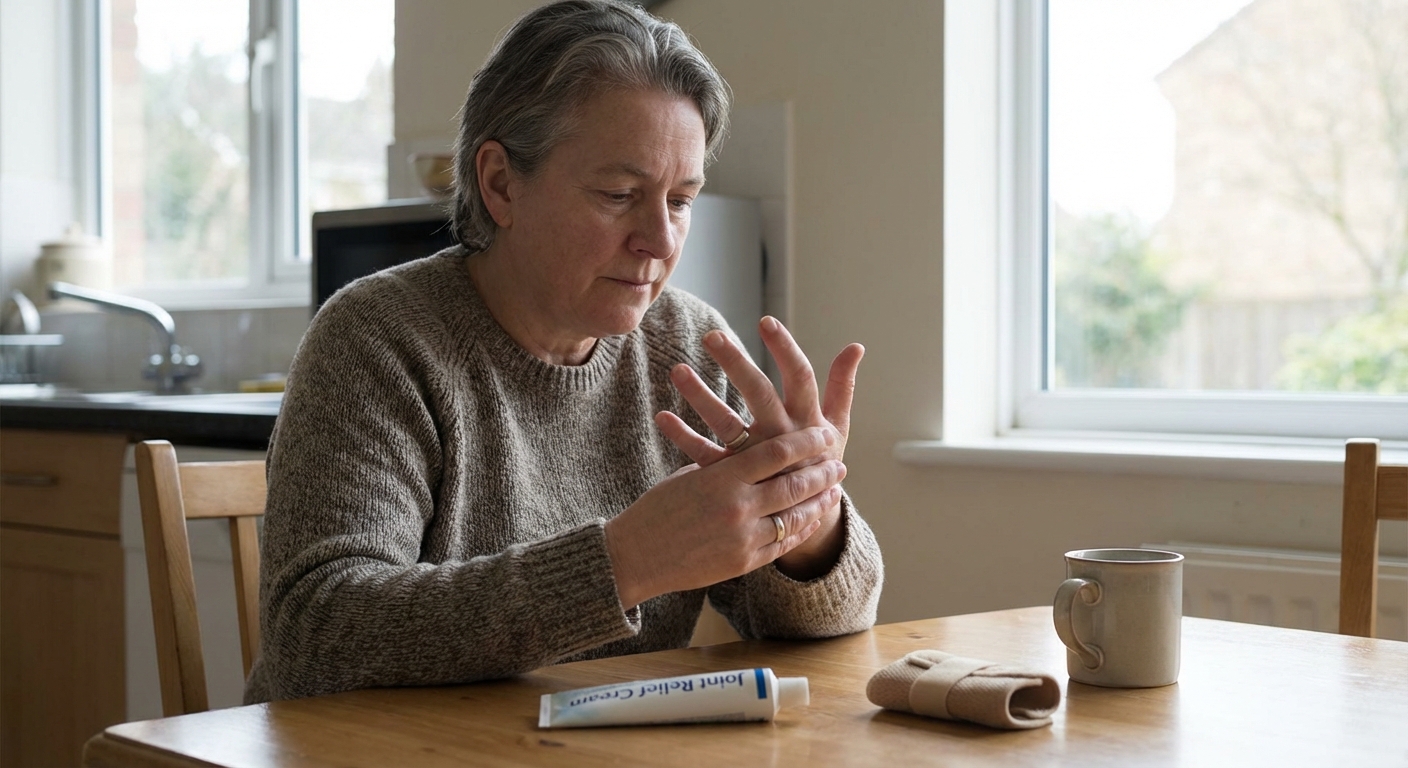
- Timing: My stiffness was worst in the morning but eased up in 10–15 minutes. That’s more typical of OA and overuse. RA stiffness usually hangs around longer.
- Triggers: Long sessions on my laptop trackpad and scrolling on my phone were almost guaranteed flare starters.
- Location: My thumb base (the CMC joint) and index finger were the repeat offenders—classic OA spots.
- Sensations: Achy, dull pain with occasional sharp stabs during gripping. No constant numbness, which made carpal tunnel less likely.
I showed that diary to my primary care doctor and later a rheumatologist. It sped everything up. They ran blood tests to rule out RA and gout, plus X‑rays to check joint space and bone changes. Seeing the images made it real—tiny but clear degenerative changes in the thumb joints.
Movement: The Thing That Hurts… but Also Helps
The most counterintuitive thing I learned: avoiding all motion because it hurts often makes it worse.
When I tested a simple hand exercise routine from a certified hand therapist, I was shocked how much it helped after just a couple of weeks. Not a miracle cure, but I could open jars again without swearing.
Some exercises that consistently helped me (cleared by my doc first):
1. Warm-up soaksI soak my hands in warm (not hot) water for 5–10 minutes. This reduces stiffness and makes exercise less cranky on the joints. A 2018 review in Clinical Rehabilitation highlighted that heat therapy can modestly improve hand function for arthritis patients.
2. Tendon glidesWith my wrist neutral, I move from:
- Open palm ➝ hook fist ➝ full fist ➝ flat fist, and back.
I do 5–10 reps, a few times a day. It feels weirdly satisfying—like stretching a rusty hinge.
3. Thumb oppositionI touch my thumb to each finger, one at a time, then slide down the little finger toward the palm. This one looked silly, but over time it made texting and gripping less painful.
4. Gentle resistanceWith a soft therapy ball or even a rolled-up sock, I do soft squeezes (about 50% effort) for 5 seconds, 10 reps. If pain flares more than a mild ache afterward, I back off next time.
The trick is gentle consistency—not heroic, once-a-month pain marathons.
Smart Tools and Habits That Saved My Hands
I used to underestimate how much my everyday tools were sabotaging me. Small changes made big differences.
1. Ergonomics: How You Use Your Hands Matters
- I swapped my tiny mouse for a vertical ergonomic mouse. My wrist angle changed, and after a week my evening hand throbbing was noticeably less.
- I adjusted my keyboard height so my wrists stay neutral—no bending up or down.
- I use a phone stand whenever possible and type with two thumbs or voice dictation instead of one furious texting thumb.
2. Splints and braces: Helpful, but not a magic glove
When I first tried a thumb CMC brace, I hated how clunky it felt. Then I wore it only when doing “risky” tasks: opening jars, cooking, lifting grocery bags. Massive difference.
Evidence backs this up: a randomized trial in Arthritis Care & Research (2011) found that thumb base splints can reduce pain and improve function in CMC osteoarthritis.
The downside? If you wear rigid splints all day, every day, you can lose strength over time. I use them like a seatbelt during high‑load activities, not as 24/7 armor.
3. Breaks: Micro-pauses, big payoff
I started using a 25‑minute timer (Pomodoro style). Every cycle, I:
- Open and close my hands 10 times
- Shake them gently
- Stretch my forearms
It feels trivial, but on the weeks I skip it, my pain absolutely calls me out.
Medications and Injections: Where They Fit (and Where They Don’t)
I’ve tried most of the “usual suspects” under medical supervision, and here’s how they shook out for me.
Over-the-counter relief
- NSAIDs like ibuprofen or naproxen sometimes take the edge off, especially during flares. But my doctor and I agreed on using them sparingly because of potential gut, kidney, and cardiovascular side effects, especially with long-term use.
- Topical NSAID gels (like diclofenac) were surprisingly helpful. Research (and guidelines from the American College of Rheumatology) shows they can be as effective as oral NSAIDs for hand and knee OA with fewer systemic side effects.
- Warm and cold packs: Warmth helps my stiffness; cold packs help when it’s more of a hot, angry flare.
Prescription options
- For inflammatory arthritis like RA, disease-modifying drugs (DMARDs) are game changers. I don’t have RA, but two friends do, and both went from struggling to open doors to almost-normal life with methotrexate and biologics. Downsides: immune suppression, regular lab checks, cost.
- Steroid injections: I tried a corticosteroid injection in my worst thumb joint. For me, it gave about 2–3 months of noticeably less pain. My doctor was very clear: not a long‑term, repeat‑every-few-months solution due to potential cartilage damage with frequent use.
None of these are one-size-fits-all. A legit diagnosis and discussion with a doctor or rheumatologist is non-negotiable here.
What About Supplements and “Natural” Fixes?
I went through the full supplement phase: glucosamine, chondroitin, turmeric, collagen, you name it.
Here’s the honest summary based on both my n=1 experiments and the research:
- Glucosamine & chondroitin – Some people swear by them. Large trials have shown mixed results. The NIH-funded GAIT trial didn’t find strong overall benefit, though certain subgroups seemed to improve. They’re generally safe but can be pricey.
- Turmeric/curcumin – There’s some evidence it can modestly reduce inflammation and pain in arthritis, but doses and formulations vary a lot. I noticed a slight improvement in general stiffness, but it wasn’t dramatic.
- Omega‑3s – Stronger evidence in inflammatory arthritis (like RA) than in plain OA. If your diet is low in fatty fish, it might help.
My personal rule now: if a supplement doesn’t show clear improvement in 8–12 weeks and the evidence is shaky, I don’t keep paying for it.
Always run supplements by your doctor—some interact with blood thinners, diabetes meds, and more.
When to Stop DIY-ing and See a Doctor
I’m all for smart self-management, but there are definite “don’t mess around” signs. I’d seek medical care (or a second opinion) if:
- Morning stiffness lasts more than an hour regularly
- Multiple joints are swollen, hot, or visibly red
- You have fever, unexplained weight loss, or fatigue with joint pain
- Fingers start drifting sideways or deforming
- Pain wakes you from sleep regularly
- Numbness/tingling doesn’t improve when you shake out your hands
These can point to RA, psoriatic arthritis, gout, infection, or nerve compression—conditions where early treatment can literally protect your joints or nerves from permanent damage.
The Mental Side: When Pain Hijacks Your Mood
This part surprised me. On bad hand days, I was snappier, more tired, and weirdly sad. I later read that chronic pain changes how your brain processes emotions.
What helped:
- Pain education – Understanding that some pain comes from sensitized nerves, not just “more damage”, reduced a lot of fear.
- Pacing – Planning my day so I didn’t burn through all my “hand energy” before lunch.
- Talking about it – I casually told friends, “Hey, I’ve got some joint issues, so if I pass on rock climbing, that’s why.” It took pressure off pretending I was fine.
I also tried a few sessions with a therapist trained in pain coping strategies. Huge for dealing with the frustration.
What’s Actually Worked Best for Me (The Short List)
If I had to boil down what’s moved the needle the most for my own finger and hand joint pain, it’d be this combo:
- Clear diagnosis – Getting imaging and a rheumatology evaluation stopped the guessing game.
- Daily low-intensity hand exercises – 5–10 minutes, usually in front of Netflix.
- Ergonomic changes – Vertical mouse, better keyboard posture, phone stand, and intentional breaks.
- Targeted support – Thumb brace for heavy tasks, but not around the clock.
- Occasional meds – Topical NSAID gel and short bursts of oral NSAIDs during rough flares, under doctor guidance.
It’s not a cure. I still have grumpy-hand days. But I’ve gone from “struggling to open a jar” to “I forget about my hands for hours at a time,” and that feels like a massive win.
If your fingers and hands are running your life right now, you’re not stuck there. Get curious, track your patterns, team up with a solid clinician, and experiment (safely) with changes.
Your hands might not be 18 again—but they can absolutely be happier than they are today.
Sources
- National Institute of Arthritis and Musculoskeletal and Skin Diseases – Hand Out: Osteoarthritis – Overview of osteoarthritis, including hand involvement and treatment options.
- American College of Rheumatology – Osteoarthritis of the Hand – Patient-focused guidance on symptoms, diagnosis, and management.
- Mayo Clinic – Rheumatoid Arthritis – Detailed explanation of RA, including hand symptoms and treatment.
- NIH – Glucosamine/Chondroitin Arthritis Intervention Trial (GAIT) – Large clinical trial evaluating glucosamine and chondroitin for knee osteoarthritis.
- NHS – Carpal Tunnel Syndrome – Evidence-based information on symptoms, causes, and treatment for carpal tunnel, a common cause of hand pain.