Guide to Melanoma Skin Cancer Warning Signs
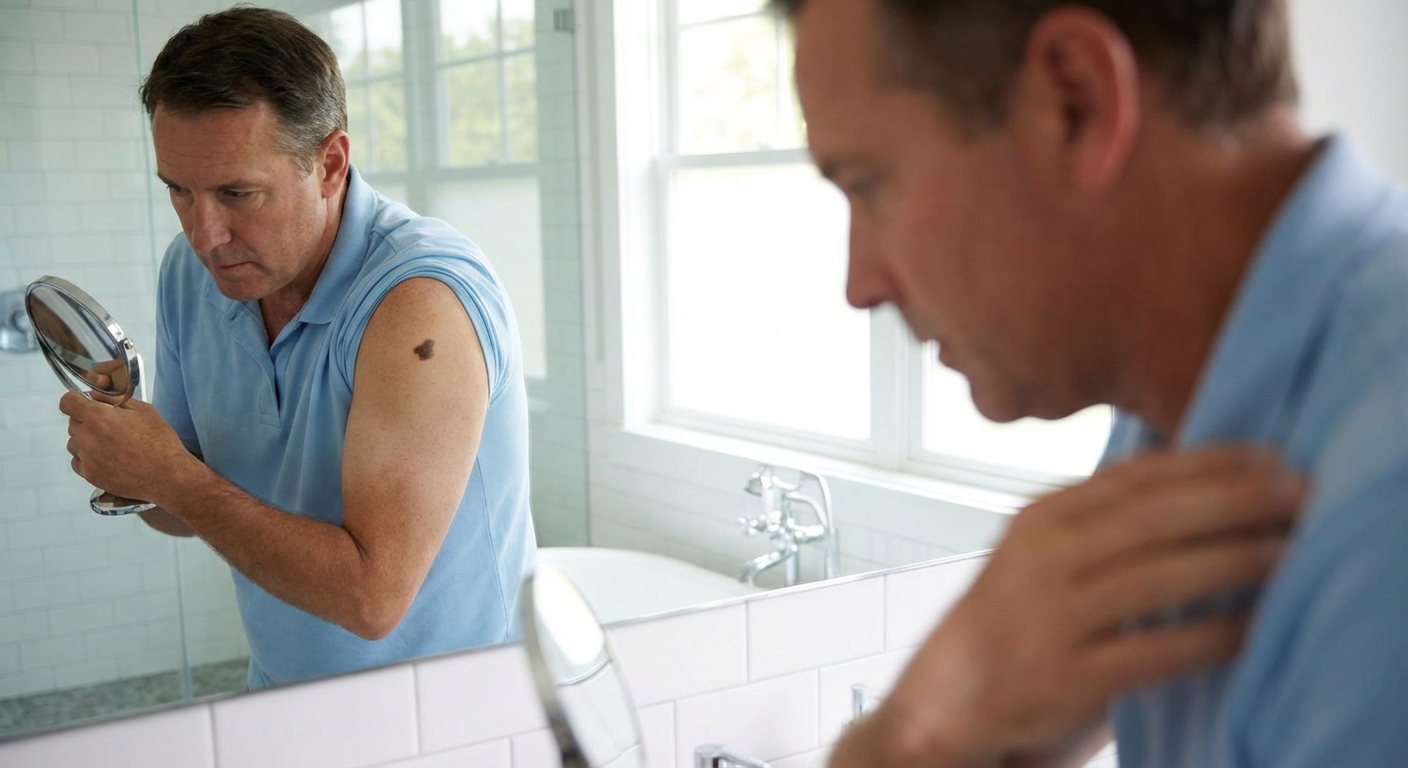
a tiny, weird freckle on my shoulder that wouldn’t stop bugging me. It didn’t hurt. It wasn’t huge. It just looked...off.
When I finally showed it to a dermatologist, she paused longer than I was comfortable with and said, “Good call coming in.” That was the moment melanoma stopped being an abstract fear and turned into something very real on my own skin.
I’m sharing what I’ve learned since then, both from my own experience and from diving deep into the research, so you can catch potential warning signs way earlier than I did.
What Melanoma Actually Is (No, It’s Not “Just a Mole”)
Melanoma is a type of skin cancer that starts in melanocytes – the pigment-producing cells that give your skin, hair, and eyes their color. Unlike many other skin cancers, melanoma is notorious because it can spread (metastasize) to other parts of the body if it’s not caught early.
According to the American Cancer Society, melanoma accounts for only about 1% of skin cancer cases but causes a large majority of skin cancer deaths. In 2024, they estimated over 100,000 new melanomas would be diagnosed in the U.S. alone.
What really stuck with me when I dug into the data: early-stage melanoma (caught before it spreads) has a 5‑year survival rate of around 99%. Once it reaches distant organs, that number drops dramatically. That’s why recognizing warning signs is not “nice to know” – it’s genuinely life-saving.
The ABCDE Rule: The Basics Everyone Should Have Memorized
When I first heard doctors talk about the ABCDE rule, I thought it sounded like something from a pamphlet no one reads. Then I watched my dermatologist literally go through each letter while examining my skin.
Here’s the breakdown, in plain language:
A – AsymmetryIf you draw an imaginary line through the middle of the mole, do the halves look different? In my case, one side of my suspicious spot was chunkier and darker than the other. That asymmetry was her first red flag.
B – BorderHealthy moles usually have smooth, even borders. Melanomas can have jagged, blurred, or scalloped edges. Mine looked like someone with a shaky hand had drawn around it.
C – ColorMultiple colors in one spot – tan, brown, black, red, even white or blue – are concerning. The one that got my attention had a darker center with a lighter brown halo around it, almost like it couldn’t make up its mind.
D – DiameterAnything larger than about 6 mm (think pencil eraser) deserves a closer look – but this is where nuance matters. My dermatologist was very clear: melanomas can be smaller than that. So diameter is a clue, not a rule.
E – EvolvingThis is the big one. If a mole or spot is changing – in size, shape, color, elevation, or symptoms (itching, bleeding, crusting) – that’s your sign to stop Googling and book an actual appointment.
When I tracked photos of my spot over a few months (yes, I went full detective), I could see it had darkened and expanded slightly. That evolving pattern is what made me finally pick up the phone.
The “Ugly Duckling” Sign: The Trick That Changed How I Look at My Skin
One thing my dermatologist said that I’ll never forget: “Look for the mole that doesn’t match the others.”
That’s the “ugly duckling” sign – a surprisingly powerful way to catch trouble early:
- If you have lots of small, light-brown moles and one darker, blotchy one – that’s the ugly duckling.
- If most of your moles are round and flat and one is raised, weirdly shaped, or just different – that’s the ugly duckling.
When I tested this on my own skin (yes, standing half-naked in good bathroom lighting), my suspicious spot absolutely stood out from the rest. It wasn’t that it was huge or horrifying – it was just different. That subtle mismatch is exactly what melanoma can look like early on.
Sneaky Places Melanoma Hides (That I Honestly Never Checked Before)
I used to think checking for skin cancer meant glancing at my arms and maybe my face. Then my dermatologist handed me a mirror and said, “Let’s look at your scalp and the bottoms of your feet.” I felt instantly called out.
Melanoma can appear in places that rarely see the sun, including:
- Scalp and hairline – especially dangerous because hair hides it. I now ask my hairstylist to flag anything weird they notice.
- Under nails (subungual melanoma) – can show up as a dark streak or spot, often mistaken for a bruise. If it doesn’t grow out with the nail, that’s suspicious.
- Palms, soles, between toes and fingers – especially in people with darker skin tones, where melanoma often appears in these acral sites.
- Genital area and buttocks – awkward to talk about, but your skin doesn’t care what’s “polite.” Melanoma can show up there too.
The most humbling part of my full-body skin check was realizing how many spots I literally never see without help – like the back of my thighs or behind my ears. Now I do a regular self-check with a handheld mirror and, if I’m being honest, some seriously unflattering angles.
What Melanoma Feels Like (and What It Usually Doesn’t)
One sneaky thing about melanoma: it’s often painless. That false sense of “If it doesn’t hurt, it’s fine” kept me from going in sooner.
From my dermatologist and the research I’ve read, here are some symptom patterns:
Common warning sensations and changes:- Itching or tenderness in a mole that never bothered you before
- Bleeding or oozing without any obvious injury
- Crusting, scaling, or a sore that doesn’t heal
- A new bump that looks shiny, firm, or strange compared to your other moles
- Whether it’s early or advanced just by touch
- Whether it’s “just a mole” vs melanoma without a biopsy
That last one matters. I asked my dermatologist point-blank, “Can you tell by looking?” She said, “I can be suspicious by looking. I can only be sure by testing.” That honesty made me trust her a lot more.
Who’s Actually at Higher Risk (Beyond the Obvious)
I grew up assuming risk was basically “pale and burns easily = doomed.” The truth is more layered.
Factors that raise melanoma risk include:
- History of blistering sunburns, especially in childhood or adolescence
- Indoor tanning – even a few sessions significantly boost risk; the World Health Organization classifies tanning beds as Group 1 carcinogens (same category as tobacco)
- Fair skin, light eyes, red or blond hair – but melanoma absolutely affects people with darker skin too, often diagnosed later and in different locations (like palms and soles)
- Family history of melanoma or genetic mutations (like CDKN2A)
- Having many moles or atypical (dysplastic) moles
- Previous melanoma or other skin cancers
In my experience, the most dangerous mindset isn’t being high-risk; it’s thinking you’re low risk and therefore “don’t need to worry.” One of my friends with medium-dark skin was stunned when her dermatologist found an early melanoma on her foot.
Getting Checked: What Actually Happens at a Skin Exam
I delayed my first full-body skin exam because I imagined something way more embarrassing and intimidating than reality. Here’s what it was really like:
- Quick history chat – sun exposure, tanning, family history, weird spots I’d noticed.
- Gown on, modesty intact – they uncover one area at a time; you’re not just on display.
- Head-to-toe visual check – scalp, behind ears, back, buttocks, legs, feet, between toes, nails. It’s clinical, not awkward.
- Dermatoscope time – this is a small handheld device that lets them see structures under the surface of the skin. When my dermatologist zoomed in on my suspicious spot, she showed me the irregular pigment network and said, “That’s why I want to biopsy this.”
- Biopsy if needed – a quick, numbed skin sample. It looks more dramatic than it feels.
The downside: you might leave with tiny bandages and some nerves while waiting for results. The upside: you gain a real baseline for your skin and a pro’s eyes on spots you’d never see alone.
Prevention and Reality: What Actually Helps (and What’s Overhyped)
When I overhauled my sun habits after that scare, I tried pretty much everything. Here’s the honest breakdown of what’s worth the effort.
What truly helps:- Broad-spectrum sunscreen (SPF 30 or higher), applied generously and reapplied every 2 hours outdoors or after swimming/sweating. I tested “a dab here and there” vs a full teaspoon per limb – spoiler: the dab routine gave me burns.
- Seeking shade and avoiding peak sun (10am–4pm) when possible.
- UPF clothing, hats, and sunglasses – I was skeptical until I spent a beach day in a long-sleeve UPF shirt and didn’t burn at all while my friends were lobster-red.
- Regular self-exams plus professional skin checks on a schedule recommended by your dermatologist.
- “Base tans” from tanning beds – they don’t protect you; they just damage your skin before you go outside. Multiple studies link indoor tanning with significantly higher melanoma risk.
- Only checking “ugly” spots – some melanomas look subtle or even kind of boring.
- Apps that claim to diagnose melanoma from photos – these can be helpful prompts, but they are nowhere near as reliable as a dermatologist with a dermatoscope and, if needed, a biopsy.
No prevention strategy is perfect – even people who are really careful can develop melanoma – but the combination of sun protection + regular checks shifts the odds strongly in your favor.
When to Stop Scrolling and Call a Dermatologist
If you’re reading this and thinking of a specific mole or spot, don’t ignore that instinct. Based on what I’ve learned (and what my dermatologist drilled into me), it’s time to book an appointment if you notice:
- A new mole after age 30 that looks different from your others
- Any mole or spot that matches one or more ABCDE criteria
- A streak in a fingernail or toenail that isn’t from trauma and doesn’t grow out
- A sore that doesn’t heal within a few weeks
- A mole that starts itching, bleeding, or changing for no clear reason
The worst-case scenario for going in “too early” is a quick visit and some reassurance. The worst-case scenario for waiting too long is a completely different story.
My own biopsy came back atypical but not full-blown melanoma. I needed a wider excision and a short season of wearing big bandages and loose shirts. Was it annoying? Yes. Was it worth avoiding the what-if spiral? Absolutely.
If one person ends up getting a weird little spot checked because you read this, I’m calling that a win.
Sources
- American Cancer Society – Key Statistics for Melanoma Skin Cancer – Incidence and survival data
- Centers for Disease Control and Prevention – Melanoma – Overview, risk factors, and prevention
- Mayo Clinic – Melanoma: Symptoms and Causes – Clinical signs and risk details
- National Cancer Institute – Melanoma Treatment (PDQ) – In-depth clinical and staging information
- World Health Organization – Artificial Tanning Devices – Health risks of indoor tanning