Guide to Natural Sinus Congestion and Pressure Relief
a full month — where my face felt like it was being inflated with a bicycle pump. That’s when I went down the rabbit hole of natural sinus relief.
This is the guide I wish I’d had back then.
What’s Actually Happening in Your Sinuses?
When your sinuses clog up, it’s rarely just “mucus being dramatic.” Inside your face you’ve got air-filled cavities (frontal, maxillary, ethmoid, sphenoid sinuses). Their lining is covered with cilia — tiny hairlike structures that sweep mucus out like microscopic brooms.
When you’re sick, dealing with allergies, or breathing dry/irritating air:
- The mucous membranes swell (inflammation)
- Mucus gets thicker and stickier
- Cilia slow down or stall
End result: pressure, pain, post-nasal drip, headache, and that charming “I’m talking through a pillow” voice.
In my experience, the goal of natural relief isn’t just “dry it all up,” it’s:
- Reduce inflammation
- Thin the mucus
- Help it drain properly
Once I started approaching it that way, things got a lot easier.
Saline Rinses: The First Thing I Recommend to Anyone
I’ll be honest: the first time I tried a neti pot, I was convinced I was waterboarding myself. Then I saw the results.
Why saline works
Sterile saline (salt water) rinse helps:
- Flush out allergens, irritants, and thick mucus
- Restore normal mucociliary clearance (that broom action)
- Gently shrink swollen tissues via the salt effect
The American Academy of Otolaryngology actually recommends saline irrigation for chronic sinus issues and allergic rhinitis. There was a 2016 review in Cochrane Database of Systematic Reviews showing nasal saline can improve symptoms and reduce medication use in chronic sinusitis.
How I use it (and what I learned the hard way)
When I tested this during my month-long congestion saga, I did it twice daily:
- Morning: squeeze bottle saline rinse in the shower
- Evening: neti pot rinse before bed
A few key lessons from my own trial and error:
- Use distilled or previously boiled water. Tap water can contain organisms (including rare but deadly Naegleria fowleri). The CDC is extremely clear on this.
- Don’t overdo the salt. Too strong burns; too weak feels useless. I stick to pre-mixed saline packets now.
- Lean forward, mouth open. If you tilt your head wrong, it will go down your throat. Ask me how I know.
Steam, Humidity & Heat: Old-School But Surprisingly Powerful
When I was at my worst, I literally camped out in my bathroom running a hot shower for steam. Not the most eco-friendly strategy, but the relief was real.
Why moisture helps
Warm, moist air:
- Thins mucus so it can drain
- Soothes irritated mucosal lining
- Helps cilia move more effectively
What’s actually helped me
- Hot shower + deep nasal breathing: Temporary but fast relief.
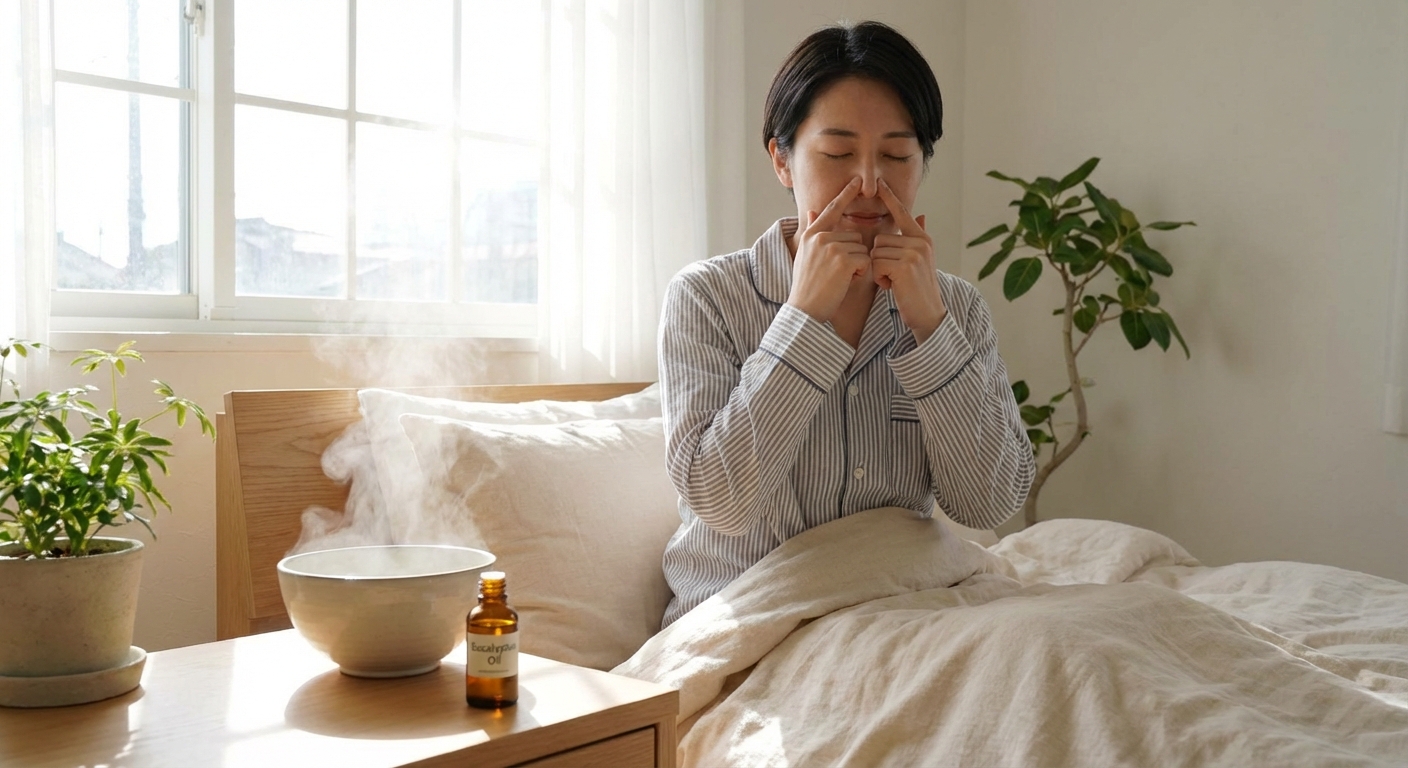
- Bowl of hot water + towel over head: I add a drop or two of eucalyptus oil near the bowl, not in it, so it doesn’t irritate.
- Cool-mist humidifier by the bed: This changed my sleep. I keep humidity around 40–50% — higher than that can encourage mold.
There’s decent supportive evidence that humidified air can ease upper respiratory symptoms, especially in dry climates or heated indoor air. It’s not a cure, but for me it’s a quality-of-life multiplier.
Pros: Non-drug, works fast, good for kids (minus essential oils directly on them). Cons: Only lasts while you’re using it; humidifiers need meticulous cleaning to avoid mold and bacteria.Strategic Hydration & Foods That Don’t Make It Worse
One thing I completely underestimated: how much what I drank and ate changed my congestion.
Hydration tricks that actually made a difference
When I consciously pushed fluids for a week, congestion loosened about day three. I’m talking:
- Water
- Herbal teas (ginger, chamomile, peppermint)
- Broths
Mucus is mostly water. When you’re under-hydrated, it gets gluey and stubborn. Thin mucus drains better. Simple but very real.
I also like a warm mug of water with lemon and a tiny bit of honey. Honey has mild antimicrobial and soothing properties; there’s decent evidence it helps with cough, especially in kids (over 1 year old).
Foods: what helped vs what… didn’t
This part is personal, but here’s what I noticed testing this on myself:
- Dairy: For me, heavy dairy (cream, cheese) made mucus feel thicker and my throat more coated. Studies are mixed, but if you feel worse with dairy, it’s not in your head.
- Ultra-processed, salty foods: Bloat + inflammation = more facial pressure.
- Spicy foods: A double-edged sword. Capsaicin opened my nose right up… for about 20 minutes. Then rebound drip. I use it for short-term relief only.
Herbal & Natural Helpers: What’s Worth Considering
There’s a lot of hype here, so I’ll stick to what I’ve personally tried and what has at least some evidence behind it.
1. Eucalyptus & menthol (topical or inhaled)
When I was so stuffed I could barely sleep, a tiny dab of eucalyptus-menthol balm on my chest and under my nose made me feel at least 30% more human.
They don’t actually “unclog” your nose; they trick cold receptors into a cooling sensation that the brain interprets as more airflow. But subjectively, it’s pretty wonderful.
Just don’t:
- Use straight essential oil on skin (always dilute)
- Use strong menthol on infants or toddlers (risk of respiratory irritation)
2. Bromelain (from pineapple)
I was skeptical of this one until I read some of the research. Bromelain is a proteolytic enzyme found in pineapple stems. Several studies (including a 2013 paper in Laryngoscope) suggest bromelain can reduce sinusitis symptoms, likely by anti-inflammatory and mucolytic effects.
I tried a standardized bromelain supplement during one particularly bad flare. My subjective take: less facial pain, slightly quicker drainage. Not magic, but noticeable.
Warning: Blood thinners + bromelain can be a risky combo. Always clear supplements with your clinician.3. Quercetin & N-acetylcysteine (NAC)
On my “I’m done suffering” experiment week, I tried combining:
- Quercetin: A flavonoid that stabilizes mast cells and may reduce histamine release.
- NAC: A mucolytic that can break up thick mucus.
I used them alongside saline rinses and antihistamines during peak allergy season. My experience: fewer “solid brick” sinus days. Evidence is still emerging, but both have plausible mechanisms and some supporting data.
Again: supplements aren’t candy. They can interact with meds and conditions.
Pros: Helpful for some people, can support conventional treatment, often well-tolerated. Cons: Mixed evidence; quality of supplements varies wildly; not for everyone medically.Physical Techniques: Gravity Is Your Friend
The un-sexiest trick that helped me: sinus positioning.
Gentle sinus massage
When my maxillary sinuses (cheeks) were pounding, I’d:
- Press gently along the sides of my nose, under my cheekbones
- Make small circles along my eyebrows and between my eyes
This encourages lymphatic drainage and subjectively reduced some of the dull ache. There aren’t huge clinical trials on “face rubs,” but many ENT clinicians do recommend gentle massage.
Sleeping and posture hacks
Things that clearly backfired for me:
- Lying completely flat
- Sleeping on my stomach, face smashed into the pillow
What worked better:
- Elevating the head of the bed 4–6 inches or using two pillows
- Side sleeping on the “less congested” side to encourage drainage
Is it glamorous? No. Did it reduce that horrible morning-pressure feeling? Absolutely.
Pros: Free, low risk, can pair with every other strategy. Cons: Mild effects; won’t fix a truly severe infection on its own.When Natural Relief Isn’t Enough
I love natural approaches, but I also really like being able to breathe and not getting complications. Here’s where I personally draw the line and call a pro.
Red flags that need medical evaluation
If I have any of these, I stop trying to “herb” my way through it:
- Sinus pain/pressure lasting more than 10 days without improvement
- Symptoms getting worse again after starting to get better
- High fever (≥38.9°C / 102°F)
- Severe one-sided facial or tooth pain
- Swelling around eyes, vision changes, or severe headache
- Thick green/yellow discharge plus feeling systemically ill
The CDC and Mayo Clinic both point out that viral sinusitis is far more common than bacterial, and antibiotics are often overprescribed. But real bacterial sinusitis and complications like orbital cellulitis are no joke.
Also, chronic sinus congestion can signal:
- Uncontrolled allergies
- Structural issues (deviated septum, nasal polyps)
- Chronic rhinosinusitis that may need more advanced care
I’ve personally benefited from seeing an ENT and getting a CT scan when my symptoms were dragging past the “this is probably just a cold” timeline.
How I’d Build a Natural Sinus Relief Routine from Scratch
If I had to start over from Day 1 of a congestion flare, here’s exactly what I’d do — balancing evidence, safety, and what’s actually doable when you feel awful.
Day 1–3 (early stage):- Push fluids hard (water, herbal tea, broth)
- Start warm steam once or twice a day
- Run a clean humidifier at night
- Add gentle saline spray (not full irrigation yet if I’m very swollen)
- Upgrade to full saline rinses 1–2x daily with distilled/boiled water
- Continue steam and humidity
- Use eucalyptus/menthol chest rub at night
- Clean up diet (less dairy/processed, more anti-inflammatory foods)
- Consider asking my clinician about adding something like bromelain or NAC
- Reassess symptoms honestly
- If red flags appear or I’m just stuck in misery, see a clinician or ENT
Natural doesn’t have to mean “no medicine ever.” For me, the sweet spot has been combining smart, evidence-aligned home strategies with medical care when needed.
If you’re reading this with a throbbing face and a box of tissues nearby, I’ve been there. The good news is you’re not at the mercy of your sinuses. With a few consistent habits — saline, steam, hydration, and smart positioning — you can stack the odds heavily toward relief.
Sources
- CDC – Sinus Infection (Sinusitis) - Overview of causes, symptoms, and when to seek medical care
- Mayo Clinic – Chronic sinusitis - Detailed explanation of chronic sinusitis and treatment options
- Cleveland Clinic – Saline Nasal Irrigation - How and why to use saline rinses safely
- National Institutes of Health – Bromelain: biochemistry and therapeutic applications - Review of bromelain’s mechanisms and clinical uses
- Harvard Health – Humidity and your health - Discussion of humidifiers, humidity levels, and respiratory symptoms