Guide to Relieving Eczema Itching and Discomfort
, that “itch-scratch-cry-repeat” cycle is painfully familiar.
I’m not a dermatologist, but I’ve spent years juggling prescriptions, lifestyle tweaks, and very weird home remedies (yes, there was a cabbage-leaf phase). Here’s what’s actually helped dial down my eczema itching and discomfort, backed by research and real-world trial and error.
Understanding What’s Actually Causing the Itch
When I finally stopped treating eczema as “just dry skin,” things started to change.
Eczema is a chronic inflammatory skin condition where your skin barrier is damaged. That barrier is supposed to keep moisture in and irritants out. When it’s leaky:
- Water escapes → your skin dries and cracks.
- Irritants, allergens, and microbes sneak in → your immune system freaks out.
This triggers inflammation, histamine release, and nerve hypersensitivity. That’s why the itch can feel deep and electric, not just surface-level dryness.
The American Academy of Dermatology estimates that about 1 in 10 people in the U.S. has eczema at some point, and up to 25% of children are affected. Some grow out of it; others (hi) keep it into adulthood.[^aad]
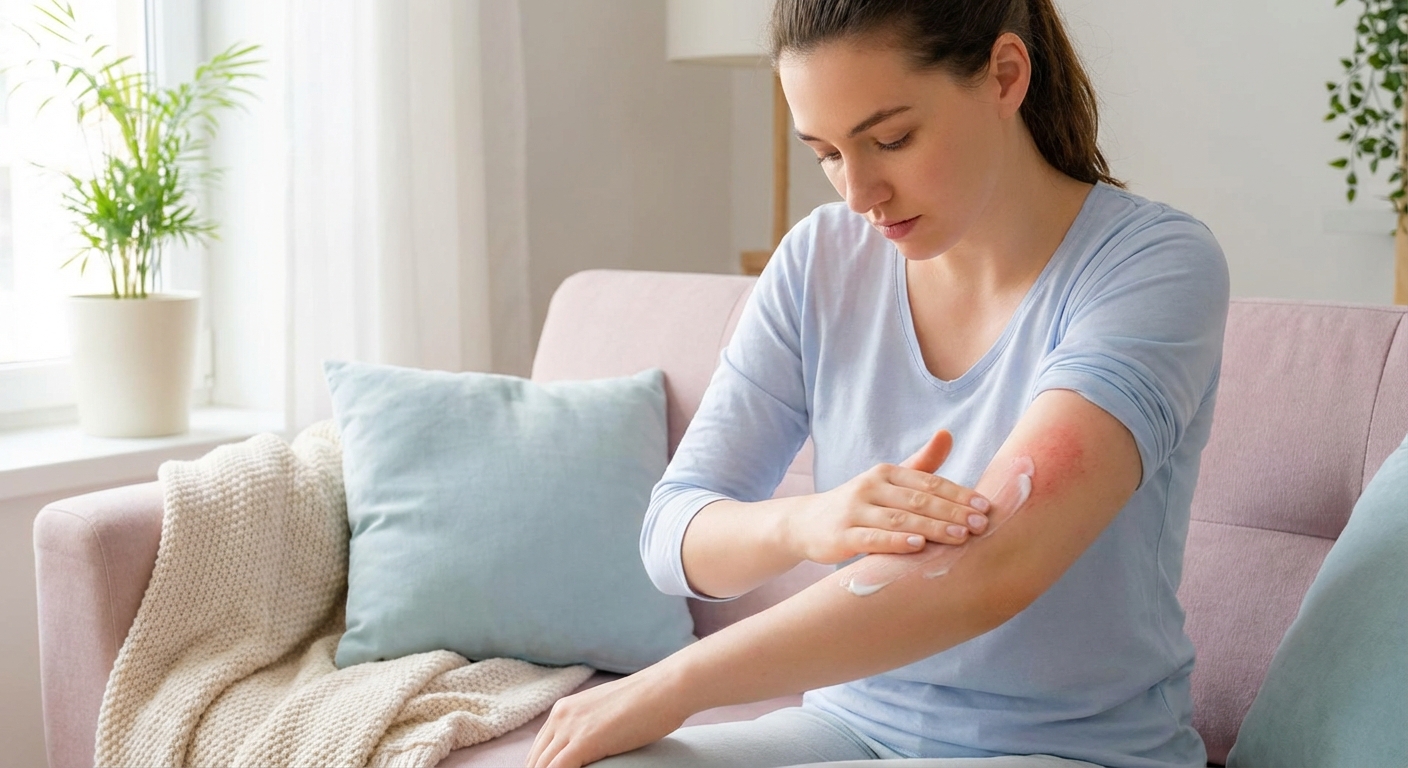
I noticed my own flares were worse when:
- My skin was dry (cold weather, long hot showers)
- I was stressed or sleep-deprived
- I used fragranced products
- I sweated and didn’t rinse off quickly
Once I started tracking triggers like a detective with a journal app, patterns jumped out.
Step 1: Master the Moisture Game (Barrier Repair Is Everything)
I used to slap on lotion once a day and wonder why my eczema laughed in my face.
What worked better when I tested it:
The “3-Minute Rule” After Showering
Dermatologists talk about applying moisturizer within 3 minutes of getting out of the shower. When I actually tried this consistently, my skin felt less tight and I scratched less at night.
My routine that helped:
- Short, lukewarm shower (5–10 minutes max).
- Pat dry gently; don’t rub.
- Within 3 minutes, apply a thick moisturizer.
Creams vs Lotions vs Ointments
In my experience:
- Lotions: Felt nice, did almost nothing during flare-ups.
- Creams: Pretty good for daytime.
- Ointments (petrolatum-based): Unsexy, sticky, insanely effective during bad flares.
A 2017 review in the Journal of Allergy and Clinical Immunology highlighted that regular use of emollients can reduce flare frequency and the need for steroids.[^jaci]
Personally, when my skin is cracked and burning, I reach for:
- A bland cream with ceramides (they help repair the barrier)
- Or straight-up petroleum jelly on the worst patches at night
Downside: Ointments are greasy. My compromise was “eczema pajamas” and old pillowcases.
Step 2: Cooling the Itch Without Destroying Your Skin
My worst habit used to be scratching until I felt a sting. That sting felt like relief… for 10 seconds. Then the itch roared back worse.
Here’s what actually helped me break that cycle.
Cold > Scratching
I recently discovered that keeping a couple of soft gel ice packs in the freezer is a game changer.
When an area starts burning:
- I wrap a cold pack in a thin cloth
- Hold it on the itchy patch for 5–10 minutes
That numbs the nerve endings just enough. Sometimes even a cold damp washcloth does the trick.
The “Press, Don’t Scratch” Trick
When I absolutely couldn’t resist, I tried pressing or pinching lightly over clothing instead of digging my nails in. It’s not perfect, but my skin looked way less shredded.
I also kept my nails very short. Not glamorous, but it reduced infection and scarring.
Anti-Itch Products: What Worked (and What Backfired)
- Colloidal oatmeal creams: Super soothing for mild flares; too weak alone for severe ones, but great as a base layer.
- 1% hydrocortisone cream: Helped small patches when used for a few days. When I overused it, my skin got thinner and more sensitive.
- Menthol/camphor lotions: Gave a cooling distraction, but sometimes burned if the skin was broken.
I learned the hard way: if the skin is open or oozing, simple bland moisturizers are safer than fancy “cooling” products.
Step 3: Smarter Use of Prescription Treatments
There was a point where I tried to “tough it out” without medication. My skin just got worse and more infected. Once I accepted that eczema is a medical condition, not a willpower test, things improved.
When I finally worked with a dermatologist, these options came up.
Topical Steroids (Used Carefully)
I was prescribed medium-potency topical steroids for flares. They:
- Reduced redness and swelling
- Calmed the itch enough so I could sleep
But there are downsides:
- Overuse can cause skin thinning, stretch marks, or discoloration
- Stopping abruptly after heavy use can trigger rebound flares
What helped me:
- Using them only on active red patches
- Limiting to the shortest time that worked (often 5–7 days)
- Then switching back to heavy moisturizers
Non-Steroid Topicals
When I asked about steroid-sparing options, my dermatologist mentioned:
- Topical calcineurin inhibitors (like tacrolimus, pimecrolimus)
- Topical PDE4 inhibitors (like crisaborole)
When I tested tacrolimus on my eyelids (a super-sensitive area), the burning sensation for the first few days was real—but then it calmed and became a nice long-term option without the risk of thinning.
Biologics and Advanced Treatments
For severe cases, there are now biologic drugs like dupilumab that target specific immune pathways. Clinical trials have shown significant itch reduction and better sleep in many patients.
I haven’t needed these personally, but a friend with full-body eczema went on dupilumab and described it as “like someone turned down the volume on my immune system.”
Downsides:
- Expensive
- Require injections
- Not everyone responds equally
This is definitely in the “talk in-depth with a dermatologist” category.
Step 4: Daily Habits That Quiet Flares Instead of Feeding Them
When I tracked my own patterns, lifestyle played a much bigger role than I wanted to admit.
Showers, Soaps, and Everything That Touches Your Skin
What helped me:
- Short, lukewarm showers instead of long, hot ones
- Swapping harsh soaps for fragrance-free, pH-balanced cleansers
- Patting dry instead of rubbing
- Avoiding fabric softeners and using fragrance-free detergents
The National Eczema Association strongly emphasizes fragrance-free and dye-free products for a reason—they’re a common trigger.
Clothes That Don’t Make You Want to Claw Your Skin Off
When I tested different fabrics, I noticed:
- Cotton and bamboo: Way more comfortable
- Wool and some synthetics: Instant itch-party
I also started cutting off scratchy tags like a maniac. Tiny changes, big difference.
Sweat, Stress, and Sleep
I used to think my stress had nothing to do with my skin. Then I had a brutal deadline week and my eczema exploded.
Research has shown that psychological stress can worsen atopic dermatitis by altering immune activity and the skin barrier.[^nih]
What helped me (imperfectly):
- Rinsing off sweat quickly after workouts
- Doing 5–10 minutes of deep breathing or stretching before bed
- Treating sleep like a non-negotiable medicine for my skin
Step 5: Being Real About “Natural” Remedies
I went through a phase where I tried every “miracle natural cure” I could find on random blogs. Some helped. Some absolutely didn’t.
Things That Actually Helped (For Me)
- Colloidal oatmeal baths: When I tested a lukewarm oatmeal bath, my skin felt calmer and less inflamed afterward.
- Sunflower seed oil (not essential oil): Applied after bathing, it helped my skin hold moisture better.
Things That Were Overhyped or Risky
- Straight coconut oil: Everyone online swore by it. On my skin, it clogged pores and made some areas angrier.
- Apple cider vinegar soaks: Burned like crazy on broken skin. Some dermatologists warn it can irritate if not carefully diluted.
- Random essential oils: Lavender, tea tree, etc. Often made things worse. Fragrance is a big trigger for many with eczema.
I now have a rule: if it’s going on raw, broken, or inflamed skin, I want some kind of evidence or at least a green light from a professional.
When to Stop Experimenting and See a Doctor
There was a point where I realized my DIY approach was causing more harm than good.
I’d say it’s time to get professional help if:
- You’re losing sleep regularly from itching
- Your skin is oozing, crusting, or very painful (infection risk)
- Over-the-counter creams barely touch the itch
- Eczema is messing with your work, school, or social life
A dermatologist can:
- Confirm it’s actually eczema (and not psoriasis, contact dermatitis, scabies, etc.)
- Tailor a treatment plan to your skin type and severity
- Monitor side effects and adjust meds over time
One of the most relieving things for me was hearing, “You’re not failing at skincare; you have a chronic inflammatory disease.” That reframed everything.
What’s Actually Realistic
In my experience, expecting to “cure” eczema overnight leads straight to disappointment and desperation.
What has been realistic for me:
- Fewer flares
- Shorter, less intense flares
- Less scratching damage
- Better sleep and less constant obsession over my skin
It’s a mix of:
- Consistent barrier care (moisturizer, gentle cleansing)
- Smart use of medications when needed
- Avoiding known triggers where I can
- Accepting that some days, my skin has its own agenda
If you’re in the middle of a brutal flare right now, you’re not alone, and you’re definitely not “too sensitive” or imagining it. Eczema itch is real, brutal, and treatable. Not perfectly, not instantly—but meaningfully.
And if you take nothing else from my trial-and-error years: moisturize within 3 minutes of showering, keep your products boring and fragrance-free, and don’t be afraid to bring in a dermatologist as your co-pilot.
Sources
- American Academy of Dermatology – Atopic dermatitis: Overview - Clinical overview, symptoms, and treatment options for eczema.
- National Eczema Association – Eczema Symptoms and Causes - Patient-focused breakdown of triggers, management, and daily care.
- NIH – Atopic Dermatitis (MedlinePlus) - Government-backed information on eczema, treatments, and complications.
- Mansouri Y, Guttman-Yassky E. Immune Pathways in Atopic Dermatitis. J Allergy Clin Immunol. 2017 - Research article explaining the immunology behind eczema.
- BBC – Eczema: Why the Itch is So Hard to Resist - Accessible explanation of the itch-scratch cycle and its biology.