Guide to Relieving Migraine Headaches
throw up from the pain pulsing behind my right eye. If you’re reading this, you probably don’t need anyone to convince you that migraines are a whole different beast.
I’ve spent years testing strategies, talking to neurologists, tracking triggers, and frankly, making a lot of mistakes. This guide is the playbook I wish I’d had at the beginning—practical, science-backed, and brutally honest about what actually helps and what’s just wellness fluff.
What’s Really Going On During a Migraine?
In my experience, understanding what is happening made it a lot easier to manage my migraines.
A migraine isn’t just pain. It’s a complex neurological event. According to the American Migraine Foundation, it involves changes in brain activity that affect nerve pathways and blood vessels, particularly around the trigeminal nerve and brainstem.
Some key pieces:
- Cortical spreading depression: a wave of electrical activity followed by a wave of reduced activity in the brain, often linked to aura.
- Neuroinflammation: release of neuropeptides like CGRP (calcitonin gene-related peptide) that cause inflammation and dilated blood vessels.
- Central sensitization: the brain basically gets “over-reactive” to pain signals over time.
When my neurologist first mentioned CGRP, I thought it sounded like a random stock ticker. Then I learned entire drug classes now target it specifically—that’s how central it is to migraine biology.
Step One: Get a Real Diagnosis (Not Just “Yeah, You Have Headaches”)
For years, I called everything a headache and washed down ibuprofen with coffee. When I finally saw a neurologist, she calmly explained I had chronic migraine—more than 15 headache days a month, with at least 8 having migraine features.
Common migraine features include:
- Throbbing or pulsing pain (often one-sided)
- Nausea and/or vomiting
- Sensitivity to light, sound, or smells
- Worsening with activity
- Sometimes aura: visual zigzags, blind spots, tingling, trouble speaking
If you’re getting disabling headaches regularly, or the pain feels like it’s hijacking your life, a visit to a neurologist or headache specialist is honestly worth its weight in gold.
Why this matters:- You might qualify for targeted treatments (like triptans or CGRP meds) instead of generic painkillers.
- You can rule out other causes (tumor anxiety is real, I’ve been there).
- You’ll have documentation if you need work/school accommodations.
The “Migraine Stack”: What I Use During an Attack
When I tested a one-pill-fixes-all approach, I lost. Hard. What works better for me is a stack—a set of actions I take as soon as I feel that early warning sign.
Here’s my personal stack, built with my doctor (not medical advice, just real life):
1. Early Meds (Don’t Wait Until It’s a Full-Blown Nightmare)
If I catch it early:
- Triptan: I use sumatriptan at the first clear sign of migraine. Triptans (like rizatriptan, zolmitriptan) work by acting on serotonin receptors and constricting dilated blood vessels.
- NSAID: I often pair it with naproxen (per my neurologist’s plan). Combination therapy is actually supported by studies for better relief.
Timing is everything. When I delayed meds “to see if it gets better,” it almost always got worse.
2. Sensory Shutdown: Dark, Quiet, Cool
I used to stubbornly power through at my laptop. Terrible idea.
What works better:
- I go to the darkest, quietest room I can find.
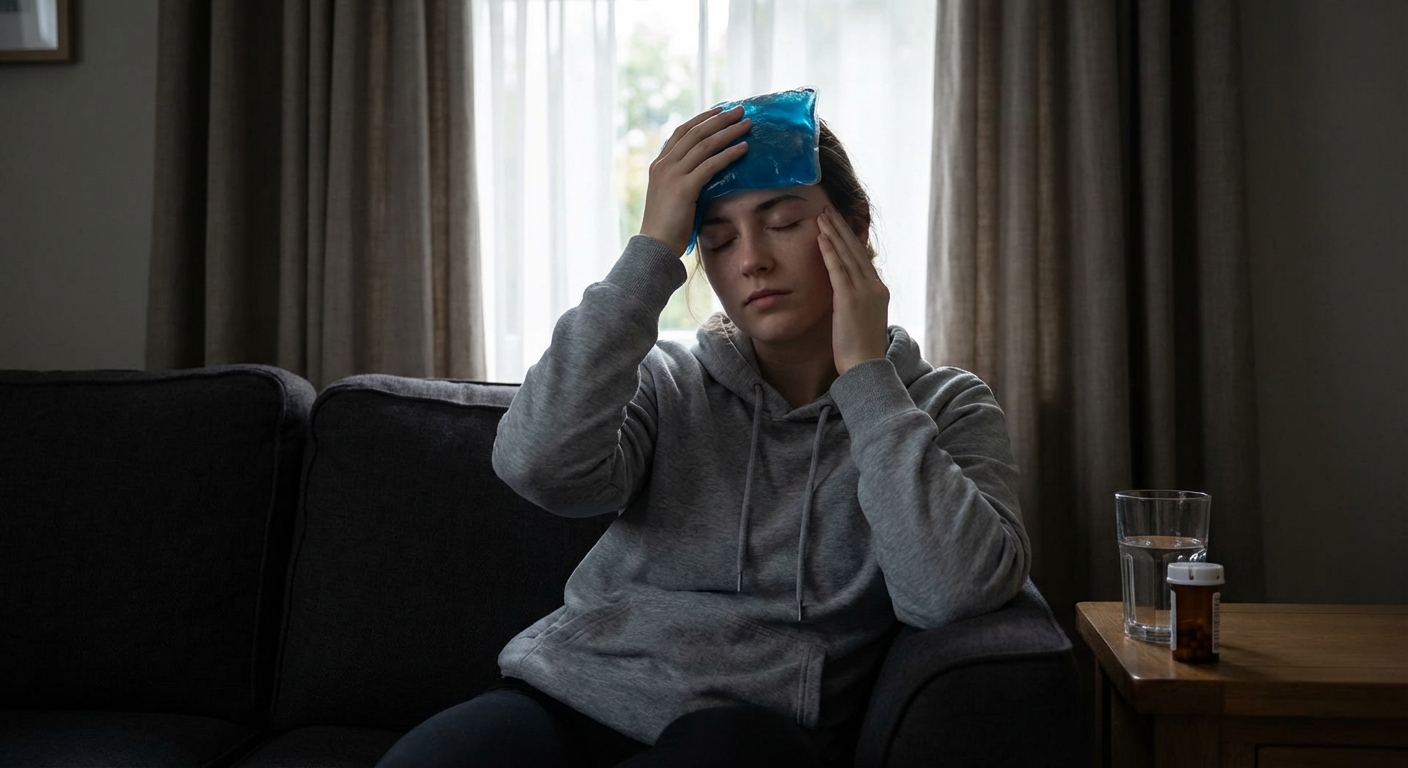
- I use a cool gel eye mask or a cold pack wrapped in a cloth on my forehead/neck.
- Noise-cancelling headphones with white noise or calm ambient sounds.
The combination of cool + darkness + stillness doesn’t cure the migraine, but it absolutely turns down the volume.
3. Hydration + Gentle Caffeine
When I tested this, I realized I usually either overdid the coffee or ignored fluids completely.
What works for me:
- 1 tall glass of water or an electrolyte drink
- A small amount of caffeine (like half a cup of coffee or strong tea) early on
There’s evidence that caffeine can enhance the effect of some pain meds for headaches—but too much, or taking it too late in the day, can backfire or trigger rebound headaches.
4. Nausea Control
Migraine nausea is its own special nightmare. I use an anti-nausea medication prescribed by my doctor on really bad days, which helps me keep fluids and meds down.
Non-prescription options I’ve tried:
- Ginger chews or capsules
- Deep, slow breathing while lying on my side
They’re not magic, but they take the edge off sometimes.
Preventing Migraines: The Less Glamorous, Way More Powerful Side
Relief during an attack is great. Reducing how often they happen is life-changing.
My Very Unsexy but Effective Routine
When I finally took prevention seriously, my migraine days dropped from around 12 a month to about 4–5. Not perfect, but dramatically better.
Here’s what consistently helps me:
#### 1. Sleep Regularity (Not Just “Get More Sleep”)
I noticed a pattern: staying up late one night? Migraine bait.
What I changed:
- Same wake-up and bedtime every single day, even weekends (within 30 minutes)
- No large meals or heavy screens in the last 60–90 minutes before bed
Sleep irregularity is a known migraine trigger. My neurologist called it “social jet lag,” which felt uncomfortably accurate.
#### 2. Trigger Awareness (Without Becoming Obsessed)
I used a migraine tracking app for three months. What surprised me:
- Red wine? No issue.
- Skipping meals? Massive trigger.
- Fluorescent office lighting? Sneaky but consistent enemy.
Research shows common triggers like stress, hormonal shifts, dehydration, certain foods, and sensory overload—but they’re highly individual. Tracking helped me separate real triggers from internet myths.
What I do now:
- No skipping meals (protein + complex carbs helps me).
- Sunglasses or blue-light filtering glasses under harsh lights.
- Extra hydration on busy/stressful days.
#### 3. Exercise (But the Right Kind, the Right Way)
When I tried going from zero to intense workouts, my body responded with—you guessed it—migraines.
The sweet spot for me:
- 20–30 minutes of moderate exercise (walking, cycling, light strength training) 4–5 days a week.
- Longer warm-up and cool-down to avoid sudden spikes in exertion.
Studies suggest regular aerobic exercise can reduce migraine frequency, but overexertion can trigger attacks. It’s a frustrating but real balancing act.
#### 4. Prescription Preventive Meds
When my migraines were at their worst, lifestyle changes alone weren’t enough.
Options my neurologist walked me through:
- Beta-blockers (like propranolol)
- Antidepressants (like amitriptyline)
- Anti-seizure meds (topiramate, etc.)
- CGRP monoclonal antibodies (erenumab, fremanezumab, etc.)
- OnabotulinumtoxinA (Botox) for chronic migraine
I ended up trying a low dose of a beta-blocker first. Side effects? Yes—some fatigue at the beginning. But my number of migraine days dropped enough that I could actually plan my week.
None of these options are one-size-fits-all. Some people swear by them; others can’t tolerate the side effects. That’s where working closely with a doctor who listens is absolutely key.
Complementary Approaches: What Actually Helped Me (and What Didn’t)
I’ve experimented with a lot. Some things genuinely helped; others were expensive disappointments.
Helped (At Least a Bit)
- Magnesium glycinate: When I took 200–400 mg daily (approved by my doctor), I had slightly fewer and milder attacks. There’s research backing magnesium for migraine prevention, especially in people with aura.
- Riboflavin (Vitamin B2): 400 mg/day is a common dose in studies. Took a couple of months to notice any difference, but it seemed to reduce attack frequency.
- Mindfulness / relaxation training: Doing 10 minutes of guided breathing most days lowered my stress baseline. Not a cure, but my “stress-triggered” attacks became less frequent.
Meh or Not Worth It (For Me)
- Expensive “migraine detox” diets: Super restrictive and honestly just made me stressed and hungry, which ironically triggered migraines.
- Random supplements from social media: If the ad copy sounds like magic, it almost never is.
That said, some people do incredibly well with targeted elimination diets or acupuncture. The key is to test things in a structured way: change one variable at a time, give it a realistic trial period, and track results.
Red Flags: When a “Migraine” Might Be Something Else
My rule: new, weird, or dramatically different symptoms = get checked.
According to the U.S. National Institute of Neurological Disorders and Stroke, you should seek urgent medical care for any of these:
- Sudden, severe “thunderclap” headache (worst of your life)
- Headache with confusion, trouble speaking, weakness, or loss of consciousness
- Headache with fever, stiff neck, rash, or seizures
- Headache after a significant head injury
Most migraines aren’t emergencies, but you don’t lose anything by being cautious once.
Building Your Own Migraine Playbook
If you’ve read this far, you probably know this already: there’s no single magic bullet. What actually works is a custom stack you build over time.
Here’s a simple way to start, based on what helped me the most:
- Get evaluated by a neurologist or headache specialist.
- Track for 4–6 weeks: sleep, food, stress, hormones, screen time, migraine days.
- Build a treatment stack for attacks: meds (with your doctor), dark room, cold packs, fluids, mild caffeine, nausea plan.
- Choose 2–3 preventive habits: sleep regularity, hydration, moderate exercise, magnesium/B2 if approved.
- Review every 2–3 months with your doctor to adjust.
When I finally treated migraines like a long-term condition to manage—not a random annoyance to fight one day at a time—the whole thing became less terrifying and more… negotiable.
No, my life isn’t migraine-free. But I’m not planning my weeks around “what if I’m knocked out that day” anymore. And that, to me, feels like getting my life back.
Sources
- American Migraine Foundation – What Is Migraine? - Clear overview of migraine mechanisms, symptoms, and subtypes.
- National Institute of Neurological Disorders and Stroke – Migraine Information Page - U.S. government resource on symptoms, diagnosis, treatment, and red flags.
- Mayo Clinic – Migraine: Diagnosis and Treatment - Detailed rundown of acute and preventive therapies, including new CGRP drugs.
- Harvard Health Publishing – Lifestyle Changes for Migraine - Discussion of lifestyle and behavioral strategies for managing migraines.
- NEJM – Calcitonin Gene–Related Peptide in Migraine - Review of CGRP’s role in migraine and related treatments.