Guide to Understanding Colon Polyps and Health Risks
I walked into the clinic thinking, “This is just a formality, I’m relatively healthy.” I walked out with photos of my own colon, a printout describing two adenomatous polyps, and a very real wake-up call about colon cancer risk.
So if you’ve just been told you have colon polyps—or you’re dreading your first colonoscopy—you’re not alone. I’ve been the nervous patient googling medical terms at 2 a.m., trying to decode what’s actually dangerous and what’s just medical jargon.
Let’s unpack colon polyps in plain language, with a mix of personal experience and what the research actually says.
What Exactly Are Colon Polyps?
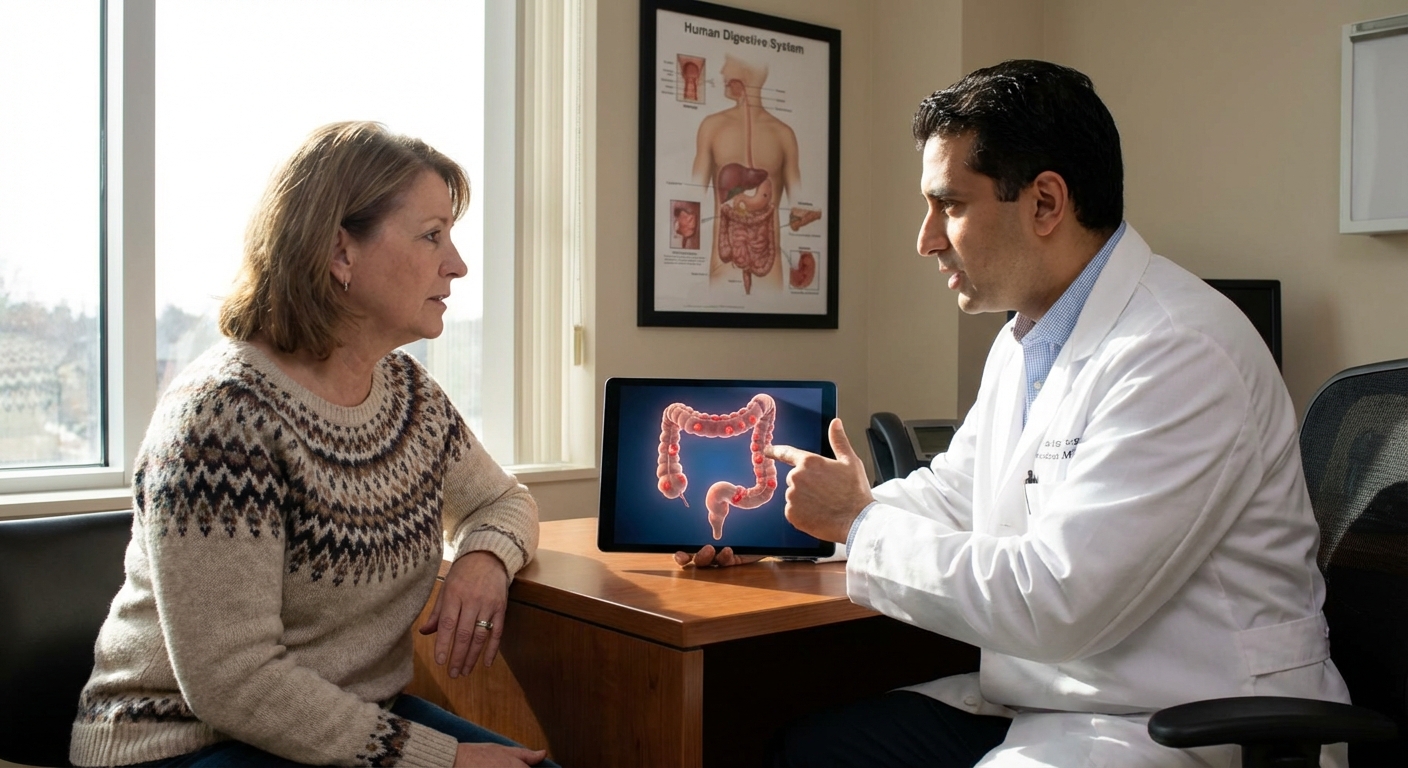
In my gastroenterologist’s words, a polyp is basically “a tiny bump or growth on the inner lining of your colon or rectum.” Some are flat, some are mushroom-shaped, some look like small blobs.
A few key points:
- Colon polyps are extremely common. Studies suggest that by age 50, about 25–30% of adults will have at least one polyp found on colonoscopy.
- Most polyps are benign (non-cancerous).
- But certain types can slowly turn into colorectal cancer over 10–15 years if they’re not removed.
When my doctor showed me the images, I was surprised how small they looked. One was about 4 mm, the other around 6 mm. Yet those tiny dots were the entire reason my surveillance schedule changed.
Types of Colon Polyps (And Which Ones Worry Doctors)
When I first saw my report, it listed “tubular adenoma” and “sessile serrated lesion.” At that point, it might as well have been written in Klingon. Here’s what those terms usually mean.
1. Hyperplastic Polyps
These are often the “good guys” (or at least the less scary ones).
- Usually small and found in the rectum or sigmoid colon
- Historically considered low risk for cancer
- Many guidelines don’t treat small hyperplastic polyps in the lower colon as a big red flag
My doctor basically shrugged at the tiny hyperplastic polyp found on a follow-up and said, “This one doesn’t keep me up at night.”
2. Adenomatous Polyps (Adenomas)
These are the ones that made me pay attention.
- Most common type of precancerous polyp
- Can be tubular, villous, or tubulovillous
- Villous features and larger size = higher risk of becoming cancer
The majority of colorectal cancers are believed to develop from adenomas via the so‑called adenoma–carcinoma sequence. That’s why guidelines recommend removing them.
3. Serrated Polyps
These confused me at first because they sound harmless, but they’re not always.
- Sessile serrated lesions (SSLs) and traditional serrated adenomas can be precancerous
- Often flatter and harder to spot during colonoscopy
- Associated with a “serrated pathway” to colorectal cancer, particularly in the right colon
One of my polyps was a small SSL, and my gastroenterologist told me, “These are sneaky. They can be flat, blend in with the mucosa, and that’s why a careful colonoscopy matters.”
How Do Colon Polyps Turn Into Cancer?
This was my biggest question: If I have polyps now, am I doomed later?
Short answer: no, not at all. But ignoring them is a bad strategy.
Here’s the basic process, simplified:
- A normal colon cell develops a genetic mutation.
- That mutated cell grows into a small polyp.
- Over years, additional mutations accumulate.
- The polyp can become dysplastic (abnormal cells) and eventually malignant.
The good news? This progression typically takes 10–15 years. That huge time window is exactly why colonoscopy screening works. You’re literally catching and removing precancerous tissue before it has a chance to transform.
In my pathology report, the phrase “no high-grade dysplasia” was the line that let me sleep that night.
Who’s at Higher Risk for Polyps and Colon Cancer?
When I started digging into this, I realized my risk profile wasn’t as low as I’d assumed.
Common risk factors include:
- Age: Risk jumps after age 45–50, which is why screening typically starts there.
- Family history: A first-degree relative (parent, sibling, child) with colon cancer or advanced polyps.
- Personal history: Previous polyps, inflammatory bowel disease (Crohn’s or ulcerative colitis).
- Lifestyle factors:
- Smoking
- Heavy alcohol use
- Obesity
- Sedentary lifestyle
- Diet high in processed meats and low in fiber
There are also rare genetic syndromes like familial adenomatous polyposis (FAP) and Lynch syndrome (hereditary nonpolyposis colorectal cancer) that dramatically increase risk and usually show up with strong family histories of early colon cancer.
My own wake-up: colorectal cancer in a relative in their 50s plus my own adenomas moved me into a closer surveillance group.
Symptoms: What You Might (or Might Not) Feel
Here’s the frustrating part:
Most colon polyps cause zero symptoms.I felt completely fine. I was working out, eating okay-ish, sleeping… decent. Absolutely nothing suggested there was anything growing in my colon.
When symptoms do show up, they might include:
- Rectal bleeding or blood in the stool
- Changes in bowel habits (diarrhea, constipation, narrowing of stool) lasting more than a few days
- Unexplained iron-deficiency anemia or fatigue
- Abdominal discomfort
But by the time symptoms are obvious, you might already be dealing with something more serious than a tiny polyp. That’s why waiting for symptoms is—bluntly—a bad plan.
How Polyps Are Found: My Colonoscopy Experience
I won’t sugarcoat it: I dreaded the prep.
You drink a powerful laxative solution, stay near a bathroom, and clear your bowel completely so the camera can see the lining of your colon. It’s not glamorous. But the actual colonoscopy procedure itself was easier than I expected.
Here’s how it went for me:
- I changed into a gown, got an IV, and talked to the nurse and anesthesiologist.
- They used conscious sedation (propofol in my case), and I essentially took the best nap of my year.
- The gastroenterologist inserted a thin, flexible tube with a camera (a colonoscope) and inspected the entire colon.
- When they saw a polyp, they passed tiny instruments through the scope to snip it off (polypectomy) or remove it with a loop (snare) using cautery.
- I woke up groggy, with a printout of images and a summary.
I didn’t feel the polyps being removed at all; no pain, just some bloating afterward from the air used during the exam.
Beyond colonoscopy, there are other tests:
- Stool tests (FIT, fecal DNA like Cologuard) — look for blood or DNA markers
- CT colonography — a “virtual colonoscopy” using CT imaging
In my experience, stool tests are a good start if you’re low risk, but they don’t remove polyps. If something is positive, you still end up needing a colonoscopy.
Are Colon Polyps Dangerous?
This is where nuance matters.
The Pros (or rather, the “less scary” side)
- Most small polyps never become cancer.
- If they’re found and removed early, your risk of colorectal cancer drops significantly.
- Large-scale studies show colonoscopy with polypectomy reduces colorectal cancer incidence and mortality.
The Cons (and real risks)
- Some polyps absolutely can evolve into cancer if ignored.
- Larger size (>10 mm), high-grade dysplasia, villous features, and certain serrated lesions are higher risk.
- Colonoscopy has small risks: bleeding, perforation (tear in the colon), adverse reactions to sedation.
My own risk–benefit calculation? I’d rather accept the tiny risk of a colonoscopy than roll the dice on undetected cancer.
Can You Prevent Colon Polyps?
There’s no magic food or supplement that guarantees a polyp-free colon. Anyone telling you otherwise is selling something.
But evidence does suggest you can lower risk:
- Diet: More fiber (fruits, vegetables, whole grains), less processed meat and charred red meat.
- Exercise: Regular physical activity is linked with reduced polyp and cancer risk.
- Weight: Maintaining a healthy weight helps.
- Smoking and alcohol: Quitting smoking and limiting heavy drinking are non-negotiable wins.
- Aspirin / NSAIDs: Some studies show low-dose aspirin can reduce polyp formation, especially in high-risk groups. But I’m not popping aspirin daily just because of that—there are bleeding risks and stomach issues. This is strictly a talk-to-your-doctor-first situation.
In my case, I made three practical changes after that colonoscopy:
- Added at least one genuinely high-fiber meal per day (not just promising myself I’d “eat healthier”).
- Cut back processed meats to “occasional treat” instead of “lazy weeknight staple.”
- Put my next colonoscopy on the calendar the same day I got the report.
How Often Do You Need Screening?
This part can be confusing because the schedule depends heavily on what’s found.
General (simplified) patterns from major guidelines:
- Average-risk adults with a clean colonoscopy: repeat every 10 years.
- 1–2 small (<10 mm) tubular adenomas: often repeat in 5–7 years.
- Multiple adenomas, larger size, high-grade dysplasia, or serrated lesions: repeat sooner, sometimes 3 years.
- Strong family history or genetic syndromes: tailored, often more frequent and starting earlier.
After my two small polyps, I was put on a 5‑year follow-up plan. When the letter came, I felt a weird mix of annoyance (“Already?”) and gratitude (“At least we’re watching this”).
If you’ve had polyps removed, your pathology report and your doctor’s recommendations are your roadmap. There’s no one-size-fits-all schedule.
When You Should Talk to a Doctor
From my experience—and the research—the red flags worth a conversation are:
- You’re 45 or older and haven’t had any colorectal cancer screening.
- You have a family history of colon cancer or advanced polyps.
- You’ve noticed rectal bleeding, unexplained anemia, or persistent changes in bowel habits.
Bring questions. Ask for your pathology results. Ask what type of polyps you had, how many, what size, and what that means for your future risk.
I’ve learned that the most reassuring thing isn’t a perfect report; it’s having a clear plan.
The Bottom Line I Wish I’d Heard Earlier
Colon polyps are common, sneaky, and often symptomless—but they’re also one of the most preventable stepping stones to cancer we know about.
My first colonoscopy felt like a hassle. Now I see it as one of the most high‑value health decisions I’ve made. Those tiny polyps were warnings, not verdicts.
If you’re on the fence about screening or anxious about a polyp finding, here’s the perspective I came away with:
- Polyps are not a failure. They’re an opportunity.
- Early detection massively stacks the odds in your favor.
- A couple of inconvenient prep days every few years beat months of chemo or major surgery by a mile.
And if you do end up staring at a pathology report like I did, you’ll at least know what those weird words mean—and that you’re far from alone in dealing with them.
Sources
- U.S. Preventive Services Task Force – Colorectal Cancer: Screening - Official U.S. screening recommendations and age guidelines
- National Cancer Institute – Colon Polyps and Cancer - Overview of how polyps relate to colorectal cancer risk
- Mayo Clinic – Colon polyps - Symptoms, causes, and treatment of colon polyps
- American Cancer Society – Colorectal Cancer Facts & Figures - Data on incidence, mortality, and prevention
- Harvard Health – Understanding colon polyps - Patient-friendly explanation of types of polyps and follow-up