Guide to Using Knee Sleeves for Swelling Support
ss “I-still-got-it” basketball game in my mid-30s. I could barely go down the stairs without wincing.
That’s when I started digging into knee sleeves for swelling support—not just as a writer, but as someone desperately trying to avoid hobbling like a pirate.
What I found: knee sleeves can absolutely help with swelling and comfort, but only when you use the right type, at the right time, for the right reason.
Let’s walk through it (literally, hopefully).
What Knee Sleeves Actually Do (and Don’t Do)
When I first bought a knee sleeve, I secretly hoped it would be a magic brace that “fixed” my knee. It didn’t. And it’s not supposed to.
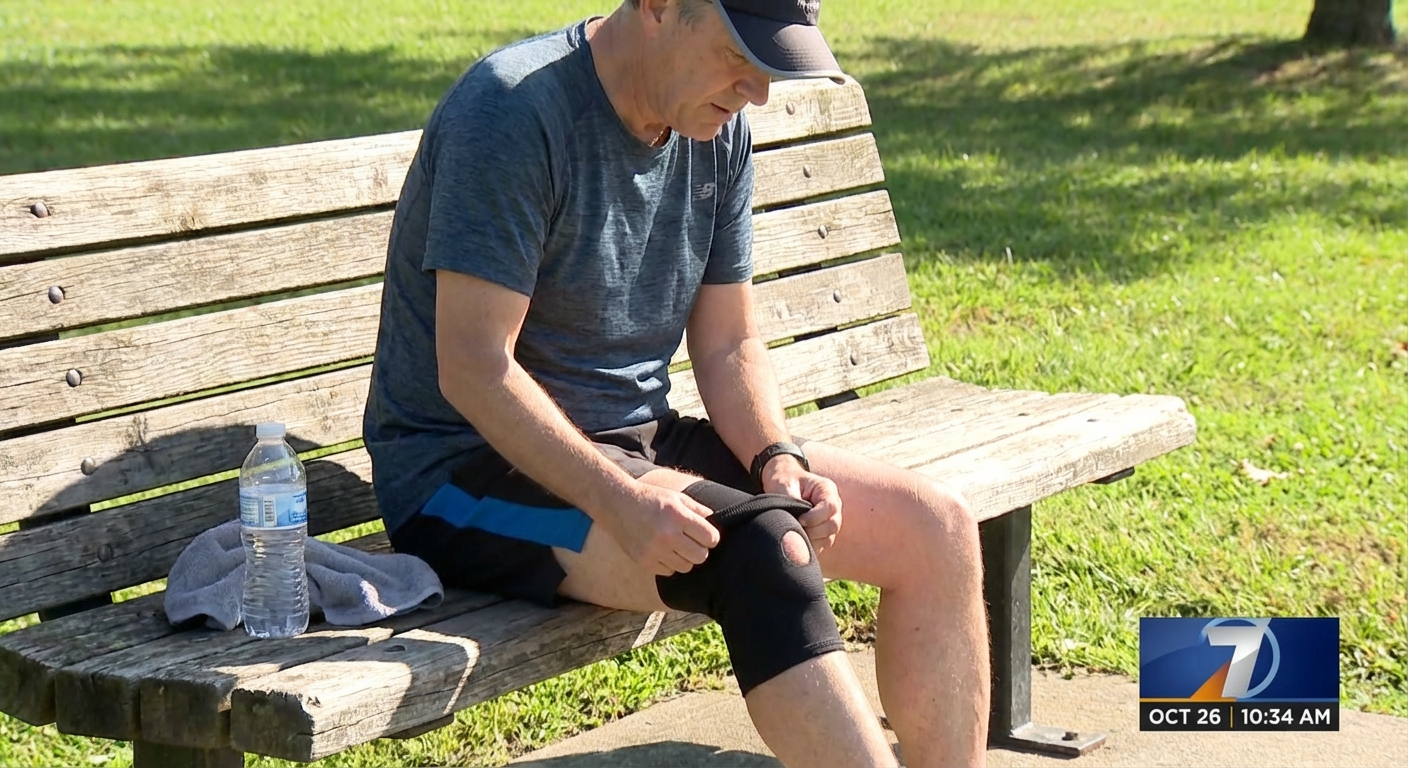
Knee sleeves are primarily about compression and proprioception.- Compression: Gentle pressure around the joint can help manage mild swelling by supporting venous and lymphatic return.
- Warmth: The fabric traps heat, improving blood flow to the area.
- Proprioception: Basically, your brain’s awareness of where your joint is in space. A snug sleeve can remind your body to move in a safer way.
What they don’t do:
- Realign bones
- Replace ligaments or meniscus
- Heal injuries on their own
In my experience, a knee sleeve is like a good assistant: it supports your knee while you (and possibly a physical therapist) do the real work.
When Knee Sleeves Help with Swelling—and When They Don’t
I first tested a knee sleeve a few days after my basketball injury. My knee was visibly puffy, warm, and I had that “tight balloon” feeling when I tried to bend it.
Here’s what I’ve learned from that episode and from diving into the research.
Helpful for:
- Mild to moderate swelling from overuse (running, hiking, long days on your feet)
- Chronic conditions like mild osteoarthritis where the joint tends to flare
- Post-activity support when your knee feels puffy after a workout
- Stability and comfort during light activity or rehab exercises
Several studies on knee osteoarthritis, like a 2017 randomized trial in Clinical Rehabilitation, found that compression sleeves can reduce pain and improve function by enhancing joint stability and proprioception.
Not so great for:
- Massive, sudden swelling after a traumatic injury (think “knee the size of a grapefruit”) – that needs a medical eval, not just a sleeve
- Suspected ligament tears or fractures – a sleeve can mask symptoms and delay proper treatment
- Unexplained swelling with fever, redness, or night pain – could be infection, inflammatory arthritis, or something more serious
I learned this the hard way with a friend who threw on a sleeve after a nasty twist in a soccer game. He kept playing. Turned out he had a partial ACL tear that needed proper rehab. The sleeve made him feel just okay enough to do more damage.
So yeah, sleeves = support; doctors and PTs = diagnosis and plan.
Types of Knee Sleeves (And Which One I’d Actually Buy Again)
The first time I searched “knee sleeve” online, I was hit with a wall of neon neoprene and wild marketing promises. Here’s how I sort them now.
1. Basic Compression Sleeves
Material: Usually elastic/nylon/spandex blend, sometimes with silicone bands. Best for:- Mild swelling
- General support for walking, standing, light workouts
2. Neoprene Sleeves (Thicker, Warmer)
Material: Neoprene, sometimes with a patella (kneecap) opening. Best for:- People who like warmth and a “hugged” feeling
- Cooler climates
- Lifting/strength workouts
3. Sleeves with Side Stabilizers or Hinges
Technically we’re veering into brace territory here.
Best for:- Instability
- Post-injury under guidance of a healthcare provider
If your main goal is swelling support, a well-fitted compression sleeve is usually the sweet spot.
How Tight Should a Knee Sleeve Be for Swelling Support?
The first time I put mine on, I went too small. It looked great on the size chart. In reality, it cut into my calf and left a dent like a tight sock. That’s not the vibe.
Here’s the rule I use now:
> Snug, not strangling.
You want:
- No numbness or tingling
- No change in skin color (purple, pale, or blotchy is a bad sign)
- No sharp pain or burning
- Ability to slide a finger comfortably under the edge
If you remove the sleeve and your skin has deep, angry grooves that take a while to fade, it’s probably too tight.
Most brands use measurements around the knee joint and sometimes above/below it. When I finally followed the measuring instructions with an actual tape measure (not guessing), the fit was much better—and my knee didn’t feel like it was in a tourniquet.
When to Wear a Knee Sleeve for Swelling
I experimented with three timelines:
- Only during activity (walking, workouts)
- All day except sleeping
- Part-time (most of the day, off for a few hours)
What worked best for me—and often for people with mild swelling—is targeted use:
- During activity that usually triggers swelling (long walks, work shifts, travel)
- Right after activity for a few hours
- Not 24/7 unless your doctor specifically recommends it
Too much compression for too long can actually irritate your skin or make your muscles lazy. There’s some concern among rehab pros that relying on external support all day every day can reduce muscular engagement around the joint.
I personally noticed that if I wore my sleeve nonstop, my knee felt kind of “weak” when I took it off, like it forgot how to be on its own.
How Knee Sleeves Fit Into R.I.C.E. (And Modern Rehab)
You’ve probably heard of R.I.C.E. (Rest, Ice, Compression, Elevation). Knee sleeves live in that compression box.
But even R.I.C.E. has evolved. Many sports medicine pros now use acronyms like P.E.A.C.E. & L.O.V.E. that emphasize early movement and load instead of just rest.
Based on what my sports PT walked me through, here’s how a sleeve can fit in:
- Early stage (first 24–72 hours after minor injury): A sleeve can offer light compression, but many clinicians prefer adjustable bandages initially so you can control pressure more precisely.
- Sub-acute stage (after the big swelling goes down): This is where a sleeve shines—helping manage residual swelling and boosting confidence as you move more.
- Chronic swelling: For arthritis or old-injury knees that puff up with use, sleeves can be part of a sustainable strategy alongside strength training and weight management.
A 2021 guideline in the British Journal of Sports Medicine emphasizes active rehab and gradual loading for most soft tissue injuries. Compression is still in the toolkit, just not the whole toolbox.
Pros and Cons of Using Knee Sleeves for Swelling
After a year of living the slightly-creaky-knee life, here’s my honest breakdown.
What I love
- Instant comfort boost: There’s a real “ahh” feeling when the compression is just right.
- Subtle support: I walk more confidently with one on during longer days.
- Low risk, low cost: Compared to meds or injections, it’s a simple tool.
- Easy to travel with: Mine lives in my backpack on trips.
What I don’t love
- They can be overhyped: No, that $60 sleeve isn’t going to “regrow cartilage.”
- Sweat and skin issues: I’ve had some irritation behind the knee on hot days.
- False sense of security: It’s tempting to push too hard because your knee “feels supported.” I’ve definitely overdone it this way.
- Sizing drama: Some brands run wildly inconsistent.
So yes, they’re useful—but they’re a supporting actor, not the star of the show.
Red Flags: When a Knee Sleeve Isn’t Enough
There are moments when you absolutely shouldn’t just slap on a sleeve and hope for the best.
Based on my own scare (and a hasty urgent care visit), I’d get evaluated by a pro if you notice:
- Swelling that appears suddenly and dramatically after a twist or fall
- You can’t put weight on the leg
- The knee looks deformed
- Fever, chills, and a hot, very painful knee
- Locking (knee gets stuck and can’t fully bend/straighten)
- Swelling that lasts more than a week without any improvement
Those can point to things like ligament tears, fractures, septic arthritis, or inflammatory conditions like gout or rheumatoid arthritis. That’s way beyond what a sleeve can handle.
How I Actually Use Knee Sleeves Now
These days, my right knee and I have a truce. Here’s my real-life routine:
- Strength work 2–3x/week: Quads, hamstrings, glutes, calves (step-ups, split squats, Romanian deadlifts). This does more for swelling long-term than any sleeve.
- Sleeve on for:
- Longer walks or hikes
- Flights over ~2 hours
- Days I know I’ll be on my feet a ton
- Sleeve off for:
- Short errands
- At home, especially when I’m elevating my leg
- Sleep (unless specifically told otherwise by a clinician)
When I tested this “situational” approach versus wearing a sleeve all day, I had less irritation and my knee felt stronger over time.
If you take anything from my experience, let it be this:
> Use knee sleeves as a smart tool to manage swelling—not as a crutch that replaces movement, strength, or proper medical care.
And honestly, that mix of support + smart loading has been way more powerful than I expected when I first panic-ordered that neoprene tube after my pickup game disaster.
Sources
- NIH: Osteoarthritis of the Knee - Overview of knee problems, including osteoarthritis and management strategies
- Mayo Clinic – Knee Pain - Causes of knee pain and when to seek medical care
- Cleveland Clinic – R.I.C.E. Method - Explanation of rest, ice, compression, elevation and where compression fits in
- Harvard Health – Osteoarthritis: Keeping Your Knees Healthy - Guidance on knee osteoarthritis management and the role of support devices
- CDC – Arthritis Data and Statistics - Background data on arthritis prevalence and impact