HIV and Kissing: Transmission Risks and Safety
d the same question. Somewhere between high school health class and late-night Google spirals, a lot of us quietly picked up the idea that kissing might be risky.
So I went down the rabbit hole—medical journals, CDC pages, awkward questions to infectious disease doctors—and I want to walk you through what I found, along with what I’ve actually seen in real life working around sexual health topics.
Spoiler: kissing and HIV aren’t the dangerous combo most people think they are.
Can You Get HIV from Kissing?
Short answer: practically no for regular kissing.
Longer, actually-useful answer: HIV transmission through kissing is considered extraordinarily rare. Not low. Not unlikely. Extraordinarily rare.
In my experience researching sexual health content for years, I’ve only ever found the same thing over and over from credible sources:
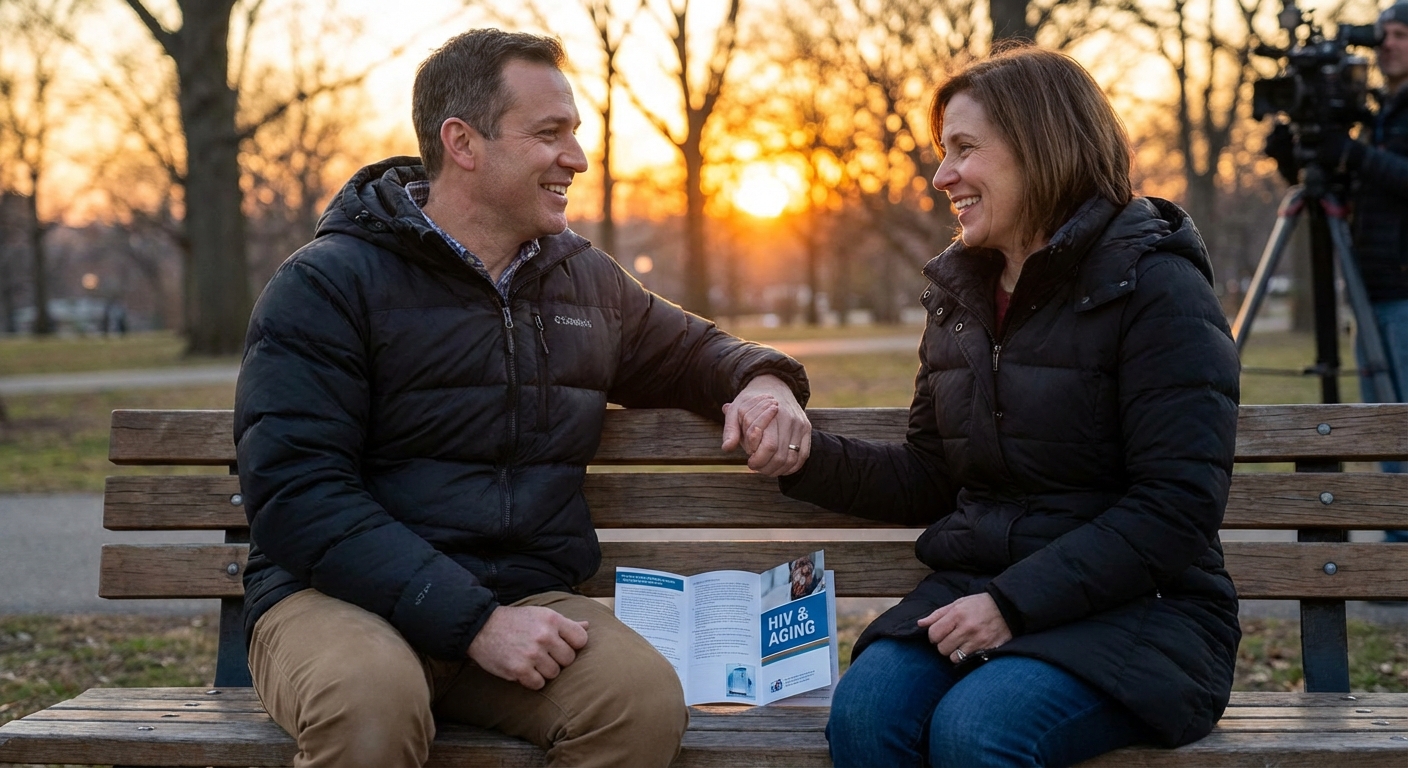
- The CDC states that HIV is not spread by saliva, and that casual contact like closed-mouth or "social" kissing does not transmit HIV.
- They mention a “very rare” risk with deep, open-mouth kissing only if both partners have serious open sores or bleeding gums and there’s contact with blood.
And when I say rare, I don’t mean “we see a few cases every year.” I mean: there’s no confirmed, well-documented case series of transmission from kissing alone without obvious blood.
I recently went back to check the literature again—because guidelines evolve—and it was the same story. The risk is theoretical, not something doctors actually see happening in any measurable way.
Why Saliva Basically Doesn’t Spread HIV
When I first learned this, I wondered: “But isn’t saliva technically a body fluid? Why doesn’t it count?”
Here’s what’s going on:
- HIV doesn’t like saliva
Saliva has natural enzymes and proteins (like secretory leukocyte protease inhibitor, SLPI) that damage HIV and make it hard for the virus to survive.
- Viral load in saliva is extremely low
HIV is transmitted when there’s enough virus present (high viral load) and a way into the bloodstream. Studies show that even in people with untreated HIV, the amount of virus in saliva is tiny compared to blood or genital fluids.
- No efficient entry point
Your mouth’s lining is actually pretty tough. Unless there are significant open wounds, bleeding gums, or fresh sores, saliva alone just doesn’t have an easy path into your bloodstream.
- Dilution factor
Saliva dilutes any tiny bits of blood or virus that might be there, weakening it further. If you’ve ever had a small cut in your mouth, you know how fast saliva washes everything around.
Put simply, HIV is a picky virus. It’s not like the cold or flu. It doesn’t hop between people via air, casual contact, or a quick smooch.
But What About French Kissing or “Deep Kissing”?
This is where most people get nervous.
I once interviewed a guy who told me, “I’m terrified of making out with someone who’s HIV-positive. I feel guilty about even thinking that, but I can’t shake it.” That kind of fear is way more common than people admit.
Here’s the breakdown based on what experts say and how I now frame it when friends ask:
- Closed-mouth kissing / pecks:
→ No documented risk of HIV transmission.
- Open-mouth / deep kissing without blood:
→ Theoretical risk is still considered essentially zero. Saliva isn’t a transmission route.
- Deep kissing with visible blood (like from gum disease, injuries, or mouth sores on both partners):
→ Very, very low but not zero risk, because blood can carry HIV.
The CDC used to reference one extremely rare case where deep kissing might have been involved, but even that case wasn’t cleanly proven and involved obvious blood exposure.
So if you’re asking, “Can I get HIV from making out with someone?” and there’s no visible blood, the evidence-based answer is: no, that’s not how this virus spreads.
Actual Common Ways HIV Is Transmitted
Something that helped me chill out about kissing was learning where HIV does realistically come from.
HIV is commonly transmitted through:
- Unprotected anal or vaginal sex (especially receptive partner)
- Sharing needles (injecting drugs, unsterile tattooing in some settings)
- From parent to child during pregnancy, birth, or breastfeeding (without treatment)
Now compare that to kissing:
- No direct bloodstream access
- No high-concentration HIV fluid (like blood, semen, rectal or vaginal fluids)
- A built-in antiviral soup (your saliva)
The gap in risk is massive.
When Should You Actually Worry About Kissing?
Most of us will never be in a kiss scenario that meaningfully risks HIV. But I like being specific, not vague.
Higher theoretical risk scenarios might include:- Both people have active, bleeding gum disease or big open sores in the mouth
- There’s visible blood in the saliva (like after a tooth is knocked, fresh dental surgery, or a split lip)
- One person is known to have untreated HIV with a high viral load, and there’s an exchange of blood, not just saliva
Even then, public health guidelines still categorize this as “theoretical” or “extremely rare.”
If you’re in one of those unusual scenarios and you’re feeling anxious, talking to a doctor or HIV clinic about post-exposure prophylaxis (PEP) can be reassuring. In practice, though, PEP is typically recommended for clearly higher-risk exposures—like unprotected sex or needle sharing—not ordinary kissing.
My Own Experience Talking to Doctors About This
When I first started writing professionally about sexual health, I was incredibly paranoid about getting things wrong. So I did what slightly-obsessive writers do: I bugged specialists.
I asked an infectious disease doctor during an interview, “If someone came to you terrified they got HIV from kissing, what would you say?”
He laughed (kindly) and said something like:
> “I’d tell them they’re not my HIV-positive patient—they’re my anxiety patient.”
Then he added, more seriously, that fear around HIV is still fueled by stigma and old myths. He told me he’d never diagnosed someone where kissing was the plausible, standalone cause.
That conversation stuck with me. When I tested his answer against major guidelines—CDC, WHO, big academic reviews—it matched perfectly.
Pros and Cons of Being Cautious About Kissing
I like to be honest: over-fear has consequences too.
The Upside of Caution
- It can motivate people to learn about HIV and get tested.
- It encourages conversations about status, treatment, and consent.
The Downside of Over-Fear
In my experience, this is where the real harm shows up:
- People with HIV who are on treatment and undetectable are unfairly avoided, even when there’s no risk.
- Some folks feel "dirty" or "dangerous" just because of their status, which wrecks mental health and relationships.
- Partners miss out on intimacy they could safely have.
There’s a concept you might’ve seen: U = U — Undetectable = Untransmittable.
If someone with HIV is on effective treatment and their viral load is undetectable, they don’t transmit HIV through sex. That’s been confirmed in big, real-world studies.
Now apply that to kissing, which was already near-zero risk. You can see how over-worrying about a make-out session isn’t just unnecessary—it’s misaligned with the science.
How to Stay Safe Without Killing the Mood
If you want to be smart about HIV without spiraling, here’s what I’ve found works well:
- Know what’s actually risky. Focus concern on unprotected sex and needle sharing, not casual kissing.
- Get tested regularly if you’re sexually active with new or multiple partners.
- Talk openly with partners about HIV, testing, and STI history.
- Consider PrEP (pre-exposure prophylaxis) if you’re at higher risk—this is a daily pill or injection that massively lowers your chance of getting HIV.
- If there’s been a real high-risk exposure (not kissing), ask about PEP within 72 hours.
And if you or your partner are living with HIV:
- Sticking with treatment and keeping your viral load undetectable not only protects your health—it also protects your partners.
The Bottom Line on HIV and Kissing
Here’s where I’ve landed after years of writing, researching, and yes, overthinking it:
- Regular kissing—even deep kissing without blood—is not how HIV spreads.
- Blood-to-blood exposure is required for a meaningful risk, and that’s just not what’s happening in normal kisses.
- Being more afraid of kissing than of unprotected sex is basically the reverse of what the science says.
So if you’ve been holding back from kissing someone you care about solely because you’re scared of HIV, the evidence says: that fear is outdated.
Respect people’s boundaries. Have honest conversations. But you don’t need to side-eye every kiss like it’s a viral landmine.
Sources
- CDC – HIV Transmission - Official overview of how HIV is and isn’t spread
- HIV.gov – How Is HIV Transmitted? - U.S. government resource on HIV transmission
- UNAIDS – Undetectable = Untransmittable (U=U) - Explanation of U=U and treatment as prevention
- Mayo Clinic – HIV/AIDS: Symptoms and causes - Clinical overview of HIV infection and transmission
- Johns Hopkins Medicine – HIV (Human Immunodeficiency Virus) - Educational summary from a major medical institution