How I Tricked My Brain Into Reading More (And Actually Loving It)
on a noisy subway, I finished a chapter of a novel and felt my nervous system exhale for the first time in weeks. Since then, I’ve gone from “one book every few months” to averaging 4–6 books a month — without quitting my job, waking up at 4 a.m., or pretending I don’t like TikTok.
This isn’t a list of “50 books you must read before you die.” It’s the system I accidentally built by experimenting on my own distracted brain, mixed with what literary research and reading experts actually say about how our minds engage with stories.
If you’ve ever thought, “I wish I could be a reader again,” this one’s for you.
Why Your Brain Keeps Ghosting Your Reading Habit
When I seriously tried to get back into reading a few years ago, I did what most people do: I bought a heavy “classic,” posted it on Instagram, then watched it judge me silently from the nightstand for three months.
Here’s what I eventually realized — backed up by cognitive science and not just my own guilt spiral:
Our brains love low-friction dopamine. Scrolling is easy: bright colors, movement, likes, endless novelty. Reading, especially at the beginning, feels like trying to start a car in winter.
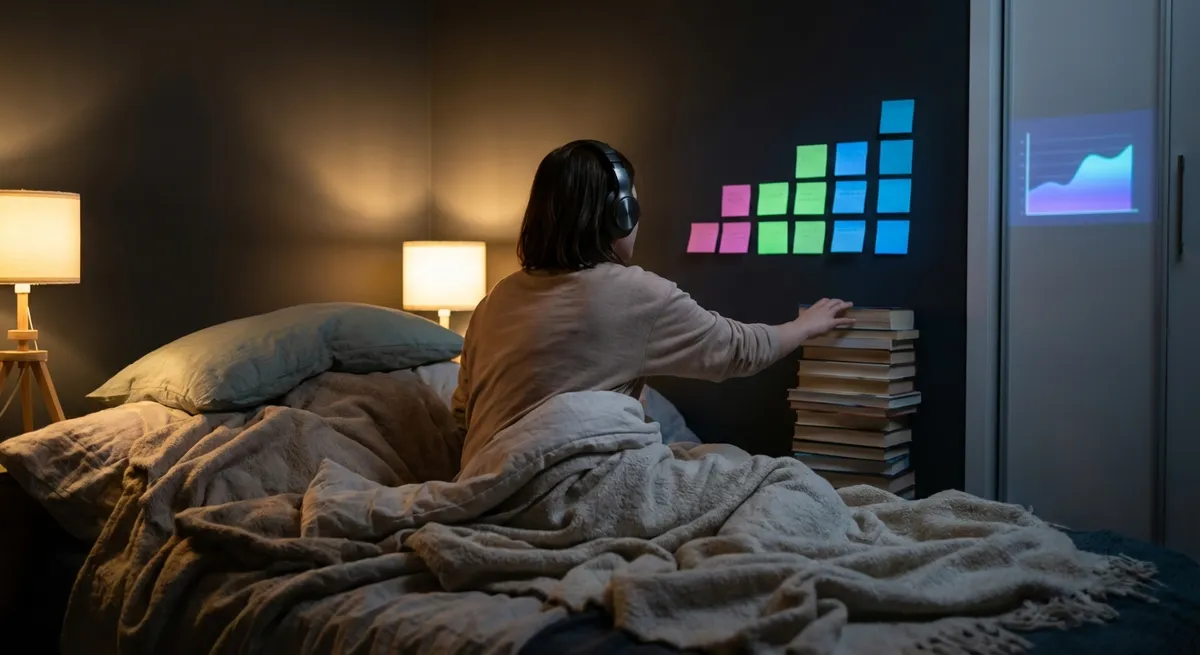
What helped me was understanding why:
- Cognitive load: Research on reading comprehension shows that dense text with unfamiliar vocabulary dramatically increases mental effort. I noticed when I forced myself into Victorian prose after a day of emails, my brain just refused to cooperate.
- Attention residue: After hopping between apps all day, I’d open a book and my mind would keep pinging like, “Shouldn’t we be refreshing something?” I later found out attention scientists like Sophie Leroy have written about this “residue” effect when switching tasks.
- Reading stamina: When I tested this, I realized I could doomscroll for 40 minutes no problem, but my reading “muscle” tapped out at around 8–10 minutes. Not a character flaw — just deconditioned focus.
Once I treated reading like rebuilding any other habit (gym, instruments, language), things clicked fast.
My first move? I dropped the book I felt I should read and picked up something that felt almost embarrassingly fun.
Very not-deep, absolutely gripping, zero shame.
The “No Shame Starter Pack”: Reading That Grabs You Back
The single biggest shift in my reading life happened the day I gave myself permission to read “lowbrow” books on purpose.
One Sunday, I picked up a fast-paced mystery a friend recommended and promised myself, If this feels like watching Netflix on paper, that’s a win. I finished it in two days and was genuinely mad I hadn’t done this earlier.
Here’s what worked in practice, and what I noticed when I experimented:
- I chased narrative momentum, not prestige
When I started choosing books where plot did most of the heavy lifting — thrillers, mysteries, character-driven fantasy, contemporary romance — I didn’t need willpower. I just needed to know what happened next.
Publishing data backs this up: crime, romance, and fantasy consistently drive huge sales because they hook readers hard with narrative tension.
- I lowered the entry barrier
Short chapters, snappy dialogue, familiar settings — these are like training wheels for a tired brain. In my experience, switching to books with:
- 3–7 page chapters
- lots of scene breaks
- clear stakes
made it way easier to slip into a flow state.
- I treated audiobooks as “reading with subtitles turned off”
I know some people fight about whether audiobooks “count.” I tested it on myself: when I listened to a novel during commutes, my recall of plot details and characters was basically the same as reading print.
Studies from places like the University of Virginia have found that comprehension between audiobooks and print can be very similar for many readers. Once I accepted that, I stopped gatekeeping myself and just… consumed more stories.
- I let mood dictate genre
Burned out? I’d grab cozy fantasy or romance. Overstimulated? A quiet memoir or nature writing. Feeling existential? Something like speculative fiction or literary sci‑fi.
Weirdly, once my “for fun” reading habit solidified, heavier books didn’t feel as intimidating anymore — my brain trusted that reading = pleasure, not punishment.
Micro-Reading: The Habit Hack That Shockingly Worked
I used to think “real readers” sat in leather chairs for hours. I do not own a leather chair. I own an apartment where the laundry basket is permanently half-full and the notifications are always on.
So I built a micro-reading system that slid into the chaos instead of fighting it.
Here’s exactly what I did:
1. I created a 10-page rule
When I tested different targets, “10 pages” hit the sweet spot: small enough that I’d do it even on rough days, big enough that I often blew past it once I got into the story.
- If I read more, great.
- If I only did 10, I still logged it as a win.
Over a month, that minimum alone is ~300 pages — easily a full book.
2. I planted books in “dead time” zones
This felt almost stupidly simple, but it worked:
- One paperback lived in my bag for commutes and waiting rooms.
- One book stayed by my bed, strictly no phone once the book was open.
- One was on the kitchen table for coffee time.
The first week I tried this, I accidentally read an extra 40–50 pages just from “waiting for pasta to boil” moments.
3. I used my phone’s worst feature… against itself
I noticed I’d reach for my phone on autopilot. So I rearranged my home screen: put my reading app (Kindle/Libby) or audiobook app in the exact spot where TikTok used to be.
Then I made a slightly silly rule with myself:
> “If you have the energy to scroll, you have the energy to read 2 pages first.”
Two pages is microscopic. But often, once I started, I kept going. When I looked at my screen time after a month, reading time had eaten a visible chunk out of social media — without me making some heroic digital detox pledge.
Choosing Books You’ll Actually Finish (Not Just Post About)
I used to sabotage my own reading by picking books based on vibes and covers alone. Sometimes that works; often it just left me with stacks of unread “aspirational” books.
So I quietly adopted a more nerdy approach that borrows from how librarians, editors, and book critics talk about reading.
1. I learned my “reading DNA”
I started paying attention not just to what I liked, but why:
- Did I love this book because of the voice (narrator’s style)?
- Because of the structure (nonlinear timeline, multiple POVs)?
- Because of the worldbuilding (detailed setting, magic system)?
Professional reviewers often break books down this way, and once I did it too, my hit rate shot up. For example, I realized I’m a sucker for:
- Tight, character-driven stories
- Present tense or close third person
- Subtle, emotionally messy relationships
So now, when I sample a book, I read the first few pages specifically asking: Does the voice hook me? Do I care even a little about this person yet?
If yes, I keep going. If not, I don’t bully myself into it.
2. I started DNF-ing (Did Not Finish) ruthlessly
At first, I felt guilty abandoning books. Then I heard authors and critics casually say they DNF all the time. That was liberating.
In my experience, the 50–100 page mark is where I usually know. If I’m dreading picking it up? That’s data, not failure.
Pros of DNF-ing:
- Protects your finite reading time
- Keeps the habit associated with pleasure, not obligation
- Leaves room to come back later when you’re in a different headspace
The only downside: you occasionally wonder if you missed a brilliant final act. But honestly, if a book punishes you for 300 pages then becomes amazing at 350, I’m okay missing that.
3. I trusted curated lists from people who actually read widely
When I stopped relying only on algorithmic “Because you liked…” recs and started following librarians, critics, and booksellers, my TBR (to-be-read) pile became way more interesting.
I noticed professional curators often:
- Highlight quieter books that don’t trend on TikTok
- Explain why a book works, not just that it’s “amazing”
- Give content notes, which helps avoid personal deal-breakers
Balancing viral hits with thoughtfully curated choices kept reading feeling fresh, not like I was chasing the same three tropes forever.
Turning Reading Into a Social Life (Without a Cringey Book Club)
When I tested joining a traditional book club, the vibe wasn’t quite me — lots of half-finished books, slight guilt, and one person monologuing about symbolism for 20 minutes.
But the social piece of reading? That turned out to be rocket fuel.
Here are a few low-cringe, high-reward things I tried:
1. Tiny “buddy reads”
A friend and I picked one book per month and agreed to text each other when we hit certain points (“end of chapter 5,” “middle twist,” “epilogue”).
What surprised me:
- I read faster because I wanted to catch up or stay aligned.
- The story stuck deeper because we unpacked it together.
- We got inside jokes from the book that lasted for months.
No Zoom meetings, no schedules, just shared hype.
2. Quiet online corners
I dipped into smaller subreddit threads, Discords, and group chats around specific genres. The key for me was small and specific, not massive generic “readers” groups that felt like shouting in a mall.
Bonus: hearing other people’s interpretations genuinely improved my reading — like having mini-literature seminars without the essay deadlines.
3. Posting “messy” reading updates, not aesthetic ones
I once posted a quick, chaotic story: “Just ugly-cried on a bus because of the last 20 pages of this book, 10/10 would recommend.” That post got more DMs than any fancy flatlay photo I’d tried before.
People respond to:
- Honest reactions: “This ending wrecked me”
- Specificity: “If you loved X show, this has the same vibes”
- Relatability: “I don’t usually read sci‑fi, but this one converted me”
That’s also what makes book content shareable: it feels like a friend shoving a paperback into your hands, not a brand speaking in slogans.
The Dark Side: When Reading Becomes Another Productivity Metric
Here’s the part that doesn’t get talked about enough.
When my reading habit took off, I made a classic overachiever mistake: I started obsessing over numbers — books per month, pages per day, streaks in apps. Reading turned into something I could “win” at.
I hit 50 books that year. I was proud… and also weirdly hollow.
What I noticed:
- I was picking shorter, easier books just to boost my count.
- I rushed scenes that deserved to be savored.
- I forgot details quickly because my goal was “done,” not “absorbed.”
I had basically turned reading — this thing I loved — into a quiet, nerdy version of hustle culture.
So I dialed it back:
- Stopped publicizing yearly targets.
- Dropped my Goodreads goal entirely one year and just logged books privately.
- Let myself linger: re-read pages, pause to Google references, journal a line that hit too close.
The paradox? My enjoyment went up, and my overall reading volume stayed pretty high anyway — because pleasure ended up being the best long-term engine.
When Reading Is Hard (Even When You Love It)
There’ve been months where, despite all my own tricks, reading felt impossible — stressful job news, family stuff, general burnout. My brain just refused to settle.
What helped was not moralizing it.
Some things I tried in those dips:
- Rereads: Returning to a favorite book felt like rewatching a comfort show. I already knew the plot, so I could just sink into the language and characters.
- Ultra-short forms: Poetry, essays, flash fiction, even long-form journalism. There’s research showing that “deep reading” of any long-form text can engage similar parts of the brain — it doesn’t have to be a 400-page novel.
- Lowering expectations: I once set my goal to “read 5 pages today.” That’s it. Oddly freeing.
There are also real barriers that aren’t just “discipline”: attention disorders, visual impairments, chronic fatigue, language barriers. For some friends of mine, audiobooks and e-readers with customizable fonts were absolute game-changers.
Reading isn’t morally superior to other ways of consuming stories. It’s just a uniquely intimate one — your brain collaborating with an author’s brain across time. If you want more of that in your life, you absolutely can have it, but it doesn’t need to look like some BookTok montage.
Wrapping It All Together (So You Can Start Tonight)
If I strip everything back, here’s what actually changed my reading life:
- I stopped treating reading like homework and started treating it like story-bingeing, on my own terms.
- I chose books that made me feel something fast, no guilt about genre.
- I used micro-moments — 10 pages here, 5 pages there — instead of fantasizing about perfect, long reading sessions.
- I allowed myself to quit books, re-read favorites, and lean hard on audiobooks.
- I remembered that the point isn’t to look like a reader, it’s to live inside more stories.
If you want a frictionless way to start (or restart) tonight, try this:
- Pick the book you’re most excited about, not the one that seems most impressive.
- Commit to 10 pages or 10 minutes before bed, phone in another room.
- Do it for three nights in a row.
- On the fourth night, notice whether your brain starts asking, “So… what happens next?”
That little tug of curiosity?
That’s your reading life quietly waking back up.
Sources
- Pew Research Center – Who Doesn’t Read Books in America? – Data on how many adults read books, in what formats, and demographic patterns.
- Harvard Graduate School of Education – “Why We Should All Be Reading Aloud to Children” – Explores cognitive and emotional benefits of reading and storytelling, including attention and language development.
- The New York Times – Are Audiobooks as Good for You as Reading? – Examines research comparing comprehension and engagement between audiobooks and print.
- University of Virginia – Study on Digital vs. Print Reading – Discusses differences and similarities in comprehension and engagement across formats.
- BBC Future – How Reading Rewires Your Brain – Summarizes neuroscience findings about deep reading, attention, and empathy.