IVIG Hemo Treatment: Overview and Uses
t since grad school, and one patient who said, half‑joking, “So this is basically liquid gold, right?”
Honestly? They weren’t far off.
I’ve followed IVIG (intravenous immunoglobulin) for years, especially in hematology settings, and every time I dig deeper into the data, I discover another niche use, another nuance, another “wait, that’s actually backed by a randomized trial?” moment.
Let’s break down what IVIG hemo treatment really is, when it’s used, and where the hype doesn’t match the evidence.
What Is IVIG Hemo Treatment, Exactly?
When people say “IVIG hemo treatment,” they’re usually talking about the use of intravenous immunoglobulin in blood-related (hematologic) conditions—things like immune thrombocytopenia (ITP), autoimmune hemolytic anemia (AIHA), or complications after stem cell transplant.
At a basic level:
- IVIG = pooled IgG antibodies from thousands of carefully screened donors.
- It’s given intravenously, usually over several hours.
- It’s not replacing “low antibodies” in these hemo conditions as much as modulating an overactive or misdirected immune system.
When I first saw an IVIG order for a patient with dangerous thrombocytopenia, I assumed it was to “boost” immunity. The attending quickly corrected me: “No, we’re tricking the immune system and buying time.” That framing has stuck with me ever since.
How IVIG Works in Blood Disorders (Without Drowning You in Jargon)
Immunology can get wild, but here’s the short version of what’s happening in hematology cases:
- Immune system goes rogue
Your body starts attacking its own blood cells (platelets, red cells, sometimes neutrophils). Conditions like ITP or autoimmune hemolytic anemia are classic examples.
- Antibodies coat blood cells
Those cells get tagged with antibodies, usually IgG. The spleen and other parts of the reticuloendothelial system see these “tagged” cells as trash and clear them.
- IVIG floods the system with competing antibodies
When I watched this in practice, it was explained like this: “We’re giving so much ‘decoy’ IgG that the spleen’s garbage disposal gets distracted.” More technically, IVIG saturates Fc receptors on macrophages, so they’re less able to bind and destroy the patient’s own antibody‑coated cells.
- Bonus immunomodulation
Over time, IVIG also affects cytokines, complement activation, and regulatory T cells. The exact mechanisms are still being teased apart in studies, but the clinical effects are very real.
So no, IVIG isn’t some magic immune booster. It’s more like a massive diplomatic intervention for a confused immune system.
Key Hematologic Uses of IVIG
1. Immune Thrombocytopenia (ITP)
This is probably the most famous hematology use.
What happens: The immune system destroys platelets, dropping counts dangerously low. I’ve seen platelet counts under 5,000/µL where a nosebleed or minor head bump suddenly becomes a crisis. How IVIG helps:- Standard dosing is often 1 g/kg for 1–2 days.
- Platelet counts can rise within 24–48 hours.
- It’s especially useful when someone is actively bleeding or going to surgery.
In my experience, the emotional impact on patients is huge. One woman I met was terrified of brushing her teeth because of gum bleeding. After IVIG, her platelets rose enough that she cried with relief at a “normal” toothbrush.
Evidence snapshot:- Guidelines from the American Society of Hematology recognize IVIG as a first‑line option alongside steroids for ITP, especially when fast response is needed.
2. Autoimmune Hemolytic Anemia (AIHA)
Here, the immune system targets red blood cells, leading to fatigue, jaundice, dark urine, and in severe cases, heart strain.
IVIG is not as consistently effective here as in ITP, but it’s used in:
- Severe or rapidly progressing cases
- Situations where steroids alone aren’t cutting it
I’ve seen it used as a kind of “rescue” therapy. The expectation was never, “This will cure it,” but more, “This might stabilize you while we get other treatments (like rituximab or immunosuppressants) on board.”
3. Hemolytic Disease of the Fetus and Newborn (HDFN)
This one hit me hard the first time I read the case reports.
In some pregnancies, maternal antibodies attack fetal red blood cells. Newborns can develop severe jaundice and anemia.
IVIG role:- Used in some babies with significant hemolysis and high bilirubin levels
- Aimed at reducing the need for exchange transfusion (a high‑risk procedure where the baby’s blood is gradually swapped out)
Studies in the early 2000s showed that IVIG can reduce the rate of exchange transfusion in certain Rh or ABO incompatibility cases, although results are mixed and it’s not a magic bullet.
4. Post–Transplant and Other Niche Uses
I’ve seen IVIG pop up in:
- Allogeneic stem cell transplant patients with severe infections or hypogammaglobulinemia
- Certain secondary immune cytopenias
- Rare cases of post‑transfusion purpura (a dramatic drop in platelets after transfusion)
These uses tend to be more specialized, often guided by institutional protocols and transplant teams.
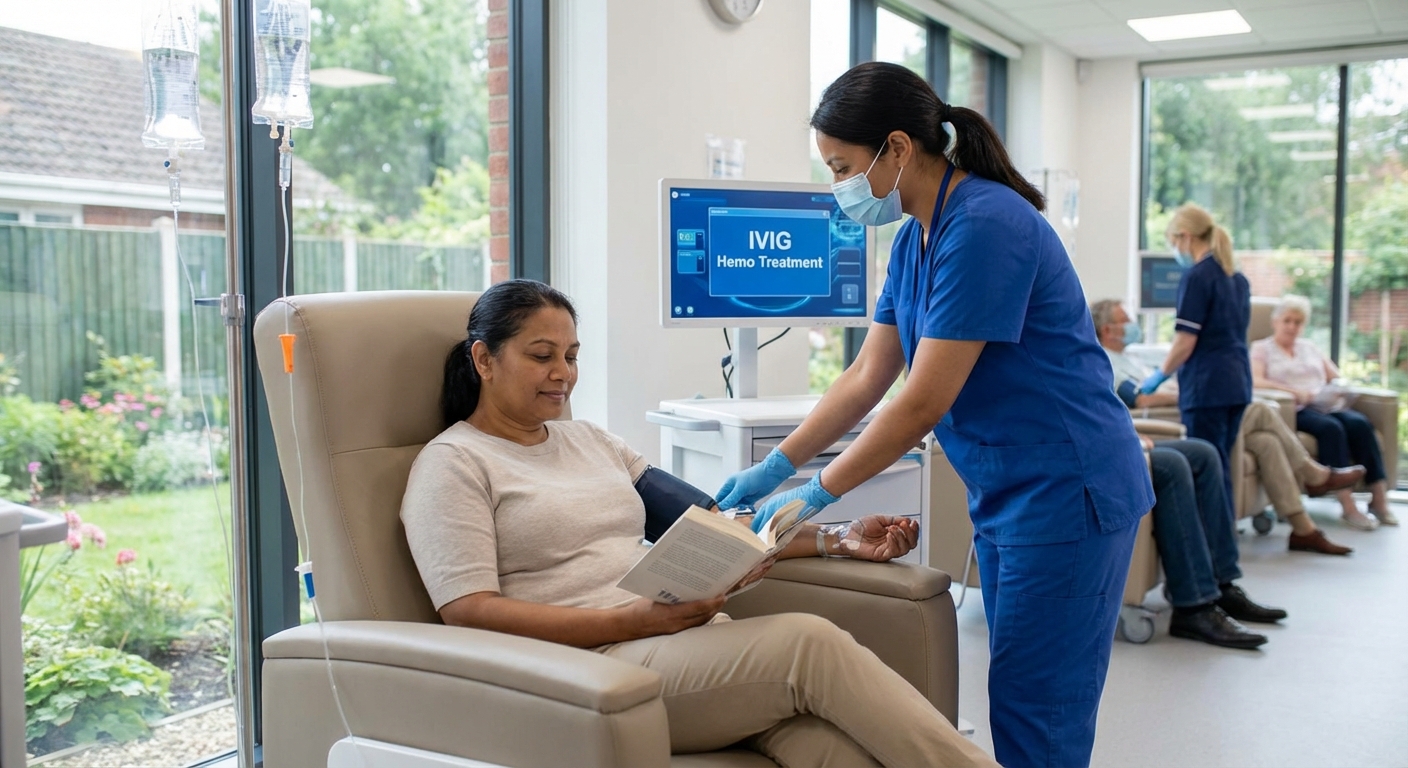
What an IVIG Infusion Session Is Like
When I sat in on my first full IVIG infusion day, I noticed three things:
- It’s slow.
The infusion rate starts low, then increases gradually if there are no reactions. Sessions can last 3–6 hours, and sometimes longer depending on dose and product.
- Pre‑meds are common.
People are often given acetaminophen, antihistamines, and sometimes steroids to reduce side effects.
- Hydration matters.
The nurses were borderline obsessed (in a good way) with patients drinking water to protect their kidneys and ease headaches.
Patients described the experience as:
- “Like a long, boring spa day but with beeping machines.”
- “Fine the first hour, then I got tired and just slept through the rest.”
Benefits vs. Risks: The Honest Breakdown
I’ve seen IVIG work brilliantly, and I’ve also watched people struggle with side effects or limited benefit. So here’s the reality check.
The Upsides
- Rapid response in many ITP cases – Sometimes platelet counts jump dramatically within 1–3 days.
- Steroid‑sparing – Huge for people who can’t tolerate prolonged high‑dose steroids.
- Pregnancy and newborn options – One of the few tools available in specific maternal–fetal or neonatal scenarios.
- Immunomodulatory, not cytotoxic – It doesn’t “wipe out” the immune system like some chemotherapy‑type drugs.
The Downsides
- Cost.
IVIG is incredibly expensive. One high‑dose course can run into the thousands (or tens of thousands) of dollars, depending on country, insurance, and dosage.
- Not a permanent fix.
In chronic ITP, I’ve seen beautiful quick responses that fade within weeks. It’s often a bridge therapy, not a cure.
- Side effects.
Common ones I’ve heard patients describe:
- Headache (sometimes brutal, migraine‑like)
- Fatigue
- Fever, chills, flu‑like symptoms
- Nausea
Rare but serious risks include:
- Kidney injury (especially with sucrose‑containing products or in older patients)
- Thrombosis (blood clots)
- Aseptic meningitis (severe headache, neck stiffness, but no infection)
- Supply and sustainability.
Since IVIG comes from human plasma, it’s limited. Overuse for weakly supported indications puts pressure on availability for patients who truly need it.
Who Should Actually Consider IVIG Hemo Treatment?
From what I’ve seen and what the literature supports, IVIG in hematology makes the most sense when:
- There’s a clear immune‑mediated blood disorder (like ITP) with serious bleeding risk or need for rapid platelet rise.
- Steroids alone are too slow, poorly tolerated, or contraindicated.
- You’re in a specialized scenario (like HDFN, post‑transplant cytopenias) under the care of a hematologist or neonatologist.
If someone is suggesting IVIG “just to boost your blood” without a specific diagnosis or lab evidence of an immune process, that’s a giant red flag in my book.
Whenever I’ve seen it used appropriately, the decision came after:
- Careful review of blood smears, antibody tests, and clinical history
- Discussion of pros, cons, cost, and alternatives
My Takeaways After Watching IVIG in Action
When I first “tested” my understanding of IVIG by trying to explain it to a patient in simple language, I realized how easy it is to oversell it as a cure‑all. It’s not.
In my experience, IVIG in hematology is:
- A powerful, targeted tool for specific immune‑mediated blood disorders
- Most impressive as a fast‑acting bridge while longer‑term treatments kick in
- Over‑hyped in some online spaces that promote it as a generic immune booster
If you or someone close to you is being offered IVIG hemo treatment, the best next steps I’ve seen are:
- Ask directly: “What’s the exact diagnosis you’re treating? What’s the goal: rescue, bridge, or long‑term control?”
- Clarify: “How will we know if it worked, and what happens if it doesn’t?”
- Make sure the plan includes monitoring for side effects, especially headaches, kidney function, and clot risk.
Used wisely, IVIG can turn a terrifying lab report into a manageable condition. Used loosely, it can drain resources and set unrealistic expectations.
And that “liquid gold” comment? After watching it rescue platelets overnight more than once, I get why patients say it. I just also know gold comes with a price tag—and you want to be absolutely sure it’s being spent on the right battle.
Sources
- American Society of Hematology – Immune Thrombocytopenia (ITP) Treatment Guidelines - Evidence-based recommendations for ITP management, including IVIG
- National Institutes of Health – Intravenous Immunoglobulin Therapy Overview - Clinical review of IVIG indications, mechanisms, and safety
- UCSF Health – Intravenous Immunoglobulin (IVIG) - Patient-focused explanation of how IVIG is used and what to expect
- CDC – Blood Safety and Plasma Products - Background on plasma-derived therapies like IVIG and safety considerations
- New England Journal of Medicine – Treatment of Autoimmune Hemolytic Anemia - Review article discussing therapies for AIHA, including the role of IVIG