Learn About Common Daily Habits That Can Make Joint Pain Worse
oblem. Your habits are.”* That stung a little… but he was right.
Once I started paying attention, I realized I was doing a whole list of tiny things every single day that silently cranked up my joint pain. When I tested changing them, the difference was big enough that I stopped joking about “grandma knees” and actually did something about it.
If your knees, hips, fingers, or shoulders are constantly complaining, some of these everyday habits might be making things worse.
Habit #1: Sitting Like a Pretzel for Hours
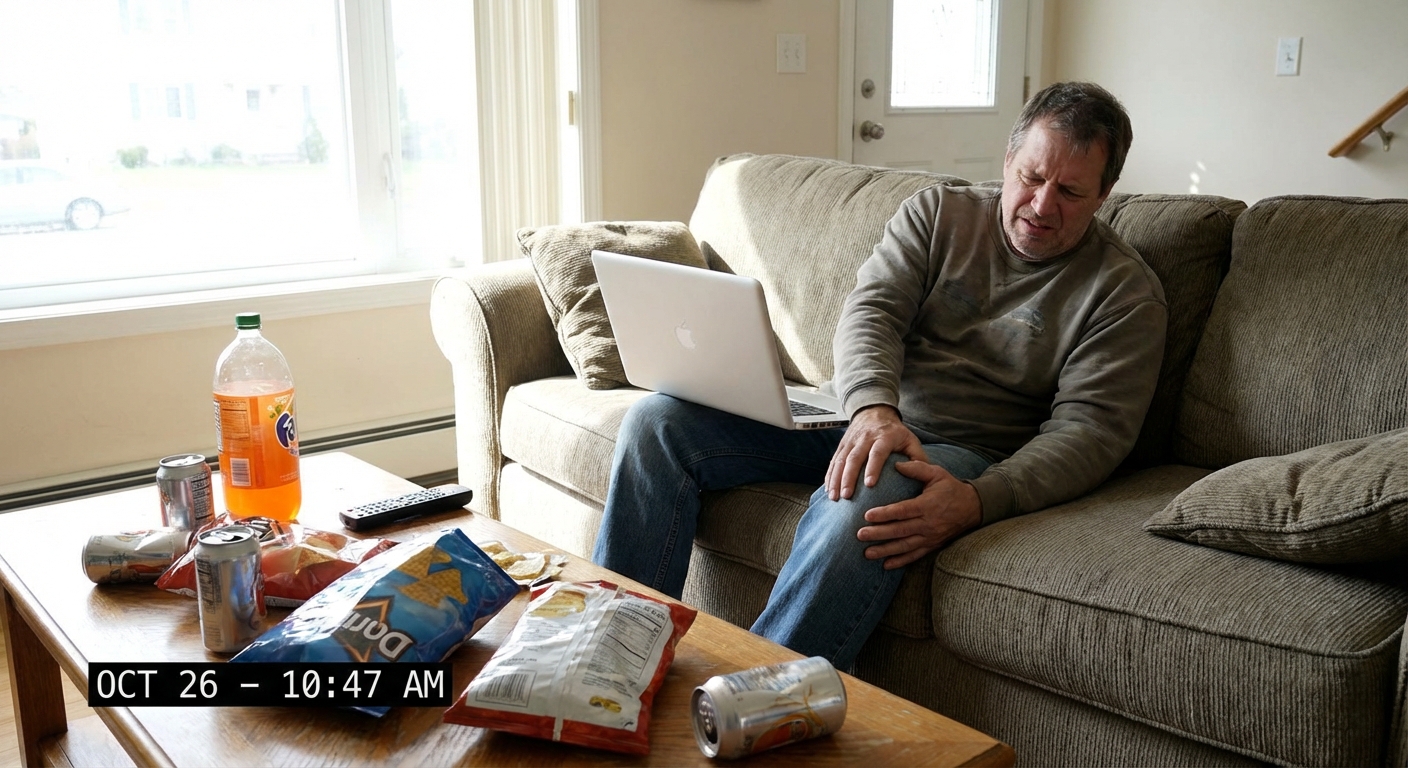
I used to write for hours with one leg tucked under me like a flamingo that gave up halfway. My right knee hated it.
Orthopedic specialists call this sustained flexion – holding your joints in a bent position for a long time. When your knees or hips stay at those angles, the synovial fluid (that slick joint lubricant) doesn’t circulate as well, and pressure on cartilage goes up.
When I finally wore a fitness tracker that buzzed every 30–45 minutes, I realized I could sit almost three hours without moving. No wonder my joints felt like rusty hinges.
What helped me:
- Standing up every 30–45 minutes, even just for 60 seconds
- Swapping low, squishy couches for firmer chairs where my hips and knees are at about 90 degrees
- Keeping both feet on the floor instead of crossing or tucking
Is sitting always bad? No. A 2020 review in Arthritis Care & Research suggested that long, uninterrupted sitting is more problematic than total sitting time. Breaks matter more than perfection.
Habit #2: Weekend Warrior Workouts (And Weekday Couch Life)
For a long time, my exercise schedule looked like this: sit all week, then try to become a CrossFit legend on Saturday. My knees did not appreciate the personality change.
This “all or nothing” pattern overloads joints that aren’t conditioned. The American College of Rheumatology and the CDC both emphasize regular, moderate activity for joint health – not heroic bursts.
When I backed off intensity and increased frequency, I noticed:
- Less swelling after workouts
- Less next-day stiffness
- Fewer “why did I think I could do that?” moments
What I changed:
- 20–30 minutes of moderate movement (walking, light cycling, mobility work) 4–5 days a week
- Strength training with lighter weights and higher reps, focusing on form
- Active warm-up (dynamic stretches, light cardio) instead of walking in cold and going full beast mode
The downside? Progress feels slower. The upside? You can actually still walk the next day.
Habit #3: Ignoring Muscle Strength (And Blaming Just the Joints)
When my knees hurt, I assumed the problem was… my knees. My physio gently pointed out that my glutes were basically on vacation and my quads weren’t much better.
Joints are not meant to do all the work. Muscles act as shock absorbers. If surrounding muscles are weak, forces go straight into the joint surfaces and ligaments.
A 2013 study in Arthritis & Rheumatism showed that people with stronger quadriceps muscles had slower progression of knee osteoarthritis symptoms [1]. Strength doesn’t magically “cure” joint issues, but it can change how load is distributed.
What helped me:
- Simple exercises: glute bridges, wall sits, step-ups, banded side steps
- 2–3 strength sessions per week, not just random pushups when I remembered
- Focusing on controlled movement instead of ego lifting
Caveat: If you’re flaring badly, some strength moves will feel awful. I had days where bodyweight squats were too much, and on those days, I counted gentle isometric holds as a win.
Habit #4: Living in Unsupportive Shoes (Yes, Even at Home)
I used to shuffle around my apartment in floppy, flat slippers and then complain that my knees and ankles ached by evening. When I swapped to shoes with real arch support and cushioning, I could feel the difference within a week.
Your feet are your foundation. If they collapse inward (overpronation), that stress travels up to ankles, knees, hips, and even the lower back. The American Academy of Orthopaedic Surgeons highlights footwear and orthotics as a key part of managing knee and foot joint issues.
What I noticed:
- Wearing supportive sneakers at home on “bad joint days” cut my knee pain by maybe 30–40% (obviously not a clinical measurement, but it was very noticeable)
- Swapping worn‑out running shoes every 300–500 miles helped more than I expected
Downside: Good shoes and inserts cost money. For me, though, they were cheaper than another round of imaging and pain meds.
Habit #5: Constant Low-Level Inflammation From Food and Sleep
I didn’t want to hear this part. I like fries, late-night snacks, and scrolling in bed as much as anyone.
When I finally paid attention to my food and sleep for a few weeks, I saw a pattern:
- Nights with 5–6 hours of sleep = more morning stiffness
- Days with heavy ultra-processed foods and sugary drinks = joints felt puffy and hot
There’s growing evidence that systemic inflammation worsens joint symptoms, especially in conditions like rheumatoid arthritis and osteoarthritis. A 2021 review in Nutrients pointed to ultra-processed foods, high sugar intake, and excess omega-6 vs omega-3 fats as potential drivers of chronic inflammation [2].
What helped me (slowly, not magically):
- Adding omega‑3 sources (salmon, sardines, walnuts) several times per week
- Treating sweets and fries like treats, not “I deserve this every day because I’m stressed” staples
- Consistent sleep window: roughly the same sleep and wake time, even on weekends
Does diet fix everything? Absolutely not. I still have pain days. But the extreme flares got less frequent when I wasn’t constantly pouring gasoline on the fire.
Habit #6: Powering Through Pain Instead of Respecting It
I used to wear “I push through pain” like a badge of honor. Then a sports doctor looked at my MRI and said, “This is what ignoring your body for two years looks like.” Ouch.
There’s a difference between discomfort (muscles working, mild soreness) and joint pain (sharp, catching, grinding, swelling, or pain that lingers or worsens overnight).
Evidence-based guidelines for osteoarthritis and sports injuries consistently recommend activity modification, not full stop and not full send. The trick is learning your line.
What I do now:
- Use the “24-hour rule”: if a workout makes my joint pain significantly worse for more than a day, intensity was too high
- Swap high-impact (running, jump squats) for low-impact (cycling, swimming, elliptical, walking) during flares
- Use pain as feedback, not an enemy
Downside: You sometimes feel like you’re training “below your potential.” Upside: You’re actually able to keep training.
Habit #7: Skipping Medical Input and Playing WebMD Roulette
For a while, I self-diagnosed everything. Meniscus tear? Gout? Mystery autoimmune disease? I’d convinced myself of all three by 2 a.m. courtesy of Google.
When I finally saw a rheumatologist and later an orthopedic specialist, we ruled out the scary stuff, confirmed mechanical issues, and I got a real plan instead of 12 conflicting internet tips.
Reliable sources like the CDC, NIAMS (National Institute of Arthritis and Musculoskeletal and Skin Diseases), and academic hospital websites repeatedly hammer this point: persistent joint pain (especially with swelling, warmth, or morning stiffness longer than 30–60 minutes) should be evaluated.
Where medical help changed things for me:
- I stopped taking random supplements that did nothing
- I got a proper physical therapy plan instead of copying Instagram workouts
- We caught some early changes on imaging that I could actually do something about
Is every doctor visit perfect? No. I’ve had rushed appointments and confusing advice too. But having a baseline diagnosis matters if you want to make smart decisions.
How to Start Changing These Habits Without Losing Your Mind
When I tried to overhaul everything at once, I lasted three days.
What actually worked was stacking tiny changes:
- Week 1: Stand up every 30–45 minutes, even if just to stretch
- Week 2: Add one 20-minute walk on three days
- Week 3: Add two simple strength exercises after that walk
- Week 4: Swap one highly processed meal or snack for something slightly less chaotic
None of this made my joints feel perfect. But over a couple of months, the “this hurts constantly” feeling shifted into “this flares sometimes, but I can actually predict why.” That’s a powerful place to be.
If your joints are yelling at you, you’re not fragile — but you are getting real feedback. The small routines you repeat every day can quietly help or quietly harm. When I finally took those routines seriously, my MRI didn’t magically fix itself, but my life felt a lot less ruled by pain.
Sources
- CDC – Osteoarthritis: Managing Symptoms - Overview of osteoarthritis and evidence-based management strategies.
- NIAMS – Handout on Health: Osteoarthritis - Detailed information on joint changes, risk factors, and treatment.
- Arthritis Foundation – Joint-Friendly Fitness - Practical guidance on exercise for people with joint pain.
- Harvard Health – Food and inflammation - Discussion of diet and systemic inflammation.
- Mayo Clinic – Joint pain: Causes and treatment - Medical overview of common causes and treatment options for joint pain.