Learn about knee joint pain and treatment options
- I was not 18 anymore.
- I had no idea how serious knee pain could get until it was mine.
If you’ve ever winced going down the stairs, hesitated before squatting, or secretly Googled “why does my knee hurt when I…” — you’re in the right place. I’ve been there, I’ve tested a bunch of solutions (some amazing, some a complete waste of time), and I’ve dug through the actual science so you don’t have to.
This is the guide I wish I had the day my knee started complaining.
What’s really going on inside your knee?
When my orthopedic surgeon pulled up my MRI and zoomed in, I finally understood: the knee isn’t just a hinge; it’s a busy intersection of bones, cartilage, ligaments, tendons, and muscles.
Here’s the quick anatomy tour I wish someone gave me earlier:
- Bones: femur (thigh), tibia (shin), and patella (kneecap)
- Cartilage: smooth tissue on bone surfaces + the menisci (C‑shaped shock absorbers)
- Ligaments: ACL, PCL, MCL, LCL that stabilize the joint
- Tendons & muscles: especially the quadriceps and hamstrings that control movement
When any part of that system gets irritated, torn, worn down, or overloaded, you feel it as knee joint pain.
In my experience, the surprising thing is that the intensity of pain doesn’t always match the severity of the problem. My mild meniscus tear hurt way more than a later flare of early osteoarthritis.
Common causes of knee joint pain (and how they actually feel)
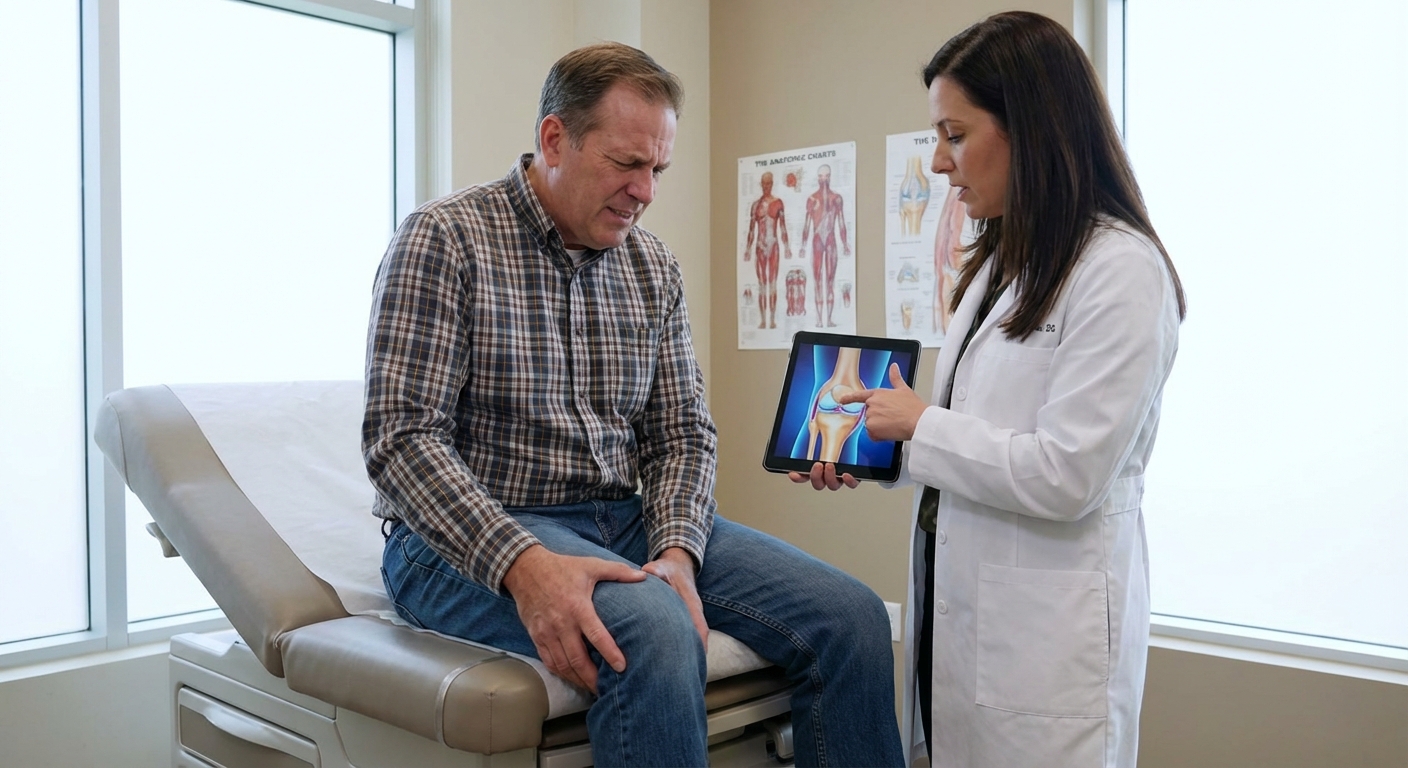
When I first saw a sports medicine doctor, she didn’t start with scans. She started with questions:
- Where exactly does it hurt?
- When does it hurt most?
- What were you doing when it started?
Those answers are often more revealing than an X‑ray.
1. Osteoarthritis (wear and tear)
This is the one you hear about all the time, and for good reason. According to the CDC, roughly 32.5 million US adults have osteoarthritis, and the knee is one of the most commonly affected joints.
What it feels like (for me and many others):- Stiffness in the morning or after sitting a long time
- A dull, achy pain that improves a bit with gentle movement
- Occasional grinding or “creaking” (called crepitus)
Osteoarthritis is basically the gradual breakdown of cartilage. Once that smooth cushion thins out, bones start irritating each other.
2. Meniscus tears
My first knee injury was a small medial meniscus tear from an awkward twist while doing lunges. Classic.
Typical signs:- Sharp pain along the inner or outer side of the knee
- Pain with twisting, deep squatting, or pivots
- A feeling of catching, locking, or instability
Not every meniscus tear needs surgery — more on that later — but they’re incredibly common in both athletes and desk workers who suddenly “go hard” on the weekend.
3. Ligament injuries (like ACL and MCL)
These often come from sports, sudden stops, or awkward landings. When I tested my knee on a simple hop test with my physio, she could immediately tell my ligaments were intact, which was a huge relief.
Classic clues:- You may hear or feel a pop
- Immediate swelling
- Instability or the sensation that the knee might “give out”
4. Patellofemoral pain / runner’s knee
A lot of people I’ve trained with who started running too fast, too soon ended up here.
How it shows up:- Pain behind or around the kneecap
- Worse when going downstairs, running hills, or sitting with bent knees for long periods
- Often linked to muscle imbalances and tracking issues, not “knee doom”
5. Inflammatory conditions
Things like rheumatoid arthritis, gout, or infections can also attack the knee. These are a different beast and need fast medical attention.
Red flags I look out for personally:
- Red, hot, very swollen knee
- Fever or feeling unwell
- Sudden severe pain without clear injury
How doctors actually diagnose knee pain
When I finally stopped self-diagnosing via random forums and saw a specialist, the process was a lot more systematic than I expected.
Here’s what usually happens:
- Detailed history – What triggers the pain, what eases it, any popping, locking, or giving way.
- Physical exam – Range of motion, swelling, tenderness, specific ligament and meniscus tests.
- Imaging if needed:
- X‑rays: great for seeing bone changes and osteoarthritis
- MRI: best for soft tissues like cartilage, menisci, and ligaments
- Ultrasound: sometimes used for tendons and fluid
One thing my doctor was very blunt about: imaging doesn’t tell the whole story. Many people have “ugly” MRIs but little pain, and others have intense pain with minimal visible damage.
Non-surgical treatment options I’ve tried (and what actually helped)
Let’s talk about the part you probably care about most: What can you actually do about knee pain?
I’ve personally experimented with most of the mainstream options under professional supervision. Some were game‑changers, some were overhyped.
1. Activity modification (the low-glamour secret weapon)
When I tested this, it felt like defeat at first — scaling back my workouts, changing how I walked upstairs, even adjusting my chair height.
But reducing repetitive stress on the joint made a huge difference. For a few weeks I:
- Swapped running for cycling and swimming
- Took the stairs down slower and used the railing
- Avoided deep squats and lunges
It wasn’t sexy, but it worked. Pain went from a constant 6/10 to a manageable 2–3/10.
2. Targeted physical therapy
If I had to pick one treatment to put at the absolute top, it would be good physio.
We focused on:
- Strengthening: quads, hamstrings, glutes, and hip stabilizers
- Mobility: stretching tight hip flexors and calves that were changing my knee mechanics
- Neuromuscular control: learning to land, pivot, and squat with better alignment
A 2020 review in Annals of Internal Medicine backs this up: structured exercise therapy is one of the most effective non-surgical treatments for knee osteoarthritis and many other chronic knee issues.
Not every set of exercises online is right for every knee, though. The day I tried copying a random “knee rehab” YouTube video, I flared up my pain for a week. Personalized plans matter.
3. Medications and injections
I’m pretty cautious with meds, but here’s how they played out in my case and what the research says.
- NSAIDs (like ibuprofen or naproxen): These helped during bad flares, especially combined with rest and ice. But they’re not candy — long-term use can affect your stomach, kidneys, and heart. My doctor had me use the lowest effective dose for short periods.
- Topical NSAID gels: Surprisingly effective for me with fewer systemic side effects. Rubbing diclofenac gel around the joint before long walks helped a lot.
- Corticosteroid injections: I tried one during a brutal flare. It reduced pain noticeably for about 6–8 weeks, but the effect faded. Studies show they’re useful for short-term relief, but repeated injections may accelerate cartilage loss, so most specialists limit how often they’re used.
- Hyaluronic acid injections: I personally skipped these, but I’ve seen mixed experiences among friends and patients reported in studies. Some people get great relief; others feel nothing. Evidence is borderline, and insurers are increasingly picky about covering them.
4. Bracing, taping, and supports
I used a simple neoprene sleeve during runs and long walks. It didn’t magically fix anything, but it gave a sense of stability and warmth that made movement less scary.
For patellofemoral pain, my physio used specific taping techniques to help the kneecap track better. That made a surprisingly noticeable difference during stair climbing.
5. Weight management (the brutally honest part)
I wasn’t massively overweight, but I was about 15 pounds heavier than my pre‑injury self. When my doctor casually mentioned that each extra pound can translate to roughly 3–4 extra pounds of pressure across the knee, that got my attention.
Slowly dropping just 8–10 pounds made stairs and walks feel different. I didn’t expect it to be that noticeable — it was.
When surgery might be on the table
I was honestly terrified of the word surgery. But after digging into the data and talking to a couple of orthopedic surgeons, I realized the picture is more nuanced.
Arthroscopic surgery
For mechanical symptoms (like true locking from a meniscus tear), arthroscopy — “keyhole” surgery — can be very effective.
However, for degenerative meniscus tears in older adults with osteoarthritis, high‑quality trials (like the 2013 FIDELITY trial) show that arthroscopic partial meniscectomy often performs no better than sham surgery or structured physical therapy.
My surgeon flat‑out told me: “We don’t operate on MRIs, we operate on people and symptoms.” Because my knee was stable and not locking, we stuck with conservative care. I’m glad we did.
Partial or total knee replacement
For advanced osteoarthritis where:
- Pain is severe and daily
- Sleep and basic activities are affected
- Conservative treatment has failed
…knee replacement can be life‑changing. I’ve seen older relatives go from barely walking to hiking again after recovery.
The pros:
- Significant pain reduction for most patients
- Improved function and quality of life
The cons:
- Major surgery with real risks (infection, blood clots, stiffness)
- Recovery and rehab take months, not days
- Implants wear down over time, especially in younger, very active people
In my case, I’m not even close to that stage yet, but it’s reassuring to know the option exists if things progress decades down the line.
What’s overhyped or uncertain (from my testing and the science)
I’ve seen — and tried — my fair share of “miracle” knee fixes:
- Random joint supplements: I experimented with glucosamine and chondroitin for six months. My honest experience: no clear difference. Large trials (like the GAIT trial funded by the NIH) show mixed or modest results at best.
- PRP (Platelet-Rich Plasma): Fascinating idea, and some early research suggests potential benefits for certain knee conditions, but protocols vary wildly and it’s often expensive and not covered by insurance. If you’re considering it, talk to a sports medicine specialist who does it regularly, not a spa that just added it to their menu.
- Stem cell injections: This is the Wild West area. Tons of marketing, very uneven regulation, and limited high-quality evidence so far. My own rule: if a clinic markets stem cells as a guaranteed cure for everything from arthritis to aging, I walk away.
What’s actually worked best for me (and many patients)
If I strip away the noise and focus on what consistently helped my knee (and what’s supported by solid research), it’s this combo:
- Regular, smart movement – walking, cycling, and strength training with good form
- Targeted physio – 2–3 times a week early on, then a maintenance routine
- Short bursts of medication – when flare‑ups hit, not every day “just in case”
- Weight and lifestyle tweaks – small changes adding up over time
- Being honest about pain – not ignoring it, but also not letting it control me
The biggest mindset shift was this: my knee wasn’t broken; it was irritated and overloaded. And with the right strategy, I could calm it down and build it back stronger.
When you absolutely should see a doctor
From my own journey and conversations with specialists, these are non‑negotiable:
- Sudden severe pain after an injury, especially with a pop
- Inability to bear weight or straighten the knee fully
- Obvious deformity or major swelling within a few hours
- Red, hot knee with fever
- Knee pain that’s steadily getting worse over weeks despite rest and basic care
Self‑experimenting has limits. A good doctor or sports physio can save you months of guessing.
If your knee has been nagging you, you’re not alone — and you’re definitely not stuck. I’ve gone from limping down stairs to comfortably hiking again, not because of one magic treatment, but because of a practical mix of science-backed strategies and a bit of stubborn consistency.
Your knee may never feel like a brand‑new factory model, but with the right plan, it can absolutely feel like a reliable, upgraded version again.
Sources
- CDC – Osteoarthritis Facts - Overview of osteoarthritis prevalence and impact
- NIH – GAIT Trial: Glucosamine/Chondroitin for Knee OA - Large trial on joint supplements
- Harvard Health – Knee Pain: What Causes It and How to Treat It - Evidence-based overview of knee pain and treatments
- Mayo Clinic – Knee Replacement Surgery - Detailed explanation of indications, risks, and recovery
- NEJM – Arthroscopic Partial Meniscectomy vs Sham Surgery - FIDELITY trial on meniscus surgery in degenerative tears