Learn about life expectancy in Alzheimer's disease
he room went silent, but everyone was thinking the same thing: How long do we have?
If you’re here, there’s a good chance you’re asking that same question. I’ve sat in those appointments, read the research papers at 2 a.m., and watched this disease unfold in real life. What I’m sharing is a mix of lived experience, science, and the kind of nuance doctors sometimes don’t have time to explain.
What “life expectancy” actually means in Alzheimer’s
When families ask about life expectancy, they usually want a number. But Alzheimer’s doesn’t really play by our neat-number rules.
From the research side:
- Large studies suggest that average life expectancy after diagnosis is about 4–8 years.
- Some people live up to 10–20 years, especially if diagnosed early and otherwise physically healthy.
One of the better-known figures comes from the Alzheimer’s Association and a classic 2004 study in Archives of Neurology: people typically live 8–10 years after symptoms become obvious, but that’s a wide average.
In my experience sitting with families, what they really want to know is:
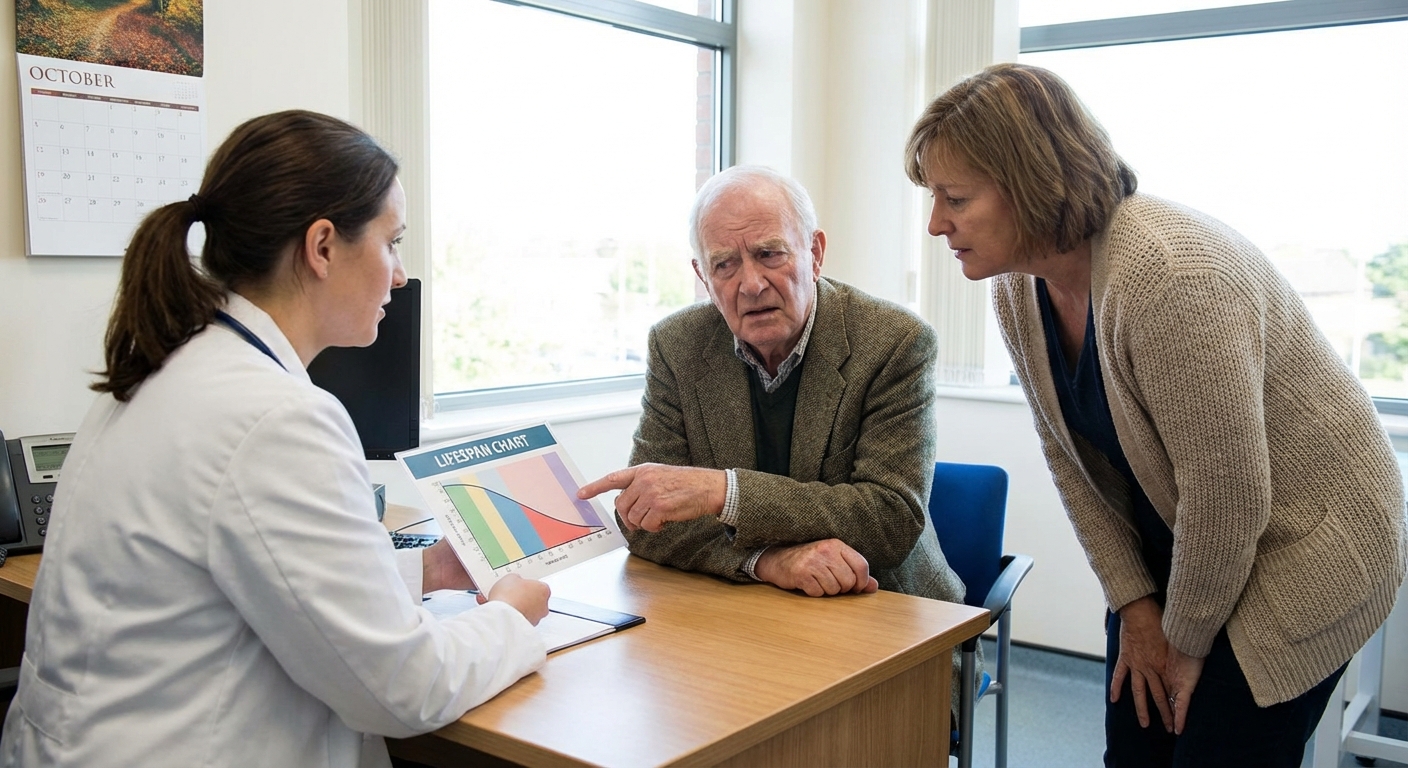
- Are we talking months, years, or decades?
- Will it be a slow decline or a quick one?
- What can we still plan for — trips, weddings, grandkids, retirement?
The honest answer: Alzheimer’s is incredibly individual, but there are patterns that can help you make sense of what you’re seeing.
The stages and how they connect to life expectancy
Alzheimer’s is usually described in three broad stages: early (mild), middle (moderate), and late (severe). These aren’t just labels — they tend to line up with how much time may be left.
Early (mild) stage: People still “seem like themselves”
I recently visited a friend’s dad who’d just been diagnosed. He repeated questions and got lost in stories, but he still paid the bill at the café and joked with the waiter. This is classic early-stage Alzheimer’s.
Typically:
- Duration: ~2–4 years
- People can still:
- Live semi-independently
- Drive (sometimes, with monitoring)
- Work or volunteer in some capacity
- Main issues:
- Mild memory loss
- Difficulty with complex tasks (finances, planning trips)
If Alzheimer’s is caught in this stage, life expectancy from symptom onset tends to be longer, sometimes 10+ years.
Middle (moderate) stage: The long, exhausting middle
This is the phase I’ve seen families struggle with the most.
Here’s what I’ve watched again and again:
- Loved ones start needing daily help — dressing, bathing, meals
- Behavior changes appear: agitation, wandering, anxiety, sundowning
- Communication gets harder: lost words, shorter sentences, frustration
Typically:
- Duration: ~3–6 years
- Risk starts to climb for:
- Infections (especially urinary tract infections)
- Falls
- Weight loss and malnutrition
Life expectancy at this point is harder to predict because complications begin to matter more than the Alzheimer’s itself.
Late (severe) stage: Body shuts down gradually
In late-stage Alzheimer’s, the brain struggles to handle even basic life functions.
What I’ve seen in this phase:
- People lose the ability to walk, then to sit up, then to swallow safely
- They may sleep most of the day
- Talking shrinks to a few words or noises, then stops
Typically:
- Duration: ~1–3 years
- Most common causes of death:
- Pneumonia (especially aspiration pneumonia from food/liquid going into the lungs)
- Severe infections
- Complications from being bedridden (blood clots, pressure sores)
This is usually when hospice teams step in and shift the goal from “adding days” to “making the days left more comfortable and meaningful.”
Key factors that change life expectancy
Two people can get the same diagnosis at the same age and live completely different lengths of time. Here’s what tends to make the biggest difference, based on both data and what I’ve seen firsthand.
1. Age at diagnosis
- Younger onset (before 65):
- Often a more aggressive course
- But people may live longer because they’re physically stronger
- Older onset (late 70s, 80s, 90s):
- Shorter overall life expectancy, partly because of other health issues
A 2008 study in BMJ followed over 13,000 people and found that diagnosis at 65 was associated with around 8–10 years of survival, while diagnosis after 90 could mean 3 years or less on average.
2. Overall physical health
When I’ve seen people live longer with Alzheimer’s, they usually had:
- Good heart health
- Controlled blood pressure and diabetes (if present)
- No major strokes, kidney failure, or advanced cancer
On the flip side, things that tend to shorten life expectancy:
- Heart failure
- Repeated strokes
- Advanced lung disease
- Chronic infections or serious immune problems
3. Type of dementia and mixed causes
Not everyone has “pure” Alzheimer’s. Many older adults have mixed dementia — Alzheimer’s plus vascular dementia (from strokes or small vessel disease).
Mixed dementia can:
- Speed up decline in some people
- Increase risk of falls and strokes
This is one reason two people with the same “Alzheimer’s” label can look so different over time.
4. Complications: The quiet game-changers
When I worked with a care team on a case review, we noticed something predictable: the death certificate almost never said “Alzheimer’s” alone.
Instead, it listed things like:
- Aspiration pneumonia
- Sepsis from a severe infection
- Hip fracture followed by complications
This sounds grim, but it’s actually practical information: preventing complications can genuinely extend life.
Things that help in my experience:
- Fall-proofing the home early
- Treating swallowing issues quickly (speech therapy, diet changes)
- Staying on top of hydration, nutrition, and oral care
Can treatment extend life expectancy?
Here’s where the nuance matters.
What current drugs can (and can’t) do
The older medications — donepezil (Aricept), rivastigmine, galantamine, and memantine — are symptomatic treatments. They don’t stop the disease, but they can:
- Delay worsening of memory and daily function in some people
- Make the early and middle stages more manageable
Some studies hint at slightly longer survival in people who stay on these meds, but the effect isn’t huge, and it’s not universal.
Then we have the newer disease-modifying drugs like lecanemab (Leqembi), which the FDA approved in 2023 for early Alzheimer’s. They work by targeting amyloid plaques in the brain.
From what we know so far:
- They slow cognitive decline modestly, especially if started early
- There’s no rock-solid long-term data yet on how much they extend life
- They come with real risks, like brain swelling and bleeding in some patients
When I talked with one family about these new treatments, we ended up with this question:
> Are we trying to maximize years or quality within the years?
There’s no one right answer — and that’s okay.
What families often get wrong about life expectancy
I’ve watched families misunderstand two big things, and it leads to a lot of guilt and regret.
Misconception 1: “The diagnosis date is the starting line”
Most people have had Alzheimer’s changes in their brain for years before diagnosis. The true “start” isn’t the MRI date or the first neurologist appointment; it’s when symptoms quietly began.
If your loved one seems to decline “fast” after diagnosis, sometimes it’s not fast — you’re just stepping into the story halfway.
Misconception 2: “Decline is always linear”
Families often expect a smooth downward slope. In reality, I’ve seen this pattern more:
- Long, stable plateaus
- Sudden dips after infections, surgeries, or hospitalizations
- Partial bounce-backs, but never quite to the previous baseline
Once you see Alzheimer’s as a staircase instead of a slide, the progression makes a weird kind of sense.
How to make the years you do have actually count
This is the part most statistics leave out.
In my experience, the families who cope best don’t obsess over whether they’ll get 4.5 years or 7.2 years. They:
- Have early conversations about wishes (feeding tubes, hospitalizations, resuscitation)
- Get legal documents in place while their loved one can still participate
- Use respite care and support groups so caregivers don’t burn out
- Focus on small, repeatable joys: familiar music, short walks, photos, routines
One daughter told me, after her mom died, “We stopped counting how long and started asking how can we make this week softer? That’s when I finally felt like we were living again.”
A realistic, hopeful way to think about it
Alzheimer’s is a terminal disease. That’s the hard truth.
But it’s also a slow disease, and slow gives you something that many other diagnoses don’t: time to adapt, to say what needs to be said, to organize, to grieve in layers instead of all at once.
If you’re caring for someone with Alzheimer’s — or you’ve just been diagnosed yourself — you’re allowed to ask about life expectancy. You’re also allowed to decide that the better question is:
> Given the time we probably have — whether that’s three years or fifteen — how do we want to live it?
If the numbers give you a framework, use them. If they just scare you, push them to the background and focus on support, safety, and connection. The research can estimate years; you and your loved one decide what those years feel like.
Sources
- Alzheimer’s Association – 2024 Alzheimer’s Disease Facts and Figures - Comprehensive data on survival, stages, and treatment
- Mayo Clinic – Alzheimer’s disease: Symptoms and causes - Overview of progression and complications
- National Institute on Aging (NIA) – Alzheimer’s Disease Fact Sheet - Government resource on causes, stages, and outlook
- BMJ – Survival times in people with dementia: analysis of mortality data - Research article on life expectancy by age at diagnosis
- FDA – Leqembi (lecanemab-irmb) Information - Official details on newer Alzheimer’s treatment and risks