Learn about low vitamin D and hair loss
I ran my fingers through my hair in the shower and came away with a small clump. Then another. Then I started seeing loose hairs on my pillow, my keyboard, the car seat. I told myself I was being dramatic… until my hair part suddenly looked wider in photos.
I didn’t feel sick. I wasn’t doing anything radically different. But my energy was trash, my mood was weirdly low, and my hair was clearly thinning.
When I finally ran bloodwork out of sheer frustration, one number jumped off the page: my vitamin D level.
It was 18 ng/mL.
For context, most labs flag anything under 20 as deficient.
That was my first real clue that low vitamin D and hair loss aren’t just some random wellness rumor floating around TikTok. There’s a surprisingly deep pile of science behind it.
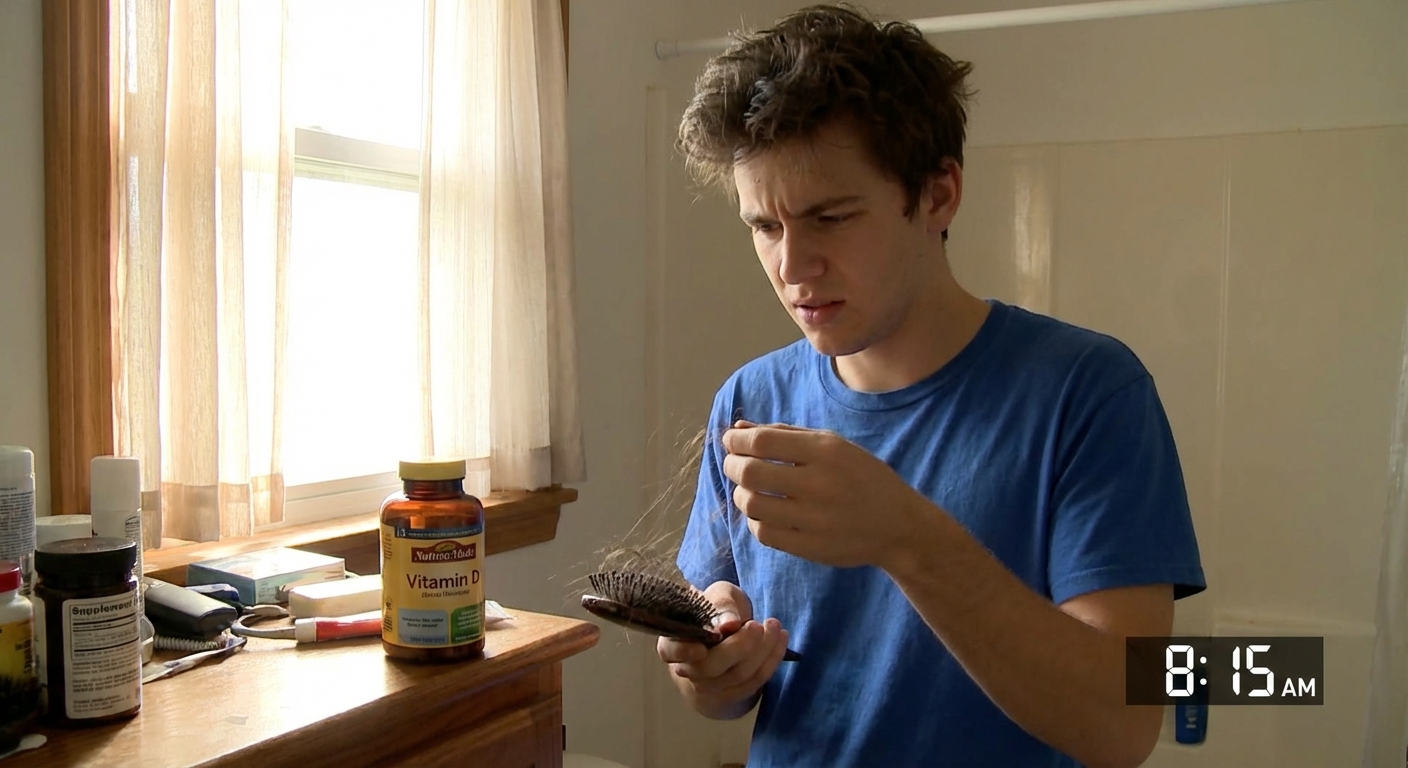
Let’s break it down in plain English, with what I learned the hard way.
How vitamin D actually ties into hair growth
I used to think vitamin D was just the “bone health” vitamin. Cool, prevents rickets, end of story.
Then I fell down the research rabbit hole and learned this:
- Hair follicles have vitamin D receptors (VDRs) on their cells.
- Those receptors help regulate the hair growth cycle, especially the early growth (anagen) phase.
- When those receptors aren’t activated properly (like when vitamin D is chronically low), follicles can get “stuck,” miniaturize, or shift more hairs into the shedding phase.
One of the big eye‑openers for me was reading about vitamin D receptor knockout mice in research. When scientists remove or disable the vitamin D receptor gene, the mice develop alopecia (hair loss), even when their diet is normal.
That doesn’t mean every human with low vitamin D will go bald, but it strongly suggests vitamin D is part of the machinery that keeps hair cycling correctly.
In my experience, this explained why my hair wasn’t just shedding more; it also felt slower to grow back, especially around my temples.
What the research says about low vitamin D and hair loss
Once my doctor flagged my deficiency, I went full nerd and started digging into actual studies rather than random Reddit threads.
A few that really shaped my thinking:
- A 2013 study in the British Journal of Dermatology found that people with alopecia areata (an autoimmune type of patchy hair loss) had significantly lower vitamin D levels compared to controls.
- A 2014 study on women with telogen effluvium (diffuse shedding) also reported lower vitamin D in the hair loss group.
- A 2021 systematic review in the International Journal of Trichology looked across multiple studies and concluded that vitamin D deficiency is common among people with various hair loss disorders, including androgenetic alopecia (pattern hair loss).
Now, here’s the honest part:
- Most of these studies show association, not proof of causation.
- Supplementing vitamin D doesn’t magically regrow hair for everyone.
But there’s enough evidence that when I saw my level at 18 ng/mL, it felt less like a coincidence and more like a pretty obvious red flag.
How I realized my vitamin D was tanked
The hair loss got my attention, but looking back, I’d had subtle signs for months:
- Afternoons where I felt like my body was made of sandbags
- Low mood and random irritability
- More colds than usual
- Mild muscle aches I blamed on “bad posture”
None of that screamed “vitamin D deficiency” to me at the time.
Then my doctor asked one question that clicked everything into place:
> “How much sun do you actually get?”
I work mostly indoors. I live at a latitude where winters are long and gray. And, like a lot of people, I’d gotten pretty diligent with sunscreen.
When we tested my serum 25‑hydroxyvitamin D (that’s the lab marker), it came back at 18 ng/mL.
My doctor’s comment: “This alone may not be the only cause of your hair shedding, but we absolutely need to fix it.”
That was the start of my n=1 experiment.
What changed when I corrected my vitamin D (and what didn’t)
We decided on a moderate supplement regimen after ruling out other stuff (thyroid issues, iron deficiency, B12, major hormonal problems). I’m not going to list my exact dose here because that should be tailored by a healthcare provider—but it was in the typical range used for deficiency, not some megadose biohacker thing.
What happened over the next 3–6 months:
- The crazy handfuls of hair in the shower calmed down. I still shed, but it wasn’t terrifying.
- My hairbrush stopped filling up as fast.
- My energy and mood improved in a way I hadn’t fully realized I was missing until it came back.
Here’s what didn’t happen:
- I didn’t wake up with a magically thicker ponytail.
- My existing thinned‑out areas didn’t instantly go back to teenage density.
- It didn’t replace other treatments—like topical minoxidil—that my dermatologist recommended.
In my experience, correcting low vitamin D felt less like hitting a “regrow” button and more like taking the brakes off my hair cycle so the other therapies could actually work.
Could your hair loss be linked to low vitamin D?
Based on what I learned (and what the science shows), here are a few scenarios where it’s very reasonable to at least check your levels:
- You live far from the equator or go through long winters
- You have darker skin (more melanin = less vitamin D produced from the same sun exposure)
- You rarely go outside or work indoors most of the day
- You consistently use strong sunscreen (good for preventing skin cancer, but it does block UVB)
- You wear clothing that covers most of your skin for cultural or personal reasons
- You have digestive conditions (like celiac, Crohn’s, certain bariatric surgeries) that affect nutrient absorption
None of this is a diagnosis, obviously. But if you check a bunch of those boxes and you’re noticing increased shedding or overall thinning, a simple blood test is a low‑effort starting point.
Personally, I wish I’d tested this 6 months earlier instead of just obsessing over expensive shampoos.
How to test and what numbers to look for
The test you want to ask for is:
> 25‑hydroxyvitamin D (25(OH)D) blood test
Typical reference ranges (these can vary by lab and guideline):
- < 20 ng/mL (50 nmol/L) – Deficient
- 20–29 ng/mL (50–74 nmol/L) – Insufficient
- 30–50 ng/mL (75–125 nmol/L) – Generally considered adequate for most people
- > 100 ng/mL (250 nmol/L) – Potential toxicity
My own sweet spot—based on follow‑up labs and how I felt—ended up around 35–45 ng/mL. That’s personal, not a universal target, but it lines up with what many clinicians aim for.
One thing I learned the slightly scary way: more is not always better. I met someone online in a hair loss forum who was taking 10,000+ IU daily for months without testing. They ended up with vitamin D toxicity, high calcium, and a whole new set of problems.
Lesson: let your levels guide your dose, not vibes.
Ways to raise vitamin D (that aren’t totally unrealistic)
Here’s what actually fit into my life without turning me into a wellness caricature:
1. Sensible sun exposureI started doing short walks midday, a few times a week, with forearms or lower legs exposed. No burning, no tanning obsession, just 10–20 minutes depending on the season and UV index.
2. Food sources (helpful, but usually not enough alone)I added more of these:
- Fatty fish like salmon and sardines
- Fortified foods (some milks, plant milks, cereals)
- Eggs (the yolks have a bit of vitamin D)
Honestly, diet alone rarely fixes a true deficiency, but I treated it as background support.
3. Targeted supplementationThis was the main lever that actually moved my blood levels. My doctor chose:
- A daily dose instead of huge once‑a‑month blasts, to keep things stable
- Regular retesting every 3–4 months to avoid overshooting
Within a few months, my 25(OH)D climbed into the mid‑30s, then low 40s ng/mL, which is when I noticed my hair situation feeling less… urgent.
The honest truth: vitamin D is a piece of the puzzle, not the whole picture
I’d love to tell you that fixing my vitamin D turned me into a shampoo commercial model. It didn’t.
Here’s the more nuanced reality from my experience and the literature:
Where vitamin D helps:- It may reduce excessive shedding when deficiency is a driver
- It supports overall follicle health and growth cycles
- It’s crucial for immune regulation, which may matter in autoimmune hair loss
- It doesn’t cure classic male or female pattern baldness by itself
- It can’t override genetic predisposition
- It’s not a replacement for dermatology‑backed treatments like minoxidil, finasteride (for some people), or low‑level laser therapy
My dermatologist described it perfectly:
> “Think of vitamin D as making sure the garden soil isn’t depleted. But you still have to deal with weeds, pests, and the actual plants.”
For me, getting my vitamin D in range made my hair more responsive to other treatments and calmed the alarming shedding. It didn’t rewrite my genetics, but it did stop me from trying to grow a garden in nutrient‑poor dirt.
When to talk to a professional (and what to ask)
If your hairbrush is starting to scare you and you suspect low vitamin D might be part of the story, here’s what I’d do differently if I were starting over:
- See a dermatologist or primary care provider instead of only consulting the internet.
- Ask for labs that cover:
- 25‑hydroxyvitamin D
- Thyroid panel (TSH, maybe free T4)
- Ferritin (iron storage)
- CBC, maybe B12 and folate
- Bring photos of your hair from 6–12 months ago to show changes.
- Be honest about your sun exposure, diet, stress, and medications.
The mix of lab data + clinical exam + your story is way more powerful than any single number.
For me, connecting low vitamin D with my hair loss turned down the anxiety and turned up the action plan. Once I stopped guessing and started testing, the whole thing felt a lot less mysterious—and a lot more manageable.
Sources
- National Institutes of Health – Vitamin D Fact Sheet - Overview of vitamin D functions, sources, and recommended intakes
- Harvard T.H. Chan School of Public Health – Vitamin D - Evidence summary on vitamin D and health
- Cleveland Clinic – Vitamin D Deficiency: Causes, Symptoms & Treatment - Clinical explanation of deficiency and management
- American Academy of Dermatology – Hair loss: Who gets and causes - Overview of common hair loss causes
- BBC Future – Is vitamin D really a cure-all? - Balanced look at vitamin D claims and evidence