Learn about natural sinus infection remedies
my cheeks, and the lovely bonus of feeling like my head is full of wet cement.
Over the last few years, I’ve gone down a deep rabbit hole testing natural sinus infection remedies. Some helped a lot, some did absolutely nothing, and a few made things worse (I’ll tell you which so you can skip the same mistakes).
I’m not your doctor, but I am that friend who’s tried almost everything and reads medical journals for fun. Let’s walk through what’s actually worth trying—and when you really shouldn’t mess around and need a professional.
Quick reality check: sinus infections can be serious
Before we get to the teas, rinses, and steams, I want to be upfront.
In my experience, the biggest mistake people make (my past self included) is trying to “tough out” a sinus infection that actually needs antibiotics or at least an evaluation.
Red flags that mean you should call a doctor ASAP:- Symptoms lasting more than 10 days without improvement
- High fever (around 102°F / 38.9°C or higher)
- Severe facial pain or swelling, especially around one eye
- Vision changes, confusion, very stiff neck, or extreme headache
- Symptoms that get better, then suddenly get much worse
The American Academy of Otolaryngology and CDC both note that many sinus infections are viral and improve on their own in 7–10 days, but bacterial sinusitis or complications like orbital cellulitis and meningitis are absolutely not DIY situations.
So, what follows is focused on mild to moderate sinus symptoms and supportive care—things I’ve used alongside medical treatment or while waiting to see if a viral infection would resolve.
Saline rinses and neti pots: the unglamorous MVP
I resisted nasal irrigation for years because, honestly, the idea of pouring water through my nose sounded like medieval torture.
Then I finally tried a neti pot during a brutal sinus infection. When I tested this the first time, I was so congested nothing came out one side. By day three, I was draining mucus I swear could’ve had its own zip code.
How saline irrigation helps
Sterile saline rinses can:
- Thin and flush out mucus and allergens
- Reduce inflammatory mediators in the mucosa
- Improve function of the cilia (those tiny hairs that move mucus along)
A 2016 review in Canadian Family Physician found that saline irrigation is safe and can improve symptoms of chronic rhinosinusitis and acute sinusitis when used correctly.
But: the big safety rule you can’t ignore
When I say sterile, I mean:
- Distilled or sterile water only, or
- Previously boiled water (then cooled), not just tap
The FDA has specifically warned about rare but deadly brain infections from using contaminated tap water in neti pots. It’s rare, but not worth the risk.
My routine when I’m congested:- Use a pre-mixed saline packet with distilled water once or twice daily
- Lean over the sink, mouth slightly open, breathe through my mouth
- Stop if I feel burning (usually means the salt concentration is off)
Steam inhalation: feels amazing, helps… somewhat
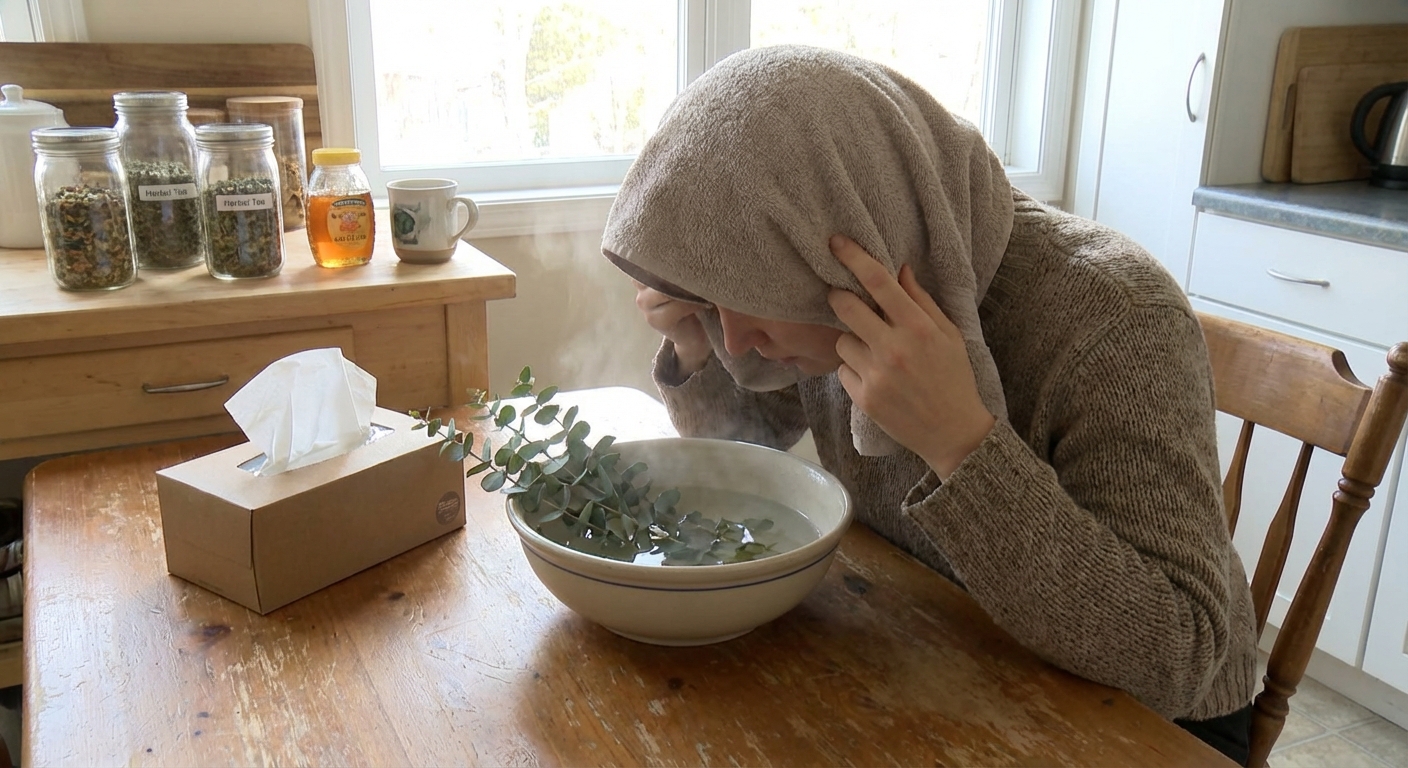
I used to do the classic towel-over-the-bowl steam setup like I was in some low-budget spa commercial.
Steam doesn’t “kill” pathogens in your sinuses, but it can temporarily:
- Loosen thick mucus
- Moisturize irritated nasal passages
- Reduce that dry, scratchy feeling in the throat
One randomized trial in The BMJ (2016) on adults with chronic or recurrent sinusitis found that steam inhalation alone didn’t dramatically change outcomes long-term, but patients reported it felt soothing.
What worked best for me:- Long hot showers with the bathroom door closed
- A bowl of hot (not boiling) water with a few drops of eucalyptus oil at a distance (if you’re not sensitive to scents)
The controversial one: essential oils
I was very skeptical about essential oils until one particularly nasty sinus infection. I dabbed a diluted mix of eucalyptus and peppermint oil on my chest and under my nose before bed, mostly out of desperation.
Did it cure the infection? No.
Did I breathe more easily and finally sleep for more than two hours? Yes, noticeably.
What the science actually says
- Eucalyptus oil (specifically cineole) has mild mucolytic and anti-inflammatory properties. A 2009 study in Laryngoscope found that cineole improved symptoms in acute sinusitis compared with placebo.
- Peppermint oil contains menthol, which doesn’t actually open airways but tricks your brain into feeling like you’re breathing better.
- A small amount (2–3 drops in a carrier oil) on my chest or neck, never straight on skin
- A diffuser across the room—not right in my face
- Never drop essential oils directly into your nose or neti pot
- Keep them away from kids and pets
- They can trigger asthma or allergies in some people
For me, they’re a comfort add-on, not a core treatment.
Hydration, diet, and that annoyingly boring advice that actually helps
When I recently tracked my hydration during a sinus flare, the difference honestly surprised me.
On days I got close to 2–2.5 liters of fluid, my mucus was noticeably thinner and easier to clear. On the day I lived on coffee and forgot water? Thick, sticky congestion all day.
What’s helped me repeatedly
- Warm liquids: Broth, herbal tea, warm lemon water. There’s some evidence from a 2008 study in Rhinology that hot drinks can provide immediate relief of nasal airflow sensations.
- Light, anti-inflammatory foods: I go easier on sugar and dairy when I’m very congested—not because they’re evil, but because heavier meals make me feel more sluggish when I’m already miserable.
- Electrolytes: If I’m sweating with a fever or not eating much, an electrolyte drink keeps me from feeling totally wiped out.
No food has ever single-handedly “cured” my sinus infection, but the combination of hydration and lighter meals makes me function a lot better while my immune system does its job.
Herbal options I’ve actually felt a difference with
I’ve tried a silly number of herbs marketed for sinus relief. Most were underwhelming. A couple earned permanent spots in my cabinet.
1. Bromelain (from pineapple)
Bromelain is a proteolytic enzyme extracted from pineapple stems.
A 2006 open study in In Vivo suggested that bromelain may help reduce swelling and improve breathing in acute sinusitis when used alongside standard therapy.
My experience: When I took bromelain (on an empty stomach) during a sinus infection, facial pressure was a bit less intense. It wasn’t dramatic, but it was enough that I noticed. Cautions:- Can increase bleeding risk (don’t mix casually with blood thinners)
- Possible allergies, especially if you’re allergic to pineapple
2. Sinupret (herbal combination)
On a trip to Europe, a pharmacist recommended Sinupret, a German herbal combo with gentian root, primrose flowers, sorrel herb, elderflower, and verbena.
I initially rolled my eyes, tried it, and then… cleared my nose more in 24 hours than I had in three days.
Several German studies have suggested Sinupret may improve mucus drainage and reduce symptom duration when used with conventional treatment. It’s not a miracle drug, but in my case, it consistently seems to help thin mucus.
Always check:- For interactions with medications
- If you’re pregnant, nursing, or have liver issues
Sleep position and environment: unsexy but powerful
One night I tracked my symptoms hour by hour and realized my congestion was always worse after I’d been lying flat.
Since then, I’ve made a couple small changes that pay off almost every single time:
- Elevate your head: I use two pillows or a wedge pillow. Less postnasal drip pooling in the back of my throat, less coughing.
- Humidifier in dry seasons: But I clean it like it’s my job. Dirty humidifiers can blow mold and bacteria into the air—exactly what you don’t want.
The Mayo Clinic and multiple ENT specialists consistently recommend optimizing bedroom humidity (around 30–50%) and head elevation for sinus issues.
What didn’t really work for me (or backfired)
To keep this honest, here are a few things that flopped when I tested them:
- Straight apple cider vinegar shots: Burned my throat, upset my stomach, did nothing for my sinuses.
- Shoving garlic cloves up my nose: I never did this because I like my nasal tissue, but ENTs regularly have to remove stuck garlic from people who saw this on social media. Please don’t.
- Overusing decongestant nasal sprays: Not natural, but worth mentioning. Years ago I got rebound congestion from using oxymetazoline sprays longer than 3 days. Miserable.
The rule I follow now: if a remedy sounds like a dare or a punishment, I skip it.
When natural remedies fit—and when they don’t
Here’s how I personally use natural sinus infection remedies now:
- Early stage / mild symptoms: Saline rinses, steam, hydration, head elevation, maybe herbal support.
- Moderate symptoms, no red flags: I’ll give it 3–5 days of the above while monitoring closely. If things aren’t clearly improving, I check in with a clinician.
- Severe pain, high fever, or symptoms >10 days: I skip the DIY experimentation and get evaluated. Natural remedies become supportive, not primary.
In my experience, the sweet spot is using these strategies to:
- Make yourself more comfortable
- Help your body clear mucus more efficiently
- Potentially shorten the “miserable” part of the illness
But I never treat them as a guaranteed cure, and I don’t use them as a reason to delay medical care when my symptoms are clearly outside the “normal cold” range.
If you take anything from my trial-and-error journey, let it be this: a salt rinse and an extra glass of water will do more for your sinuses than most of the fancy stuff—just pair that common sense with real medical backup when your body’s telling you this is more than a simple clog.
Sources
- FDA – Is Rinsing Your Sinuses With Neti Pots Safe? – Guidance on safe nasal irrigation and water types
- Mayo Clinic – Sinusitis – Overview of sinus infection symptoms, causes, and treatments
- CDC – Antibiotic Use: Sinus Infection (Sinusitis) – When sinus infections need antibiotics vs. when they’re usually viral
- BMJ – Effectiveness of steam inhalation and nasal irrigation for chronic or recurrent sinus symptoms – Study on steam and nasal irrigation
- NCBI – Efficacy of Cineole in Acute Rhinosinusitis – Research on eucalyptus-derived cineole and acute sinusitis