Learn About Ways to Manage High Uric Acid Levels
on my foot. I just… slept. The ER doctor looked at my bloodwork, raised an eyebrow, and said, “Your uric acid is high. This is gout.”
That one sentence sent me down the rabbit hole of understanding uric acid, gout, and how much control we actually have over those painful flare-ups and long‑term risks. I tested different diets, hydration strategies, supplements, even how late I ate dinner. Some things helped a lot. Others were overhyped or flat-out useless—for me, anyway.
This is what I’ve learned, backed by research and real-world trial‑and‑error.
What High Uric Acid Actually Is (And Why It Matters)
Uric acid is a waste product your body makes when it breaks down purines—compounds found in your own cells and in certain foods (especially some meats, seafood, and alcohol). Normally, your kidneys filter uric acid out and you pee it away.
When uric acid levels climb too high (hyperuricemia), crystals can form in joints and tissues. That’s where gout comes in: sudden, burning, red, swollen joints—often the big toe, but knees, ankles, and fingers aren’t exactly safe either.
High uric acid is also linked (sometimes silently) to:
- Kidney stones
- Chronic kidney disease
- Metabolic syndrome, high blood pressure, and cardiovascular risk
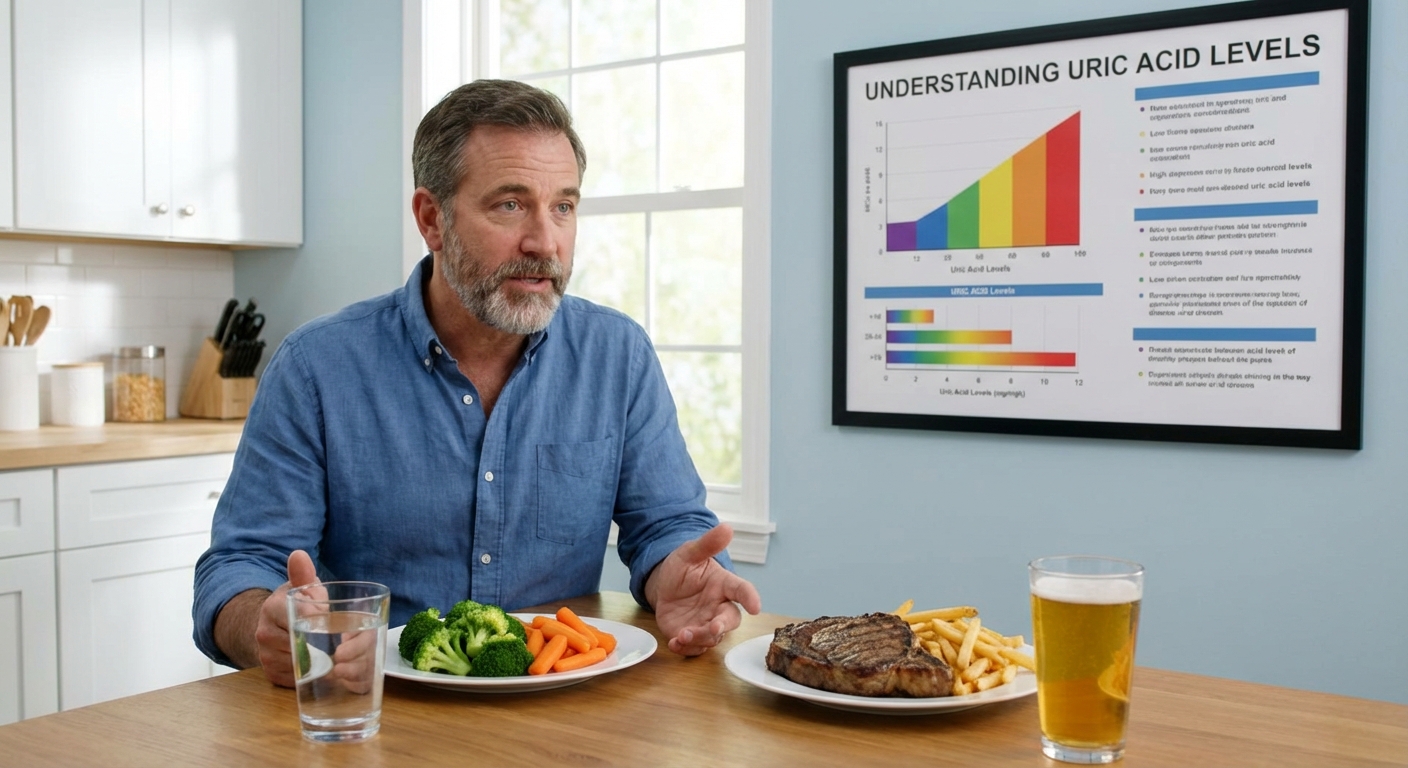
Lab-wise, many labs flag uric acid above roughly 7.0 mg/dL in men and 6.0 mg/dL in women, though “safe” can vary by person and medical history.
How I Found Out My Triggers (The Painful Way)
When I first saw my lab report, my uric acid was hovering around 8.5 mg/dL. I’d just had a week of:
- Two big steak dinners
- Several beers
- Not much water
- Barely any sleep
Basically, the Gout Starter Pack.
My doctor asked me to log everything I ate and drank for a month and repeat the blood test. When I tested this approach, patterns jumped out:
- Beer + red meat weekends = biggest spikes
- Dehydration days = more joint “twinges,” even without a full flare
- Late‑night heavy meals = morning stiffness and soreness
Once I saw those patterns on paper, managing uric acid became way less mysterious and way more doable.
Core Strategy #1: Dial in Your Diet Without Going Miserable
I tried the “go extreme” approach at first—no meat, no alcohol, basically no joy. Unsurprisingly, I lasted about 10 days.
What worked better for me (and lines up with research) is a moderate, sustainable approach.
Foods I Learned to Limit (Not Always Eliminate)
These tend to be high in purines or strongly associated with gout flares:
- Organ meats (liver, kidney, sweetbreads)
- Certain seafoods: anchovies, sardines, mussels, scallops, trout
- Red meats in large quantities
- Beer and spirits more than wine
- Sugary drinks with high-fructose corn syrup (sodas, energy drinks)
When I cut way back on these and saved them for rare occasions, my uric acid dropped by about 1.5 mg/dL over a few months.
What I Eat More Of Now
I leaned into a modified Mediterranean-style pattern, which the 2017 American College of Rheumatology guidelines broadly support for overall gout risk reduction:
- Low‑fat dairy (yogurt, milk): some studies show it can help lower uric acid
- High‑fiber carbs: oats, brown rice, quinoa, beans (more on beans in a second)
- Fruits and vegetables: especially cherries, berries, and leafy greens
- Nuts and seeds: almonds, walnuts, chia
- Healthy fats: olive oil, avocado, fatty fish in moderate portions (salmon, mackerel)
About beans and lentils: they do contain purines, but multiple studies suggest plant-based purines aren’t as strongly linked to gout flares as animal-based ones. When I tested this personally, I could eat lentil soup or chickpea curry without provoking attacks, while two steak dinners in a row were a different story.
Core Strategy #2: Hydration and Simple Lifestyle Shifts
I used to roll my eyes when people said “Just drink more water.” Then I tracked it.
On days I hit around 2.5–3 liters of fluids (mostly water and herbal tea), I:
- Peed more, obviously
- Felt fewer random joint aches
- Had fewer “mini-flare” sensations after heavy meals
The logic makes sense: more fluid helps your kidneys clear uric acid more efficiently. The CDC and many clinicians aim for clear to pale yellow urine as a decent rule of thumb.
Other lifestyle tweaks that helped me:
1. Weight (Slow) Loss
I wasn’t hugely overweight, but I dropped about 6–7 kg over six months with walking and modest calorie cuts. Studies show excess weight is strongly linked to gout, and modest weight loss can reduce flares and uric acid.
Interestingly, rapid weight loss or crash diets can briefly worsen gout, probably due to increased breakdown of body tissues, so I went slow and steady. No detoxes, no 1,000-calorie crash days.
2. Sleep and Stress
When I was chronically sleep‑deprived and stressed, my flares were worse and more frequent. Cortisol, inflammation, late‑night snacking, more alcohol—everything snowballed.
Once I started:
- Keeping a semi‑regular sleep schedule
- Doing 10–15 minutes of breathing or stretching at night
…I didn’t suddenly cure my gout, but I did notice fewer bad weeks back‑to‑back.
Core Strategy #3: Medication – The Honest Pros and Cons
There’s a big difference between managing occasional flares and treating chronically high uric acid.
In my case, lifestyle helped, but my levels were still borderline high. After multiple flares, my rheumatologist recommended allopurinol, a xanthine oxidase inhibitor that lowers uric acid production.
My Experience with Allopurinol
When I tested this medication under supervision:
- My uric acid dropped from ~8.5 to ~5.8 mg/dL over a few months
- Flares became way less frequent and milder
But there are honest downsides:
- Dose adjustments took time (we started low to avoid side effects)
- I had some initial stomach discomfort
- There’s a (rare but serious) risk of allopurinol hypersensitivity syndrome, especially in some ethnic groups with certain HLA gene variants
Other medications my doctor discussed:
- Febuxostat – similar goal to allopurinol, but some data (e.g., the CARES trial in 2018) raised concerns about cardiovascular risk in certain high‑risk patients
- Colchicine, NSAIDs, or steroids – for treating acute flares, not for long‑term uric acid control
- Probenecid and other uricosurics – increase uric acid excretion via the kidneys, but not ideal if you have kidney issues or a history of stones
I’m not saying “everyone should jump on meds.” I am saying that if you’ve had recurrent gout attacks or high uric acid plus kidney issues or tophi (those hard uric acid lumps), ignoring medication options can backfire.
Supplements and “Natural” Hacks I Tested (What Actually Helped)
I skeptically tried a few “natural” tools. Some were placebo at best. A few had mild but real effects.
1. Cherries and Cherry Juice
There’s legit research here. A 2012 study in Arthritis & Rheumatism found cherries were associated with a lower risk of gout attacks. When I drank tart cherry juice regularly and ate a handful of cherries several times a week, my flares were less intense.
Was it magic? No. But combined with meds and diet, it felt like a helpful extra 5–10%.
2. Vitamin C
Moderate‑dose vitamin C (like 500 mg/day) has been shown in some studies to slightly reduce uric acid levels. For me, it didn’t move the needle dramatically, but my follow‑up labs after a few months did show a small drop (~0.2–0.3 mg/dL) when combined with everything else.
3. Things That Did Basically Nothing (For Me)
- Apple cider vinegar shots – gross and unhelpful
- Random herbal blends from the internet – expensive and zero lab impact
I’m not saying they’re useless for everyone, but they didn’t measurably shift my uric acid, and I kept checking labs to be sure.
When You Really Need Medical Help (Not Just Google and Green Tea)
Based on both my experience and guidelines from the American College of Rheumatology and other expert bodies, I’d take high uric acid seriously if you:
- Have recurrent gout flares (more than 1–2 a year)
- Notice joint deformities, lumps, or tophi
- Have kidney disease, kidney stones, or reduced kidney function
- Take medications that can raise uric acid (like some diuretics)
- Have a family history of early gout or high uric acid
A good clinician will usually:
- Check your serum urate level
- Review your kidney function, medications, and comorbidities
- Talk about both lifestyle and pharmaceutical options
- Set a target uric acid level (often under 6.0 mg/dL, or below 5.0 mg/dL in severe gout)
I wish I’d had that conversation earlier instead of waiting for “just one more flare” and limping around the office.
What Actually Worked as a Long-Term Game Plan
After a lot of trial and error, my current routine looks like this:
- Keep uric acid under 6 mg/dL with a low‑to‑moderate dose of allopurinol
- Stick to mostly Mediterranean-style eating with high-fiber carbs, low‑fat dairy, and reduced red meat
- Limit beer and hard liquor; if I drink, it’s usually a glass of wine with food
- Drink 2.5–3 liters of water most days
- Move daily (walking + light strength training) and slowly maintain a healthy weight
- Use colchicine or NSAIDs early if I feel a flare coming on, per my doctor’s plan
Is it perfect? No. I still occasionally overdo it at a barbecue or on vacation and feel the consequences. But the frequency and severity of my gout attacks have dropped massively, and my kidney numbers look better too.
If your uric acid is high, you don’t have to accept that future‑you is doomed to a life of hobbling and ice packs. With lab monitoring, some honest lifestyle changes, and (when needed) medication, you can absolutely tilt the odds in your favor.
Sources
- American College of Rheumatology – Gout Patient Information - Overview of gout, risk factors, and treatment options.
- National Institute of Diabetes and Digestive and Kidney Diseases (NIDDK) – Gout - Government resource explaining gout and kidney links.
- Mayo Clinic – Gout: Symptoms and Causes - Detailed description of causes, risk factors, and complications.
- Arthritis Foundation – Gout and Diet - Practical diet guidance and trigger foods.
- Zhang Y, et al. "Cherry consumption and decreased risk of recurrent gout attacks." Arthritis Rheum. 2012. - Study on cherries and reduced gout attack risk.