The New AI-Generated News Problem: How I Learned to Stop Doomscrolling and Actually Verify Stories
subtitles. My heart dropped. I checked major outlets… nothing. Ten minutes later, the original post quietly disappeared.
That was the moment I realized: I can’t just “feel” what’s real anymore. I have to verify it.
This isn’t a boring media-literacy lecture. It’s survival training for your brain in the age of AI-generated news, hyper-speed misinformation, and engagement-optimized chaos. And yeah, I’ve messed up a few times along the way.
The Day I Got Tricked (And Why It Was So Easy)
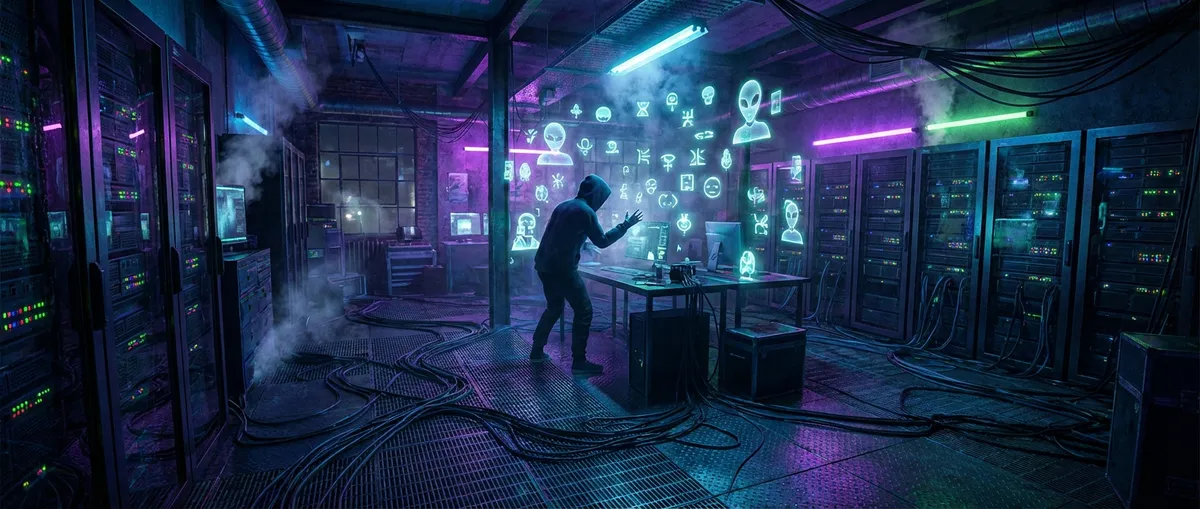
A few months ago, I shared a “scoop” about a massive tech company allegedly getting hacked. The post had:
- A fake-but-professional looking screenshot of a “leaked” internal memo
- A thread with technical-sounding jargon
- Hundreds of angry comments and “this is huge” quote-tweets
I reshared it. Felt smart. Felt early. Felt… misled.
When I actually dug in later:
- No mention on Reuters, AP, or any major outlet
- The supposed “internal memo” had weird formatting and a logo from an old brand kit
- Cybersecurity researchers on Twitter were literally saying, “Yeah, this doesn’t check out”
I had fallen for a classic tactic: a story formatted like news, moving faster than verification.
The scary part? The person who posted it might not even have been human. Accounts using AI-written threads + AI-generated “documents” are now a whole thing. And they’re getting better… fast.
How AI Is Quietly Rewriting the News Feed
When I tested a few popular AI tools to see how fast I could create a fake “breaking” post, it took me about 7 minutes to generate:
- A realistic-looking “eyewitness” paragraph
- A fake quote from a made-up “local official”
- An image that looked like a real street protest
I didn’t publish it, obviously. But the ease of it kind of freaked me out.
Three big shifts I’ve noticed as a news addict:
1. Synthetic images and video are now “good enough”Tools like Midjourney, DALL·E, and open-source models can create:
- “Photos” of politicians getting arrested
- War-zone footage that never happened
- Crowd scenes with flags, smoke, uniforms, all fake
In 2023, a fake AI-generated image of the Pentagon “explosion” went viral and even briefly affected the stock market before being debunked by outlets like the Washington Post and BBC. I remember seeing that one in real time and thinking, “If that fooled traders, what chance do regular scrollers have?”
2. Sloppy AI-written articles are everywhereYou’ve probably seen them:
- Weird, stiff phrasing
- Generic intros like “In the ever-evolving landscape…”
- No clear author, just “Staff Writer” or no byline at all
Some low-quality news sites are using AI to churn out huge volumes of barely-checked content, which then gets scraped, re-shared, and screenshotted. By the time it reaches you, it feels like “everyone is saying this,” even if it started from one junk source.
3. Engagement algorithms don’t care if it’s truePlatforms optimize for:
- Clicks
- Shares
- Time spent
Not accuracy.
MIT researchers found that false news spreads “farther, faster, deeper and more broadly” than true news on Twitter (now X), especially in politics. I remember reading that study and thinking: it’s like the platform gave lies a turbo boost and then walked away.
My 30-Second Gut Check Before I Believe Any “Breaking” Post
I got tired of feeling manipulated, so I built a tiny, lazy-person-friendly system.
Whenever I see a dramatic news post, I run through this in under 30 seconds:
1. “Who’s actually saying this?”
I ask myself:
- Is this from a random account, or an outlet I recognize?
- Does the outlet have a real website, with staff and contact info?
- If it’s a screenshot, can I find the original post?
If the story is supposedly huge but only appears on an account with like 3k followers and no clear identity? Red flag.
2. “Can I find this on at least two solid sources?”
My default checks:
- BBC, Reuters, AP News for global events
- Local news sites for city-specific stuff
- Government or institutional sites if it’s about policy, laws, or public health
If it’s genuinely breaking, it might not be fully reported yet. That’s fine. But if it’s been 30+ minutes and no one credible has even hinted at it? I pause.
3. “Does the visual make sense?”
I zoom in on images and video:
- Are the shadows consistent?
- Do signs, uniforms, license plates match the supposed location?
- Any weird hands, teeth, or text (AI still gets these wrong sometimes)?
One time, a “live protest in Paris” went viral. When I looked closely, signs in the background were… Cyrillic. That’s not a deepfake problem — that’s just a “nobody checked” problem.
What Journalists Do That We Don’t (But Should Steal)
I’m not a reporter, but I’ve spent years reading how good journalists work, and I’ve started copying a few of their habits in my daily scrolling.
Corroboration is their superpower
Reporters don’t trust:
- Single, anonymous sources
- Screenshots with no traceable origin
- Videos without verified location and time
They cross-check names, places, dates, and quotes. If three sources don’t line up, the story slows down.
When I tested this in my own life, it instantly stopped me from sharing a viral “new law” in my country that… did not exist. A two-minute fact-check on the government website saved me from looking extremely loud and extremely wrong in front of friends.
They look for who benefits from the story
Is it:
- Politically convenient for one side?
- Perfectly timed to distract from another scandal?
- Suspiciously aligned with a brand’s interests?
I’ve started asking myself: “If this story is true, who wins?” If the answer is “this one random influencer or partisan page,” I slow down.
The Mental Side: Outrage Is a Product Being Sold to You
I noticed a pattern: the posts that made me feel the most outraged were also the ones I was least likely to verify.
That’s not an accident.
When I went down the research rabbit hole, I found:
- Studies showing that emotionally charged headlines get more clicks and shares
- Social platforms rewarding content that triggers anger, fear, and moral disgust
- Bad actors (and sometimes legit outlets) exploiting this to drive engagement
It hit me: my outrage is profitable.
Once I internalized that, I started treating extremely emotional “news” like I’d treat spammy diet ads: suspicious by default.
Now, when I feel that instant surge of “I can’t believe they did this,” I ask myself:
> “Do I want to feel this… or do I want to know if it’s real?”
That tiny pause has saved my sanity more than once.
How I Now “Layer” My News Diet (So One Bad Source Doesn’t Break My Reality)
I used to rely on three things:
- Twitter/X
- YouTube commentary
- Screenshots in group chats
That’s not a news diet. That’s a rumor buffet.
These days, I try to layer my sources:
1. Fast but dirty: social media
I still use it as a first alert system. It’s great for:
- “Something’s happening in this city right now”
- “This platform just went down”
- “People are reporting weird weather / outages”
But I treat it like a fire alarm, not the full fire report.
2. Slower but cleaner: wire services and mainstream outlets
Once I see something blowing up, I check:
- Reuters, AP News, BBC, The New York Times, The Guardian
- For US policy or elections: NPR, major US papers
- For science/health: Nature, Science, CDC, WHO, Mayo Clinic, etc.
I don’t worship any outlet. They all have blind spots. But compared to anonymous accounts, they at least have:
- Editorial standards
- Corrections policies
- People whose jobs are on the line if they repeatedly publish nonsense
3. Deep dives: longform and specialist sources
For complex topics – AI, climate, geopolitics, public health – I’ll often:
- Read expert explainers from universities or research institutes
- Look up original studies or policy documents
- Search for specialist journalists who’ve covered the beat for years
This layer has saved me from half-baked takes on AI that sound spicy on TikTok but collapse under basic technical scrutiny.
What Actually Works to Share Responsibly (Without Becoming “That Guy”)
I worried that double-checking everything would make me the boring friend who never shares anything.
Turns out: people like not being lied to.
I’ve started doing a few small things:
- When I share a story, I often add one line like: “Via BBC + AP” or “Not yet confirmed by major outlets.”
- If I later find out something I shared was wrong, I correct it publicly. It’s mildly embarrassing for 30 seconds, then people just… appreciate it.
- Sometimes I’ll share a fact-check instead of the original rumor and say, “I almost believed this one.”
We don’t have to be perfect. We just have to be slightly less reckless than the algorithms expect us to be.
Where This Is Headed (And How Not to Lose Your Mind)
I don’t think the future is “nothing will be real anymore.” That’s too dramatic and gives up way too early.
What I’m seeing instead:
- Platforms are slowly adding more content labels, but they’re inconsistent
- Governments are starting to talk about AI-generated content rules, but those will lag
- Newsrooms are building verification teams and using their own AI tools to detect fakes
- Everyday users (that’s us) are becoming more skeptical of “perfectly viral” content
In my experience, the people who cope best with this new reality do three things:
- They assume the first version of any breaking story is incomplete.
- They care more about being accurate tomorrow than being first today.
- They treat their attention as a resource, not a reaction.
That’s where I’m trying to land. Not cynical, not naïve — just… calibrated.
Conclusion
The news problem right now isn’t just that lies exist. Lies have always existed.
The problem is that we’ve built a system where speed beats accuracy, emotion beats nuance, and AI can dress nonsense up in a suit and tie in under a minute.
I’m not logging off. I like knowing what’s happening in the world. But I’ve stopped playing the game on “auto.”
Now, when I see some viral “breaking” headline screaming at me, I give myself 30 seconds, a couple of tabs, and a tiny bit of doubt.
We don’t have to become professional fact-checkers. But if enough of us become just 10% harder to fool, a lot of this junk stops working.
And honestly? That’s a timeline I’d like to live in.
Sources
- MIT Study: The Spread of True and False News Online (Science, 2018) – Landmark research showing false news spreads faster and farther than true news on Twitter.
- BBC Reality Check – How AI-Generated Images Are Transforming Misinformation – Explains real cases of AI-generated photos going viral and how to spot them.
- Reuters – Explainer: What Is Misinformation and How Is It Spreading? – Overview of modern misinformation ecosystems, including social media dynamics.
- AP News – AP’s Standards for Using Artificial Intelligence in News – Shows how a major newswire is handling AI tools and verification.
- Poynter Institute – A Reader’s Guide to Verifying Images and Videos Online – Practical techniques used by journalists and fact-checkers that regular readers can copy.