The “Sleep Debt Trap” Almost Broke Me — Here’s How I Crawled Out
y called my bluff. My heart started racing for no reason, my memory glitched during simple conversations, and my mood turned into a roller coaster with no safety bar. That’s when I learned the phrase sleep debt the hard way.
I didn’t fix it overnight (pun absolutely intended). But I did experiment, fail, tweak, and slowly figure out how to climb out of a years‑long sleep hole without quitting my job, ghosting my friends, or becoming “that person” who leaves every party at 8:30 pm.
Here’s what actually worked for me, what didn’t, and what the research says about paying back your sleep debt before it quietly wrecks your health.
The Moment I Realized “Being Tired” Wasn’t Just A Personality Trait
My wake-up call wasn’t dramatic. No collapse at the gym or ambulance moment. It was way more boring and somehow scarier.
One Monday, I was leading a simple meeting I’d run a dozen times. Same slides, same talking points. Halfway through, my brain just… blanked. I stared at the screen and couldn’t remember a term I say weekly: “baseline.” I mumbled something else and kept going, but I was rattled.
That week I also:
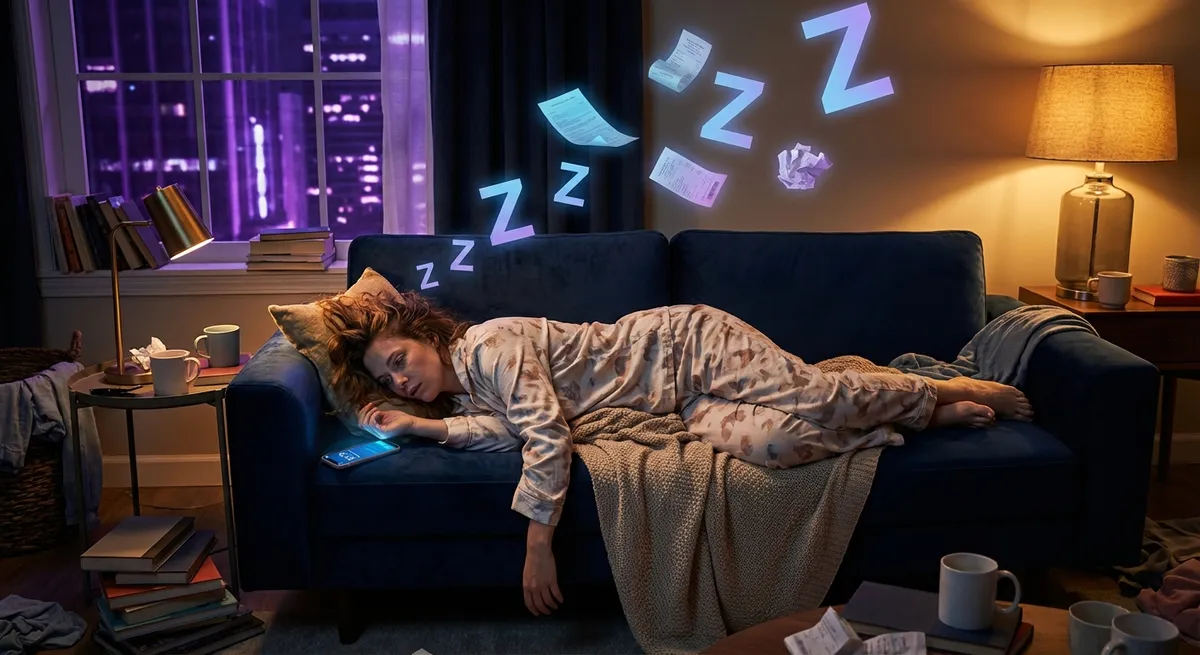
- Snapped at a barista because my order took 5 minutes
- Forgot where I parked (on a level I never park on)
- Laid in bed exhausted but weirdly wired, scrolling my phone past midnight
The thing that pushed me over the edge was a stupid little article I skimmed on my lunch break. It mentioned that chronic sleep restriction to 6 hours per night can impair your reaction time and cognition as much as being legally drunk — after just about two weeks. The study was from the University of Pennsylvania in 2003, and the data was brutal: participants thought they were “doing fine,” but their performance kept tanking.
I recognized myself in that exact delusion: “Yeah, I’m tired, but I’m still functioning.” I wasn’t. Not really.
That’s when I started tracking my sleep and realized I’d been averaging between 5 and 6 hours for months, sometimes less. My “I’ll catch up on the weekend” myth exploded pretty quickly once I actually looked at the numbers.
What Sleep Debt Actually Is (And Why Weekends Don’t Magically Erase It)
When I first heard “sleep debt,” I pictured some simple equation: miss 3 hours tonight, add 3 hours tomorrow, problem solved. That’s not how it works.
Sleep debt is basically the gap between how much sleep your body needs and how much you actually give it — built up over days and weeks. Most healthy adults need around 7–9 hours per night. I tested this on myself: left to my own devices on vacation (no alarm, no laptop), I naturally drifted to just under 8.5 hours per night. That was my personal “real” number.
Now imagine needing ~8.5 and routinely getting 5.5 or 6. That’s 2–3 hours missed per night. Over the workweek, I was running a deficit of 10–15 hours. Every week. Repeatedly.
Here’s what I learned when I dug into the science and tested things on my own life:
- Short-term catch-up helps, but doesn’t fully reset you. I’d oversleep on Saturdays and feel great… until Tuesday. Research backs this up: a 2019 study in Current Biology found that sleeping in on weekends didn’t completely reverse the metabolic and cognitive effects of weekday sleep restriction. It helped, but didn’t fix the underlying problem. I could feel that crash by midweek.
- Your brain adjusts to feeling awful… and calls it “normal.” That Pennsylvania study I mentioned? Participants restricted to 6 hours of sleep for 2 weeks had performance equivalent to up to 24 hours of total sleep deprivation, but they reported only feeling “slightly sleepy.” When I read that, it felt like someone had installed a hidden camera in my brain.
- Sleep debt hits everything: mood, appetite, immune system, and even how you store memories. I noticed I craved more sugar and junk food when tired, which I now know lines up with disrupted leptin and ghrelin (hormones tied to hunger and fullness). I got sick more often. Little annoyances felt apocalyptic.
So if sleep debt is real and weekends aren’t a full reset button, what do you actually do when you’ve been under-sleeping for months or years?
That’s where I started treating this less like a quick hack and more like rehab for my circadian rhythm.
The “Sleep Rehab” Plan I Tested On Myself (And The Parts That Flopped)
I didn’t suddenly become a zen sleep influencer who drinks chamomile tea and writes gratitude lists by candlelight. I work, I go out, I doomscroll sometimes. So I needed a plan that survived actual life.
Here’s the rough 6-week experiment I ran on myself, what worked shockingly well, and what totally failed.
Step 1: I Stopped Chasing the Perfect Bedtime and Focused on Wake Time
Every sleep article yells about bedtime. When I tried to force myself to be “an 11 pm person,” my brain responded by throwing a mental rave at 10:45 pm.
So I flipped the script. For 4 weeks straight, I set a non-negotiable wake time: 7:00 am. Weekdays, weekends, doesn’t matter. That was the anchor.
The first few days were rough. I was tempted to “just this once” sleep in. But holding that wake time did three big things for me:
- My body started predicting when it had to be awake, and I got sleepy earlier without forcing it.
- Grogginess dropped dramatically by week 2 — that awful heavy-headed feeling faded.
- I could actually plan my nights instead of playing roulette with my alarm.
This lines up with what sleep physicians emphasize: consistency in wake time stabilizes your circadian rhythm more than obsessing over an arbitrary “ideal” bedtime.
Step 2: I Added Sleep in 20–30 Minute Chunks, Not Giant Jumps
I knew my sweet spot was around 8–8.5 hours. I was at 5.5–6. If I tried to jump straight to 8.5 hours, I’d just lie there frustrated, staring at the ceiling and negotiating with the universe.
So I treated it like progressive overload at the gym:
- Week 1: Target 6.5 hours
- Week 2: Target 7 hours
- Week 3–4: Target 7.5–8 hours
That meant going to bed about 20–30 minutes earlier each week while keeping the same wake time. I used a wind-down alarm on my phone 45 minutes before bed to remind myself, “Hey, decision time. Are you actually going to sleep today or not?”
The surprise: the first real shift in my energy didn’t happen right away. It came around week 2. The research suggests that reversing chronic sleep restriction isn’t instant; some cognitive functions lag even after nights of “normal” sleep. But once the benefits hit, they were obvious:
- My word-finding mishaps dropped
- I stopped rereading the same paragraph five times
- My resting heart rate (which I track with a wearable) dropped by a few beats
Step 3: Caffeine Rules I Hated But Needed
When I tested this, caffeine was my emotional support beverage. So I didn’t quit. I set boundaries.
The rule I found most effective (and most annoying): no caffeine after 2 pm. Not even “half-caf” or “just a little tea.” The science here is brutal — caffeine’s half-life is around 5 hours, but its effects can linger even longer in sensitive people. Even if I felt tired enough to sleep, my sleep quality tanked when I had later caffeine.
The first week of this rule, I crashed hard around 4 pm. I compensated with:
- A 10–15 minute “non-sleep deep rest” break — literally just lying down with eyes closed, no phone
- A brief walk outside to grab some sunlight (even cloudy light helps your circadian clock reset)
It felt a bit silly at first, but the combo worked better than I expected. I wasn’t bouncing off the walls, but I was awake enough to finish my day without zombifying myself at night.
Step 4: The Two Habits That Shockingly Mattered More Than Fancy Sleep Gadgets
I tried the usual props: white noise app, eye mask, magnesium supplement. Some helped a bit, but two boring habits did the real heavy lifting.
- Morning light exposure
When I tested this, I made a deal with myself: within 30–45 minutes of waking, I’d get 10–15 minutes of actual daylight. No sunglasses if possible, just ambient light. Even on overcast days, that outdoor light intensity crushes anything inside.
Within a week, I noticed I was actually getting sleepy at a predictable time. This made sense once I read more: light in the morning anchors your circadian rhythm and starts a timer in your brain for melatonin release later.
- A hard rule: no “new” content 30 minutes before bed
This sounds weird, but it was huge. I realized my brain wasn’t wired from being awake; it was wired from constant novelty. New TikToks, new emails, new conversations, new news.
My rule: after that 45-minute wind-down alarm, I could only consume familiar stuff — rewatching a show, rereading a favorite book, gentle music, stretching. Nothing with cliffhangers, plot twists, or “breaking” anything.
When I respected this rule, falling asleep got dramatically easier. When I broke it for “just one more episode,” I’d pay for it with an extra 40 minutes of racing thoughts in the dark.
What Actually Changed Once My Sleep Debt Shrunk (And What Honestly Didn’t)
I wish I could say “sleep fixed everything.” It didn’t. But it fixed enough that I’m weirdly evangelical about it now.
The Wins I Actually Felt
After about a month of treating my sleep like a non-negotiable instead of a suggestion, I noticed:
- My anxiety baseline dropped. Stressful things were still stressful, but they didn’t trigger that instant chest-tightening panic as often. There’s decent evidence for this — sleep deprivation ramps up the amygdala (your brain’s fear center) and weakens the prefrontal cortex (the rational part).
- My focus came back online. I didn’t magically become hyper-productive, but I could do deep work for longer than 10 minutes without grabbing my phone. That alone was worth the effort.
- Workouts stopped feeling like punishment. On 5-hour nights, even light exercise felt like moving through concrete. On 7.5–8 hour nights, my endurance and mood during workouts noticeably improved. Recovery felt smoother too.
- My “random” aches and headaches eased up. This is obviously anecdotal, but mild tension headaches that used to show up multiple times a week dropped to “occasional visitor” status.
The Stuff Sleep Didn’t Magically Cure
To stay honest:
- I still procrastinate. I just procrastinate more awake.
- I still have nights where my brain spirals and I sleep badly. I’m not a robot.
- I still get tired afternoons — sleep isn’t a constant 10/10 energy guarantee.
And there are limits to “fix it with sleep” as advice. If you’re dealing with sleep apnea, chronic pain, major depression, shift work schedules, or parenting a newborn, no amount of perfect wind-down routines will override those realities. That’s where professional help and realistic expectations become crucial.
How to Start Shrinking Your Own Sleep Debt Without Blowing Up Your Life
If you suspect you’re running a chronic sleep deficit — and your body’s quietly screaming at you — here’s the simple version of what I wish I’d done earlier, distilled from my own experiment and the research I dug through.
This isn’t medical advice, just a blueprint you can test and adapt.
- Figure out your real sleep need.
On a vacation or long weekend with no alarm, track how long you sleep after a few “catch-up” nights. Average the last few. That rough number is your target. Mine was ~8.5 hours.
- Pick a wake time you can actually stick to most days.
Make that the anchor. Even if your bedtime is a mess at first, keep the wake time consistent for 2–3 weeks and let your body adjust.
- Add sleep in small increments.
20–30 minutes earlier every week works better than a “new life, new me, 9 pm bedtime” fantasy that collapses after two nights.
- Draw a caffeine line in the sand.
Choose a cutoff (I like 2 pm) and actually respect it for 10–14 days before you judge whether it helps.
- Protect that last 30 minutes before bed like it’s sacred.
No new content, no intense conversations, no “just checking one email.” Treat it like a landing strip for your nervous system.
- Watch for red flags that you might need professional help, not just habit tweaks.
From everything I’ve read and heard from sleep doctors, it’s worth seeing a professional if:
- You snore loudly or stop breathing in your sleep (your partner may notice)
- You wake up gasping, with a dry mouth, or pounding headaches
- You fall asleep in unsafe situations (at the wheel, in meetings, etc.)
- You’ve tried solid sleep habits for weeks and still feel wrecked
When I finally took my own exhaustion seriously, it felt weird at first — like I was being “dramatic” for prioritizing bedtime as an adult. But honestly, once my brain started working properly again, I realized how dramatic it had been to live half-fogged and call that normal.
I didn’t get my life back in some movie-montage moment. It was more like my world slowly coming into focus, color by color, as that massive invisible sleep debt stopped charging interest on everything I cared about.
Sources
- National Institutes of Health – “Brain Basics: Understanding Sleep” – Overview of how sleep works, sleep stages, and why consistent sleep is essential for brain and body health.
- National Heart, Lung, and Blood Institute – “Sleep Deprivation and Deficiency” – Explains the health risks of chronic sleep loss and offers evidence-based guidance on healthy sleep habits.
- Van Dongen et al., 2003 – “The cumulative cost of additional wakefulness” (University of Pennsylvania study) – Landmark study showing that chronic restriction to 6 hours of sleep severely impairs performance while people think they’re doing fine.
- Wong et al., 2019 – “New evidence that weekend catch-up sleep is no cure-all for long-term sleep loss” (Current Biology)30105-3) – Research exploring the limits of using weekend sleep-ins to compensate for weekday sleep restriction.
- Centers for Disease Control and Prevention – “How Much Sleep Do I Need?” – Age-based sleep duration recommendations and public health guidance on adequate sleep.