Understanding Age-Related Dizziness in Older Adults
ghed it off with, “The room just did a little spin,” but I could see the fear in her eyes.
I’ve heard that exact same sentence from patients, relatives, and even a neighbor who’s only in his early 60s. And when I finally dug into the research—and tested some of the strategies myself with older family members—I realized age‑related dizziness is way more common, more complicated, and more fixable than most people are told.
This isn’t just about “feeling a little lightheaded.” Dizziness can wreck confidence, trigger a fear of falling, and slowly shrink someone’s world down to the distance between the couch and the bedroom.
Let’s unpack what’s really going on.
What Does “Dizzy” Actually Mean?
When I ask older adults to describe their dizziness, I almost never get a textbook answer. I get things like:
- “I feel floaty, like my head’s full of helium.”
- “The room spins when I roll over in bed.”
- “I stand up and everything goes gray for a second.”
- “I feel drunk, but without the fun.”
Medically, we break this vague word “dizziness” into a few buckets:
- Vertigo – a spinning or rotating sensation (you or the room feels like it’s moving). Often linked to inner ear or vestibular issues.
- Presyncope – feeling like you’re about to faint: dim vision, sweating, weakness, “graying out.” Often blood pressure or heart related.
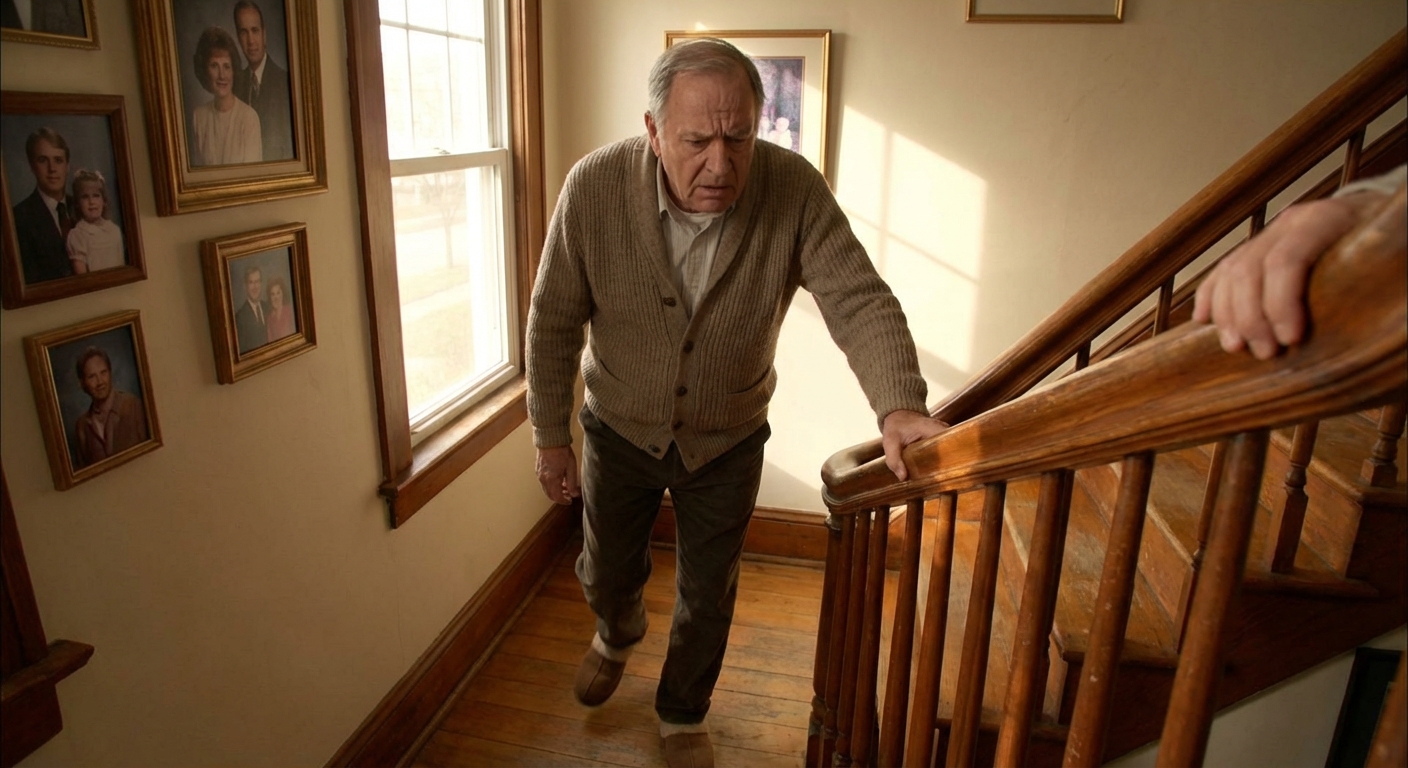
- Disequilibrium – unsteady, off-balance, “walking on a boat,” usually worse when walking or turning.
- Nonspecific dizziness – that vague fuzzy, woozy feeling that doesn’t fit neatly anywhere.
In my experience, once we pin down which kind someone is dealing with, we get a lot closer to what’s actually causing it.
Why Dizziness Gets More Common With Age
I used to think dizziness was just a random side effect of “getting older.” It’s not that simple.
Several systems in the body have to communicate perfectly to keep you upright:
- Inner ear (vestibular system)
- Eyes (visual input)
- Joints and muscles (proprioception)
- Brain (integration of all those signals)
- Heart and blood vessels (steady blood flow to the brain)
With age, every single one of those systems is more likely to get a little glitchy.
1. Inner Ear Changes
The inner ear has tiny crystals (otoconia) and super delicate hair cells that tell your brain where your head is in space. As we get older:
- Those crystals can get dislodged and float into the wrong place → Benign paroxysmal positional vertigo (BPPV)
- Hair cells degenerate → less accurate balance signals
BPPV is wildly common. A 2010 study in Neurology found that around 9% of older adults had BPPV at some point, and most had never been properly diagnosed.
2. Blood Pressure and Circulation
I remember helping my uncle test his blood pressure at home. Sitting: totally normal. Standing: it dropped like a rock.
That’s orthostatic hypotension – a drop in blood pressure when you stand up, often causing lightheadedness or near-fainting. It’s more frequent in older adults because:
- Blood vessels get stiffer
- The nervous system that tightens vessels on standing becomes less responsive
- Many common medications (for blood pressure, depression, prostate, etc.) can worsen it
3. Medications (The Sneaky Culprit)
I can’t count how many times a “mystery dizziness” case cleared up when a doctor carefully reviewed medications.
Common culprits:
- Blood pressure meds (especially if there are multiple)
- Sedatives and sleep aids (benzodiazepines, certain sleep pills)
- Some antidepressants and antipsychotics
- Meds for overactive bladder, allergy, nausea
One large study in JAMA Internal Medicine found that adults 65+ were taking an average of 4–5 prescription medications—that’s a lot of potential for interaction and side effects.
4. Vision, Joints, and Muscles
Older adults often rely more heavily on their vision for balance because proprioception (joint position sense) and muscle strength decline.
So now combine:
- Slightly blurry vision
- Arthritis in the knees or feet
- Weak hip and core muscles
…and suddenly a small dizziness episode feels like walking on a moving treadmill.
5. Brain and Sensory Processing
Conditions like stroke, Parkinson’s disease, mild cognitive impairment, or even just age-related white matter changes in the brain can alter how balance signals are integrated.
This doesn’t mean “dementia = dizzy,” but it does mean the central processing unit isn’t as quick to compensate when something’s off.
Red Flags: When Dizziness Is an Emergency
When I talk to families, this is what they always want to know: “How do I know when it’s serious?”
Get urgent or emergency medical help (call emergency services or go to the ER) if dizziness comes with any of these:
- Sudden weakness or numbness on one side of the body
- Drooping face or slurred speech
- Trouble walking, sudden severe imbalance, or loss of coordination
- Double vision, trouble speaking, or swallowing
- Sudden, explosive “worst headache of my life”
- Chest pain, shortness of breath, or palpitations
These can be signs of stroke, heart attack, or serious heart rhythm problems, not “just dizziness.” The American Stroke Association repeatedly emphasizes that dizziness plus other neurological symptoms should be treated as a possible stroke until proven otherwise.
The Most Common Age-Related Causes (And What I’ve Seen Help)
1. BPPV: The “Bed-Spin” Vertigo
I first learned the name BPPV after watching a physical therapist do the Epley maneuver on my aunt. She’d been terrified of rolling in bed for weeks because of sudden room-spinning episodes. One carefully guided maneuver and she sat up blinking, stunned: “It’s…gone?”
BPPV typically:
- Comes on with head movements (rolling in bed, looking up, bending down)
- Lasts seconds to under a minute per episode
- Can leave a lingering mild nausea or off feeling
- Proper diagnosis with simple positional tests (like Dix–Hallpike)
- Canalith repositioning maneuvers (Epley, Semont) done by a trained provider (ENT, vestibular therapist, some primary care clinicians)
2. Orthostatic Hypotension: The “Stand-Up Swoosh”
If someone tells me, “When I get out of bed too fast, I almost black out,” I’m immediately suspicious of orthostatic hypotension.
What I’ve seen work in real life:- Getting blood pressure checked lying down and then again after standing 1 and 3 minutes
- Rising slowly: sit at the edge of the bed, pump the ankles a bit, then stand
- Staying hydrated and, for some people, slightly increasing salt (only on a doctor’s advice)
- Reviewing medications with a clinician and trimming or adjusting doses
For more stubborn cases, doctors sometimes prescribe compression stockings or medications like midodrine or fludrocortisone. These definitely have pros and cons and need supervision.
3. Medication Side Effects: The “Invisible” Cause
I watched one neighbor go from “I can’t walk straight” to “I’m back on my morning walks” after his doctor switched one blood pressure pill and cut down a sleep med.
What helps:- Listing every medication and supplement (yes, even the “natural” stuff)
- Asking the prescriber directly: “Could any of these be contributing to my dizziness or falls?”
- De-prescribing when possible (slowly, safely, never stop meds abruptly on your own)
Practical Strategies I’ve Seen Make a Real Difference
I’m not a fan of magic fixes, because with dizziness there usually isn’t one. But layered, realistic changes? Those can be powerful.
1. Vestibular Rehabilitation Therapy (VRT)
When I first heard about vestibular rehab, I assumed it was just glorified balance exercises. I was wrong.
A trained vestibular physical therapist can:
- Tailor exercises that gently provoke and then retrain the brain to handle head movements
- Work on gaze stabilization (keeping vision steady while the head moves)
- Build core and leg strength for better balance
Studies published in journals like Otology & Neurotology show significant improvement in dizziness handicap scores for older adults after VRT.
2. Home Safety Tweaks That Aren’t Overkill
I walked through my aunt’s apartment with a kind of “dizziness detective” mindset:
- Removed the cute but deadly little throw rugs
- Added a night light in the hallway and bathroom
- Put a small chair near the entrance so she could sit to put on shoes
- Raised the bed slightly so standing up wasn’t such a strain
She rolled her eyes at some of it, then quietly admitted a week later: “I don’t feel as nervous walking at night anymore.”
3. Strength and Balance Training
Tai chi, simple leg-strengthening exercises, or structured balance programs like Otago (developed in New Zealand and used worldwide in fall prevention) can:
- Improve stability
- Reduce fear of falling
- Actually lower fall risk in clinical trials
It doesn’t have to be fancy. I’ve watched older relatives get noticeable gains from doing sit-to-stands from a chair, heel-to-toe walking along the kitchen counter, and standing on one leg while holding the sink.
4. Managing Expectations (And Anxiety)
One thing I’ve learned the hard way: the fear of dizziness can be almost as disabling as the dizziness itself.
When someone’s terrified of triggering symptoms, they move less, stay home more, and lose strength—creating a vicious cycle where everything gets worse.
On the flip side, pretending nothing’s wrong and pushing through without assessment isn’t great either.
Finding that middle ground—“We’re going to figure this out, step by step, and there are tools that help”—can transform how someone relates to their own symptoms.
What I’d Do If an Older Loved One Mentioned Dizziness
If I had to boil all of this down to a realistic checklist based on what I’ve seen work, it would look like this:
- Ask detailed questions: When does it happen, how does it feel, how long does it last, any triggers, any other symptoms?
- Book a proper medical evaluation, not just a rushed prescription. Specifically mention fall risk and dizziness.
- Request orthostatic blood pressure measurements, not just a single sitting number.
- Bring a complete medication list to the appointment and explicitly ask which ones might contribute.
- Ask about vestibular causes like BPPV and whether a vestibular therapist or ENT referral makes sense.
- Start simple home changes for safety and consider gentle strength/balance exercises, cleared by a professional.
And—this matters more than we admit—stay patient. Dizziness in older adults is often multi-factorial. That means the fix is usually multi-factorial too: a little medication tweaking, a little rehab, a little environment change, a little time.
I’ve watched people go from “I’m scared to leave my chair” to “I’m back to gardening” over a few months. Not because they found a miracle cure, but because they finally understood what was happening in their body and had a plan instead of fear.
That shift—from mystery to understanding—is often where the real healing starts.
Sources
- National Institute on Deafness and Other Communication Disorders – Balance Problems - Overview of causes and treatments for balance disorders, including in older adults
- Centers for Disease Control and Prevention – Important Facts about Falls - Data on fall risk and impact among older adults
- American Academy of Family Physicians – Dizziness: Approach to Evaluation and Management - Clinical guidance on diagnosing types and causes of dizziness
- Harvard Health Publishing – Vertigo and Dizziness in the Elderly - Discussion of common vertigo causes and treatment in older adults
- Mayo Clinic – Orthostatic Hypotension (Postural Hypotension) - Explanation of symptoms, causes, and management of orthostatic hypotension