Understanding Vision Impairment and Common Eye Issues
The letters on the chart looked like they’d been left in the sun too long and melted into each other. I remember squinting, blinking, even doing that ridiculous thing where you lean forward like that magically improves eyesight. It didn’t.
That embarrassing moment sent me deep into the world of vision impairment and eye health. I started grilling optometrists with questions, reading research papers, and even volunteering at a low-vision clinic for a few weekends. What I learned was both reassuring and a bit scary: a lot of eye problems are common, many are preventable or treatable, and far too many people ignore the early warning signs.
Let’s walk through what I wish I’d understood much earlier.
What Vision Impairment Actually Means
When I first heard the term vision impairment, I assumed it just meant “bad eyesight that needs glasses.” That’s only part of the story.
The World Health Organization (WHO) defines vision impairment as any condition where a person’s eyesight can’t be fully corrected to normal levels, even with glasses, contact lenses, or surgery. It ranges from mild vision loss to complete blindness.Professionals usually break it down like this (measured using the standard eye chart):
- Mild vision impairment: 20/30 to 20/60
- Moderate vision impairment: 20/70 to 20/160
- Severe vision impairment: 20/200 to 20/400
- Blindness: worse than 20/400 or very limited field of view
A simple way I remember it: 20/200 means what a person with typical vision can see clearly at 200 feet, you only see at 20 feet.
What shocked me when I dug into the data: according to WHO estimates updated in 2023, at least 2.2 billion people globally have some form of vision impairment or blindness, and almost half of these cases could’ve been prevented or are still untreated.
The “Big Three” Common Vision Issues I Keep Seeing
When I started asking eye doctors what they see all day, three issues came up again and again. I’ve dealt with two of them personally.
1. Refractive Errors: Nearsighted, Farsighted, and Astigmatism
This is the category I live in.
Refractive errors happen when light doesn’t focus properly on the retina at the back of your eye. The eye is basically a camera with a slightly fussy lens.The main types:
- Myopia (nearsightedness): You see near objects clearly, distance is blurry. That’s me. Street signs are my natural enemy.
- Hyperopia (farsightedness): Distance might be clearer, near work (like reading) is hard.
- Astigmatism: The cornea or lens isn’t perfectly round, more like a football. This distorts vision at all distances.
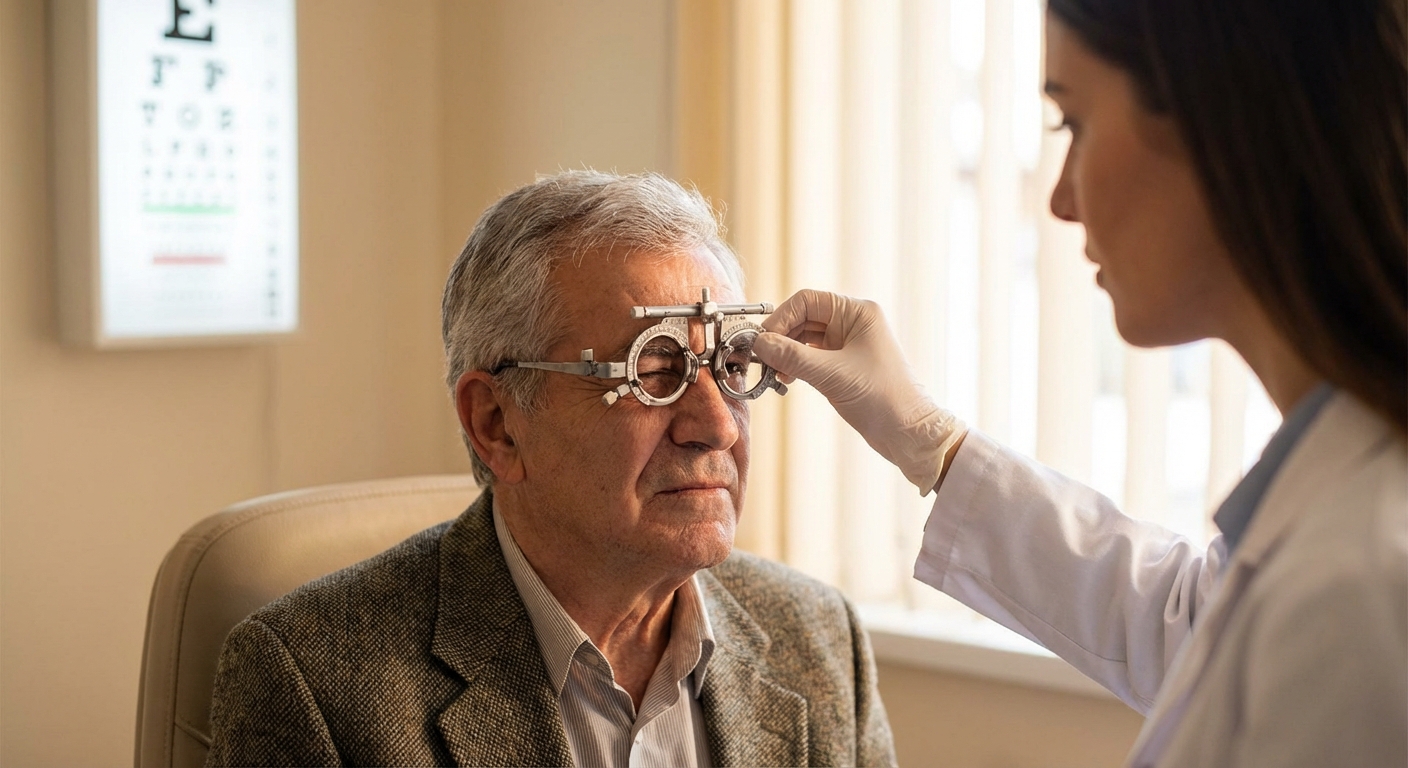
When I finally got a proper refraction test, the optometrist explained my prescription, walked me through how the lenses bend light, and actually showed me the difference between my old and new glasses. The change was ridiculous. I walked out of the clinic stunned that trees had individual leaves.
Pros of treating refractive errors:- Glasses and contacts are safe, fast, and relatively affordable.
- Laser surgeries like LASIK or PRK can permanently reduce dependence on glasses for many people.
- Surgery isn’t for everyone (thin corneas, severe dry eye, unstable prescriptions).
- Glasses and contacts need regular updates and proper care.
- Staring at screens doesn’t permanently damage your prescription, but it does worsen eye strain and symptoms like headaches.
2. Dry Eye: The Problem I Thought Was Just “Too Much Screen Time”
When I tested blue-light–blocking glasses a couple of years ago, I expected them to be magic. They weren’t. What actually helped my burning, gritty eye feeling was discovering I had dry eye disease, not a blue-light problem.
Dry eye happens when your tears either:- Aren’t produced enough, or
- Evaporate too quickly because the oily layer from your meibomian glands isn’t working properly.
Symptoms I had (and ignored for months):
- Burning or stinging
- Feeling like sand in the eye
- Blurry vision that clears when you blink
- Redness after long computer sessions
A 2017 paper in The Ocular Surface estimated that dry eye affects 5–50% of people depending on definition and region. That’s a huge range, but either way, it’s common.
What actually helped in my case:- Following the 20-20-20 rule (every 20 minutes, look 20 feet away for 20 seconds)
- Warm compresses to unblock oil glands
- Preservative-free artificial tears
- Raising my screen so I wasn’t staring upward with wide-open eyes
3. Age-Related Eye Issues: What I See in My Older Relatives
I’ve watched family members go through cataract surgery and glaucoma treatment, and seeing the difference before and after has been intense.
The big age-related conditions to keep on your radar:
- Cataracts: Clouding of the eye’s natural lens. Colors fade, glare increases, night driving becomes a nightmare. The good news: modern cataract surgery is one of the most successful surgeries performed worldwide. The catch? You need access and a proper evaluation.
- Glaucoma: Often called the “silent thief of sight.” It usually damages the optic nerve slowly and painlessly, often linked to high eye pressure, though not always. By the time you notice vision loss, damage can be permanent. That’s why regular pressure checks and optic nerve exams matter, especially after 40.
- Age-Related Macular Degeneration (AMD): This hits the macula—the central part of the retina—so you can lose sharp central vision while still keeping your side vision. Reading, recognizing faces, and driving become harder.
What struck me listening to a retina specialist one afternoon: for many patients, the difference between independence and disability isn’t some miracle drug, it’s whether they got diagnosed early enough for existing treatments to work.
Screen Time, Kids, and the Myopia Wave
When I started reading the research on kids’ eyesight, I had a mild panic.
Multiple studies, including large trials in East Asia, suggest that myopia (nearsightedness) is surging, especially among children who spend long hours indoors on near work (screens, books, homework) and very little time outdoors.
One landmark study from Guangzhou, China, published in JAMA in 2015, found that adding 40 minutes of outdoor time a day at school reduced the onset of myopia over three years. The exact mechanisms aren’t fully pinned down yet—light exposure, dopamine release in the retina, and focusing distance all seem involved—but the trend is clear: more outside time seems protective.
When I tested this with my own habits (as an adult), I started taking midday outdoor walks instead of scrolling my phone on the couch. My eyes didn’t magically revert to 20/20, obviously, but my eye strain dropped noticeably.
For kids, based on what pediatric ophthalmologists keep emphasizing:
- Outdoor play isn’t just “nice”; it’s turning into a prescription for healthier vision development.
- Regular eye exams starting before school age matter more than most parents realize.
How to Protect Your Vision (Without Becoming Obsessed)
Here’s what I’ve seen work consistently—for myself, people close to me, and in clinic settings.
1. Get Real Eye Exams, Not Just “Can You Read That Sign?”
I used to treat vision tests like a formality. Then I watched an optometrist catch early glaucoma in a patient who thought he just needed “stronger readers.”
A proper eye exam usually includes:
- Vision and refraction test
- Eye pressure measurement
- Slit-lamp exam of the front of the eye
- Retina and optic nerve check (sometimes with dilation)
For most adults: every 1–2 years, or as your provider recommends. More often if you have diabetes, high blood pressure, family history of glaucoma or AMD, or you’re on certain medications.
2. Simple Daily Habits That Actually Help
These aren’t glamorous, but they’re the stuff that keeps showing up in research and clinic guidelines:
- 20-20-20 rule for screens
- Blinking intentionally during long computer sessions
- Wearing UV-blocking sunglasses outdoors
- Managing systemic health: blood sugar, blood pressure, and cholesterol directly affect the tiny blood vessels in your eyes
- Removing makeup thoroughly and avoiding expired products near your eyelids (this one I learned the hard way after a mild eyelid infection)
3. Be Skeptical of Eye “Hacks” and Miracle Supplements
I’ve tested a bunch of eye supplements out of curiosity. Some have decent evidence (lutein and zeaxanthin in specific doses for certain AMD patients, based on AREDS2 trials). Others are basically just expensive multivitamins with marketing.
What I’ve landed on:
- If a product claims to “reverse blindness” or “cure myopia permanently” without medical intervention, I close the tab.
- I check if the claims match reputable sources: peer-reviewed studies, academic or government websites, or professional associations.
There’s no magic food or pill that replaces proper exams, glasses, or evidence-based treatment. A nutrient-rich diet (leafy greens, fish, colorful fruits and vegetables) absolutely supports eye health, but it’s support, not a standalone cure.
When You Shouldn’t Wait
If you take nothing else from this, keep this part.
Get urgent care (ER or same-day emergency eye care) if you notice:
- Sudden vision loss in one or both eyes
- Flashes of light, a curtain-like shadow, or a sudden shower of floaters
- Eye trauma, chemicals in the eye, or severe eye pain with redness
Those can signal retinal detachment, acute glaucoma, or other emergencies where hours actually matter.
For everything else—gradual blur, night driving issues, frequent headaches, eye strain—book an eye exam soon rather than “someday.” I kept delaying mine for over a year. I regret that.
The Quiet Power of Seeing Clearly
The first evening after I got my updated glasses, I took a walk around my neighborhood. The world looked…high definition. Streetlights had crisp edges instead of halos. Text on distant shop signs snapped into focus. I hadn’t realized how much mental effort I was spending just trying to see.
That’s the part we don’t talk about enough: good vision doesn’t just help you read street signs or avoid bumping into furniture. It affects how tired you feel at the end of the day, how safe you are on the road, how much kids enjoy reading, and how confidently older adults move around their homes.
From what I’ve seen, the combo that works best is simple:
- Respect your eyes enough to get them checked regularly
- Build a few boring-but-powerful habits into your day
- Stay skeptical of quick fixes, but open to real treatments
Your future self—reading comfortably, driving safely, actually seeing individual leaves on trees—will thank you.
Sources
- World Health Organization – Blindness and vision impairment - Global data and definitions of visual impairment
- National Eye Institute (NIH) – Facts About Dry Eye - Overview of dry eye causes, symptoms, and treatments
- JAMA – Effect of Time Spent Outdoors at School on the Development of Myopia - Clinical trial on outdoor time and myopia onset in children
- American Academy of Ophthalmology – Cataract Surgery - Detailed explanation of cataract surgery and outcomes
- Mayo Clinic – Glaucoma - Symptoms, causes, and risk factors for glaucoma