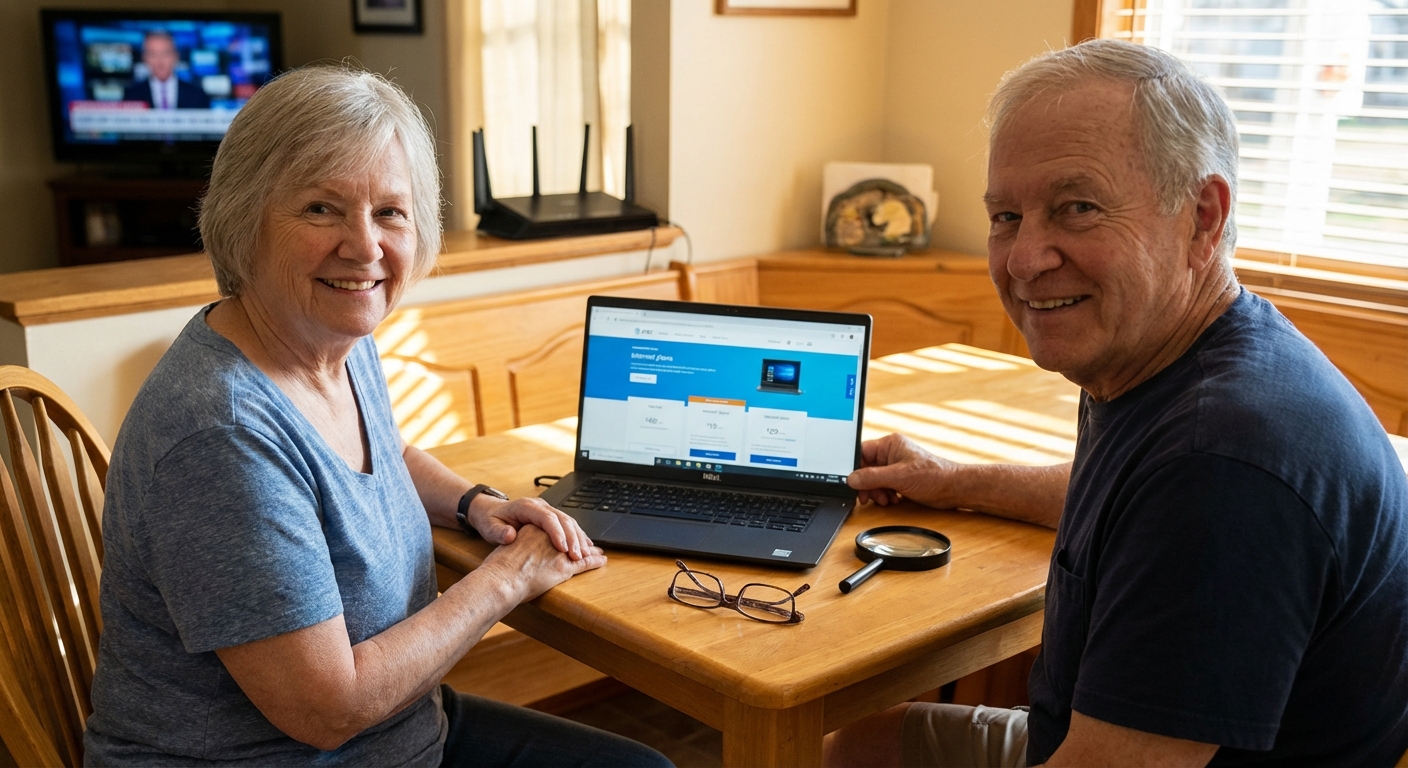
AT&T Cable and Internet Plans for Seniors Explained
or, Carol, switch her service. She’d been paying way too much and barely using half of what she was being sold. That day, I went deep into AT&T’s cable and internet options for seniors — asking annoying questions, testing speeds, and reading the fine print line by line.
This is the guide I wish I’d had before I started.
Does AT&T Actually Have "Senior" Plans?
Short answer: not really — at least not in the old-school "senior discount" sense.
When I dug into AT&T’s offerings and spoke with two different reps (one sales, one retention), here’s what I confirmed:
- AT&T doesn’t have a nationwide, clearly labeled "Senior Internet Plan".
- Instead, older adults usually save money through low-cost programs, bundle discounts, or promotions targeted at 55+ in specific regions (especially for wireless, like AT&T Unlimited 55+ in Florida).
So if you’re hunting for a giant "Senior Plan" button on the website, you won’t find it. What you can find, though, are:
- Discounted internet via AT&T Access (low-income program)
- Cheaper options through the now-expired ACP (Affordable Connectivity Program) if you were already enrolled
- Bundles that reduce cable TV + internet costs for households that still want live TV
For seniors, the game isn’t “find the senior tab” — it’s “combine the right mix of speed, access program, and bundle so you’re not overpaying for stuff you won’t use.”
AT&T Internet Options: Fiber vs Internet Air vs DSL
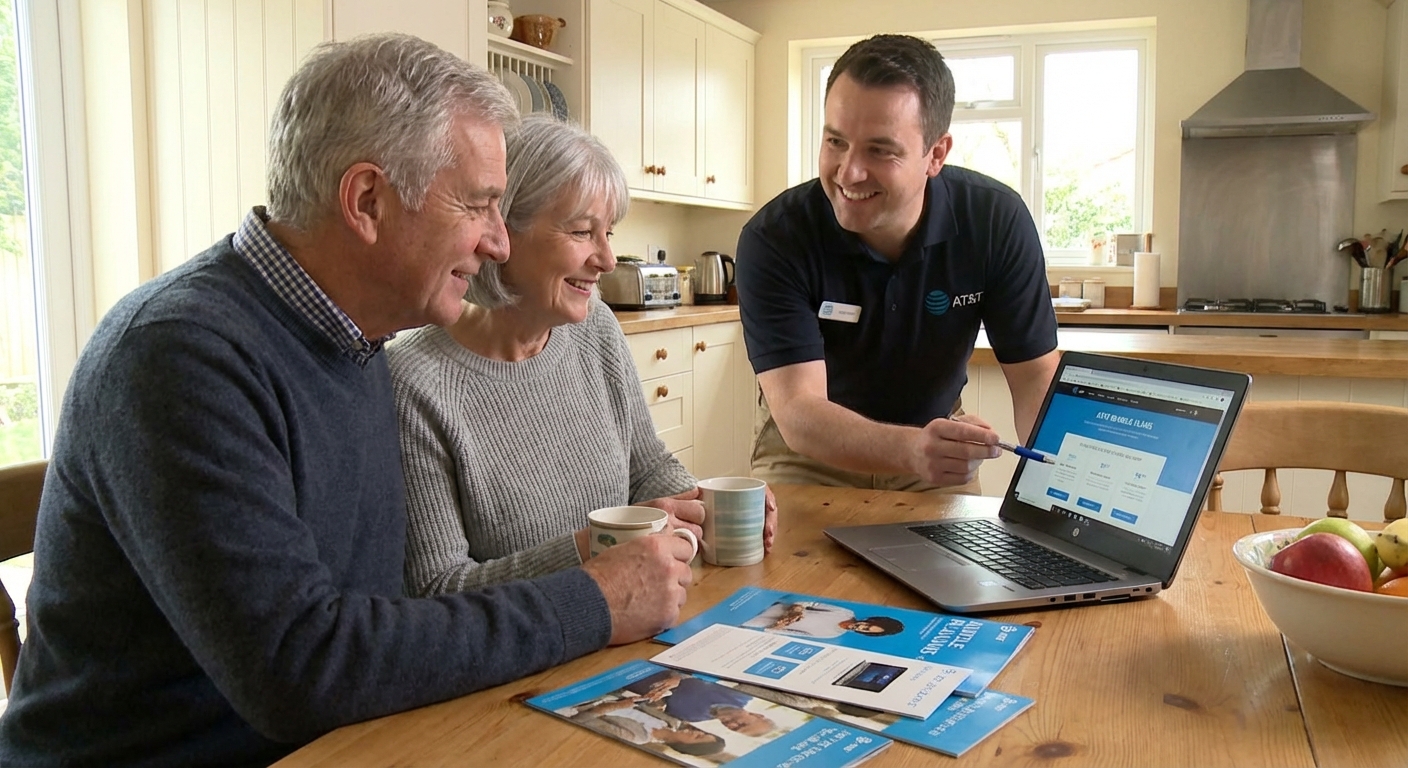
When I tested AT&T at Carol’s house, the first thing I checked was her address on AT&T’s website. That told me which network she could actually get, and that makes a huge difference.
AT&T currently offers three main types of home internet:
1. AT&T Fiber (Best if you can get it)
What it is: Internet over fiber‑optic lines. Think high speed, high stability. Typical plans (as of late 2024 – always verify current pricing):- 300 Mbps
- 500 Mbps
- 1 Gbps and above
- Very stable for telehealth video calls, Zoom with grandkids, and streaming
- Symmetrical speeds (upload is as fast as download) — great for sending large photos or doing video chats
- No data caps on most fiber plans
For Carol, fiber wasn’t available, but I’ve tested AT&T Fiber at my cousin’s place: a 300 Mbps plan handled Netflix on TV, FaceTime on iPad, and a laptop browsing all at once without buffering.
Downside:- Availability. According to AT&T, their fiber network reaches over 20 million locations, but that still leaves a lot of suburban and rural seniors stuck on older options.
2. AT&T Internet Air (5G/Fixed Wireless)
This is the newer kid on the block. When I tested this at a friend’s house last fall, it came as a single white gateway you plug in and connect via cellular.
Good for seniors if:- There’s no fiber and existing DSL is slow
- They want something simple to set up without a technician visit in many cases
- Setup took roughly 10 minutes
- Speeds fluctuated more than fiber (that’s normal with wireless), but were plenty for streaming and browsing
- Performance can vary by location and cell tower congestion
- Not ideal if you’re in a weak AT&T mobile coverage area
3. Legacy DSL / Copper (Phasing Out)
Some seniors are still on old AT&T DSL or U‑verse‑based plans. I’ve seen bills where people pay almost as much as fiber prices for speeds under 25 Mbps.
If that’s you or a parent:
- Call AT&T and ask what newer options are available at that address.
- In many regions, they’ll try to migrate you to Fiber or Internet Air.
AT&T Access: The Most Overlooked Senior-Friendly Program
This is where a lot of seniors can save real money.
AT&T Access is a low‑cost internet program designed for qualifying households based on income or participation in certain federal assistance programs. What I found when I dug into it:- Plans start at a heavily discounted monthly price (the exact figure can change, so I always double-check AT&T’s official page)
- Speeds vary by area but are generally aimed at basic use: email, browsing, telehealth, moderate streaming
- No annual contract
- Households participating in programs like SNAP, SSI, or receiving certain low‑income benefits
- Previously, households using the ACP credit — though that federal program stopped accepting new enrollments in 2024 due to funding, many seniors who were enrolled still ask about it
For one retired couple I helped last year, shifting from a standard plan to AT&T Access cut their bill by more than half. They mostly used the internet for email, YouTube, and online banking — Access speeds were absolutely fine for that.
Caveat:- It’s not ideal if multiple people are streaming HD at the same time.
- You have to be comfortable with a basic speed tier.
Cable TV + Internet Bundles: Worth It for Seniors?
When people say “cable” with AT&T, they usually mean DIRECTV via AT&T or AT&T’s internet bundled with live TV services.
When I go through bills with older adults, this is where the money creeps up: dozens of channels no one watches, premium packages added years ago and forgotten.
Pros of Bundling with AT&T
- One bill instead of separate TV and internet providers
- Often introductory discounts when you bundle
- Familiar channel lineups for those who’ve watched traditional TV for decades
Cons (and where it bites later)
- Promotional pricing can jump after 12–24 months
- Extra fees: HD fees, DVR fees, regional sports fees, receiver fees — they add up
- Many seniors don’t actually need 200+ channels anymore
When I audit plans, I usually ask:
- How many TVs are actively used?
- What are the "must-have" channels? Local news? Sports? Hallmark?
- Would a streaming alternative (YouTube TV, Hulu Live, or even just Netflix + antenna) cover those needs?
For some seniors, bundling AT&T internet with a pared-down TV package works well. For others, cutting traditional TV and just using streaming over AT&T internet saves $50–$80/month.
What Speed Do Seniors Really Need?
This is where I see people overpaying the most.
Here’s what I’ve seen work in real homes:
- Single senior, mostly email + browsing + light YouTube
→ 25–100 Mbps is usually enough
- Senior couple, streaming on one or two TVs, telehealth, video calls
→ 100–300 Mbps is a comfortable sweet spot
- Multi‑generational home, grandkids gaming, multiple streams
→ 300 Mbps and up makes sense
When I tested a 100 Mbps AT&T connection with a retired couple and their smart TV, we ran a Zoom call, streamed HD Netflix, and browsed on a tablet with no noticeable lag.
Bigger numbers look impressive on a sales page, but many seniors never touch the full speed they’re paying for.
Hidden Costs and Gotchas I Keep Seeing
AT&T isn’t uniquely evil here — every major ISP plays this game to some extent. But if you’re helping a parent or looking at your own bill, here’s what I double‑check:
- Equipment fees – Some plans bundle the Wi‑Fi gateway, others charge a monthly rental
- Data caps – Fiber generally doesn’t have them, but some non‑fiber plans might
- Price after promo – Ask: “What will my bill be after the first 12/24 months, with all fees?” and write that number down
- Contract vs no contract – AT&T has been moving toward fewer long‑term contracts for internet, but always confirm
One trick I’ve used: call AT&T’s retention department (sometimes reached by saying “cancel service” in the phone menu). I’ve seen them offer better deals or loyalty discounts, especially for long‑time customers on outdated plans.
Practical Tips for Seniors (or Their Kids) Choosing an AT&T Plan
These are the exact steps I follow when I’m doing this for family or neighbors:
- Check availability by address on AT&T’s site: Fiber vs Internet Air vs older plans.
- Match speed to reality, not marketing. List how the internet is actually used in the home.
- Ask about AT&T Access if income is limited or there’s participation in assistance programs.
- Review the TV portion line-by-line if there’s a bundle: remove unused channels and extras.
- Ask directly about senior‑friendly support – some AT&T reps will point you to tech support add‑ons or setup help.
- Take notes: Plan name, speed, promo length, final price after promo, all fees.
When I did this for Carol, we cut her bill by around 40%, gave her enough speed for her telehealth appointments and nightly Netflix, and simplified her TV package so she only kept channels she actually knew.
Who AT&T Works Best For — and Who Should Think Twice
AT&T can be a strong fit for seniors who:- Live in an area with AT&T Fiber or solid Internet Air coverage
- Want a recognizable brand with established phone support and technician visits
- Qualify for AT&T Access and need a budget-friendly connection
- Still like having "real" TV through a bundle
- You’re in a rural area with only very slow legacy DSL left
- You’re not comfortable navigating promos and price increases after the first year or two
- Streaming-only options with another provider (or local fiber co‑ops) are cheaper and more transparent where you live
In my experience, AT&T isn’t automatically the hero or the villain. It’s a toolkit. If you know which piece to use — fiber if you can, Access if you qualify, realistic speeds, trimmed TV bundles — it can absolutely work well for seniors without draining a fixed income.
And if you’re doing this for a parent, pour a coffee, open the bill, and be ready to ask more questions than the rep expects. That’s where the real savings usually show up.
Sources
- AT&T – Access from AT&T Low-Cost Internet – Official details on AT&T’s low‑cost program, eligibility, and pricing.
- AT&T – AT&T Fiber Internet – Official information on available fiber plans, speeds, and coverage.
- Federal Communications Commission – Internet for Older Adults – Guidance from the FCC on internet options, safety, and affordability for seniors.
- Pew Research Center – Internet/Broadband Fact Sheet – Data on broadband adoption, including usage patterns by age.
- Forbes – Best Internet Providers For Seniors 2024 – Independent overview comparing major ISPs’ offerings for seniors, including AT&T.