Discover Hidden Value in Old Coins
nd a tiny ziplock bag of coins from my grandfather.
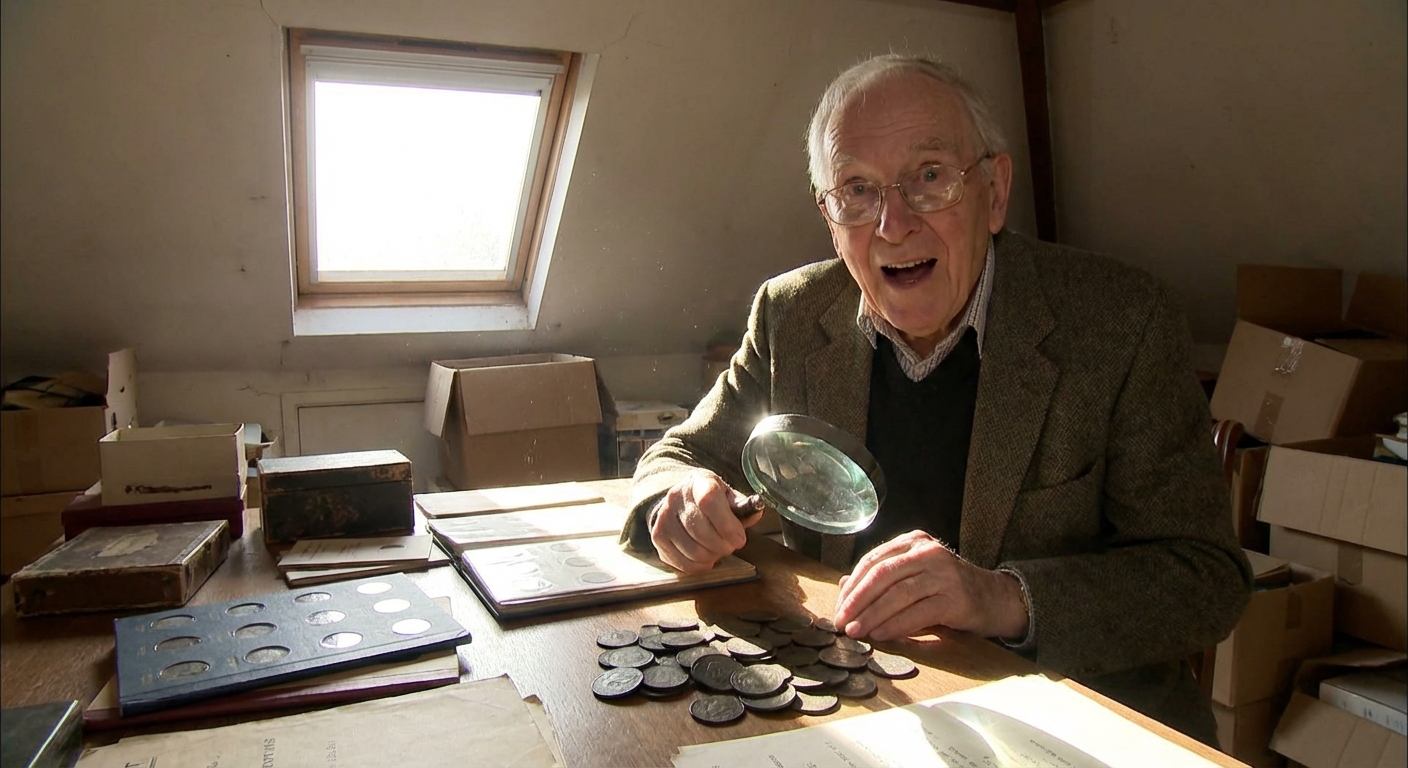
I almost tossed them into a charity jar. Instead, I grabbed a cheap magnifier and started Googling dates and mint marks.
One coin I thought was just “grandpa pocket change” turned out to be a 1943 steel Lincoln cent in surprisingly good condition, worth around $20–$30 to collectors. That’s not retirement money, but it definitely grabbed my attention.
That little discovery sent me down a deep rabbit hole of numismatics (fancy word for coin collecting) — and I quickly realized a lot of people are literally giving away money because they don’t know what they’re looking at.
This isn’t about hype or lottery tickets. It’s about why some old coins trade like blue-chip stocks while others are basically historical scrap metal — and how you can tell the difference.
Why Old Coins Can Be Surprisingly Valuable
In my experience, the value of an old coin usually comes down to four things:
- Rarity – How many were minted, and how many survived.
- Condition (Grade) – Whether it’s beat up from circulation or looks like it left the mint yesterday.
- Demand – How much collectors actually care about that type of coin.
- Metal Content – Especially for silver and gold coins, the melt value sets a floor price.
When I first started checking values, I assumed age was the main driver. “Older = more valuable,” right? Not really.
A heavily worn 1890s penny might be worth less than a crisp 1960s quarter made of 90% silver. Age is a factor, but the market cares more about scarcity and condition.
One example that surprised me: common-date U.S. silver quarters from 1964 and earlier. They’re usually not rare, but because they’re 90% silver, their intrinsic metal value is often far higher than 25 cents. When silver hit around $30/oz in 2011, ordinary circulated quarters were trading for roughly $6–$7 each based purely on melt value.
That’s like finding a latte in your couch cushions.
How I Started Evaluating Coins (Without Getting Scammed)
When I tested different ways to check coin values, I found a simple 3-step process that works even if you’re a complete beginner.
1. Identify the basics: date, country, and denomination
This sounds obvious, but older or foreign coins can be confusing. I literally sat with a small flashlight and said out loud: “Okay, this is a 1957, United States, one cent.”
Then I flipped it over to look for the mint mark — a tiny letter like “D”, “S”, or no letter at all, usually indicating where it was minted (Denver, San Francisco, Philadelphia, etc.). Sometimes that tiny letter can change the value by hundreds of dollars.
For example, in U.S. coins:
- A 1909 S VDB Lincoln cent can be worth thousands in high grade.
- A 1909 VDB without the “S” is far more common and much cheaper.
I cross-checked these with the Red Book (the “Guide Book of United States Coins”), which is kind of the hobby’s annual pricing bible.
2. Estimate condition (grading) — but stay humble
Professional graders use the Sheldon Scale from 1 to 70 (Poor-1 to Mint State-70). The first time I tried grading my own coins, I was hilariously over-optimistic.
“Looks perfect!” I thought.
In reality, a professional would probably call it Extremely Fine (XF) or About Uncirculated (AU) once they spot the tiny hairlines, rim dings, and wear on high points.
I learned two key things:
- Circulated vs. Uncirculated: If it clearly spent time in pockets, it’s circulated. Sharp detail and mint luster means it might be uncirculated.
- Don’t clean coins. Ever. When I tested this (on a common coin, thankfully), cleaning left hairline scratches and destroyed the natural patina. Value dropped instantly. Third-party graders like PCGS and NGC actually label harshly cleaned coins, and collectors pay less.
3. Check real-world market prices, not just wishful thinking
Price guides are helpful, but they’re not gospel. I started checking recent sales, not just asking prices.
I used:
- Completed sales on eBay (filter by “sold items”)
- PCGS Price Guide and auction records
- Heritage Auctions archives for high-end pieces
What I found: lots of listings asking crazy money… and very few actually selling for those amounts. The real value is what a buyer just paid last week, not what someone hopes to get this week.
Where People Accidentally Throw Away Valuable Coins
Once I got the hang of spotting potentially valuable pieces, patterns started popping up.
1. Old jars and inherited collections
That shoebox I mentioned? Classic example. I’ve since helped two friends go through inherited mason jars and “grandpa’s cigar box” collections.
In one case, we found a handful of pre-1965 U.S. dimes and quarters with silver content. Melt value alone pushed the total over $150 — from coins everyone assumed were spare change.
2. Bank rolls and pocket change
When I tested roll hunting (buying rolls of coins from banks and searching them), I honestly didn’t expect much. But I pulled:
- A 40% silver Kennedy half dollar from a bank roll
- Several wheat cents from circulation
Nothing life-changing, but it proved there’s still decent stuff floating around, especially in half-dollar rolls that fewer people bother with.
3. Foreign “junk” coins from travel
I had a sandwich bag full of foreign coins from old trips and relatives. Most were low-value, but a few pre-euro European coins had higher metal value, and one older British shilling caught a collector’s eye online.
Foreign coins can be a slow market, but some older colonial, silver, and lower-mintage pieces do surprisingly well.
The Pros and Cons of Turning Old Coins into Cash (or an Investment)
Why it can be a smart move
From a finance perspective, old coins can play a few roles:
- Store of value: Silver and gold coins track precious metals, which can hedge against inflation. During periods of high inflation or market stress, investor demand for bullion coins like American Eagles often spikes. The U.S. Mint actually reported record bullion sales in 2020–2021 as investors moved into hard assets.
- Collector premium: Rare dates and high-grade coins can appreciate faster than their metal value. Certain key dates in popular U.S. series (like Morgan dollars or early Lincoln cents) have outperformed broad commodity indexes over some timeframes.
- Diversification: It’s not a mainstream asset class, but a small allocation to physical coins can diversify away from purely digital or paper investments.
The flip side — things that don’t work so well
In my experience, there are very real downsides:
- Liquidity can be slow: You can’t click “sell” like a stock. You might need to ship to an auction house or negotiate with dealers.
- Dealer spreads: Many coin shops buy at wholesale and sell at retail. That spread can be 10–30% or more, depending on the item.
- Risk of overpaying: If you don’t know grading or current market levels, it’s easy to pay top dollar for a mediocre coin.
- Scams and fakes: Counterfeit coins — especially gold, silver, and key rarities — are a serious issue. The U.S. Secret Service has actually warned about counterfeit bullion entering the marketplace.
So while coins can be a legitimate part of a broader financial strategy, they’re not a magic wealth machine. Treat them more like a niche alternative investment or a specialized collectible, not your primary retirement plan.
How to Get a Reliable Appraisal (Without Getting Lowballed)
When I wanted a reality check on a small group of coins, I tried a few different routes.
1. Local coin shops
Walking into a brick-and-mortar coin shop was both intimidating and incredibly useful. The first shop I went to gave me a quick, free look-over of my coins.
What helped:
- I sorted coins by type and date beforehand.
- I was honest: “I’m new, just trying to understand what I have.”
Some dealers will underbid, because they need margin to resell. That’s fair — they have rent and overhead. But if something feels way off, get a second opinion.
2. Coin shows and clubs
I attended a regional coin show, and it was like speed-dating with experts. Multiple dealers and collectors looked at the same coins, and I quickly saw where opinions lined up and where they didn’t.
Local numismatic clubs (often affiliated with the American Numismatic Association, ANA) can be a goldmine of free knowledge. The conversations alone saved me from a couple of dumb purchases.
3. Third-party grading services
For high-value coins, I experimented with sending a few pieces to PCGS and NGC, the two largest third-party grading firms.
Pros:
- They authenticate and assign a grade.
- A slabbed (encapsulated) coin can sell for more and move more easily online.
Cons:
- Submission fees, shipping, insurance — it adds up.
- Not worth it for low-value coins.
I only do this now when a coin’s value after grading justifies the cost.
Practical Steps to Discover the Hidden Value in Your Coins
If you’ve got a jar, box, or drawer of old coins, here’s what I’d actually do, based on my own trial and error:
- Pull out anything pre-1965 (for U.S. coins): especially dimes, quarters, and half dollars. Most of these are silver.
- Separate foreign coins and group by country. Look up any pre-1950 or obviously older pieces first.
- Look for oddities: error coins (off-center strikes, double dates, missing letters) can sometimes be valuable.
- Check a trusted guide: Use the Red Book for U.S. coins, or the Standard Catalog of World Coins for foreign.
- Verify with recent sales data: Don’t rely purely on list prices — search for sold listings.
- Get a second opinion: If you think something might be worth more than $100, show it to at least two different sources.
And seriously: resist the urge to polish anything. That “shiny clean” look almost always lowers value.
When Holding Makes Sense vs. When to Sell
I’ve wrestled with this myself. A couple of my coins have appreciated nicely, but I’ve also watched market cycles where prices cooled off.
Reasons I’ve held certain coins:- They have strong collector demand and limited supply.
- They’re part of a set I’m slowly completing.
- They have family history attached — the emotional value beats the resale value.
- They were common, easily replaceable, and had recently spiked in price.
- I could reinvest into higher-quality coins or more liquid assets.
- The spread between what a dealer would pay and what I could get online wasn’t worth the hassle.
As with any asset, I try to think like a portfolio manager: does this coin serve a purpose (hedge, diversification, collection goal), or is it just clutter I’m emotionally hanging onto?
The Real Hidden Value
The hidden value in old coins isn’t only in the cash you might unlock. When I dug into that shoebox, I ended up calling my dad and asking about my grandfather’s life at the time those coins were in his pocket.
We talked about wartime rationing, his first job, the cost of bread in the 1940s. A simple steel penny turned into a very real, very human story.
Financially, coins can be a smart niche play — part inflation hedge, part collectible, part historical artifact. But practically, they’re also one of the few assets where you can literally hold 100+ years of history in your hand.
If you’ve got a jar of “old change” somewhere, don’t assume it’s worthless. Grab a magnifier, fire up a price guide, and test a few of the ideas above.
Worst case, you learn a new skill. Best case, you discover you’ve been sitting on a small, shiny savings account for years.
Sources
- American Numismatic Association (money.org) - Educational resources and guidance on coin collecting and grading
- PCGS Price Guide – Coin Values - Professional Coin Grading Service price guide and recent auction data
- U.S. Mint – Bullion and Circulating Coins - Official information on U.S. coin composition, mintages, and bullion programs
- Heritage Auctions – U.S. Coins Archive - Real-world auction results and reference images for rare and collectible coins
- U.S. Bureau of Labor Statistics – Inflation Data - Context on inflation trends that influence precious metal and coin demand