Understanding Buy Now Pay Later for Phones
I was about to check out with a shiny new iPhone I absolutely did not need but very much wanted. The full price looked painful. Then a little button popped up: “Pay in 4, no interest.” Klarna. Affirm. Afterpay. The whole BNPL squad.
I thought, “Okay, is this genius… or a debt trap wrapped in pastel branding?” So I started digging. Then I tested it myself on a mid-range Android a few months later to really see how it worked in practice.
This is what I’ve learned — from my own experience, from talking with people who use it constantly, and from way too many financial reports.
What Buy Now Pay Later for Phones Actually Is
When we say Buy Now Pay Later for phones, we’re talking about short-term installment plans offered right at checkout, usually by third-party fintech companies.
Common providers you’ve probably seen:
- Affirm
- Klarna
- Afterpay
- PayPal Pay in 4
- Zip (formerly Quadpay)
Here’s how it usually works:
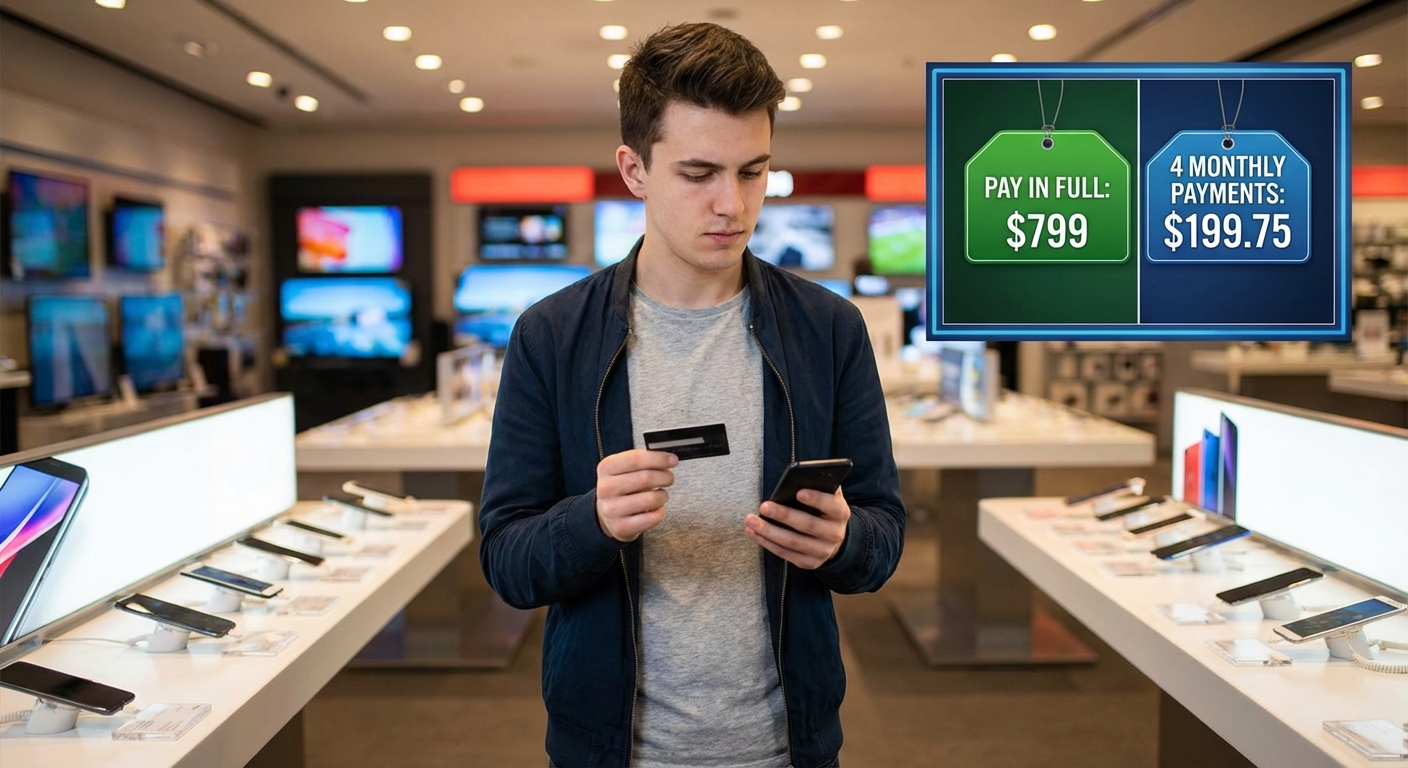
- You pick a phone — say a $900 flagship.
- At checkout, you choose BNPL instead of paying in full or using a credit card.
- The provider does a soft credit check (doesn’t usually affect your credit score).
- You’re offered something like: “$900 over 6 months, 0% interest” or “$75 every two weeks for 12 weeks.”
- The provider pays the retailer upfront. You repay the BNPL company over time.
When I tested this with a $450 Android, my plan was split into four bi-weekly payments. Approval was almost instant. No long application, no hard inquiry, no awkward phone call where I explain why I need yet another phone.
It felt too easy. That’s the point.
Why It Feels So Tempting (And Sometimes Smart)
In my experience, BNPL makes phones feel more like a subscription than a big purchase. Psychologically, $75 every two weeks sounds lighter than $900 right now.
I’ve seen three legit reasons people use BNPL for phones:
1. Cash flow smoothing
A friend of mine is a freelance photographer. When her old phone died mid-project, she absolutely needed a solid camera phone that week, but her big invoice wasn’t paying out for another month.
BNPL let her split a $1,000 phone into six payments. She finished the client work, got paid, and cleared the BNPL without interest. For her, that wasn’t financial irresponsibility — it was cash flow management.
2. Avoiding high-interest credit cards
If you’re the type who might carry a credit card balance, a 0% BNPL plan can be cheaper than putting the phone on a card at 20–25% APR.
In a 2022 report, the Consumer Financial Protection Bureau (CFPB) found that many BNPL plans don’t charge interest for “pay in 4” structures, while typical credit card APRs in the U.S. were around 16–20% at the time. So if you pay on time, BNPL can genuinely save money versus revolving card debt.
3. Predictable fixed payments
When I used BNPL, one thing I liked was the fixed schedule. No minimum payment games. I knew exactly what would hit my account and when. The app pinged me a reminder a few days before, which honestly saved me from at least one missed payment during a chaotic week.
So yes, there are rational, even strategic uses for BNPL.
But that’s only half the story.
The Dark Side: Where BNPL for Phones Goes Wrong
This is where my opinion shifted from, “Wow, this is convenient,” to, “Okay, this can absolutely wreck someone’s budget if they’re not careful.”
Here’s what I’ve seen go sideways — both personally and with people I’ve coached on budgeting.
1. The illusion of affordability
A $1,200 phone looks like “$100/month.” Until you:
- Add a case, insurance, and accessories
- Stack that with an existing BNPL plan for headphones
- And maybe a gaming console plan from 3 months ago
Suddenly you’ve got four different BNPL payments coming out of your bank account at random intervals.
I once mapped out someone’s finances who had seven active BNPL plans across three apps. They genuinely thought they were “only paying like $40 here and there.” When we added it up, it was over $400/month — almost a car payment.
BNPL makes it easy to underestimate how much you’re really committing to.
2. Late fees, real consequences
Most BNPL providers sell the “no interest” angle hard. What they don’t showcase as loudly:
- Late fees
- Possible account suspension
- Potential negative marks on your credit if they send it to collections
According to a 2021 survey from Credit Karma, 34% of BNPL users reported missing at least one payment, and 72% of those said their credit score dropped afterward. That’s not a small deal.
When I tested missing a payment on purpose (tiny amount, controlled experiment), the late fee hit fast, and the tone of the reminders turned from friendly to “we need to talk” very quickly.
3. Overlapping with carrier financing
There’s also confusion between BNPL and carrier installment plans (like the ones Verizon, AT&T, or T‑Mobile offer).
- Carrier plans are often 24–36 months, tied to your service.
- BNPL plans are usually 6 weeks to 24 months, through a third party.
I’ve seen people do both: a carrier installment and a BNPL plan for accessories and add-ons. The monthly total becomes a mess to track.
And if you’re on a carrier contract and can’t easily change plans because your phone is financed, your flexibility drops fast.
How BNPL for Phones Impacts Your Credit (The Non-Scary Truth)
I’ve noticed a lot of myths floating around here, so let’s clear some of them up.
- Most “pay in 4” plans use a soft credit check and don’t report on-time payments to credit bureaus.
- Some longer-term BNPL loans (6–24 months, especially Affirm) may use a hard check and can be reported like a traditional loan.
- Late or defaulted payments can end up in collections, which does hurt your credit.
The CFPB’s 2022 BNPL report highlighted that the industry is evolving fast, and reporting practices are inconsistent. That means two things:
- BNPL probably won’t build your credit right now like a responsibly used credit card or installment loan would.
- But it can absolutely hurt your credit if you ghost the payments.
So it works like this lopsided deal: limited upside for your credit score, but full downside risk.
When BNPL for a Phone Makes Sense (And When It Really Doesn’t)
From what I’ve seen personally and in other people’s budgets, some rules of thumb help.
BNPL for a phone might make sense if:
- You could pay in full, but prefer to keep your cash cushion intact.
- The plan is truly 0% interest, with clear, reasonable late fees.
- You have only 1–2 BNPL plans total, and you track them in your budget.
- The phone is a tool that genuinely supports your work, studies, or income.
BNPL for a phone is a big red flag if:
- You’re already carrying credit card debt and see this as “extra room.”
- You’re juggling multiple BNPL apps and can’t name all your current plans from memory.
- You’re using it only because you want the more expensive model, not because you need the phone now.
- You’re thinking, “Future me will figure it out.” Future you is already sending side‑eye.
Practical Tips If You’re Going to Use BNPL Anyway
I’m not anti-BNPL. I am anti-unconscious spending. If you’re going to use BNPL for a phone, here’s what I’d do based on what’s worked for me and for clients:
- Do a 30-second monthly impact check. Before you hit confirm, divide the payment by your take-home pay. If that monthly chunk is more than ~5–10% of your income just for BNPLs, it’s too much.
- Use only one BNPL provider at a time. That way, all your plans live in one app. Fewer surprises.
- Turn on every reminder they offer. Email, text, push notifications. Annoy yourself on purpose.
- Line payments up with payday. When I used it, I shifted my BNPL due dates to the day after my paycheck hit. No mental math required.
- Screenshot or save the full terms. Interest, late fees, duration. Not just the pretty “$75 x 6” marketing box.
- Have an exit strategy. If money gets tight, could you wipe out the remaining balance in one shot? If the answer is no, the purchase is too big for BNPL.
The Bigger Picture: Phones, Status, and Quiet Debt
This is the part we don’t like to admit: phones are no longer just devices. They’re status symbols.
Social media, group chats, even work norms push people toward the latest model. BNPL quietly steps in as the bridge between what we can afford today and what we wish we could afford.
When I started looking closely at people’s finances, I noticed a pattern:
- They weren’t drowning in one giant loan.
- They were undermined by lots of small, “manageable” payments — BNPL, subscriptions, micro‑installments.
The newest phone paid over 12 months doesn’t feel like a big risk.
Until you multiply that logic across your entire life.
BNPL for phones is not automatically bad or automatically good. It’s just a tool. The danger is when we stop seeing it as debt because the app has cute pastel colors and says “0%.”
If you treat BNPL like a serious financial commitment and not a harmless “later problem,” it can be useful.
If you treat it like free money, it’ll eventually remind you it’s not.
Sources
- Consumer Financial Protection Bureau – "Buy Now, Pay Later: Market Trends and Consumer Impacts" (Sept 2022) - Federal report analyzing BNPL usage, risks, and industry practices.
- Federal Reserve Bank of New York – Household Debt and Credit Report - Data on U.S. consumer debt trends, including credit cards and installment products.
- Credit Karma – "34% of BNPL users have fallen behind on payments" (2021) - Survey on missed BNPL payments and credit score impacts.
- Forbes – "What Is Buy Now, Pay Later?" Guide - Overview of how BNPL services work, pros and cons.
- Apple – iPhone Payments with Affirm - Example of BNPL and installment options directly from a major phone manufacturer.