Guide to Avoiding Overpacking When Traveling
t orange HEAVY tag, and I'd smile like, "Yeah, I definitely needed those three extra pairs of shoes."
I didn't.
Over the last few years, I’ve gone from chronic overpacker to annoying carry-on-only evangelist. I’ve tested packing cubes, weighed bags at 2 a.m., and learned (the hard way) how much a checked-bag fee hurts when your flight's already delayed. This guide is everything I wish I'd known sooner.
Why We Dramatically Overpack (And Don’t Realize It)
When I really paid attention, I realized I was packing for imaginary versions of my trip.
The “what if” wedding. The “maybe I’ll go hiking” fantasy. The “I might suddenly become a person who wears white jeans” delusion.Psychologists call this optimism bias – we overestimate how much we’ll do and need. A 2014 study in Judgment and Decision Making found that people consistently over-forecast their future activities and needs. That optimism shows up directly in our suitcases.
In my experience, I consistently wore the same 20–30% of what I packed. Every. Single. Trip. When I asked frequent travelers I met in hostels or on business trips, I heard the same thing.
Once you accept this, everything about packing changes.
The 80% Rule: The One Habit That Finally Worked
When I tested every packing strategy I could find, the only one that stuck was what I now call the 80% rule:
> Pack your bag, then remove enough items so the suitcase is only about 80% full.
Not bursting. Not sitting-on-it-to-zip. Just comfortably 80%.
Why it works:
- You force decisions. That third pair of jeans? It usually doesn’t make the cut.
- You leave room for souvenirs or local purchases.
- Your bag stays easier to close when everything inevitably expands mid-trip.
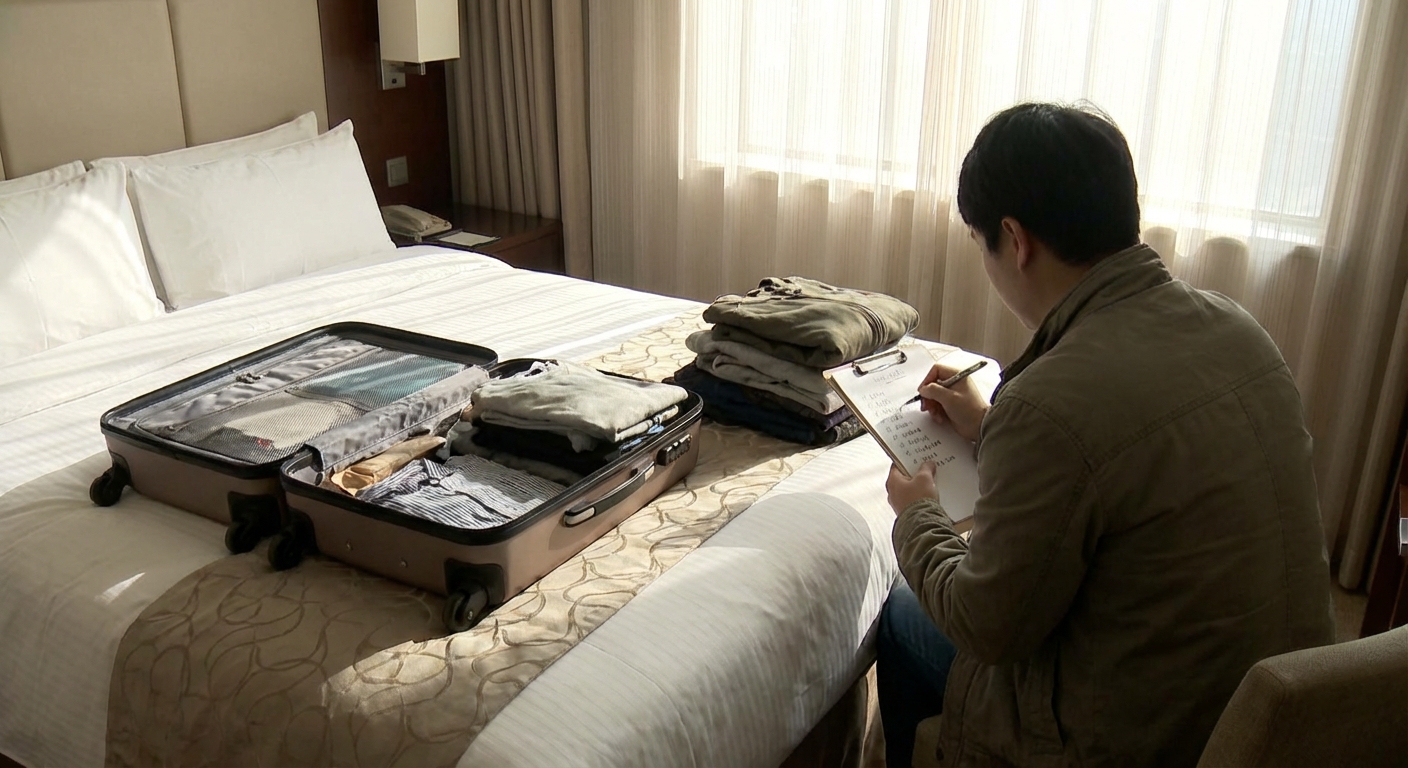
The first time I tried this, I laid everything out on my bed, packed it, then pulled out:
- One pair of shoes
- Two “just in case” outfits
- The chunky sweater that looked great but weighed as much as a small dog
I didn’t miss a single item on the trip.
Start With the Bag, Not the Clothes
I used to think, “I’ll just see what fits.” Bad idea. The space expands to fit your anxiety.
When I downsized to a 40L carry-on backpack, everything changed. Suddenly, the bag itself was a boundary.
Why smaller luggage helps
- The U.S. Department of Transportation notes that airlines worldwide handle millions of mishandled bags each year – smaller, carry-on-friendly luggage drastically cuts your risk of lost luggage.
- You avoid checked bag fees (some airlines charge $30–$75+ each way).
- You physically can’t bring the “emergency” third jacket.
When I tested a 40L backpack on a 10-day trip across two climate zones, I thought I was insane. But it worked because the constraint forced me to think in systems, not outfits.
Build a System, Not Outfits
The turning point for me was switching from “What do I want to wear?” to “What combinations can I create?”
I now aim for a mix-and-match capsule:
- 2–3 bottoms (that all match every top)
- 4–5 tops
- 1 light layer + 1 warmer layer
- 1 pair everyday shoes + 1 pair activity-specific (running / sandals / boots)
With this setup, I can easily make 20+ unique outfits from about 10–12 clothing items.
When I tested this on a two-week Europe trip, I had:
- 2 jeans
- 1 black travel pant
- 4 T-shirts
- 1 button-up shirt
- 1 light sweater
- 1 packable down jacket
I never felt like I repeated outfits, even in photos. The trick was neutral colors: black, navy, gray, white. Not thrilling, but wildly efficient.
#### Pro and con: Capsule packing
- Pro: Fewer items, way more combinations, faster getting ready.
- Con: Can feel “boring” if you really love statement pieces.
My compromise: 1 bold item (a patterned shirt or a bright scarf) that still works with everything else.
The Brutal But Honest Packing Checklist
When I work on my own packing list now, I run every single item through this filter:
- Will I use this at least twice?
- If the answer is “maybe,” it usually stays home.
- Can I buy this there if I’m desperate?
- Things like extra toiletries, a cheap umbrella, or flip-flops are almost always available at your destination.
- Does this do more than one job?
- My scarf is a blanket on the plane, a beach cover-up, and occasionally a pillow.
- Is this climate-appropriate or just fantasy-packing?
- I once brought a wool coat to Barcelona in May. Wore it zero times. Never again.
When I actually stuck to these rules, my suitcase weight dropped by about 30–40% compared to my old trips.
The Toiletries Trap (Where Overpacking Loves to Hide)
I didn’t realize my toiletry bag was half my problem until I weighed it once: 1.8 kg (4 lbs). For liquids and creams. Ridiculous.
Here’s what changed things for me:
- I bought a digital luggage scale and weighed my toiletry bag separately.
- I switched to solid toiletries (shampoo bars, conditioner bars, bar soap). Lighter, no leak drama.
- I decanted everything into travel-size containers instead of hauling full bottles.
According to TSA guidelines, liquids in carry-on must be in containers of 3.4 ounces (100 ml) or less and fit in a quart-sized bag. I realized I’d been ignoring this and winging it.
Now, I bring:
- Travel-size toothpaste
- Contact lens solution (non-negotiable for me)
- One small moisturizer that doubles as day and night cream
- Minimal makeup (3–4 go-to items)
What I stopped bringing:
- Full-size hair products
- “Maybe” skincare
- Multiple eye-shadow palettes I never touched
The funny thing? My skin didn’t get worse. I just got lighter.
Packing Cubes, Rolling vs Folding, and Other Nerdy Details
When I tested rolling vs folding vs packing cubes, here’s what I actually found, not what the internet promised me:
- Rolling clothes: Great for casual fabrics like T-shirts and athletic wear; decent space saver and less wrinkling.
- Folding: Better for structure (button-down shirts, blazers) but can create dead space.
- Packing cubes: The real star for me wasn’t saving space; it was saving mental energy.
I now use:
- 1 cube for tops
- 1 cube for bottoms
- 1 small cube for underwear/socks
Does it magically reduce volume? Not drastically. But:
- It stops my bag from turning into a laundry tornado.
- I can unpack in 30 seconds by moving cubes into drawers.
- I visibly see when I’ve overpacked a category.
The “Wear Your Bulkiest Stuff” Strategy
On a December trip to Japan, I wanted my warm coat, boots, and a chunky hoodie. Those three alone could have eaten half my suitcase.
So I wore them on the plane.
It wasn’t glamorous, but it worked. Here’s my basic rule now:
- Wear: Bulky shoes, jeans, outerwear
- Pack: Lightweight, compressible items
Most airlines don’t weigh what’s on your body. (Always check your specific airline rules—some low-cost carriers have gotten stricter about personal items and even jackets.)
Yes, I’ve been that person peeling off layers at security like an onion. Worth it.
Laundry: The Unsexy Secret to Packing Light
The turning point from “carry-on only sounds impossible” to “oh, this is easy” was embracing laundry.
On a 14-day trip, I only pack for 5–7 days now and plan to wash clothes once.
How I make it work:
- I check if the accommodation has a washing machine or laundry service.
- I bring a tiny packet of laundry detergent sheets or a small bottle of concentrated soap.
- In a pinch, I hand-wash underwear/socks/T-shirts in the sink and air dry.
According to research collected by consumer travel sites, most hotels, hostels, and even many Airbnbs on major tourist routes offer either laundry machines or next-day services. You often save more money by doing one or two loads of laundry than by paying for a checked bag each way.
Downside:- You need to plan around drying time.
- It’s one more task on the trip (but honestly, it takes less time than dealing with lost luggage).
When Overpacking Is (Sort of) Justified
I’m not going to pretend everyone can live out of a 20L daypack.
Sometimes, bringing extra makes sense:
- Traveling with kids: Extra clothes, snacks, diapers — they’re not optional.
- Remote destinations: If you’re going somewhere with limited access to stores, over-preparing can be smart.
- Medical needs: Extra medications, prescriptions, or specific products are absolutely worth the space.
I still suggest applying the same mindset: even in those cases, what’s truly essential vs. comforting but replaceable?
On a camping-heavy road trip, I definitely "overpacked" compared to my usual standard, but every item had a clear, planned purpose. That’s the difference.
The 5-Minute Pre-Departure Audit That Saves Me Every Time
Right before I leave for the airport, I do one ruthless pass:
I pull three items out of my bag. No negotiation.
Sometimes it’s a top, sometimes a gadget, sometimes that extra pair of “just in case” shoes. Every single time I’ve done this, I haven’t missed a single removed item.
When I tested this habit over six trips, my average bag weight dropped by 1–2 kg each time — just from the final edit.
The Payoff: Why This Is Actually Worth the Effort
Since I stopped overpacking, my trips genuinely feel different.
- I move faster — stairs, trains, cobblestones are no longer mini CrossFit sessions.
- I stress less — no baggage carousel anxiety, no panicking about lost suitcases.
- I spend less — fewer checked-bag fees, fewer “I forgot XYZ” emergency purchases.
And maybe the biggest win: I think about my stuff less and my experiences more.
I still don’t pack perfectly. I still bring one thing I don’t use. But the days of sitting on my suitcase and whispering threats at the zipper? Those are over.
If your bag always feels a little ridiculous, try just one of these: the 80% rule, the capsule wardrobe, or the three-item last-minute purge. When I tested them, each one individually made a noticeable difference — together, they completely changed how I travel.
Sources
- U.S. Department of Transportation – Air Travel Consumer Reports – Official data on mishandled baggage and airline performance.
- TSA – 3-1-1 Liquids Rule – Official guidelines on traveling with liquids in carry-on luggage.
- BBC Travel – Why We Pack Too Much – Insight into the psychology of overpacking and travel behavior.
- Harvard Business Review – The Power of Constraints – Discusses how constraints (like small luggage) can improve decision-making.
- University of Chicago – Optimism Bias Research – Overview of research on overestimating future behavior and needs.