Guide to Buying Pokemon Cards from Police Impound Auctions
pound lots.
Yeah, I did a double take too.
The short version: when police seize property from theft cases, fraud investigations, or unclaimed lost-and-found, some of it eventually gets auctioned off. And occasionally, that includes binders and boxes of Pokémon cards—sometimes from serious collectors, not just random kids’ shoeboxes.
When I tested this rabbit hole myself, I ended up bidding on a seized “trading card lot” that turned out to include a binder with a Shadowless Base Set Pikachu and a stack of mid-era EX-series holos. Not retirement money, but way better than the starting bid.
This guide walks you through how I’ve been hunting Pokémon cards at police impound and government surplus auctions, how to avoid getting burned, and what to expect if you decide to try it.
How Police Impound Auctions Actually Work
In my experience, the biggest misconception is that police auctions are like garage sales run by cops. Not quite.
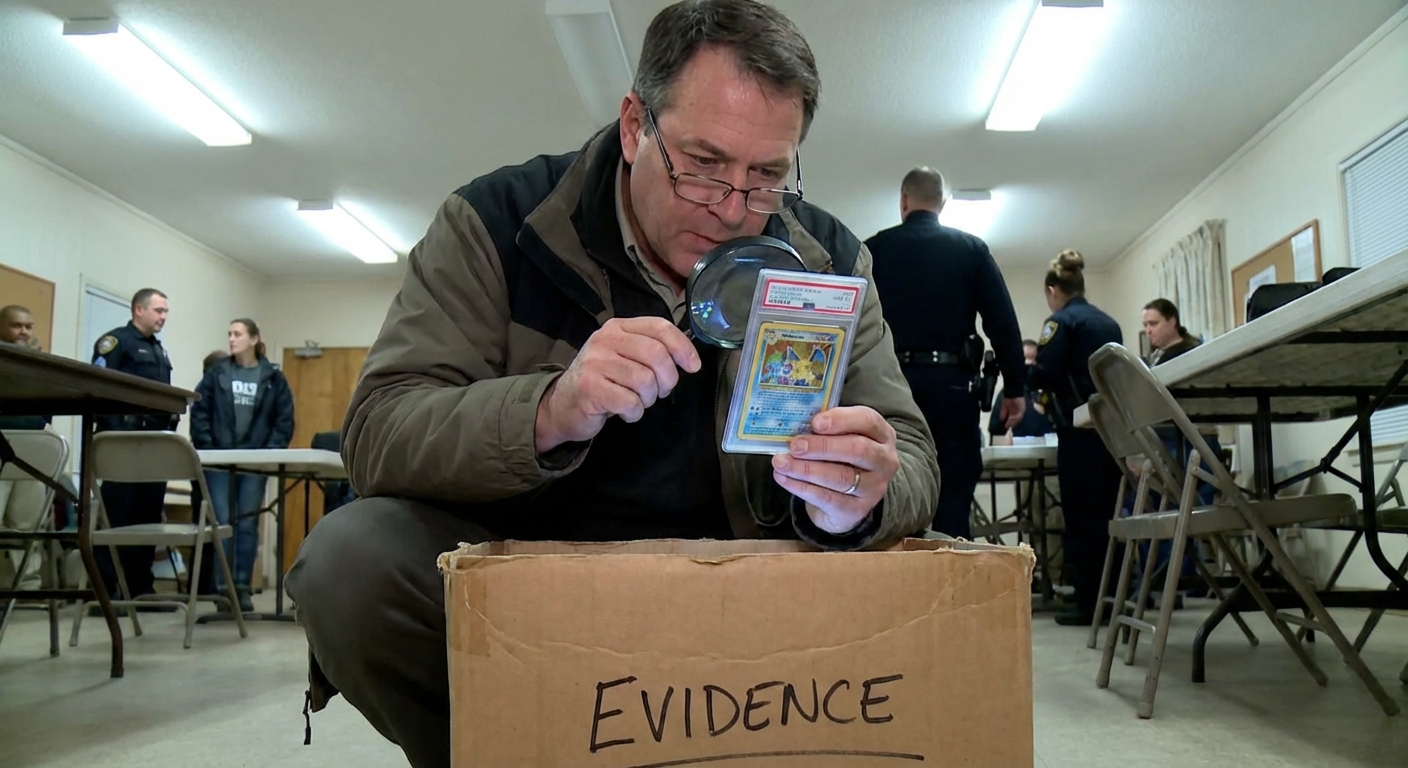
Most departments don’t run their own live auctions anymore. Instead, they:
- Partner with third‑party auction platforms like GovDeals, PropertyRoom, or local auction houses
- List assets in bulk: “misc. collectibles,” “trading cards,” “sports & gaming cards,” “unclaimed property lot”
- Sell as‑is, where‑is, with very limited descriptions
Property usually ends up in auctions because it’s:
- Unclaimed evidence after a case closes
- Recovered stolen property where the rightful owner couldn’t be found
- Abandoned or forfeited items
According to the U.S. Department of Justice guidelines on asset forfeiture, seized property is often liquidated via auctions when it’s not returned to victims or used by the agency itself (see justice.gov, 2022 policy updates). That’s the pipeline your future booster box might have come through.
Where to Actually Find These Auctions
The first time I went looking, I expected some obvious “POLICE AUCTION – POKÉMON CARDS HERE” button on city websites. Nope.
Here’s what’s worked for me:
1. Government auction platforms
These are my main hunting grounds:
- GovDeals.com – Used by tons of U.S. municipalities and school districts
- PropertyRoom.com – Specializes in police and law enforcement surplus
- PublicSurplus.com – Mix of government surplus and unclaimed property
I usually search for:
- “pokemon”
- “trading cards”
- “collectible cards”
- “TCG” or “gaming cards”
The listings are often vague, so I click anything that even smells like it might contain cards.
2. Local police department websites
I’ve found decent stuff by:
- Searching: “[your city] police auctions” or “[county] unclaimed property auction”
- Checking city or county surplus / purchasing pages
- Looking for links to specific auction partners
A few bigger cities still host in‑person auctions or use regional auction houses that don’t show up on the major platforms. When I called my local department’s non‑emergency line and simply asked, “Where do you auction unclaimed property?” the dispatcher emailed me the exact URL.
3. State surplus and unclaimed property
This is more of a long shot but still worth mentioning:
- Some states funnel seized and unclaimed assets to state surplus auctions
- Others list unclaimed safe‑deposit box contents through state unclaimed property programs
I once saw a state‑run online sale that lumped “baseball and Pokémon cards” into a single lot from unclaimed bank boxes. The photos were awful, but I could barely make out what looked like early WOTC card borders.
Reading Listings Like a Pro (So You Don’t Overpay)
The real game is in decoding terrible auction listings.
When I started, I got burned on a “Rare Pokémon Card Lot” that turned out to be a pile of 2021 bulk with one played Celebrations Charizard. Now I look for:
1. Photo quality and quantity
- Multiple angles of binders, not just the front cover
- Close‑ups of a few key pages or slabs
- Clear enough resolution to identify set symbols and borders
If there’s just one blurry shot of a closed binder, I assume it’s probably random bulk unless something else suggests otherwise.
2. Specific red flags in photos
I zoom in hard to check for:
- Binder ring damage (indentations along card edges)
- Obvious warping, water damage, or sun‑fading
- Tons of modern bulk (Sword & Shield–era commons) with nothing else in sight
One lot I passed on had multiple binder pages visibly stuck together near the spine—classic water exposure. That’s the sort of thing you’ll only catch if you slow down and really inspect.
3. Keyword traps
Auction descriptions love to say:
- “Rare Pokémon cards”
- “Vintage collection”
- “High value trading cards”
None of those words mean anything legally. What does matter is:
- Set names: “Base Set,” “Jungle,” “Fossil,” “EX Ruby & Sapphire,” “Neo Genesis”
- Condition hints: “Binder kept,” “heavily played,” “creased corners”
When I see specific early‑era sets mentioned alongside photos of 90s‑style card backs and borders, I start paying attention.
Pricing Strategy: How Much Should You Bid?
Here’s where expertise actually saves you money.
My rule of thumb: assume the lot is worse than it looks, not better.
Step 1: Identify any anchor cards
From the photos, I try to spot:
- Recognizable holos (Charizard, Blastoise, Lugia, Umbreon, Gold Stars, etc.)
- Older set symbols or 1st Edition stamps
- Any graded cards from PSA, BGS, or CGC
Then I:
- Check recent sold listings on eBay (filter: Sold Items only)
- Look up graded card values on PSA’s price guide or similar
Say I can clearly see a Lightly Played Base Set Blastoise and a stack of WOTC holos. I’ll ballpark a conservative value—maybe $80–100 for the Blastoise in LP raw condition based on recent sales, another $50–100 for the rest, then mentally chop that in half because of all the unknowns.
Step 2: Factor in fees and logistics
Police and government auctions often include:
- Buyer’s premium (often 10–15%)
- Sales tax
- Shipping or required local pickup (gas, time)
When I missed this the first time, my “$120 win” turned into about $165 out of pocket.
I now set a max all‑in price, then back‑calculate my highest bid. If I want my total to stay under $200 and I know there’s a 12% buyer’s premium and tax, my actual top bid will be around $160–170.
Step 3: Decide your angle
Are you:
- Collecting and don’t care as much about resale?
- Flipping and need a margin?
- Ripping for fun and comfortable gambling a bit?
When I’m buying to flip, I aim to bid no more than 50–60% of conservative resale value to build in a cushion for surprises and condition issues.
Risks You Need to Be Honest About
I’m a big fan of this hobby, but I’m not going to pretend it’s all secret grails and 1st Edition Zards.
Here’s what’s gone wrong for me or people I know:
- Condition is often rough. Police evidence lockers and property rooms aren’t climate‑controlled card vaults.
- Lots can be cherry‑picked before auction. Sometimes stolen collections are returned partially to known owners, and what’s left is the lower‑value bulk.
- You can’t always inspect in person. Many lots are “online only” with no preview.
- Returns are basically nonexistent. Most listings are “no returns, no guarantees.”
Legally, the agencies are usually protected as long as they describe items in good faith and sell “as‑is“. You’re assuming risk every time you click “bid.”
When I tested a higher‑value lot (over $400), I mentally treated it like cracking a sealed Booster Box: I might hit something fantastic, or I might walk away with a story and a box of regret.
How to Spot Potential Hidden Value
That said, there are signals I’ve learned to trust:
Mixed‑era collections
When I see:
- Base/Jungle/Fossil cards
- Plus EX or e‑Reader era
- Plus early XY or BW era
…in the same binder, it usually means a long‑term collector, not a random “one summer in 2016 I liked Pokémon GO” kid. Those long‑term collections are more likely to hide:
- Early holos
- Promos from events and products people forgot were special
- Oddities like misprints or foreign cards
Non‑Pokémon clues
Surprisingly, other items in the lot can matter. One of my better wins was a “collectibles and gaming” box where I noticed:
- Old Magic: The Gathering rares
- A couple of early Yu‑Gi‑Oh! structure deck holos
- Some sports cards in top loaders
That told me the original owner cared about trading cards in general, not just throwing things into a binder. The Pokémon portion of that lot ended up including a Gold Star Jolteon in played condition.
Staying Ethical and Smart
A quick reality check: these cards sometimes come from pretty rough situations—stolen property, fraud, or unclaimed belongings of people in crisis.
I personally set some lines for myself:
- I don’t message auctioneers trying to exploit ignorance or pressure them; the process is already structured.
- If I see obvious personal documents mixed into photos, I’ll flag the listing rather than bid.
On the money side, I treat this as speculative hobby spending, not a guaranteed side hustle. Markets move. Pokémon had a massive spike around 2020–2021 (Logan Paul livestreams, pandemic collectability boom, etc.) and cooled off afterward. CNBC and Forbes both covered the surge and later correction—it’s cyclical, not a straight rocket ship.
So I only bid what I’m comfortable losing, emotionally and financially.
Pre‑Bid Checklist I Actually Use
Before I place a serious bid on a police impound Pokémon lot, I run through this quick mental list:
- Have I checked every photo at 200–300% zoom?
- Can I identify at least a few specific cards or sets?
- Did I look up recent sold prices for what I can clearly see?
- Do I know the buyer’s premium, tax, and shipping/pickup situation?
- Is my top bid based on conservative value, not best‑case scenario?
- Am I okay if this turns out to be 80% bulk and 20% cool stuff?
If I can’t say yes to all of those, I don’t bid. There will always be another auction.
Final Thoughts from the Bidding Trench
Buying Pokémon cards from police impound auctions is a weird little corner of the hobby. It’s not for everyone. The information is limited, the condition is unpredictable, and you’re basically gambling with slightly better odds than a booster box.
But when it works, it’s really fun.
The best lot I’ve ever won from a police‑linked auction wasn’t headline‑level insane. It was a modest binder full of lightly played WOTC holos, several early EX cards, and a handful of promos I’d never owned as a kid. The total value comfortably beat what I paid, but more than that, it felt like I’d rescued a snapshot of 90s and 2000s Pokémon history from disappearing into some storage warehouse forever.
If you go in with clear eyes, realistic budgets, and the right research habits, police impound auctions can be a surprisingly legit way to feed the hobby—whether you’re chasing profits, nostalgia, or just the thrill of uncovering someone else’s long‑lost collection.
Sources
- U.S. Department of Justice – Guide to Equitable Sharing for State, Local, and Tribal Law Enforcement Agencies (2022) - Official overview of how seized assets are handled and disposed of, including auctions
- GovDeals – About Us - Explanation of how government and law enforcement agencies use the platform for surplus and seized property auctions
- PropertyRoom – About Us - Background on a major law-enforcement auction partner handling seized and unclaimed goods
- CNBC – Pokémon card sales are booming, driven by pandemic, influencers and nostalgia (2021) - Context on recent Pokémon card market spikes and collector interest
- PSA – Pokémon Card Price Guide - Widely used reference for card values and graded market data