Guide to Cruise Cancellation Cabins: How Rebooked Inventory Works and What to Consider
of cancellation cabins—those suddenly available staterooms that pop up after someone bails on their trip.
I recently discovered just how powerful this can be when a friend and I grabbed a balcony cabin for less than an inside room was going for three months earlier… all because another guest canceled at the last minute. That deal sent me deep into how cruise lines actually handle cancellations, rebooked inventory, and whether it’s smart to play the “wait for a cancellation” game.
Here’s how it really works, from what I’ve seen personally and what cruise insiders and travel agents have confirmed.
What Is a Cruise Cancellation Cabin, Really?
A "cancellation cabin" isn’t a special category on the website. It’s just a previously booked stateroom that gets returned to inventory when:
- A guest cancels before final payment
- A guest cancels after final payment and loses some/all of their fare
- The cruise line reassigns or upgrades guests and frees up lower-tier cabins
When I tested this on a Caribbean sailing with Royal Caribbean, a fully sold-out cruise suddenly showed three balcony cabins two weeks before departure. They weren’t new cabins; they were cancellations. The magic is: the pricing on those cabins often behaves differently than the original batch.
Cruise lines don’t put a big sign saying “Hey, this was canceled!” But you’ll see it in:
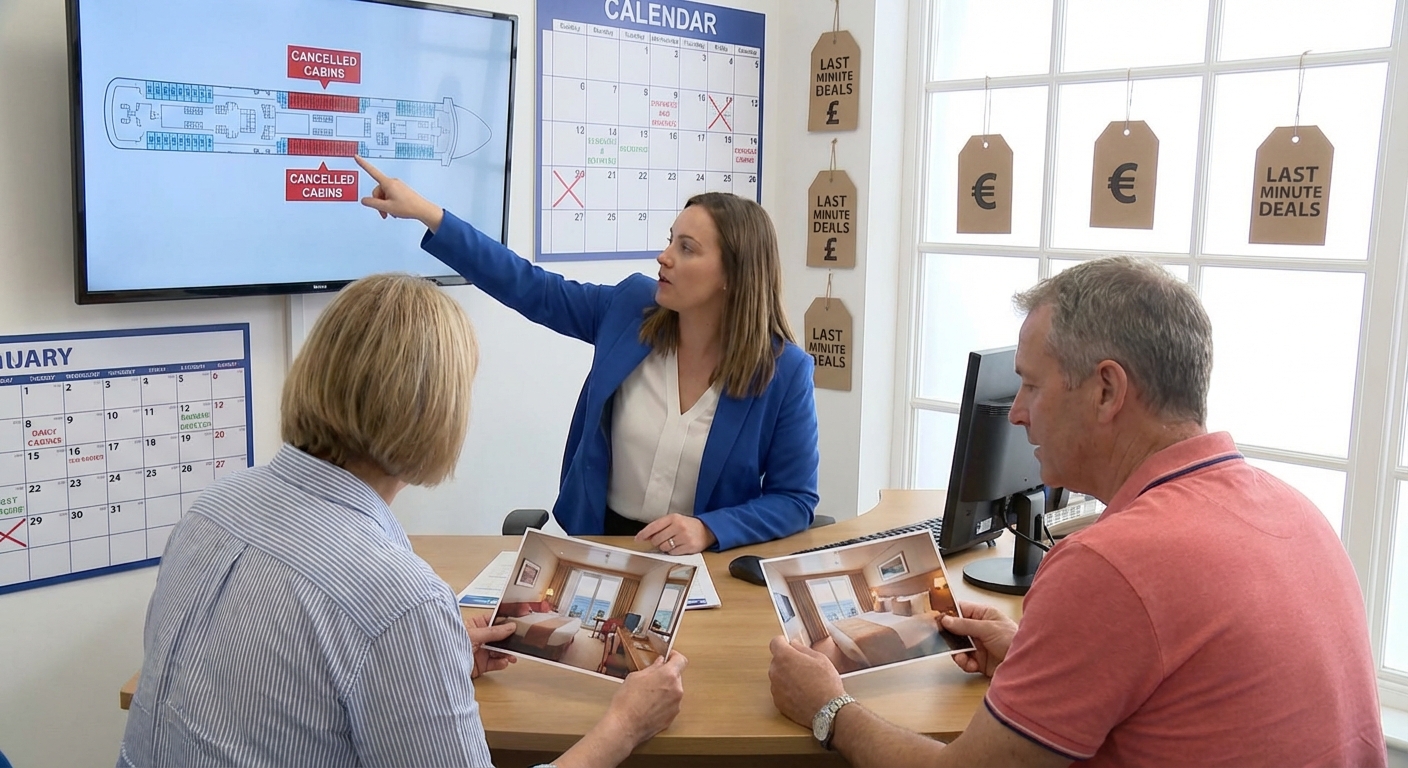
- Odd cabin numbers appearing alone on the deck plan
- Single cabins popping up on a fully or nearly sold-out sailing
- Sudden price drops or flash promos a few weeks before sail date
How Rebooked Inventory Really Works Behind the Scenes
In my experience watching fares obsessively (I’ve literally had a spreadsheet open for weeks before some sailings), cruise lines generally manage rebooked inventory in stages.
1. Before Final Payment Date
Most major lines (Carnival, Royal Caribbean, Norwegian, etc.) have a final payment deadline around 60–90 days pre-cruise for standard itineraries.
Before this date:
- Cancellations are common and usually penalty-free or low-penalty.
- Canceled cabins go back into inventory at current market price, not what the original guest paid.
- The line may raise or lower prices based on booking pace.
On one 7-night Mediterranean cruise I tracked, the sailing sat at “only 10 cabins left” for weeks. Two days after final payment, over 30 cabins suddenly appeared. My travel agent confirmed: those were mostly missed payments and voluntary cancellations.
2. After Final Payment Date
Now it gets more interesting.
After final payment:
- Cancellations often trigger heavier penalties for the guest.
- The cruise line has already collected most of the revenue it expected.
- Rebooked cabins become “bonus” revenue opportunities.
This is why you’ll sometimes see:
- Aggressive last-minute deals 2–4 weeks out
- Reduced single supplements to fill empty cabins
- “Guarantee cabin” offers (you book a category, cruise line assigns the exact cabin later)
A revenue manager I spoke with on a ship (yes, I’m that person who talks to crew about pricing strategy) explained that empty cabins are terrible optics and economics. Even if they sell a cancellation cabin at a steep discount, those guests still buy drinks, excursions, Wi‑Fi, spa treatments—the high-margin stuff.
3. Upgrades, Downgrades, and Shifting Inventory
Rebooked cabins aren’t always sold directly. Sometimes they’re used like Tetris pieces.
Cruise lines may:
- Offer bid-based or complimentary upgrades to move people up categories
- Then resell the newly freed-up cheaper cabins to price-sensitive travelers
When I tested this on a transatlantic sailing, I deliberately booked the cheapest interior guarantee cabin. Two weeks out, I got an email: paid upgrade offer to oceanview. I declined just to see what would happen. Five days before sailing, they upgraded me to an oceanview for free because they needed my inside cabin inventory. Those inside cabins reappeared online at a sale price.
Pros of Booking a Cruise Cancellation Cabin
I’ve benefited from cancellation cabins a few times now, and there are real advantages—if your schedule and nerves can handle it.
1. Deep Discounts and Category Jumps
You often see:
- Balcony cabins priced like oceanview
- Suites suddenly “within reach” compared to earlier fares
For example, in late 2023, I watched a 5-night Bahamas sailing on Carnival where balconies dropped roughly 30–35% two weeks before departure after a batch of cancellations. Historical pricing in that range is common on several lines, as travel writers at Forbes and The Points Guy have noted.
2. Better Cabin Location
Cancellation cabins can be prime real estate:
- Midship, low-motion locations (amazing if you’re motion-sensitive)
- Quiet areas away from nightclubs and elevators
- Rare solo or family cabins that were previously sold out
I once swapped from a noisy aft cabin (booked early) to a midship cancellation cabin simply because I kept checking the deck plan. No price change, just a better location.
3. Shorter Commitment Window
If you hate planning far ahead, cancellation cabins let you:
- Decide closer to departure
- React to weather trends or work schedules
- Avoid tying up funds a year in advance
Cons and Risks You Really Need to Weigh
It’s not all champagne and cheap verandas. I’ve also watched this strategy backfire—for myself and for others.
1. The Cruise Might Fully Sell Out
Sometimes demand is just too strong. Popular sailings where cancellation cabins are NOT a good gamble:
- School holiday periods
- Major events (eclipses, festivals, big-name theme cruises)
- New ship inaugural seasons
On a 2022 Alaska sailing I tracked, prices only went up after final payment, and no good cabins ever reappeared. People waiting for cancellation deals either paid more… or stayed home.
2. Less Choice and Control
With cancellation cabins, you’re often stuck with:
- Leftover cabin layouts (bunk beds, obstructed views, weird shapes)
- Less ideal locations (over nightclubs, under pool decks)
- Higher solo rates if you’re traveling alone
And if you’re a family needing connecting cabins or specific bed arrangements? Hoping for cancellations is borderline masochistic.
3. Airfare and Logistics Can Kill the Savings
When I ran the numbers on a last-minute Caribbean deal, the cruise fare was fantastic—about 40% less than six months earlier. But the flights? Nearly double.
Booking late can mean:
- Expensive or inconvenient flights
- Fewer hotel options for pre-cruise nights
- Higher travel insurance costs for last-minute coverage
Sometimes the “deal” disappears once you add everything up.
Smart Strategies If You Want to Play the Cancellation Game
Here’s what’s actually worked for me (and what hasn’t) after years of tinkering with this.
1. Book Something Early, Then Monitor Like a Hawk
This is my favorite hybrid strategy:
- Book a decent cabin early at a price you’re comfortable with.
- Use price-tracking (CruiseWatch, CruiseCritic forums, or a good human travel agent) to monitor rates.
- If a better cancellation cabin appears at a lower fare, call and ask about price adjustments or cabin changes.
Many cruise lines allow fare drops or cabin changes before final payment, and some even after, depending on your terms and region.
2. Know Your Final Payment Deadline
Mark it in your calendar.
- 30–10 days after final payment is often the sweet spot for cancellation cabins appearing.
- If there’s no movement or cabins left by then, deep discounts become less likely.
I’ve learned to stop expecting miracles inside 5 days to sailing; by that point, the line is mostly just cleaning up last-minute details.
3. Use a Travel Agent Who Knows the Patterns
I’m pretty DIY, but I’ll openly admit: a good cruise-specialist travel advisor has beaten my best efforts more than once.
They can:
- See live inventory across multiple agencies and promos
- Place 24-hour holds on newly released cabins
- Reprice or move your booking when better cabins pop up
CLIA (Cruise Lines International Association) has repeatedly noted that agents still handle a huge share of cruise bookings because of this exact complexity.
4. Consider Repositioning and Shoulder-Season Cruises
When I tested this on a shoulder-season Mediterranean and an Atlantic crossing, cancellation cabins were far more common and cheaper than during prime summer dates.
Less demand = more:
- Cancellations
- Price drops
- Upgrade opportunities
If your schedule’s flexible, this is where the real magic tends to happen.
When a Cruise Cancellation Cabin Is Worth It (And When It’s Not)
Based on my own trips and watching way too many itineraries, here’s how I personally decide.
I’ll chase cancellation cabins when:
- I’m flexible on dates and destination
- I don’t need a specific cabin type
- I can drive to the port or get cheap, flexible airfare
- I’d genuinely be okay skipping the trip if it doesn’t work out
I book early and ignore cancellations when:
- I’m traveling with family or a group
- It’s a bucket-list itinerary (Alaska, Antarctica, unique repositionings)
- I need specific cabin features (accessibility, connecting rooms)
- The dates can’t move because of school or work
The biggest mindset shift for me was this: cancellation cabins are a bonus strategy, not a core plan. Use them to improve your deal or upgrade your cabin, not as the only way you’ll go on vacation.
Final Thoughts: Play the Game, Don’t Bet the House
When I first started tracking cruise cancellations, I treated it like some secret hack that would save me thousands every time. Reality check: sometimes it works brilliantly, sometimes it doesn’t move the needle at all.
What does consistently work is a blend of:
- Understanding how rebooked inventory really flows back into the system
- Respecting your own risk tolerance and schedule constraints
- Being just obsessive enough to keep checking prices and cabin maps
If you treat cancellation cabins as a fun opportunity—not a guarantee—you can absolutely score better rooms, better prices, or both. I’ve sat on a balcony I never could’ve afforded at original pricing, simply because someone else canceled at the right moment… and I was paying attention.
Sources
- U.S. Federal Maritime Commission – Passenger Vessel Operator Information - Regulatory info on cruise operators and consumer protections
- Royal Caribbean – Cruise Planner & Payment Terms - Example of final payment timelines and policies
- CLIA (Cruise Lines International Association) – 2023 State of the Cruise Industry Outlook - Industry data on demand and booking trends
- Forbes – How To Save Money On Cruises - Expert tips on cruise pricing and last-minute deals
- U.S. Department of State – Cruise Ship Travel - Government guidance and considerations for cruise travelers