I Tried Running My Tiny Business Like a Factory—Here’s What Actually Changed
ness run out of a laptop and a painfully squeaky office chair.
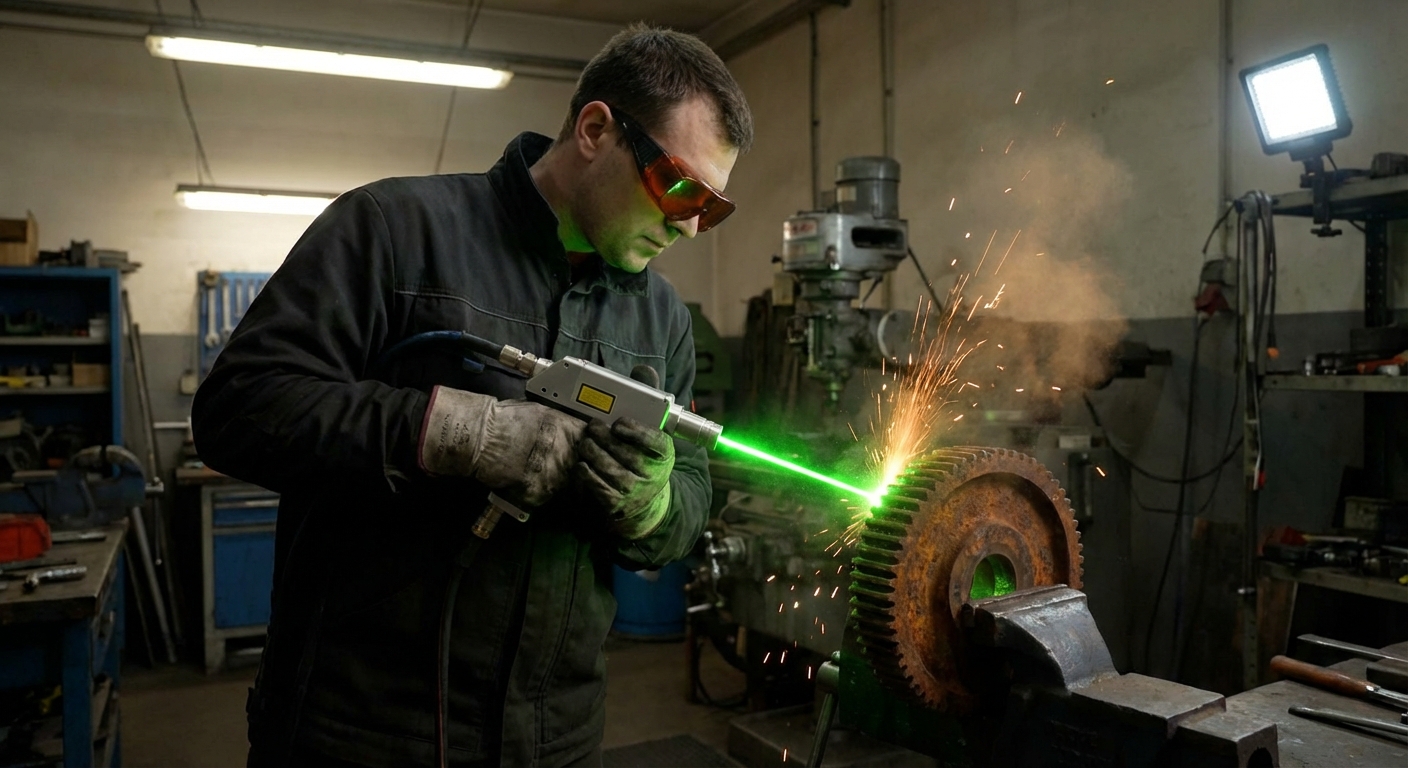
Then I spent a week shadowing a friend who runs a mid-size manufacturing plant.
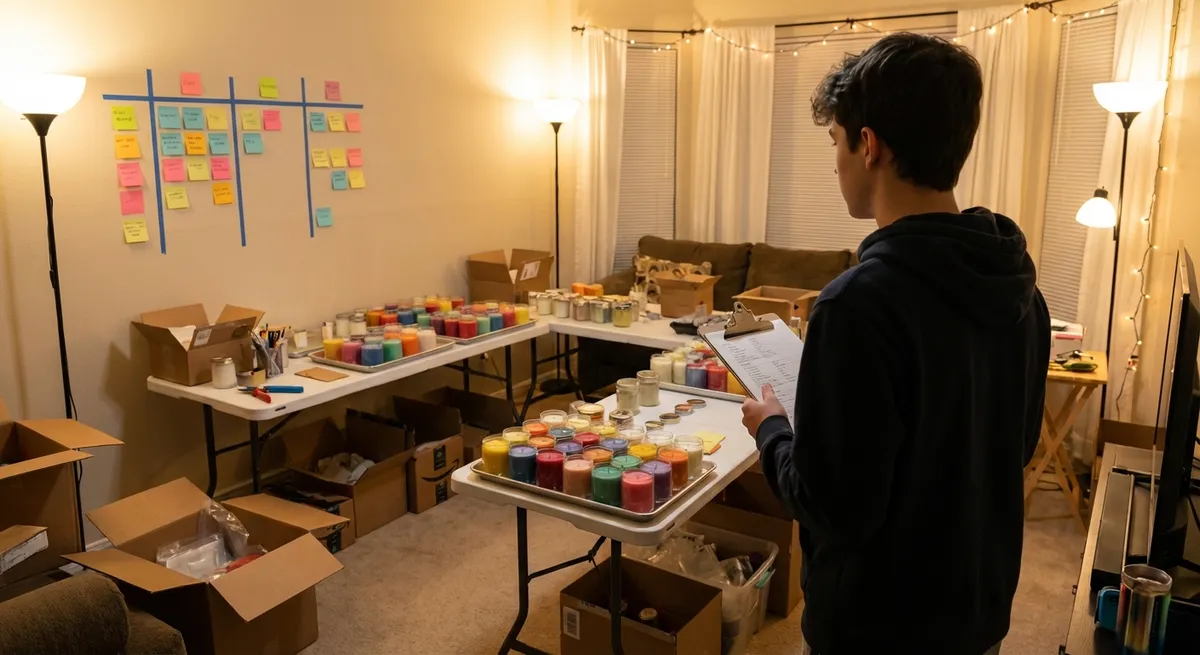
Watching pallets, machines, and people all moving in sync did something weird to my brain. I started seeing my own business—client projects, emails, invoices—as an invisible assembly line. When I got back, I decided to run my “tiny operation” like a factory for 90 days.
What changed honestly surprised me: fewer crises, faster delivery, better margins…and a lot less of that 11 p.m. “what did I even get done today?” feeling.
This is exactly what I changed, what totally flopped, and what I’d repeat in a heartbeat.
The Moment I Realized My Business Was a Factory (Just Without Forklifts)
That week in the plant, the operations manager walked me through their floor like a tour guide in Disney World—but with more steel and fewer churros.
He kept using phrases like “throughput,” “bottlenecks,” “work in process (WIP),” and “changeover time.” At first, I just nodded like I understood. But then he said something that stuck with me:
> “We don’t make products. We make flow. The better the flow, the better the profit.”
Driving home, I couldn’t shake that line.
I pulled up my project tracker and looked at my business the way he looked at that plant:
- Leads coming in = raw material
- Projects in progress = WIP sitting on the line
- Finished work delivered = shipped product
- My calendar = the production schedule
- Emails, revisions, approvals = micro-bottlenecks
It hit me: I wasn’t “bad at time management”—I was running a choppy, constantly interrupted assembly line in my own head.
So I stole three core ideas from industrial operations and applied them to my completely non-industrial business:
- Visualize the actual flow of work
- Limit how much is “in progress” at once
- Treat recurring chaos like a process problem, not a personal failure
Spoiler: the first week was a mess. Then it got interesting.
Turning My Messy To‑Do List into an Actual Production Line
The operations manager had shown me their whiteboard with four columns: Backlog → In Production → Quality Check → Shipped. Every order was a magnet, slowly marching from left to right.
I copied that, but with my stuff:
- Backlog: every project and task I’d agreed to do
- Doing: only what I was actively working on
- Waiting: things blocked by clients, approvals, or dependencies
- Done: shipped work, invoices sent, money pending or received
I used a digital Kanban board (Trello, but anything works), and when I first dumped everything in, it was ugly. I had 19 “in progress” items. Nineteen. No wonder my brain felt like a browser with 45 tabs open and audio playing somewhere.
When I tested this for real, I forced myself to adopt a WIP limit: only 3 main projects in “Doing” at any time.
Here’s what that changed:
- I stopped saying “I’ll get started on that” just to look responsive. I’d say, “You’re in the backlog; I start once one of these three clears.” Clients respected that more than the vague “I’ll try to squeeze it in.”
- I noticed my “Waiting” column was always packed. Work wasn’t stuck because of me. It was stuck in client limbo. That was a wake-up call.
- I built simple nudges: weekly messages for anything sitting in “Waiting,” like a polite alarm clock. My average project turnaround actually improved, even though I was juggling fewer active tasks.
From a numbers perspective, things shifted fast. Over 60 days:
- My average project cycle time dropped by around 30%
- “Where are we on this?” client emails dropped so sharply I checked my spam folder twice
- My effective hourly rate went up—same revenue, fewer late nights patching things up
And emotionally? My day stopped feeling like a game of whack-a-mole and more like: pick three things, move them to “Done,” shut the laptop.
It wasn’t magical. It was just…visible.
Borrowing Lean Manufacturing Without Turning Into a Robot
Once I saw my work as flow, I started obsessing over the tiny slowdowns—exactly like the plant did.
Manufacturers use concepts like Lean and Six Sigma to cut waste, improve quality, and reduce variability. I wasn’t about to start running statistical process control charts on my email response times (yet), but I did steal a few ideas.
1. Hunting “hidden waste” in my day
Lean calls waste muda and breaks it into categories: waiting, overproduction, motion, defects, etc. I did a scrappy version of a time study for two weeks.
Here’s what shocked me:
- Context switching (jumping between projects, tools, and communication channels) was eating my output. A 2020 study out of UC Irvine found it can take over 20 minutes to refocus after a switch; I was doing that constantly.
- I was massively “overproducing” emails—sending long status updates no one asked for or read, and writing proposals that were way too detailed for early-stage conversations.
- I was “reworking” tasks because I didn’t define success clearly. That’s the service-business version of defects on a production line.
I did three simple things:
- Corralled email into two specific time blocks instead of reacting all day
- Switched to a one-page “light” proposal for early leads and only built full scopes once someone was serious
- Started every new task with a one-sentence definition: “This is done when X.”
The effect was subtle but real: less mental thrash, fewer awkward rewrites, more “first try” acceptances.
2. Standardizing just enough
Factories love standard operating procedures (SOPs): step-by-step checklists for repeatable work. I resisted this for years because it felt like creativity-killing bureaucracy.
When I tested this on two things—onboarding new clients and delivering final work—the opposite happened:
- My stress went down because I wasn’t reinventing my own workflow every time
- My “oops, forgot that attachment” and “oh no, missed that step” moments dropped—fast
- I could hand off parts of the process (like invoicing and file organization) to a virtual assistant without a 3-hour brain dump
I still keep high-variation work (brainstorming, strategy, creative thinking) flexible. But the repetitive 40%? That’s standardized, like a mini production cell.
3. Running mini “Kaizen” experiments
In manufacturing, Kaizen is continuous, small improvements. I did a tiny version:
- Every Friday, I looked at what clogged the system that week
- I’d pick one tiny change to test the next week—tighter meeting agendas, clearer briefs, shorter feedback windows
- I judged it purely on whether work flowed smoother, not how “productive” I felt
Not every tweak helped. Some made things worse. But the hit rate was high enough that after 90 days, my process felt completely different, even though I never did a big “system overhaul.”
Where This Totally Broke Down (And What I Had to Undo)
I wish I could say my little “run it like a factory” experiment was a flawless success story. It wasn’t. When I pushed the industrial metaphors too hard, things got weird.
When I tried to optimize everything, I broke my own brain
I went a little overboard one week and tried to:
- Time-box every 30 minutes with zero slack
- Batch all thinking tasks together and all admin tasks together
- Hit a daily “output target” like units on a production line
By Wednesday, I was fried. Creative work doesn’t obey factory math. Sometimes the best idea shows up in 10 minutes; sometimes it takes a walk, a bad draft, and a shower epiphany.
What worked better was separating:
- Flow work (emails, admin, routine tasks) → highly optimized, almost industrial
- Deep work (strategy, writing, design, negotiation) → protected, looser, no hard “units per hour” goals
The plant I visited had this balance too: the line was heavily standardized, but R&D and engineering were given more exploratory time. It just took me a minute to see my own “R&D” time the same way.
People aren’t machines—and that includes me
Another thing I saw in the factory: they took breaks seriously because fatigue causes defects and accidents. Ironically, when I tried to “be efficient,” I started cutting my own breaks.
Bad move.
Once I reframed rest as part of the production system—a maintenance window, not laziness—it became easier to protect:
- Short no-phone breaks between major tasks
- Actual lunch away from the screen
- At least one “zero meetings” block per week for unrushed work
This didn’t just feel nicer. It reduced my error rate: fewer corrections, fewer “sorry, I misread that” moments, less passive-aggressive inbox cleanup.
Clients don’t speak factory—but they understand reliability
The final challenge: how to talk about this with clients without sounding like I was treating their projects like widgets.
The language that did land:
- “I limit how many projects I run in parallel so yours doesn’t get crowded out.”
- “Once we start, you’ll see consistent progress every week until we ship.”
- “If we don’t stick to these feedback windows, the whole timeline shifts.”
I wasn’t promising speed for the sake of it. I was promising predictability and fewer nasty surprises. That’s something every good operations manager knows: most people can live with a reasonable schedule—what they hate is chaos.
Why I’d Absolutely Do This Again (And How You Can Steal the Best Parts)
Running my tiny business like a factory didn’t turn me into a robot. It did something better: it made the invisible work visible, and the constant overwhelm…optional.
Here’s what held up after the 90-day experiment:
- I still use a simple Kanban board with WIP limits; it’s my control room
- I still treat recurring chaos as a process issue, not a personality flaw
- I still borrow from Lean—look for waste, standardize the boring stuff, experiment small
Would this work for every business? Not perfectly.
If you’re in a hyper-creative field, you’ll need to leave more slack in the system. If you’re in a high-regulation industry (healthcare, finance), you’ll lean more on formal SOPs and compliance gates. If you run a physical operation—warehouse, shop floor, restaurant—you’re already halfway there; you just might not be using the language yet.
But the core idea scales: your business is already a production system, whether you call it that or not.
You’re either managing flow on purpose, or you’re hoping the work moves itself.
What changed for me wasn’t just higher margins or faster delivery (though I won’t lie, those were nice). It was the feeling that I was finally running a business, not just surviving inside one.
If you test this for yourself, start embarrassingly small:
- Map the real flow of work from request to cash
- Cap how many things you’ll truly have “in progress”
- Fix one tiny recurring friction every week
Do that for a quarter, and your “factory” might surprise you too—no hard hat required.
Sources
- U.S. Small Business Administration – Small Business Facts – Data and reports on small business performance, survival rates, and trends
- MIT Sloan Management Review – “The Discipline of Lean” – Explains Lean principles, waste reduction, and how manufacturers structure continuous improvement
- Harvard Business Review – “The High Cost of Multitasking” – Discusses productivity losses and cognitive switching costs that mirror “flow” interruptions in operations
- UC Irvine – Research by Gloria Mark on Attention & Interruptions – Empirical study on how long it takes knowledge workers to recover focus after interruptions
- Lean Enterprise Institute – What Is Lean? – Clear overview of Lean manufacturing concepts like waste, flow, and Kaizen that inspired the approaches described