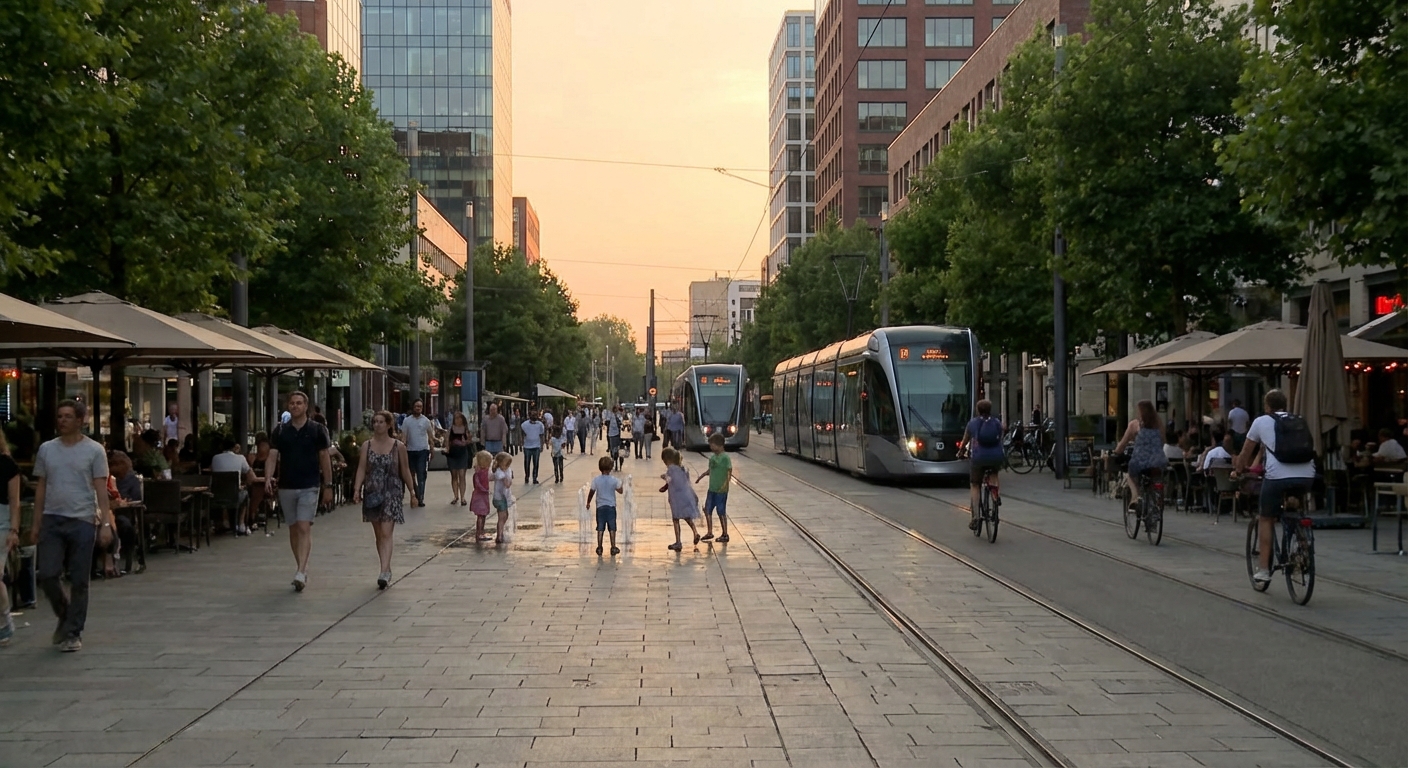
The “Train Hopping” Mindset: How Slower Travel Gave Me My Time Back
n across Europe—thinking it was a high-speed line—and it completely rewired how I think about moving through the world. That “mistake” turned into my favorite trip of the last five years, and it’s why I’ve quietly switched from planes to trains (and buses and ferries) whenever I realistically can.
This isn’t another romantic “quit your job and ride trains forever” fantasy. I still hunt for deals, I still care about schedules, and I still have a boss who expects me on Zoom. But I’ve learned that how you move matters as much as where you land—and what I now call the “train hopping mindset” has made my trips cheaper, calmer, and way more memorable.
Let me break down what changed, what actually works, and when slower travel is absolutely not worth it.
The Trip That Accidentally Slowed Me Down (and Why I Didn’t Hate It)
I recently booked what I thought was a fast train from Munich to Venice. I clicked the cheapest option on the booking site, skimmed the details, and only noticed on the day that it was the “scenic regional route” with multiple changes and a total runtime just under 9 hours.
I panicked at first. Nine hours?! I could’ve flown in one hour and spent the rest of the day eating gelato. But I went anyway, mostly because the ticket was nonrefundable and I’m stubborn.
Here’s what actually happened:
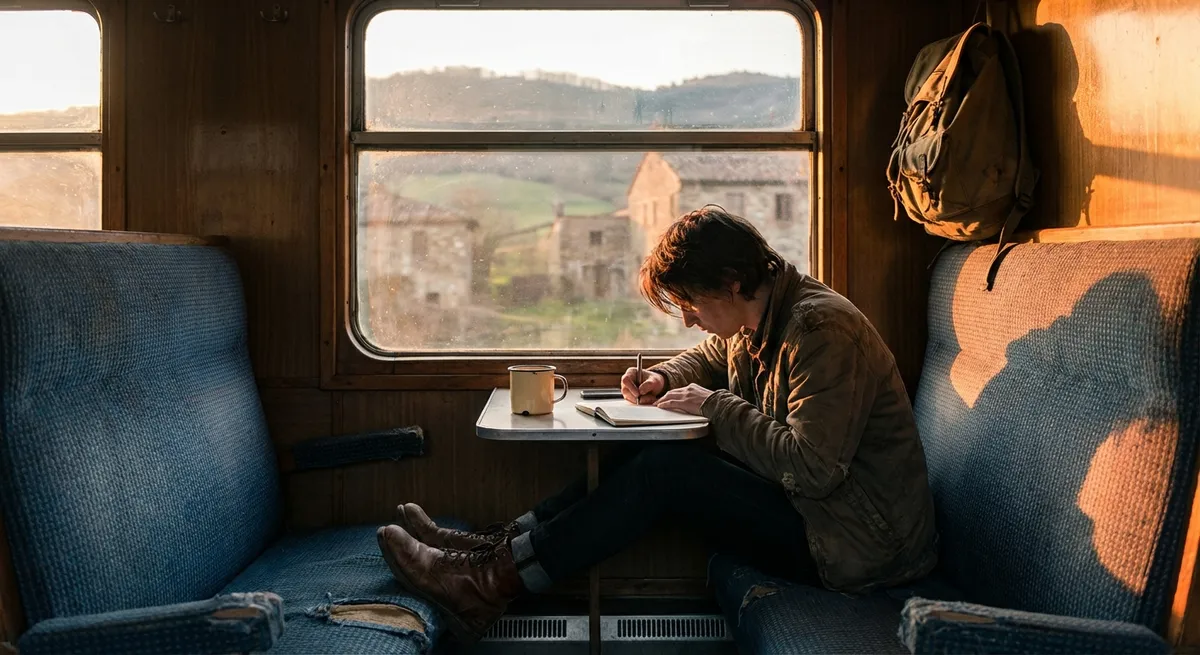
- The train wound through the Alps, and I sat there, neck craned, like a kid who’d never seen mountains before.
- A retired couple from Slovenia shared their snacks with me and literally drew a route on my map for where to walk in Ljubljana “next time.”
- I got almost a full workday of deep-focus tasks done thanks to solid Wi‑Fi and a tiny table—something I never manage on planes.
- I arrived in Venice tired but not wrecked: no dry airplane air, no pressure headache, no chaotic baggage carousel.
I paid less than I would’ve for a budget flight plus luggage, skipped the airport stress entirely, and actually saw the continent in between two famous cities instead of just teleporting over it.
That’s when the lightbulb went on: I hadn’t just taken a train. I’d traded frantic speed for intentional movement—and the trade felt shockingly good.
What I Mean by the “Train Hopping” Mindset
When I say “train hopping,” I don’t literally mean riding freight trains like a 1920s drifter. I mean treating your travel legs—trains, buses, ferries, rideshares—as part of the experience, not just a necessary evil between “real” moments.
Here’s how that plays out for me in practice:
- I treat ground transport like moving living rooms, not just boxes on wheels.
I’ll book a slightly longer train with a table seat, power outlets, and decent reviews instead of the absolute shortest route. That turns the trip into built-in reading, working, or journaling time.
- I layer micro-stops instead of maxing out single destinations.
When I tested this on a Spain–Portugal trip, I added 3–5 hour gaps between trains. I got off in random places, had coffee on quiet plazas, and then hopped back on. Those “in-between” stops are the parts of the trip I remember first.
- I optimize for stress per hour, not just price per mile.
Flying looks fast on paper, but by the time I add:
– 2 hours early airport arrival
– transit to/from airports (often 30–60 minutes each way)
– security lines + boarding + deplaning
A 1.5‑hour flight easily swells to 5–6 hours of “friction.” A 4‑hour city-center train that I board 15 minutes before departure? Weirdly competitive—and way calmer.
- I build “buffer days” into the itinerary on purpose.
Instead of squeezing every last minute, I now accept one “heavy transit” day per week on longer trips. That mental reframe alone makes delays feel like bumps, not disasters.
This mindset isn’t just spiritual fluff; it shifts the actual math of money, time, and energy in ways that have surprised me over and over again.
The Real-World Tradeoffs: Planes vs. Trains (and Buses and Boats)
I’m not anti-plane. Sometimes you really do need to yeet yourself across a continent in a metal tube. But once I started comparing full door-to-door journeys, I noticed some patterns.
When planes still win (in my experience)
- Long-haul intercontinental trips – If I’m crossing an ocean, flying is still the only sensible option for most people. Even with layovers, the time savings are massive.
- Remote or island destinations – There’s no train to Iceland, sadly. Same with many islands or sparsely connected regions.
- Ultra-tight schedules – If I’m attending a 1‑day event, I’ll pay for the speed and accept the airport chaos.
When trains and buses quietly crush flying
- 3–7 hour regional routes with strong rail networks
In Europe, for example, studies have found that city-center to city-center, high-speed trains can be faster or comparable to flying for distances up to ~800 km, once you factor in airport access and security time. I’ve personally felt this on routes like Paris–London, Madrid–Barcelona, and Milan–Zurich.
- Trips where luggage and comfort matter more than minutes
On trains and buses, I don’t have to play suitcase Tetris or worry about liquids. I can spread out, plug in, walk around, and buy real food. That comfort has a real value, even if it’s hard to quantify.
- When I want to keep my carbon footprint in check without going full ascetic
Data from the UK government’s Department for Business, Energy & Industrial Strategy has shown rail emissions per passenger-kilometer are dramatically lower than short-haul flights. I’m not perfect about this, but choosing slower ground options when it’s easy-ish feels like low-hanging fruit.
The hidden costs nobody advertises
When I sat down after a trip and actually wrote out the total time plus “annoyance factor,” it looked something like this:
- Budget flight (600–800 km):
1.5 h flight + 2 h early arrival + 1 h total airport transit + 1 h lines/boarding/deplaning + 0.5 h baggage → ~6 hours, high stress, low comfort
- Direct high-speed train:
4 h train + 0.5 h station transit + 0.25 h pre‑departure → ~4.75 hours, low stress, high comfort, better views
On paper, the flight “wins” by 0.75 hours. In my body, the train wins by a landslide.
How I Actually Plan Multi-Leg Ground Trips Without Losing My Mind
The romantic version of this style of travel is “just show up and see what happens.” I’ve tried that. I also ended up stuck overnight in a train station once, which I cannot recommend.
Here’s the more realistic system I use now:
1. Start with the “big bones” of the route
I open something like Rome2Rio or Google Maps and sketch out where I’m going and in what order, just to understand what’s even possible by rail, bus, or ferry. Once I’ve got a vague chain of cities, I check:
- Are there direct intercity trains between any legs?
- Which stretches look like they’re bus-only?
- Are there overnight options that could save me a hotel night?
I don’t buy anything yet; I just learn the landscape.
2. Lock in the “anchor” journeys first
These are the legs that are either:
- Time-sensitive (I need to be somewhere on a specific day)
- Likely to sell out (popular routes, holidays, weekends)
- Expensive if booked last minute
For Europe, I’ve had good luck comparing and booking through official rail operators or aggregators. When I tested Asian intercity buses, I found local platforms worked better than global apps—but often required some translation hackery.
3. Then I deliberately leave some gaps
This is the part that stressed-out past-me would’ve hated.
Now, instead of pre-booking every movement, I’ll leave:
- 1–2 days between cities flexible on longer trips
- Smaller regional hops unbooked until a few days before
Why? Because once I’m on the ground, I always learn things I couldn’t have known from my laptop: a town locals recommend, a festival happening one town over, or a place that just doesn’t vibe and I want to leave earlier.
Having unbooked segments lets me actually act on that information instead of staring sadly at nonrefundable tickets.
4. I treat stations as part of the experience, not dead space
I used to spend station time scrolling my phone in pure limbo. Now I:
- Try at least one local snack or drink from the station vendors
- Walk outside for 10–15 minutes if I’ve got a longer layover
- Snap photos of old signage, platforms, or weird little details for later
Those micro-moments add up. My camera roll is full of anonymous stations that now feel like real places in my memory, not just travel purgatory.
The Honest Downsides of Slower Travel (From Someone Who Still Loves It)
This all sounds romantic until your bus is late, you’re hungry, and the only food near the station is a sad vending machine sandwich. I’ve had those days too.
Here’s what genuinely sucks sometimes:
- Delays hit harder when you’ve chained multiple legs.
I once misconnected a bus–train combo in Italy and spent 3 extra hours in a town I’d never planned to see. It turned into a pleasant coffee-and-walk detour, but it easily could’ve been a stressful nightmare if I had a tight deadline.
- You have to carry your life on your back more often.
Ground travel = more transfers = more stairs, platforms, and cobblestones. When I tested this with a huge suitcase, I hated myself. With a backpack and small roller, it was fine. Luggage choices matter way more on multi-leg trips.
- Booking systems can be weird and fragmented.
Airlines have had decades to streamline online booking. Regional bus companies in some parts of the world… have not. I’ve dealt with websites that only accepted local cards, captchas that broke, and timetables that seemed to contradict each other.
- You’re more exposed to the “weather of real life.”
Strikes, storms, road closures, local holidays—these hit ground transport in ways flights sometimes skip over. I now build in more time padding and keep a small “oh no” budget for last-minute changes.
I still think the trade is worth it, but it’s not magic. It’s a set of knobs you can turn: slower, yes—but also richer, usually cheaper, and weirdly more empowering once you get used to it.
The Unexpected Upside: Reclaiming “Dead Time” as Life
The wildest thing I’ve noticed since I leaned into this style of travel isn’t about money or emissions; it’s about time.
Before, transit days felt stolen from my life: dead, gray blocks between the “real” parts of the trip. Now they feel more like moving retreats.
On a long train from Lisbon to Porto, I outlined a whole article I’d been putting off for months. On a slow ferry in Greece, I met a local student who ended up giving me a food tour of Athens the next day. On a highway bus in Mexico, I stared out the window at dusty fields and half-finished houses and realized I understood that region so much better than if I’d only landed in the tourist centers.
None of that would’ve happened at 35,000 feet.
When I tested this mentality on shorter domestic trips back home, the same thing held: suburban train lines, intercity buses, and commuter ferries became little capsules of unclaimed, unscheduled time. Time that belonged to me, not to security lines, boarding groups, or frantic gate changes.
I still fly. I still move fast when I need to.
But when I have a choice, I now ask myself a different question than “What’s fastest?”
I ask: “What kind of day do I want this to be?”
More often than not, that answer looks like a window seat, a passing landscape, and the quiet satisfaction of knowing that getting there is no longer the worst part of going.
Sources
- UK Department for Transport – Rail emissions vs. other modes – Official statistics comparing environmental impacts of different transport modes
- International Energy Agency – The Future of Rail report – In-depth analysis of rail’s role in global transport, including energy use and efficiency
- European Environment Agency – Greenhouse gas emissions from transport – Data on how aviation and rail contribute to emissions across Europe
- Amtrak – Onboard experience and amenities – Practical details on what modern intercity trains offer (Wi‑Fi, seating, power outlets, etc.)
- Rail Europe – High-speed train vs. plane comparison – City-center to city-center time comparisons between trains and flights on popular European routes