The Weird Power of “Micro-Servers”: How Tiny Online Communities Quietly Run the Internet
bit hole of hyper‑specific online communities—tiny Discord servers, obscure forums, private Facebook groups—and realized those “small corners” are actually where most of the real internet lives.
When I tested this theory and started hanging out in a few of these micro‑communities, my entire online experience flipped. Suddenly, strangers were helping me debug code at 2:17 a.m., random hobbyists were reviewing my writing drafts like an unpaid editorial board, and someone in a tiny server basically stopped me from rage‑quitting my career.
This is the stuff we don’t talk about enough: how powerful small online communities really are… and how to find (or build) one that doesn’t turn into chaos, drama, or a ghost town.
How I Accidentally Stumbled Into the “Right-Sized” Internet
A few months ago, I joined a niche Discord server for people experimenting with low‑tech, minimal‑distraction phones. No more than 300 members. No fancy branding. Half the channels had names like `#yeet-the-smartphone` and `#analog-brain`.
And yet, it ran smoother than most giant platforms:
- New members got a short onboarding: a pinned “read this first” message, three key rules, and a simple intro template.
- Mods actually talked to people instead of just deleting posts.
- There was drama occasionally, but it got handled quickly and publicly.
After a week there, I realized something: the size was perfect. Big enough for active discussions, small enough that people recognized names and remembered previous conversations. It felt less like “the internet” and more like a weird digital neighborhood.
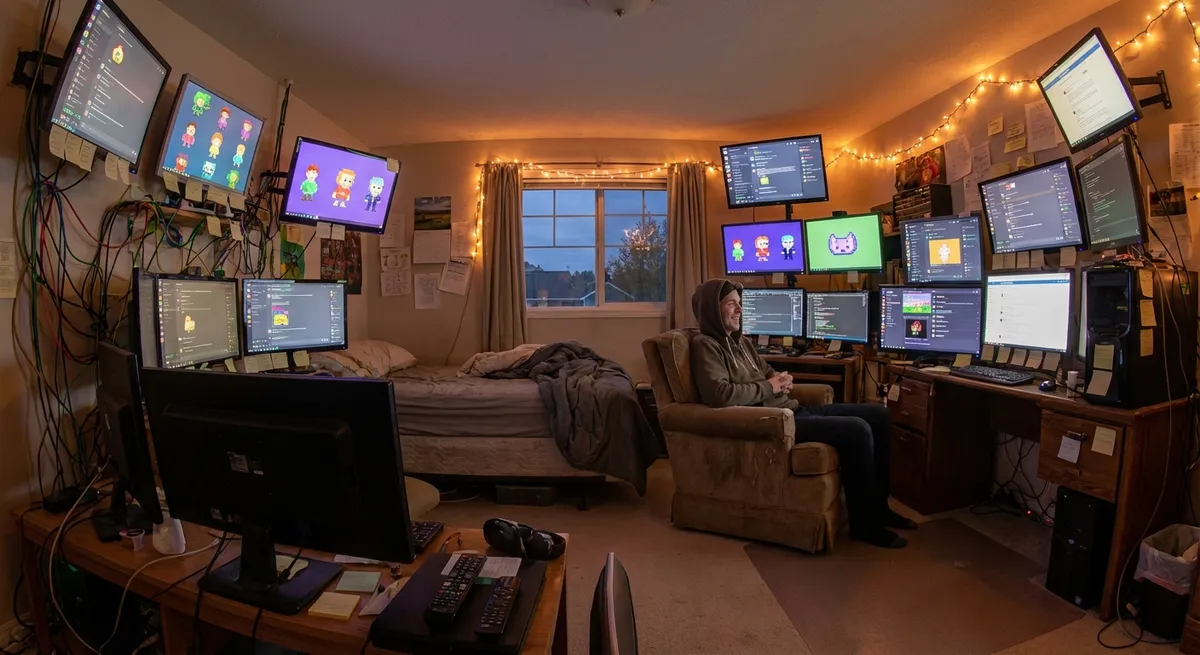
Later I stumbled across a 2020 Pew Research Center report showing that 55% of U.S. adults say they’ve felt a strong sense of connection to an online group—and a big chunk of that comes from smaller, topic‑focused spaces rather than huge social feeds. That matched exactly what I was experiencing: less noise, more actual connection.
My takeaway from that first server: the sweet spot for an online community isn’t everyone—it’s just enough people who care about the same oddly specific thing.
Why Tiny Communities Feel More “Real” Than Massive Platforms
When I compared my time in smaller communities to scrolling big social feeds, a few differences hit hard.
First: context actually survives.
On big feeds, every post is a standalone scream into the void. In small communities, conversations persist. I watched someone ask a question about productivity, get advice, try it out over a week, then come back and report results. People remembered. They adjusted suggestions. It felt like a lab, not a shout‑fest.
Second: incentives change.
On open social platforms, the algorithm rewards engagement, not depth. That means hot takes, outrage, and perfectly‑timed thirst traps. In smaller communities with no algorithm, the reward is social: reputation, trust, credibility. You’re not optimizing for virality—you’re trying not to look like a jerk in front of people you’ll see again tomorrow.
There’s research backing this up. Social scientists studying “communities of practice” (like Jean Lave and Etienne Wenger’s work in the ’90s) found that small, tight‑knit learning communities behave more like apprenticeships: people move from peripheral participation to deeper involvement over time. I’ve watched this arc play out in real time in a tiny writing critique server I’m in—newbies lurk, then share a tiny piece, then get bolder as feedback becomes familiar and less scary.
Third: accountability sneaks up on you.
I once joined a 50‑person Telegram group focused on “showing up daily” for creative work. The rule was simple: every day you had to post a short update with what you did. There were no punishments for skipping, just a public log.
Within a week, I hated posting “nothing today” so much that I started doing 15 minutes of writing at midnight just so I had something to report. No app, no metrics—just soft social pressure from a bunch of usernames I’d never met but didn’t want to disappoint.
The downside? When small communities go sour, they can get really toxic, really fast. Gossip loops, social shaming, groupthink—it all hits harder when there’s more intimacy. I’ve seen a tight forum implode because two long‑time members had a falling out and split the community in half.
So yes, small communities feel more real. But they also need more care.
The Hidden Architecture That Makes a Community Not Suck
After bouncing through dozens of online communities, I started noticing patterns between the ones that thrived and the ones that decayed into spam, silence, or weird cult behavior.
Here’s what I’ve seen consistently work.
1. Clear norms beat long rules.When I tested joining communities with huge, legal‑sounding rule documents, engagement was usually terrible. People either didn’t read them or felt like they were walking on eggshells.
Compare that with one of my favorite communities: a small, invite‑only Mastodon instance. Their “rules” section is basically:
- Don’t be a jerk.
- Assume good faith, but don’t tolerate bad faith.
- No hate speech; no harassment.
- Ask before DMing.
That’s it. But what made it work was that mods actually modeled these norms. When conflict appeared, they referred back to them in plain language: “This comment violates our ‘don’t be a jerk’ guideline because…” It made the rules feel alive, not performative.
2. Onboarding is underrated.One of the most surprisingly powerful things I saw was a knitting community on a private forum that had a dedicated `Start Here` thread where every newcomer posted:
- Where they’re from
- What they’re making
- One thing they wish they knew more about
Veteran members replied with links to old threads, patterns, or tutorials. It wasn’t automated; it was human. The result? New people stuck around because they immediately got tiny wins—useful links, warm replies, and proof someone cared.
There’s research from community platforms (like Discourse and Discord’s own community guidelines) suggesting that structured onboarding dramatically boosts retention. In my experience, the difference is obvious: random join → 1 message then ghost; guided join → five messages in a week and they’re hooked.
3. Mods are gardeners, not cops.Communities where moderators only show up to ban people or shut things down feel like living under a drone strike schedule.
The best‑run space I’ve been in—a professional dev forum—had mods who were also active participants. They shared resources, started constructive debates, and used soft interventions first. I watched one mod respond to a borderline rude comment with:
> “Hey, I know you’re frustrated, but this comes off harsher than you probably intended. Mind editing for tone? We want the OP to stick around and ask follow‑ups.”
That single message did more culture‑setting than ten pages of rules. And the person did edit their comment.
4. Quiet spaces need scheduled rituals.Dead communities rarely die all at once. They gently stop. Fewer posts. Then none.
A photography Discord I joined was on life support until one member started a weekly “24‑Hour Photo Challenge” where you had to post any photo related to a loose prompt (“circles,” “reflections,” “blue”). No prizes, just routine.
Engagement bounced back, and it became the heartbeat of the server. That’s when I realized: rituals—weekly threads, monthly calls, recurring prompts—aren’t fluff; they’re oxygen.
The Dark Side: When Online Communities Go Off the Rails
To be real, some communities I joined were disasters.
One was a “no‑filter entrepreneur mastermind” group. At first, it felt raw and honest. Then the vibe slowly shifted from supportive to performative cruelty. Feedback turned into public humiliation. People started trauma‑dumping, and instead of resources or empathy, they got hot takes and memes.
I left after a member shared a mental health crisis and someone replied, “You just don’t want it bad enough.”
That kind of failure isn’t just vibes—it mirrors documented issues with online harassment and group radicalization. The Anti‑Defamation League and other organizations have reported how some communities gradually shift toward extreme content, often through a combination of edgy humor, desensitization, and charismatic members pushing boundaries.
On the flip side, I’ve seen communities overcorrect and become too sanitized. A productivity forum I joined banned “negativity.” The result? No one posted anything real. Struggles were hidden, and only polished success stories remained. It looked great… and felt fake.
Here’s what I’ve learned to watch for when entering a new community:
- Can people disagree without getting dogpiled?
- Are there clear boundaries on hate, harassment, and doxxing?
- Do mods show their faces (metaphorically) or hide behind silent authority?
- Can vulnerability exist without becoming content for other people’s entertainment?
If those answers are consistently bad, I peace out early.
How I Curate My Own Personal “Internet Neighborhood”
Instead of trying to “be everywhere,” I started curating my own little internet, made of a handful of intentional communities.
Here’s roughly how I approach it now.
1. I pick communities for roles, not just topics.I realized I need different kinds of spaces for different parts of my life:
- A craft space (for writing and feedback)
- A learning space (for deep dives on tech and research)
- A support space (for being a human with fears and flaws)
- A play space (for memes, games, and zero productivity)
When I tried to cram all of that into one server or group, it always broke. Either it became too serious or too chaotic. Splitting them up keeps each group clearer—and I’m less frustrated by mixed expectations.
2. I contribute more than I consume (most of the time).There’s a concept in community management called the “90‑9‑1 rule”: 90% lurk, 9% engage sometimes, 1% create most content. When I tested being part of the 1–9% instead of the 90%, everything changed. I felt more connected, got more value, and people were more willing to help me when I needed it.
My own tiny rule now: if I’ve been in a community for a month and never posted anything, I either speak up or leave.
3. I set personal boundaries, not just rely on community rules.After burnout from moderating a very active Facebook group, I started enforcing my own rules:
- No checking heavy communities after 10 p.m.
- Mute notifications for “hot” threads that spike my anxiety.
- Leave any community where I feel dread instead of curiosity for more than a week.
Sounds obvious. Yet the moment I actually enforced these, my online life felt way less chaotic.
Why This Matters More Than We Admit
When I look at my own life, some of the biggest shifts in the last five years didn’t come from books, courses, or big influencers. They came from small online groups:
- A forum thread that convinced me not to quit writing.
- A Discord DM conversation that led to a real‑world job offer.
- A tiny Mastodon instance that made social media feel human again.
- A private support group that helped me understand my own burnout without shame.
Researchers at MIT, Stanford, and elsewhere have repeatedly found that weak ties—people you kind of know, in loose networks—are disproportionately powerful for things like job opportunities and new ideas. But those weak ties are often forged and held in online communities now, not just offline networks.
So when we shrug off “online communities” as just another hobby or distraction, we’re missing that they’re quietly acting as:
- Mental health buffers
- Learning environments
- Professional pipelines
- Creative incubators
Of course they can also be cesspools, echo chambers, and radicalization factories. That’s real. But after hopping through dozens of these spaces, my honest, firsthand conclusion is this:
The internet doesn’t need to get smaller.
Your piece of it does.
And if you’re intentional about the communities you join or build—if you treat them like neighborhoods instead of malls—you might suddenly find the internet feeling a lot less like a firehose and a lot more like a room full of people you actually want to talk to.
Sources
- Pew Research Center – Many Turn to Online Communities for Support, Connection, and a Sense of Belonging – Data on how adults experience connection and support in online groups
- MIT Sloan Management Review – The Power of Weak Ties in the Digital Age – Explains how online networks and loose connections shape opportunities and information flow
- Discourse – Civilized Discourse Construction Kit – Background on community design principles used in modern forum platforms
- Discord – Moderator Academy – Best practices on moderation, onboarding, and culture‑setting for online servers
- Anti-Defamation League – Online Hate and Harassment Reports – Research on how some online communities evolve into harmful or harassing spaces