Why Cozy Games Hit Different When You’re Burned Out by “Sweaty” Lobbies
k and feel… tired. Not hyped, not competitive. Just done.
So I did something weird—for me, anyway. I swapped ranked queues for cozy games. Farming, decorating, fishing, talking to NPCs instead of yelling at real players. And it quietly rewired how I think about games, stress, and even how I handle my actual life.
This isn’t a “throw away your shooters and only play cottagecore” rant. I still love a good clutch. But I’ve seen firsthand how cozy games can be a legit mental reset rather than just another kind of digital noise.
Let me show you what actually changed once I made space for slower games—and how to pick ones that won’t bore you to death if you’re used to chaos.
The Moment I Realized My “Hobby” Was Stressing Me Out
One night, I was queuing into yet another ranked match. Headset on, G Fuel™ (okay, generic energy drink) in hand, Discord already complaining about the last game. Heart rate up—and I hadn’t even spawned yet.
Halfway through the match I caught myself doing something weird: I alt‑tabbed mid-round to check work email.
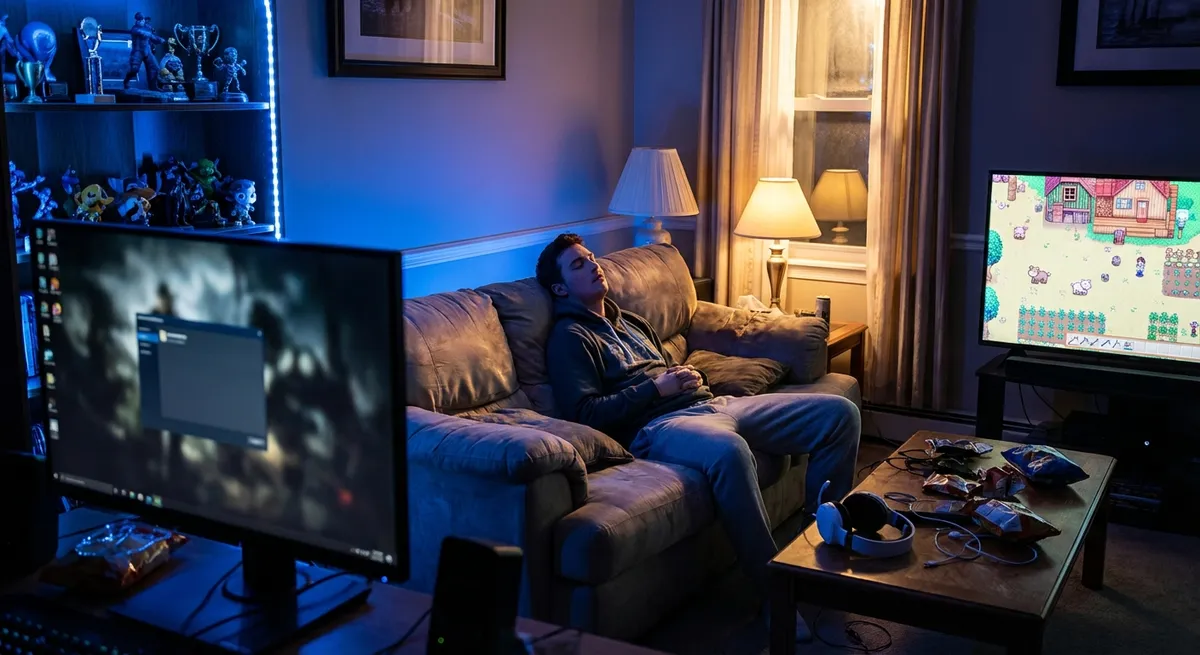
That’s when it hit me. The game wasn’t relaxing me. It was just a different flavor of performance mode.
Out of curiosity, I started tracking how I felt after different gaming sessions for a week:
- After 2 hours of competitive multiplayer: shoulders tense, jaw sore, mentally wired, sleep terrible
- After 1–1.5 hours of single-player with a strong story: emotionally full, a bit tired, slower to fall asleep
- After 1 hour of a “chill” farming sim a friend recommended: calmer, lower heart rate, actually ready to log off
It lined up a bit too well with what psychologists have been saying: not all “screen time” is equal. Studies on video games and mental health show context matters—what you’re playing, why you’re playing, and how it makes you feel changes the impact on stress and mood, especially around anxiety and burnout.
Once I saw my mood data, I stopped mocking “wholesome gamers” and started asking them for recommendations.
What Actually Makes a Game Feel “Cozy” (It’s Not Just Pastel Colors)
When I first dipped in, I thought “cozy game” just meant: cute art, no guns, maybe some cats.
That’s part of it, but when I tested a bunch of games back-to-back, I noticed the titles that genuinely relaxed me had a specific combo of design choices:
1. Low-stakes failure (or none at all)In Stardew Valley, if you miss a crop schedule, the game doesn’t scream “DEFEAT” in your face. You just wait till next season. When I compared that to the instant punishment loop in competitive shooters—where a single mistake can flip the match—my nervous system very clearly preferred the farm.
2. Soft but clear progressionI thought I’d hate “aimless” games. Turns out, the best cozy titles aren’t aimless. They just swap “WIN OR LOSE” for “grow, decorate, unlock, improve.” There are quests, checklists, collections—it’s just that the stakes are internal, not social. No leaderboard, no MMR, no fear of letting teammates down.
3. Sensory kindnessWhen I tested cozy games on a bad day, these details mattered way more than I expected:
- Gentle soundscapes instead of constant explosions
- Color palettes that don’t fry your eyes at 1 a.m.
- UI that isn’t yelling at you with flashing notifications and daily FOMO timers
There’s actually research on how audio and visual design can change arousal levels and heart rate. I 100% felt that when I’d jump from something like Valorant straight into Spiritfarer—my brain felt like it went from a nightclub to a quiet café.
4. Emotional safetyCozy doesn’t always mean emotionally light. Spiritfarer, Night in the Woods, and Unpacking hit some serious topics. But they do it gently, with space to breathe. No jump scares, no sudden difficulty spikes—your emotions aren’t being yanked around for shock value.
Once I understood these mechanics, it got easier to find games that actually soothed me instead of just looking “aesthetic” on TikTok.
How Cozy Games Quietly Hacked My Real-Life Habits
Here’s the unexpected part: the more I played cozy games, the more weird little improvements bled into my offline life.
1. My attention span stopped feeling broken
In Stardew Valley, I’d set tiny goals:
- “Just one more in‑game day”
- “Just finish watering and talk to two villagers”
- “Just rearrange the farmhouse”
When I realized an hour flew by without me alt‑tabbing or doom-scrolling my phone, it hit me: my brain could still focus—it just needed lower stakes and fewer pings.
That spilled over into work. I started using “Stardew rules” on my to‑do list:
- One small, self‑contained task
- A short, visible endpoint
- No multitasking allowed
Shockingly, it worked better than any productivity hack I’d tried that month.
2. I started sleeping better (once I swapped my “last game”)
When my final game of the night was competitive, I’d shut my PC down and my mind would still be running:
- Replaying clutch moments
- Mentally flaming that one teammate
- Feeling my heart pounding in my chest
So I experimented. For a week, I made a rule: last 30–45 minutes of gaming had to be something cozy or at least non-competitive.
My sleep tracker didn’t turn me into a Disney princess, but it did show:
- A bit less time to fall asleep
- Fewer random wake-ups
- Subjectively, I felt less “wired” in bed
It lines up with what sleep researchers say about high-arousal media before bed. Swapping your final match from “sweaty shooter” to “soft farming” is low-effort sleep hygiene.
3. My social battery got a backup charger
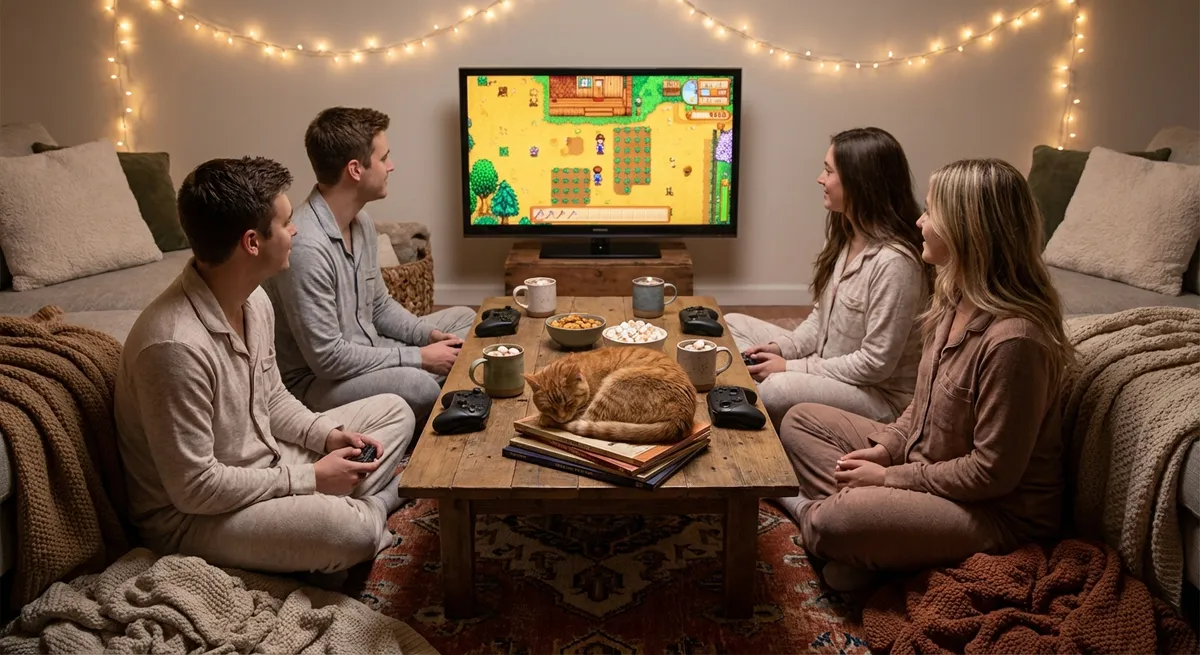
Co-op cozy games surprised me. I thought they’d feel shallow, but playing Stardew co-op and Animal Crossing visits turned into some of the lowest-pressure hangs I’d had in years.
You’re doing something together—watering crops, trading items, decorating—without the background stress of “we have to win.” I’ve had deeper conversations while chopping virtual wood than in most hyper-competitive Discord lobbies.
For friends who are anxious, neurodivergent, or just socially tired, this kind of gaming space can be a gentler way to stay connected.
Cozy Games Aren’t Perfect: Where They Fall Short (And How to Avoid the Boring Ones)
As much as I’ve fallen for this genre, it’s not magic. There are some real downsides and traps I ran into.
1. The grind can get too mindlessSome farming/life sims turn into mechanical checklist simulators:
- Wake up
- Water crops
- Pet animals
- Repeat forever
On day 20, it’s soothing. On day 200, it can feel like clocking into a second job.
What helped me:
- Choosing games with evolving mechanics (new seasons, festivals, story beats)
- Letting myself “retire” a farm/save file instead of forcing myself to “finish” everything
Some mobile “cozy” games are predatory under all the pastel:
- Energy systems that gate every action
- Timers pushing in-app purchases
- Seasonal FOMO events that feel suspiciously like battle passes in a cardigan
My rule now: if a game markets itself as calming but constantly nags me to spend or log in daily, it’s off the cozy list.
3. Not everyone relaxes the same wayA neuroscientist friend told me they actually unwind better with fast-paced games because it forces their brain to stop ruminating. I get that.
When I tested this theory, I realized:
- On high-anxiety days: cozy games helped more
- On low-energy, low-mood days: a quick-action game sometimes gave me a needed kick
So instead of “cozy = good, competitive = bad,” I treat my library like a toolbox:
- Need regulation? Cozy
- Need stimulation? Competitive
- Need story/escape? Narrative single-player
How to Build a “Cozy Corner” in Your Gaming Life (Without Ditching Your Mains)
If you’re curious but skeptical—especially if you’re used to fast-paced games—this is how I eased in without feeling bored.
Step 1: Define what relaxes you, not TikTok
When I tested different titles, I found:
- I love progression systems and light min-maxing
- I get bored if there’s zero story hook
- I prefer “cozy adjacent” (e.g., Dave the Diver, Dorfromantik) to pure life sims sometimes
Write down 2–3 things you need:
- “I want light strategy”
- “I want no time pressure”
- “I can’t handle too much text”
Use that as your filter, not just “Top 10 Cozy Games” lists.
Step 2: Start with a time-limited experiment
What made this stick for me was treating it like a mini-challenge:
“Three nights this week, I’ll swap my last queue for 45 minutes of a cozy title and see how I feel.”
Pay attention to:
- Your stress level before vs. after
- How easy it is to log off
- Whether you feel more or less drained
For me, the difference was noticeable enough that it stopped feeling like a “sacrifice” and more like a smart trade.
Step 3: Make it a ritual, not just a different game
The games helped, but the ritual amplified it. I accidentally created a “cozy mode” routine:
- Lights dimmed
- Phone face-down across the room
- Lo-fi or in-game soundtrack at low volume
- A drink that isn’t caffeine
It trains your brain: “this is the part of the day where we’re allowed to exhale.”
Step 4: Keep your competitive games—but move them
I didn’t quit ranked. I just time-boxed it:
- Early evening: competitive games, when I still have energy
- Late evening: cozy games to cool down
That alone made my whole hobby feel less like a second job.
Why I’m Never Going Back to a One-Genre Gaming Life
I still love the rush of a tight, high-stakes match. But I’ve stopped expecting that to also be my form of rest.
Cozy games gave me:
- A low-friction way to downshift at the end of the day
- A softer space to hang out with friends who don’t enjoy competitive chaos
- Proof that “relaxing games” don’t have to be boring, sugary, or shallow
If your gaming habit secretly feels more like a stress addiction than a hobby, you don’t have to delete your mains or swear off ranked. Just make room for one quiet corner in your library and treat it like mental cooldown gear.
The wild part? Once I did that, I actually played better in the games that used to fry me. Turns out, when your nervous system isn’t constantly at 11, you aim a lot steadier—on-screen and off.
Sources
- American Psychological Association – Video Games: Play That Can Do Serious Good – Overview of research on potential cognitive and emotional benefits of video games
- Oxford Internet Institute – Video game play is positively correlated with well-being (2020) – Study exploring links between game time, player experience, and well-being
- National Sleep Foundation – How Electronics Affect Sleep – Explains how different types of screen use and media can influence sleep quality
- Stardew Valley Official Website – Example of a popular farming sim often cited in discussions of “cozy games”
- Nintendo – Animal Crossing: New Horizons – Official page for a flagship cozy/life-sim title frequently used in research and articles on social gaming and relaxation