Backyard Micro-Sanctuaries: How I Turned Awkward Corners Into Daily Escapes
weird, unused corner of my own yard—patchy grass, half-buried bricks, and a rogue plastic chair—and thought: this could actually be something.
Over the last year, I’ve been quietly transforming forgotten nooks into what I call “micro-sanctuaries”: tiny, purpose-built spaces that make you want to step outside every single day. No giant remodel. No overdramatic “before and after.” Just smart tweaks, a bit of sweat, and a clear vibe.
Here’s exactly what worked for me, what didn’t, and how you can steal the ideas for your own place—whether you’ve got a full backyard, a narrow side yard, or just a small patio.
Step One: Find the “Almost Useless” Spot and Give It a Job
The best micro-sanctuaries I’ve created all started in weird, slightly ugly locations.
In my case, it was a skinny side yard where grass refused to grow. The space was too narrow for “real” furniture and too shady for a veggie garden. Classic dead zone. When I stopped thinking of it as a failed lawn and instead asked, What’s one thing I’d love to do out here? the answer came fast: read in the shade.
So I gave that space a single job: quiet reading corner.
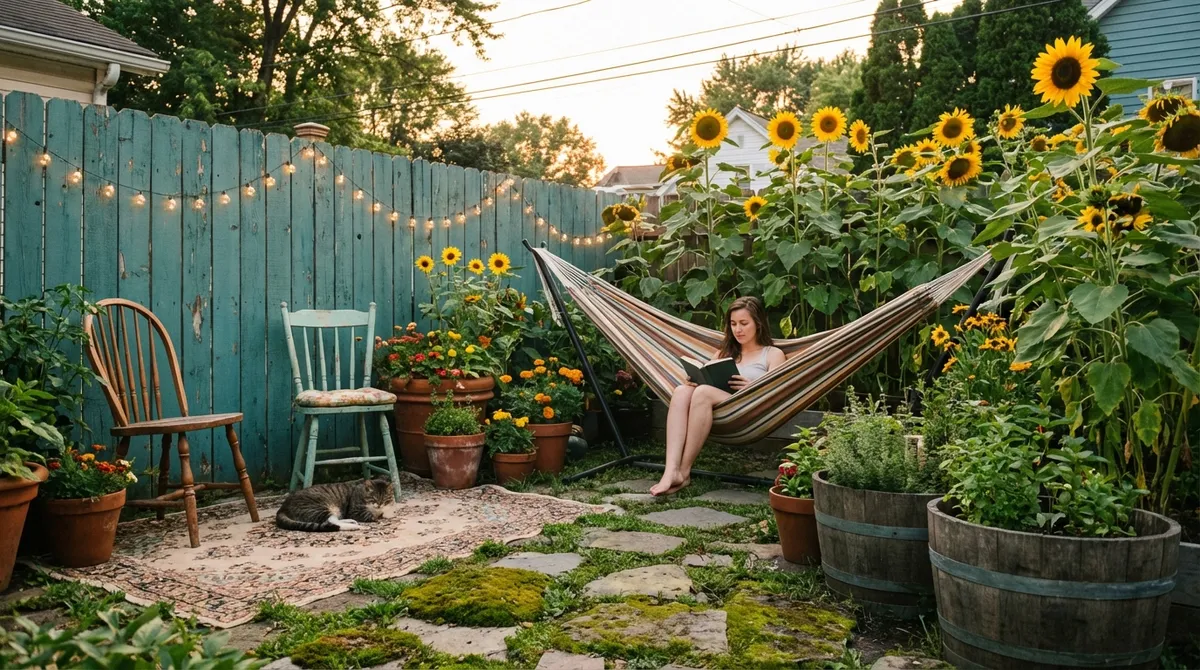
In my experience, the key is committing to one primary function:
- Morning coffee spot
- Solo reading nook
- Chat corner for two
- Kids’ nature play lane
- Tiny outdoor yoga/meditation strip
Once I picked “reading,” every decision got easier. I didn’t need a dining table or a big sofa. I just needed:
- A chair I genuinely wanted to sit in for an hour
- A surface to drop a book and mug
- Enough privacy that I didn’t feel on display for the neighbors
What surprised me: the moment a space has a clear purpose, you automatically use it more. The yard didn’t get bigger. My habits just shifted toward that little intentional corner.
Pro tip from trial and error:Don’t start by buying furniture. Start by standing in the space at different times of day. Where’s the glare? Where’s the breeze? Where does sound from the street feel loudest? I’ve moved a chair three feet and suddenly the spot went from “meh” to “I could live here.” Light and sound matter more than most decor.
Surfaces, Paths, and the Secret Power of Not Having Grass Everywhere
When I first tried making a micro-sanctuary, I stupidly left the patchy lawn as-is and just plopped a chair on it. Mud + wobbly legs + mosquitoes = zero vibe.
Once I ripped out a small section of grass and added a proper surface, everything changed.
For my narrow side yard, I tested three surface options over a few months:
- Gravel
I tried 3/8" crushed gravel first. Great for drainage and pretty cheap, but I learned quickly you need a compacted base and edging. Otherwise, it slowly migrates into garden beds and onto paths. Walking on it in sandals? Not my favorite, but it did give a nice crunch sound that weirdly felt cozy.
- Pavers with groundcover
This was my winner. I laid simple concrete pavers with gaps, then tucked in creeping thyme and Irish moss between them. It took a bit to establish, but now it feels like a mini courtyard. According to landscape designers, this combo is popular because it balances hardscape stability with a softer, cooler feel in summer.
- Mulch
I tested hardwood mulch in a different corner. It was fast and forgiving, but in my climate it broke down and needed topping up yearly. Great for a low-commitment experiment, less great if you hate maintenance.
From what I’ve seen (and what many landscape pros recommend), small defined surfaces with clean edges make a tiny space feel intentional instead of “random chair in the yard.”
I used:
- A simple metal edging strip to keep gravel and groundcover from spilling into beds
- A stepping-stone “mini path” leading to the chair, so walking there felt like “going somewhere” instead of just crossing lawn
One unexpected bonus: a 2020 EPA report on green infrastructure highlights how permeable surfaces (gravel, groundcover between pavers, mulch) can reduce stormwater runoff. I noticed after heavy rain, my micro-sanctuary area wasn’t a muddy disaster like the plain lawn used to be. Function and aesthetics, finally aligned.
Plants That Work Hard in Tiny Spaces (And the Ones That Drove Me Nuts)
I went a little overboard with plants at first. I crammed in tall shrubs, flowering perennials, and a fast-growing vine that, I swear, tried to eat the fence. It looked lush for a hot second… then turned into a trimming nightmare.
After a year of experimenting, here’s what actually worked for a low-stress, high-impact micro-sanctuary:
1. One “anchor” plant, not five.In my reading nook, I chose a single Japanese maple as the star. It gave dappled shade, color change in fall, and a sense of structure. The American Society of Landscape Architects often emphasizes a strong focal point for small spaces—it really does keep things from feeling chaotic.
2. Repeating 2–3 supporting plants.Instead of grabbing “one of everything” from the nursery (my original crime), I picked:
- A dwarf ornamental grass for texture
- A compact flowering perennial (salvia) for pollinators and color
Then I repeated them. Suddenly the area looked designed, not like a plant clearance rack exploded.
3. Scented plants near where your face will actually be.This seems obvious, but I ignored it at first. Now I tuck in:
- Lavender or rosemary at arm’s reach
- A small pot of mint nearby (in a container only—mint is a spreader and will take over if you let it)
That subtle scent when you brush past? Instant mood upgrade.
4. Avoiding the “high maintenance heartbreakers.”Plants I personally regret trying in tiny spaces:
- Super fast-growing vines: Beautiful for one season, aggressive maintenance forever
- Big roses with brutal thorns right next to seating: I still have a scar
- Anything labeled “vigorous” when you only have a six-foot strip to work with
I cross-check plant choices now using local cooperative extension resources and botanical garden guides to be sure they’ll actually behave in my climate and space, not just look good on the tag.
Light, Privacy, and the “I Don’t Want to Feel Watched” Problem
The number one reason I wasn’t using my yard before? I felt like I was on stage for the entire neighborhood. Once I fixed that, my time outside quadrupled.
When I tested different solutions, here’s what felt the most natural and not “fortress-like”:
Layered privacy instead of one big wall.In one corner, I tried a tall, solid screen. It worked… but it also made the space feel cramped and gloomy. When I replaced it with:
- A low fence panel
- A tall, airy grass behind it
- A string of café lights above
I still had privacy, but with light and airflow. The U.S. Department of Energy has guidance on outdoor shading, and it lines up: using plants and partial screens can keep spaces comfortable while avoiding dark, heat-trapping pockets.
Smart lighting for night use.I initially hung bright, cold-white LED string lights that made the yard feel like a parking lot. When I swapped to warm 2700K bulbs on a dimmer and added one low, shielded path light, the space instantly felt like a bistro instead of a big-box store.
One safety note I learned the hard way: cheap, unshielded spotlights can cause glare and make it harder to see. Downward-facing, warm, subtle lighting = way better.
Sound as privacy.I don’t live on a super busy street, but there’s enough noise that reading outside wasn’t exactly peaceful. A small, recirculating fountain about 8 feet from my chair blurred the background noise just enough. Research from environmental psychology backs this up—steady, natural sounds like water can improve perceived tranquility even when there’s traffic noise in the background.
Furniture That Actually Fits (And Doesn’t Rot in Six Months)
I used to think “outdoor furniture is outdoor furniture.” Then I watched a cheap, squishy chair mildew into oblivion in less than a year.
When I tested different setups, here’s what ended up being most durable and comfortable for compact, daily-use spaces:
One really good chair beats a whole cheap set.I eventually splurged (relatively speaking) on one weather-resistant lounge chair with a supportive back and quick-dry cushions. That chair is the reason I now actually finish books. I sit in it almost every day, and it still looks new after two seasons.
Materials that survive actual weather, not just the showroom.After a summer and a winter outside, my winners:
- Powder-coated aluminum frame (light, rust-resistant)
- Solution-dyed acrylic cushions (they resist UV fading and dry quicker after rain)
The losers:
- Cheap untreated wood that split within months
- Thick foam cushions with no ventilation, which stayed damp and smelled weird
I leaned heavily on manufacturer care guides and some independent testing summaries (like those from universities and consumer organizations) to understand what stands up long-term outside.
Multifunction without “transformer furniture” gimmicks.My side table is also:
- A hidden storage spot for a blanket and citronella candle
- A plant stand when I’m not using it
What I learned: look for simple pieces that can do double duty, instead of complicated folding things with weak hinges. In tiny spaces, anything that breaks is ten times more annoying.
My Honest Results: Wins, Fails, and What I’d Do Differently
After a year of tinkering with these micro-sanctuaries, here’s what actually changed in my daily life—and what didn’t.
Big wins:- I now drink my coffee outside at least 4–5 mornings a week. I tracked this for a month out of curiosity. Before, it was maybe once a week on a good stretch.
- I started working outside for short bursts (laptop + side table + shade) and noticed I felt less fried by 4 p.m. There’s some emerging research on nature exposure and stress reduction that lines up with what I felt: more grounded, less jittery.
- Friends actively ask to sit in “that side nook” when they visit. It’s become the unofficial deep-talk zone.
- Maintenance isn’t zero. The gravel area needs raking. The groundcover between pavers wants occasional trimming. If you hate any upkeep, aim for more hardscape and fewer plants right next to seating.
- Bugs will join your micro-sanctuary. I had to learn what actually works in my region (moving standing water, using fans to deter mosquitoes, planting fewer damp, dense plants right by my ankles).
- Not every idea is Instagram-perfect in real life. My first attempt at a hanging plant wall looked amazing for about two weeks, then turned into a crispy, thirsty mess I couldn’t keep up with.
- Spend more time planning light, privacy, and surfaces before buying a single plant.
- Start with one micro-sanctuary instead of three half-finished corners. One completed nook is way more satisfying than a yard full of half-projects.
- Budget realistically: my first nook cost more than I expected (surfacing + one good chair + plants), but the next two were cheaper because I knew what actually mattered and what was “Pinterest pressure.”
Conclusion
I didn’t turn my yard into a luxury resort. I turned a few awkward, almost useless corners into places I actually use—on random Tuesdays, after boring meetings, on quiet Sunday mornings.
The trick wasn’t money or size. It was focus:
- Give the space one clear job
- Make the surface solid and intentional
- Choose a small, smart plant palette
- Layer privacy and soft, warm light
- Invest in one or two pieces you’ll truly use
If you walk outside and think, “This area is kind of nothing,” that’s not a flaw—it’s a blank canvas for your first micro-sanctuary. Start with the spot that annoys you the most, and turn it into the one that pulls you outside without you even thinking about it.
Sources
- American Society of Landscape Architects – Residential Landscape Architecture Trends – Insights into small-space design, outdoor rooms, and focal points in residential landscapes
- U.S. Environmental Protection Agency – Green Infrastructure – Explains how permeable surfaces and plantings help with drainage and stormwater management
- University of Minnesota Extension – Selecting and Using Outdoor Furniture – Practical guidance on weather-resistant materials, maintenance, and durability outdoors
- U.S. Department of Energy – Landscaping for Energy-Efficient Homes – Discusses using plants and shade structures to manage heat, light, and comfort around the home
- National Park Service – The Benefits of Spending Time Outdoors – Overview of mental and physical health benefits associated with regular exposure to nature and outdoor environments