Understanding Septic Tanks
ocal plumber, and a not-so-glamorous backyard excavation later…I became very motivated to understand how these underground systems actually work.
If you live outside a city sewer grid, your septic tank is basically your home’s private wastewater treatment plant. When it’s working, you forget it exists. When it’s not, your whole house reminds you.
Let me walk you through what I’ve learned — the good, the gross, and the genuinely fascinating.
What a Septic Tank Actually Does (Without the Sugarcoating)
In my experience, the easiest way to picture a septic system is like a layered cake you really don’t want to eat.
When you flush a toilet, drain a sink, or run the washing machine, all that wastewater flows into a buried, watertight tank made of concrete, fiberglass, or plastic. Inside the tank, three layers form:
- Scum layer: Fats, oils, and grease float to the top.
- Effluent layer: The relatively clear wastewater in the middle.
- Sludge layer: Heavy solids sink to the bottom.
Anaerobic bacteria inside the tank quietly break down a good portion of the organic material. The clearer middle layer (effluent) then flows out into the drain field (also called a leach field), where it seeps through perforated pipes into gravel and soil. The soil acts as a natural filter, removing pathogens and nutrients before the water returns to the groundwater.
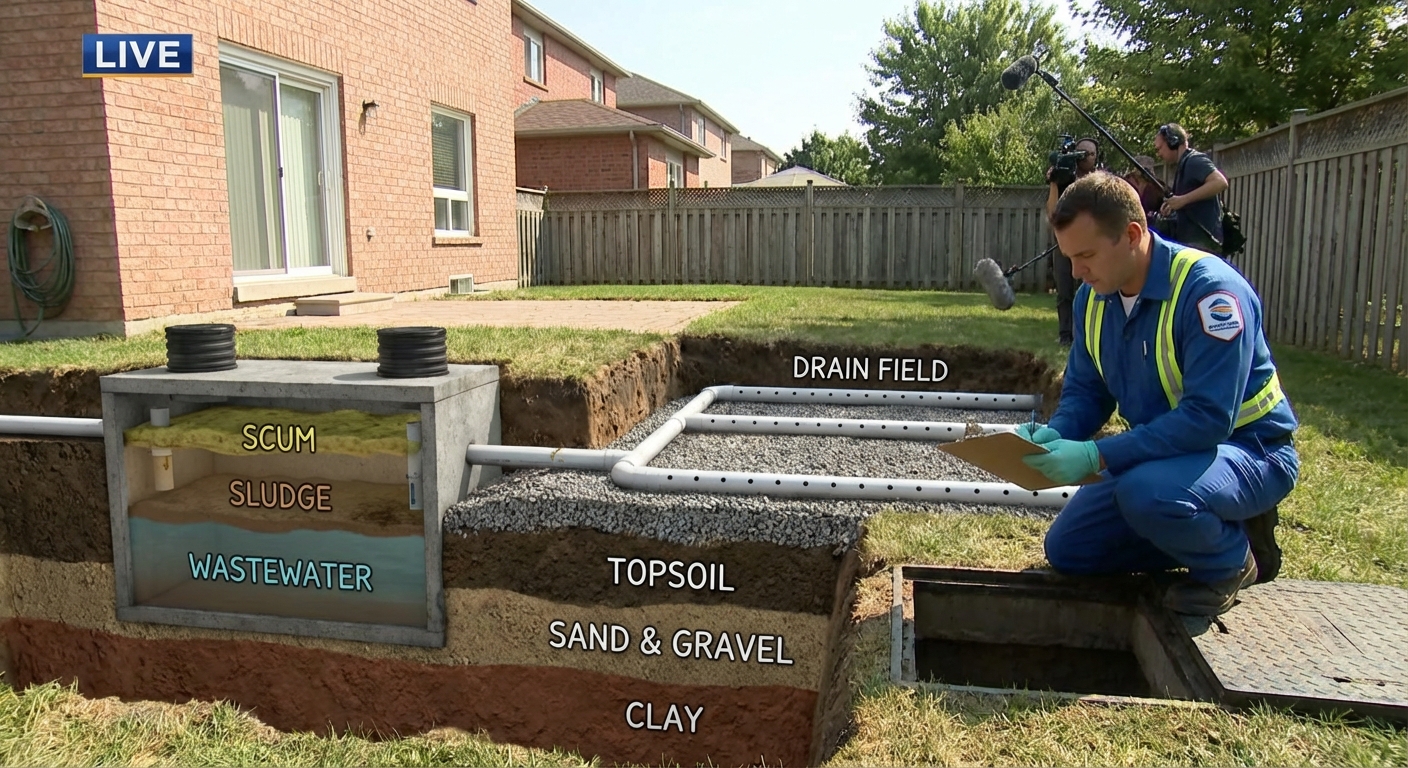
When I first saw a cross‑section diagram of a septic system, it clicked: the tank doesn’t “magically dissolve” everything — it stores solids and filters water over time. That’s why pumping is non‑negotiable.
Key Parts of a Septic System (The Stuff Under Your Lawn)
The plumber who inspected my system walked me through the main components, and honestly it helped a lot:
1. The Septic Tank
Usually 1,000–1,500 gallons for a typical single‑family home. It has:
- Inlet baffle – slows incoming wastewater and directs it downward, so it doesn’t stir up all the layers.
- Outlet baffle or tee – keeps scum and sludge from escaping into the drain field.
- Access risers & lids – modern systems often have risers that bring access points up to ground level. When I tested how long it took to locate mine, it was about 20 minutes of poking with a metal rod — now I keep that spot clearly marked.
2. The Drain Field
A network of perforated pipes buried in gravel trenches. The length and layout depend on:
- Soil type (clay vs sandy vs loam)
- Local regulations
- Household water usage
The first time I walked across my drain field with the installer, he said, “This is the most valuable invisible thing on your property.” I didn’t get it then. After reading a few repair cost estimates… now I do.
3. The Soil
Soil is the unsung hero. Properly structured soil removes bacteria, viruses, and nutrients as effluent percolates down. That’s why percolation tests and site evaluations are a big deal before installing a system.
How Long Septic Tanks Last (and What Kills Them Early)
I asked a local septic pro how long a system should last. His answer: “A well‑designed, well‑maintained system can go 25–40 years. A neglected one? You might get 10.”
From what I’ve seen and read, these are the main lifespan factors:
- Pumping frequency: The U.S. Environmental Protection Agency (EPA) suggests pumping every 3–5 years for most homes. When I checked my tank records, the previous owner had gone almost 9 years without pumping. Not ideal.
- Water use: High water volume flushes solids out faster and overwhelms the drain field.
- What goes down the drain: Wipes, grease, antibacterial soaps, paint, meds — all of these mess with the system.
- Soil and drainage: Poor drainage or a high water table can saturate the drain field and shorten its life.
Pros and Cons of Having a Septic Tank
After living with septic for a while, I’ve noticed some real upsides — and a few annoying realities.
The Upsides
- Independence from municipal sewer: No monthly sewer bill. Once my neighbor compared their city sewer fees to my occasional pumping cost, they were honestly jealous.
- Scalable: Rural properties, cabins, and off‑grid homes can function just fine with septic.
- Environmentally friendly when done right: According to the EPA, properly sited and maintained septic systems effectively treat wastewater and protect groundwater.
The Downsides
- Upfront cost: A new system can range from a few thousand dollars to over $20,000, depending on soil, size, and local codes.
- You’re responsible: There’s no “call the city and let them handle it.” If something fails, it’s on you.
- Space constraints: You need enough suitable land for a drain field, and that area becomes “no‑build, no‑park, no‑pool.”
Real‑World Septic Maintenance: What I Actually Do
When I first moved into a house with septic, I got three conflicting pieces of advice from neighbors:
- “Just flush yeast once a month.”
- “Never use a garbage disposal.”
- “You don’t need to pump if you use additives.”
So I tracked down an actual licensed septic inspector and cross‑checked with EPA guidance. Here’s what’s held up in practice.
1. Regular Pumping
The inspector did a sludge and scum measurement in my tank (there’s a simple tool for this) and recommended pumping every 3–4 years based on my household size and usage. I’ve stuck to that. The pumping itself was… visually intense, but painless logistically and took under an hour.
2. Mindful Water Use
When I tested running the dishwasher, laundry, and showers back‑to‑back, I noticed slow drains. Now I:
- Spread laundry loads over the week
- Install low‑flow showerheads and faucet aerators
- Fix drippy toilets and faucets quickly
It’s not about deprivation, just avoiding huge surges of water.
3. Watch What Goes Down
I’ve had to retrain my habits a bit:
- Only flush human waste and toilet paper. No wipes (even “flushable” ones), no feminine products, no paper towels.
- Wipe grease into the trash instead of rinsing it.
- Skip harsh drain cleaners and heavy antibacterial products that nuke beneficial bacteria.
Interestingly, research from Purdue University and others suggests that routine use of septic “additives” hasn’t shown consistent, proven benefits. After digging into studies and asking a couple of pros, I decided not to rely on them.
4. Protect the Drain Field
I used to think of that part of my yard as wasted space. Now I:
- Don’t park vehicles on it (compaction can crush pipes)
- Keep large trees away to prevent root intrusion
- Avoid building decks, sheds, or patios over it
One landscaper friend told me he’s made a small fortune tearing up fancy patios people unknowingly built over drain fields. I took the hint.
Signs Your Septic Tank Might Be in Trouble
When I had my first minor scare (slow drains + faint odor in the yard), I panicked and assumed total system failure. It turned out to be a partially clogged filter at the tank outlet — a quick fix.
Here are the red flags I now watch for:
- Gurgling in fixtures when you flush or drain water
- Slow drains throughout the house (not just one sink)
- Sewage smells near drains, the tank, or the yard
- Wet, spongy, or bright green grass over the drain field in dry weather
- Sewage backing up into tubs or lowest‑level drains
If I see more than one of these at the same time, I call a pro. Waiting usually just makes it more expensive.
Installing or Buying a Home with a Septic Tank
When I was house‑hunting, I almost skipped over septic inspection to “save time.” I’m extremely glad my agent insisted.
If you’re looking at a property with a septic system, here’s what, in my experience, actually matters:
- Full inspection, not just a quick look: A proper inspection usually includes opening the tank, checking baffles, measuring sludge/scum, and evaluating the drain field.
- System age: A 30‑year‑old system isn’t an automatic deal‑breaker, but I’d budget for eventual replacement.
- Documented pumping history: Gaps of 8–10 years can be a red flag.
- Local regulations: Some areas require upgrades when a property is sold or expanded.
For new installations, soil tests and local codes dictate almost everything — tank size, drain field design, and acceptable locations. I’ve seen neighbors turned down for additions because their lot couldn’t support both a house expansion and the required reserve drain field area.
The Bottom Line: Respect the System, and It Usually Treats You Well
After living with a septic tank for several years now, my take is simple:
- It’s not mysterious — it’s just a biology‑and‑gravity‑powered treatment plant under your yard.
- Small, consistent habits (pumping, water use, what you flush) matter more than fancy additives or hacks.
- When something seems off, calling a licensed professional early is almost always cheaper than waiting.
Honestly, the thing I recently discovered that surprised me most is how low‑maintenance a healthy system can be. Once I understood the basics and adjusted a few habits, I stopped worrying about it — and my shower hasn’t gurgled ominously in years.
If your home runs on a septic system, or you’re thinking about buying one that does, learning how it works isn’t just a nerdy side quest. It’s the difference between quiet, invisible functionality… and a very expensive backyard science experiment.
Sources
- United States Environmental Protection Agency – Septic Systems Overview - Federal guidance on how septic systems work and how to maintain them
- U.S. Environmental Protection Agency – A Homeowner’s Guide to Septic Systems (PDF) - Detailed homeowner handbook on care and maintenance
- Purdue University Extension – Maintaining Your Septic System - Research-based tips on operation and the role of additives
- Centers for Disease Control and Prevention – Septic Systems - Health and safety considerations related to septic systems
- Cornell University – Septic System Maintenance - Educational overview of design, maintenance, and common problems