Bass Pro Clearance Shopping Guide
with a cart full of heavily discounted gear and a slightly concerned bank account.
Since then, I’ve basically turned clearance hunting at Bass Pro into a mini hobby. I’ve tested how their markdowns work, compared in‑store vs online, and even chatted with employees about how things really get priced.
This is the Bass Pro clearance shopping guide I wish I’d had when I started.
How Bass Pro Clearance Actually Works
When I first started poking around, I assumed “clearance” just meant random red tags slapped on stuff nobody wants. It’s a bit more structured than that.
The basic clearance lifecycle
From my experience — and from what a fishing department associate quietly explained while restocking crankbaits — Bass Pro tends to follow a rough cycle:
- Regular price – New gear hits the shelves at full MSRP.
- Sale price – Promotional sales, usually in flyers, seasonal events, or tied to manufacturer promos (think Shimano rebate periods or fall hunting promotions).
- Markdown – Items that aren’t moving get their first markdown, often 10–30% off.
- True clearance – Last units, discontinued colors, or outdated packaging get pushed to clearance, often 40–60% off or more.
It’s not an official public policy page, but this pattern lined up with what I saw after tracking a few specific items over several months.
Where clearance hides (online vs in‑store)
When I tested this across multiple store visits and online searches, I noticed:
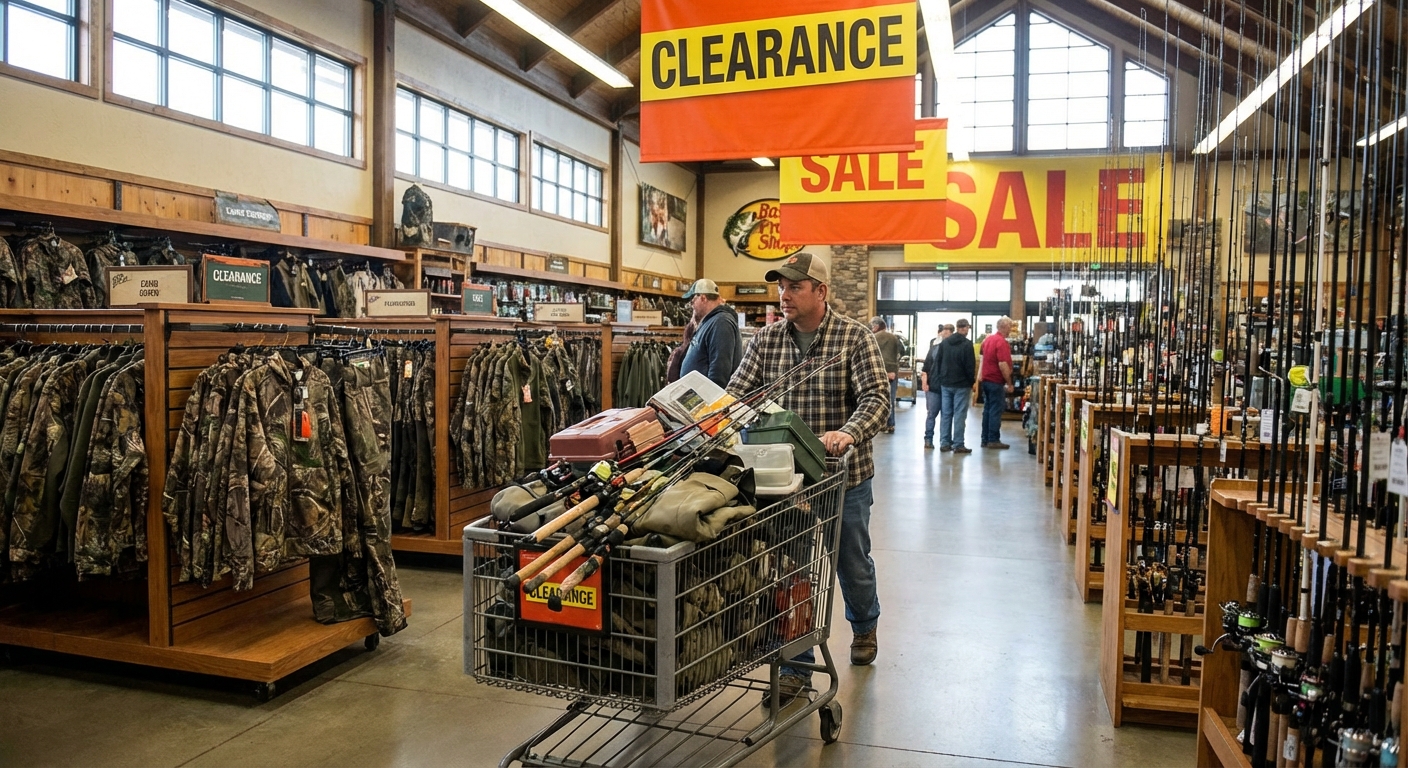
- In‑store clearance: Usually on end caps, back corners of departments, or dedicated clearance aisles. At my local store, soft plastics and terminal tackle clearance are mixed in with regular stock, so you need to scan for yellow or red tags.
- Online clearance: Bass Pro’s website has its own Clearance section, but it doesn’t include everything that’s marked down in stores. I’ve found in‑store prices cheaper than online on at least three different spinning reels.
My general rule now: check both before you buy anything over about $50.
Timing: When the Best Deals Drop
I used to think clearance deals were totally random. After a year of paying attention, there’s definitely a pattern.
Seasonal sweet spots
In my experience, the best clearance windows at Bass Pro land around:
- Post-summer (late August–October) – Fishing gear, kayaks, warm‑weather apparel
- Post-holiday (January–February) – Electronics, giftable items, some higher-end reels
- Right after big sales events – When their circular or online events end, anything that didn’t move fast enough can slide toward markdown territory.
I stumbled onto my personal best find — a Bass Pro–branded baitcasting combo originally tagged around $160, down to about $70 — in mid‑September, right as they were swapping from summer to fall inventory.
Watch for model-year changes
Just like with electronics and cars, new model years push old models into clearance. When a brand like Lowrance, Garmin, or Humminbird releases a fresh line of fish finders, the previous generation quietly starts to dip in price.
I’ve seen last‑year’s sonar units 30–40% off even though performance‑wise they were more than enough for weekend anglers.
What’s Actually Worth Buying on Clearance
Not all clearance is gold. Sometimes it’s just… weird camo patterns and neon shirts no one asked for. Here’s where I’ve consistently found real value.
1. Reels & combos
When I tested this category over several trips, clearance reels and combos gave me the highest dollar savings per item.
What I look for:- Mid-tier brands (Bass Pro Trophy series, Abu Garcia, Daiwa, Lew’s) rather than bottom-of-the-barrel unknowns
- Smooth drag systems (I’ll literally stand there and spin the handle)
- Clearance because of cosmetic changes, not mechanical issues
I avoid anything with “AS IS” scribbled or taped on it unless I can test it thoroughly.
2. Technical apparel
I used to ignore clothing clearance, then I scored a Gore‑Tex rain jacket for about 55% off and changed my attitude real fast.
In my experience, you’ll find strong deals on:
- Rain gear and windbreakers
- Base layers and thermal wear
- UV-protective shirts and neck gaiters (especially at the end of summer)
Just double-check zippers, seams, and labels. I’ve seen small defects like missing drawcords on the deepest markdowns.
3. Baits, terminal tackle & odds and ends
This is where clearance can feel like a treasure hunt.
I’ve gotten:
- Premium crankbaits for half price because the color was getting discontinued
- Bulk packs of hooks and weights when they changed packaging design
- Line at 30–40% off when newer “version 2.0” spools came in
The risk here is buying too much just because it looks cheap. I learned that lesson staring at four unopened packs of a frog color I never actually throw.
How to Spot a True Deal (Not Just a Red Tag)
When I started tracking prices more closely, I realized something: not every clearance tag is a steal.
Compare against real market prices
I’ll often stand in the aisle, pull out my phone, and check:
- Bass Pro online price
- Manufacturer’s website price
- Amazon or other retailers for the same model
More than once, I’ve seen “clearance” at 10% off when other retailers had 20–25% off the same item.
Check for older tech limitations
Especially with electronics, clearance usually means it’s a generation or two behind. That’s not always bad, but I ask myself:
- Does it lack a feature I know I’ll want in a year? (Side imaging, better GPS, mapping options)
- Is the software still supported by the manufacturer?
The Federal Trade Commission has warned that unclear or misleading sale pricing is a thing across retail, so I try to treat percentages and stickers as marketing, not gospel. I care about final price vs performance, not how dramatic the tag looks.
Pros and Cons of Bass Pro Clearance Hunting
After a lot of trips, a few mistakes, and some epic wins, here’s the honest breakdown.
The upside
- Deep discounts on quality gear – I’ve saved 40–60% on items I would’ve bought anyway.
- Access to discontinued gems – Some baits and colors that disappear from regular shelves briefly live on in clearance.
- Stackable savings – Occasionally, manufacturer rebates or club points can stack with already reduced clearance prices.
The downside
- Limited sizes and models – If you’re a common shoe size or want a popular reel ratio, the clearance rack may not love you.
- No do‑overs – When it’s gone, it’s gone. I’ve hesitated on a deal and never seen it again.
- Risk of overbuying – I’ve 100% bought lures and apparel I didn’t really need just because the price felt too good.
I’ve had a couple of returns on clearance items (mainly apparel that didn’t fit quite right). Policies can vary by location and item type, so I always check the small print on the receipt or ask at the service desk.
My Go‑To Strategy for Bass Pro Clearance Trips
When I’m doing a serious clearance run, here’s the routine that’s given me the best results.
- Start online – I browse the clearance section and note brands, models, and price ranges. It gives me a baseline.
- Head to the back of departments first – Clearance often hides away from main traffic lanes.
- Scan for name brands in odd places – I’ve found high-end baits mixed into cheaper bins more than once.
- Check for physical defects – Bent rod guides, warped reel spools, fraying seams. I don’t gamble on structural issues.
- Do a 5‑minute price sanity check on big items – If it’s over $75, I quickly compare prices on my phone.
- Sleep on mega purchases – If a pricey item isn’t likely to vanish overnight, I give myself a day. The deals that still feel smart 24 hours later are the ones I keep.
When You Should Skip the Clearance Rack
As much as I love scoring deals, there are times I walk right past.
From my experience, I skip clearance when:
- I’m buying core safety gear (PFDs, certain electronics tied to navigation). For those, I want latest tech and full support.
- The discount is under 15% and the item still feels overpriced vs competitors.
- The product is clearly an oddball model with poor reviews or known flaws.
The goal isn’t to collect random cheap stuff — it’s to upgrade your setup for less.
Final Thoughts: Turning Clearance into a Long‑Term Win
After a lot of trial and error, Bass Pro clearance has become less of a gamble and more of a strategy for me.
When I use it to:
- Grab last‑year’s tech that’s still perfectly capable,
- Stock up on proven baits and tackle I already trust,
- And upgrade apparel without paying full premium brand prices,
…it genuinely stretches my gear budget in a way that’s hard to match elsewhere.
When I use it to:
- Experiment with random lures I’ll never throw,
- Buy a fourth rain jacket because “but it’s 60% off,”
- Or chase red tags just for the thrill,
…it backfires.
If you approach Bass Pro clearance with a plan, a bit of patience, and a willingness to walk away when the numbers don’t line up, it can absolutely be one of the most powerful tools in your shopping arsenal.
And if you walk out with a screaming deal on a reel you’ve been eyeing for months? That feeling… yeah, it never gets old.
Sources
- Bass Pro Shops – Official Clearance Section - Official Bass Pro online clearance listings and categories
- Federal Trade Commission – Shopping and Saving - Guidance on evaluating discounts, sales, and pricing claims
- National Marine Manufacturers Association – 2023 U.S. Recreational Boating Statistical Abstract - Industry data on boating and marine product trends
- Outdoor Industry Association – Outdoor Participation Trends Report - Research on participation and gear purchasing trends in outdoor recreation
- REI Co-op – Expert Advice on How to Buy Fishing Gear - General expert tips on evaluating fishing gear quality and value