Bass Pro Shops Guide
p—and three hours later I walked out with a cart full of stuff, a venison jerky sample in my hand, and way too many opinions about camp stoves.
This Bass Pro Shops Guide is everything I wish I’d known before that first deep dive: how to shop smart, what’s worth the money, what’s pure impulse bait, and how to avoid getting totally overwhelmed.
Why Bass Pro Shops Is Wildly Addictive
The first time I walked into a Bass Pro, I felt like I’d wandered into an outdoor theme park. There was a 30-foot mountain with waterfalls, a taxidermy elk that stared into my soul, and a fishing boat hanging from the ceiling like a piece of art.
Bass Pro Shops isn’t just a store—it’s a carefully engineered environment designed to make outdoorsy people (and wannabe outdoorsy people, like I was at first) want to touch everything.
A few quick context points:
- Founded by Johnny Morris in 1972 in Springfield, Missouri
- Acquired Cabela’s in 2017 for about $5 billion
- Over 200 locations across North America, many with built-in attractions: bowling alleys, archery ranges, restaurants, even an indoor swamp at some flagship stores
I’d read in a 2017 New York Times piece that the brand leans heavily into “retail as entertainment,” and when I tested this on my first visit, I got it immediately—the store layout is basically a funnel that guides you past all the big-ticket categories while you’re distracted by fish tanks and dioramas.
How to Navigate the Store Without Getting Lost (or Broke)
1. Start With a Mission, Not a Mood
In my experience, walking into Bass Pro “just to look around” is how you end up rationalizing a $400 fish finder when you don’t even own a boat.
Before I go now, I literally write down:
- What I actually need (e.g., breathable waders, 20-degree sleeping bag, jig heads)
- What I’d like to price-check (e.g., ultralight rods, trail boots)
- My hard budget
When I tested this approach on a recent camping stock-up, I saved about 30% compared to my previous “wander and grab” trip, simply because I wasn’t impulse-grabbing every shiny lure wall.
2. Understand the Store Zones
Most locations are loosely divided into:
- Fishing: rods, reels, tackle, electronics
- Hunting & Shooting: firearms, bows, optics, camo
- Camping & Hiking: tents, packs, stoves, sleeping systems
- Boating & Marine: kayaks, jon boats, PFDs, trolling motors
- Apparel & Footwear: outdoor clothing, waders, boots
My trick: I walk the perimeter first, then only dive into aisles that match my original list. The hunting optics aisle alone nearly derailed me once—there’s something about a wall of scopes that makes you forget you just came for socks.
What Bass Pro Shops Actually Does Well
Fishing Gear: Their True Home Turf
When I tested a full Bass Pro–built setup (CarbonLite rod + Pro Qualifier reel + house-brand fluorocarbon line), I was honestly surprised at how close the performance was to my more expensive Shimano combo.
Where they shine:
- House brands like Bass Pro Shops, Johnny Morris Signature, and XPS often deliver strong value for intermediate anglers.
- Breadth of tackle: from finesse drop-shot rigs to striper swimbaits, it’s all in one place.
- Staff expertise: I’ve had floor staff ask, “Are you fishing clear water or stained?” and adjust their lure color recommendations accordingly—that’s a good sign.
But there’s a catch (pun intended): big-name brands (Shimano, Daiwa, St. Croix, etc.) are rarely the absolute cheapest there. I’ve seen the same reel $10–$20 cheaper at niche online shops. So I use Bass Pro to handle, flex, and compare gear in person, then price-check on my phone.
Camping & Hiking: Great for Starters, Mixed for Gear Snobs
For my first legit backpacking trip, I grabbed:
- A Bass Pro–branded 30-degree synthetic sleeping bag
- A basic two-burner camp stove
- A mid-price Ozark Trail tent (yes, the Walmart brand that sometimes appears in Bass Pro’s clearance mix)
Verdict after testing in the field:
- The sleeping bag: heavier than premium bags, but totally adequate for car camping and mild nights. I’d buy it again on a budget.
- The camp stove: absolutely solid—lit consistently, decent simmer control.
- The tent: fine for forgiving weather, but I wouldn’t trust it in a serious backcountry storm.
If you’re getting started, Bass Pro is almost perfect. If you’re chasing ultralight pack weights and technical fabrics, you’ll eventually outgrow some of their mid-range offerings and end up eyeing specialty brands and cottage manufacturers.
Apparel: Surprisingly Good… With Traps
When I tested their RedHead and Ascend apparel lines over a couple of seasons:
- The flannels and base layers held up better than I expected for the price.
- The hunting camo (especially for whitetail in wooded environments) blends incredibly well.
But here’s the trap: a lot of the graphic tees and casual wear are pure lifestyle upsell. Fun? Sure. Necessary? Absolutely not. That $25 “Weekend Hooker” fishing shirt is how you blow your budget.
Pros and Cons of Shopping at Bass Pro Shops
The Upsides
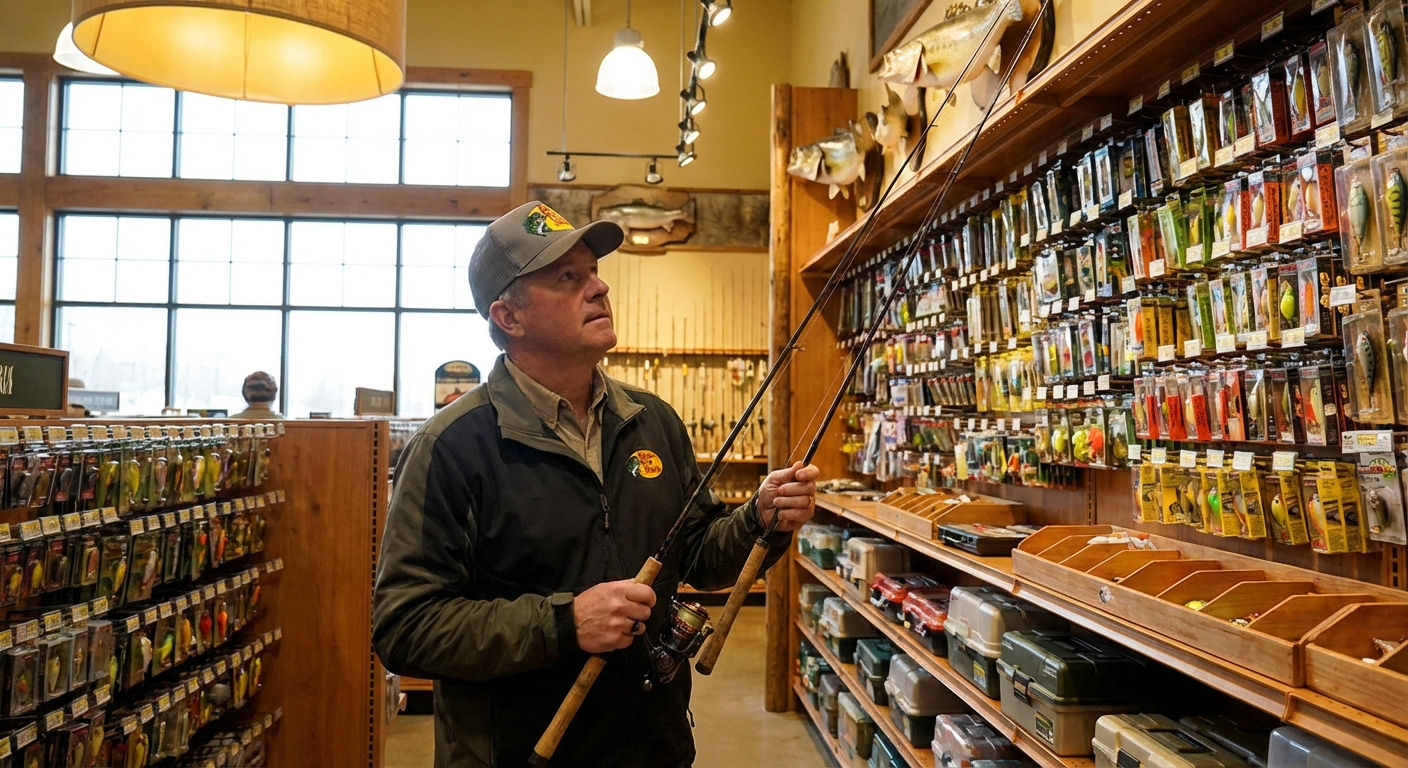
1. Hands-on testingI can pick up six different medium-light spinning rods, feel their balance, check reel seat comfort, and compare tip action in 10 minutes. That’s tough to replace with online shopping.
2. One-stop outfittingFor a family camping weekend, I literally did:
- Tents
- Chairs
- Lanterns
- Kid-sized life jackets
- S’mores sticks
…all in one run. That convenience has real value when you’re short on time.
3. Events and communityI’ve seen kids’ fishing derbies, archery demos, and even wild game cooking seminars. There’s a reason the brand regularly ends up in retail case studies about “experience-based shopping.”
The Downsides
1. Price isn’t always bestBass Pro runs promotions, but baseline pricing on big-brand gear is often just “standard MSRP.” When I compared a Garmin Striker fish finder across retailers, I found it $40 cheaper elsewhere.
2. Overwhelm is realThe sheer volume of choice can paralyze beginners. I’ve watched new anglers stare blankly at a 40-foot wall of soft plastics like they’re decoding a foreign language.
3. Not every house-brand item is a gemSome budget lines are clearly designed to hit a price point, not a performance threshold. I once destroyed a bargain-basement camp chair in two trips—one leg literally punched through the fabric.
How to Shop Smart at Bass Pro (So You Don’t Regret It Later)
1. Research Before You Go
When I’m serious about a purchase, I:
- Read reviews on multiple sites (Bass Pro, manufacturer website, Reddit, specialty forums)
- Cross-check specs (drag ratings, gear ratios, tent hydrostatic head ratings, etc.)
I lean heavily on independent sources like backpacking forums or fishing communities; they’re usually more blunt than store reviews.
2. Use Bass Pro for Fit & Feel, Online for Price Checking
My system now:
- Test fit and comfort in-store (boots, waders, packs)
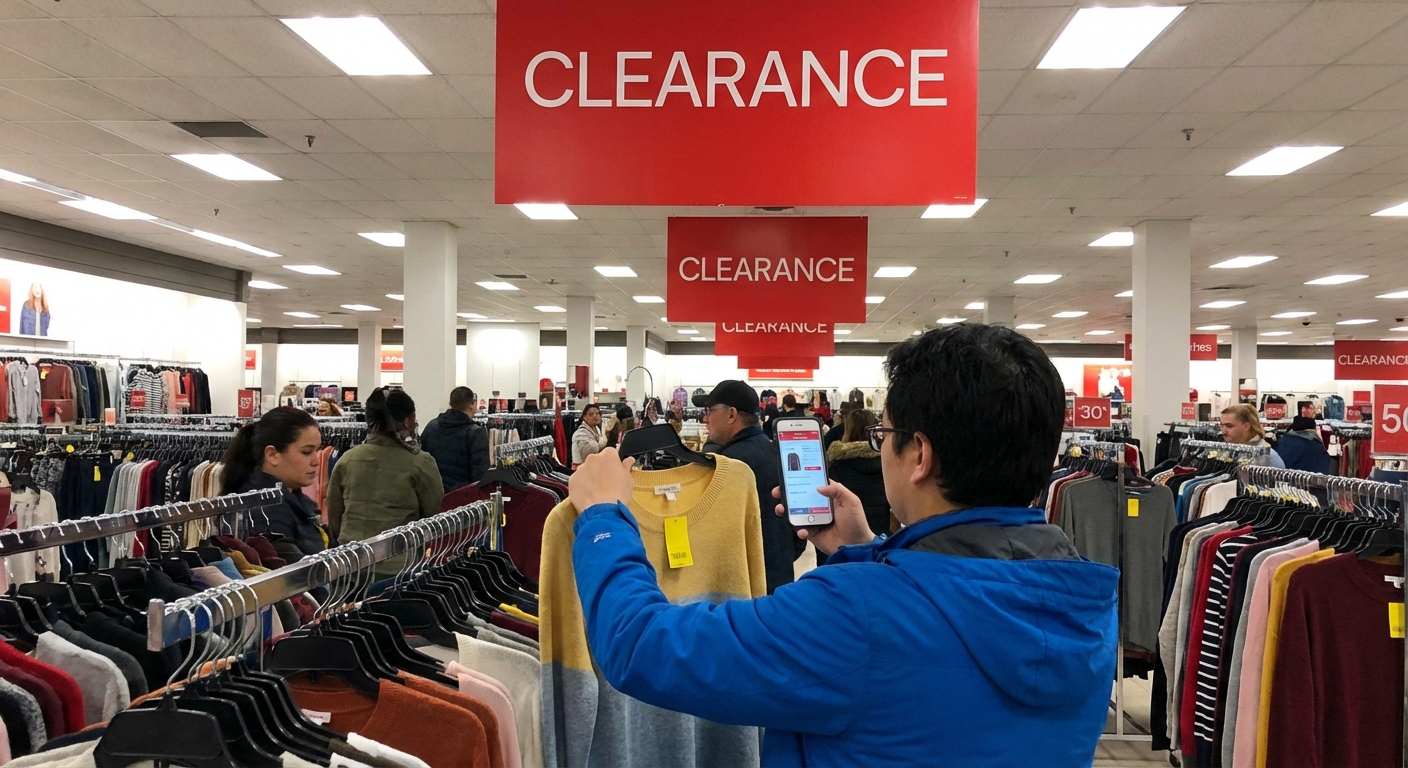
- Snap a pic of the product tag
- Price-check on my phone for a few minutes before buying
About half the time, Bass Pro’s price is fine. The other half, I either ask about price matching (some locations do, some don’t) or I order elsewhere later.
3. Don’t Rush the Big Purchases
Anything over $200—kayaks, rifles, premium optics, high-end reels—I treat as a multi-visit decision. I want:
- One visit to handle gear, ask questions
- One night to think, research, and cool off
When I followed this on a $900 kayak decision, I ended up choosing a slightly different model than I first fell in love with—and I’ve been grateful every paddle since.
Who Bass Pro Shops Is Perfect For (and Who Might Need More)
Great for:- New anglers and campers who want to touch everything before buying
- Families gearing up for occasional trips
- Intermediate outdoorsy people who value convenience and solid mid-range gear
- Ultralight backpackers obsessed with grams and cutting toothbrush handles
- Gear nerds chasing niche, high-end brands Bass Pro doesn’t carry
- People who hate crowds, sensory overload, or taxidermy staring contests
In my experience, the best way to use Bass Pro Shops is as a hybrid:
- Your outdoor playground and test lab
- Your starter kit provider
- And occasionally your one-stop emergency outfitter when you forgot literally everything for a last-minute trip
If you walk in with a plan, a budget, and a half-decent idea of what you actually need, Bass Pro Shops can be an insanely fun and surprisingly efficient place to gear up.
And if you walk in “just to browse”? Well… don’t say I didn’t warn you when you come out with a new tackle bag, three hats, and a smoker.
Sources
- Bass Pro Shops – Official Company History - Background on the founding, growth, and philosophy of Bass Pro Shops.
- “Bass Pro Shops to Buy Cabela’s in $5.5 Billion Deal” – The New York Times - Coverage of the 2017 acquisition and business strategy.
- “The Mall of the Wild: Inside Bass Pro Shops” – Forbes - Analysis of Bass Pro’s “retail as entertainment” model.
- Recreation Statistics – U.S. Fish & Wildlife Service - Data on U.S. fishing and outdoor recreation participation.
- Outdoor Retail Consumer Trends – Outdoor Industry Association - Research on outdoor gear buying habits and retail experiences.