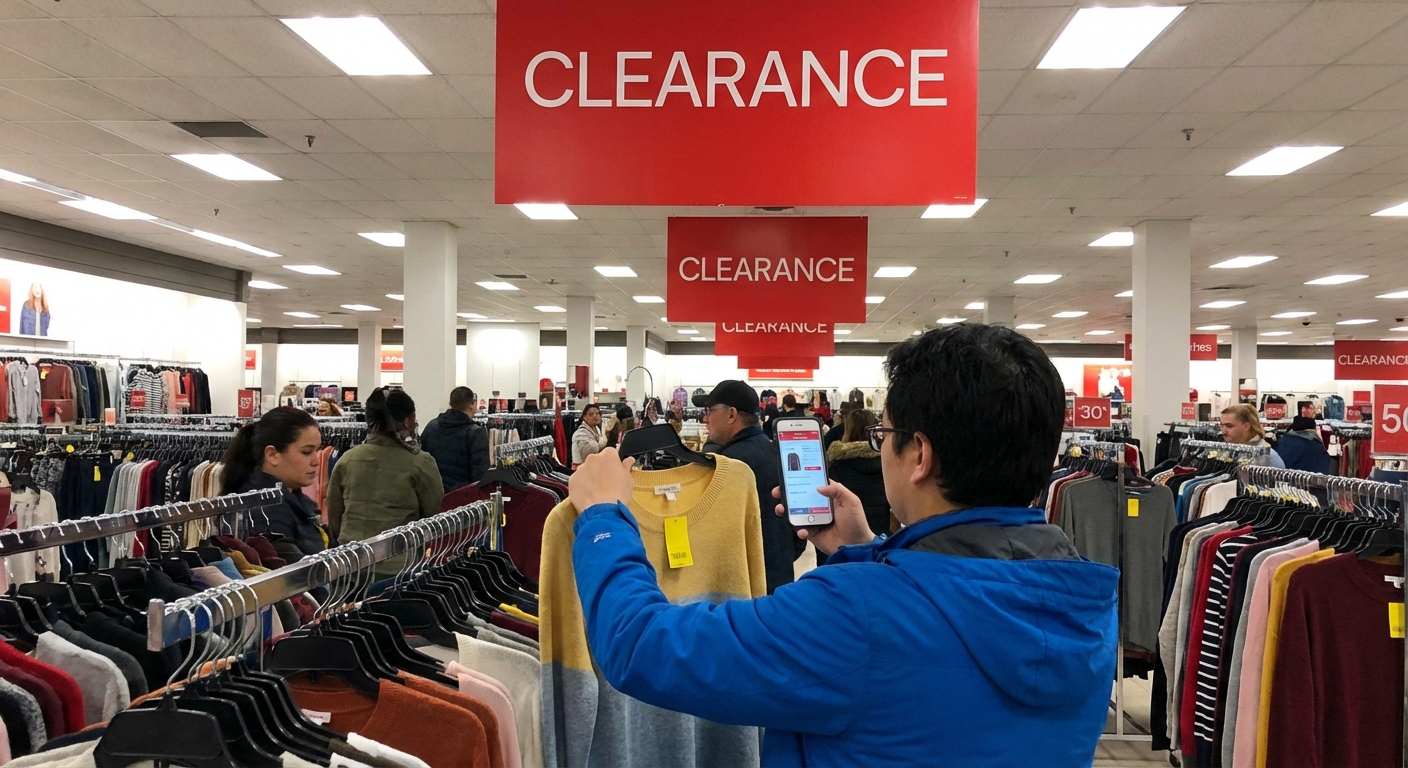
Bath and Body Works Product Guide
with a 3‑wick candle, a shower gel, two fine fragrance mists, and a quiet sense of financial regret.
Over the last few years, I’ve tested a frankly embarrassing amount of their stuff—across multiple semi-annual sales, seasonal drops, and way too many free‑shipping codes. This guide is the breakdown I wish I’d had before I started impulse‑buying every limited edition scent.
How Bath & Body Works Structures Its Products (and Prices)
When I finally stopped shopping like a gremlin and started tracking what I actually used, I realized Bath & Body Works basically works in families of products built around fragrance collections:
- Cleansing: shower gel, moisturizing body wash, bar soap
- Moisturizing: body lotion, body cream, body oil/butter (limited), hand cream
- Fragrance layering: fine fragrance mist, eau de parfum (EDP in select lines)
- Home fragrance: 3‑wick candles, single-wicks, Wallflowers, room sprays, car fragrances
In my experience, their pricing psychology is simple:
- Base prices are high-ish (e.g., $17.95+ for body cream, $26.95+ for 3‑wick candles)
- Promo pricing (Buy 3, Get 3; $13.95 candles; $5.95 mist events) is the real price
- Semi-Annual Sale (SAS) in June/July and December/January is where the heavy discounts live (50–75% off selected items)
Unless I desperately need a specific seasonal scent, I basically never buy at full price anymore. When I tracked my own purchases over one year, my average cost per product during sales was ~45–55% off list price.
Understanding Their Fragrance Types (So You Stop Guessing)
When I tested Bath & Body Works scents more systematically (yes, I actually wore one per day and took notes like a nerd), I noticed four broad categories:
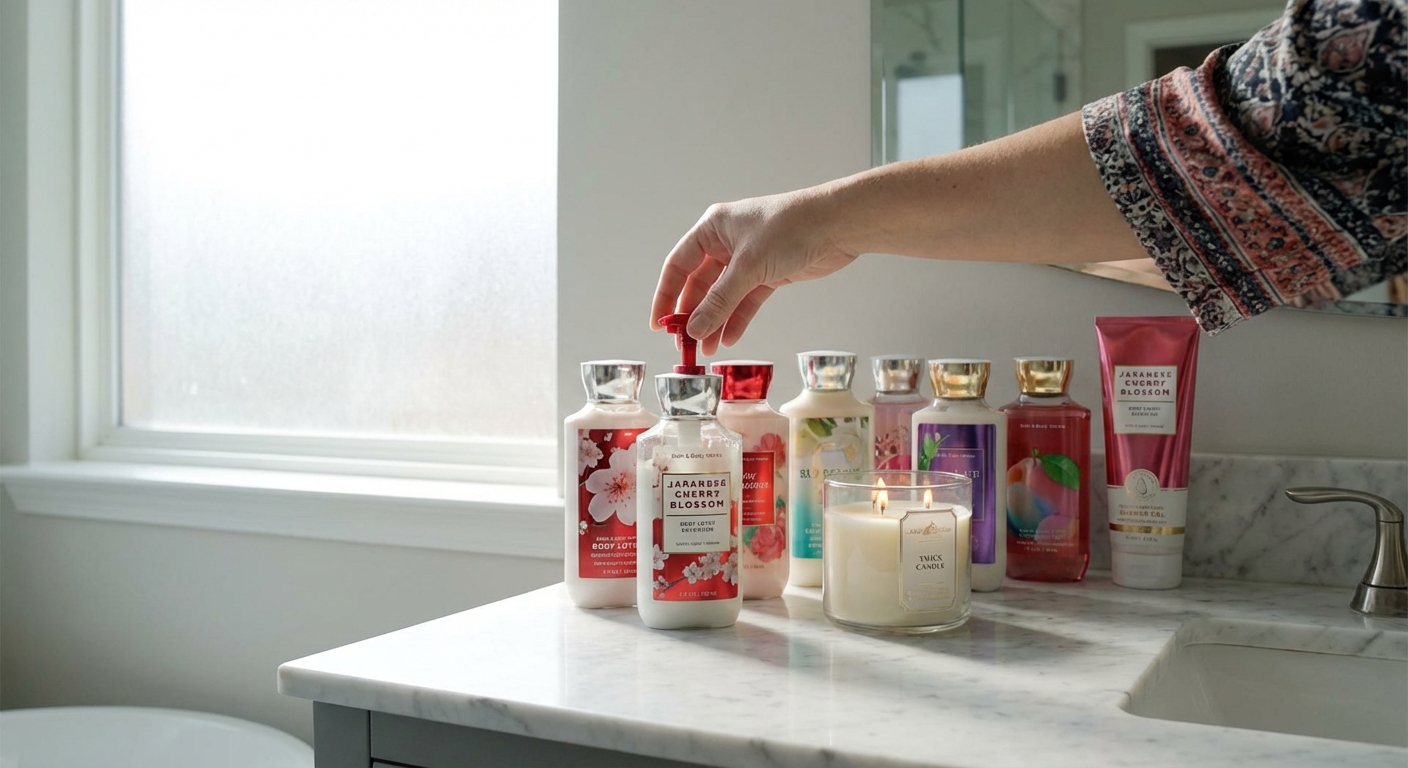
- Gourmand & Sweet – think Vanilla Bean Noel, Warm Vanilla Sugar, Strawberry Pound Cake
- Fresh & Clean – Gingham, A Thousand Wishes (borderline fruity-floral), Sea Island Shore
- Floral & Romantic – Into the Night, Moonlight Path, Japanese Cherry Blossom
- Woody & Deeper – In the Stars, Dark Kiss, newer “aroma” and “cologne” leaning lines
Projection and Longevity: What Really Lasts
A lot of people assume “body mist = gone in 20 minutes,” but some of these hold their own surprisingly well. On my skin:
- Fine fragrance mists last ~2–4 hours for lighter scents, 4–6 for deeper gourmands and woody scents (I get the best longevity from Into the Night, In the Stars, Dark Kiss)
- Eau de parfum lasts 6–8+ hours and projects more, especially on clothes
- Body creams + mist layering noticeably extends wear; I can push some scents to 8 hours doing this
A 2017 review of fragrance exposure in cosmetics from the National Library of Medicine (NLM) notes that fragrance concentration and application area are key to perceived intensity and longevity—exactly what you feel when you layer cream + mist + perfume.
Body Care: What’s Worth It (and What I Skip)
Shower Gels vs Moisturizing Body Wash
Shower gel:- Clear, more traditional surfactants (foaming agents)
- Scent tends to be brighter in the shower but doesn’t cling as heavy
- In my experience: cleans well but can be a bit drying in winter if you have very dry skin
- Creamier texture, more emollients (oils, butters)
- Slightly less sudsy, but skin feels softer afterwards
- I reach for this after I’ve absolutely roasted my skin with too‑hot showers
Dermatologists, including those at the American Academy of Dermatology, generally recommend gentle, non‑stripping cleansers for dry or sensitive skin. Bath & Body Works formulas aren’t “dermatologist‑grade gentle,” but I’ve found the moisturizing body wash noticeably more forgiving than the classic gel.
What I buy: Moisturizing body wash in winter, shower gels in summer or purely for scent variety.Body Lotion vs Body Cream
When I tested these side-by-side for a week, only applying lotion on one leg and cream on the other (yes, I do weird things for data), the difference was clear:
- Body lotion: lighter, absorbs faster, fine for normal/oily skin or hot weather
- Body cream: thicker, more occlusive, better for dry patches and winter
On me, the scent from body cream clings longer—probably because of the richer base and oils locking in the fragrance.
Downside: Many body creams come in squeeze tubes, which are terrible for those last 5–10% of product. I’ve had to cut tubes open more times than I care to admit. My rule:- Hot/humid climate or summer – lotion
- Dry climate or winter – cream
- Super sensitive skin – I honestly prefer fragrance‑free options from brands like CeraVe or Vanicream, then layer a small amount of Bath & Body Works on top where I want scent.
Hand Soaps: The Gateway Drug
When I started “just buying soaps,” I didn’t realize how fast a household can blow through them. Their foaming hand soaps:
- Feel fun and luxe for guests
- Rinse easily
- Smell strong but don’t linger as a full perfume cloud
Downside: Multiple dermatologists (including Mayo Clinic sources) warn about frequent handwashing + fragrance being irritating for eczema-prone or sensitive skin. I’ve personally had no major issues, but during one dry winter I had to switch to unscented soap in my office and keep the Bath & Body Works ones at the kitchen sink only.
Fine Fragrance Mists vs Perfumes: Which Should You Buy?
When I tested mist vs EDP in the same scent family, I noticed:
- Fine Fragrance Mist
- Cheaper, more product, lighter concentration
- Great for over‑spraying on clothes and hair
- Fabulous for layering with other scents
- Eau de Parfum (EDP)
- Higher fragrance concentration
- More structured scent development (top/mid/base)
- Better for long wear days or nights out
Industry-wise, EDP usually has a fragrance concentration around 15–20%, while mists are closer to 2–5%. That’s in line with what the Fragrance Foundation and perfumery education sources explain about formulation.
My current routine for big days:- Matching shower gel or moisturizing wash
- Matching body cream on damp skin
- Fine fragrance mist generously on body and clothes
- 1–2 sprays of EDP on pulse points only
Is it extra? Absolutely. Does it last 8+ hours? Also yes.
Home Fragrance: Candles, Wallflowers, and the Scented Overload Problem
3-Wick Candles
I recently burned three different 3‑wicks in one week just to compare:
- Average burn time: ~25–45 hours depending on how long each session was (Bath & Body Works claims up to 45 hours)
- Scent throw: strong in small to medium rooms, sometimes overpowering in tiny bathrooms
- Stunning seasonal packaging (these legitimately double as decor)
- Strong scent throw for the price
- Soot if you don’t trim wicks to ~1/4 inch (I use cheap nail scissors)
- Some gourmand scents can get headachy if left burning too long in closed rooms
According to the National Candle Association, any candle (regardless of brand) should be burned for 3–4 hours at a time max, and wicks should be trimmed regularly to reduce soot. Following that actually made my Bath & Body Works candles behave better.
Wallflowers & Room Sprays
When I tested Wallflowers, here’s what I noticed:
- Scent strength starts strong for 3–5 days
- Then settles into a background scent for 2–3 weeks
- Certain heavy or bakery scents feel cloying in small rooms
Room sprays, on the other hand, are “one‑and‑done”: intense blast, then fade over 30–60 minutes. I use them before guests arrive or after cooking something particularly… aromatic.
If you get scent fatigue or headaches easily:- Skip Wallflowers in bedrooms
- Use lighter, fresh scents (linen, citrus) instead of heavy gourmands
How to Shop Smart (So You Don’t Go Broke Like I Did)
1. Know the Real Sale Cycles
In my experience, the best times to buy are:
- Semi-Annual Sale (SAS) – June/July and December/January
- Candle Day – typically early December (3‑wicks heavily discounted)
- Body Care Day – usually once or twice a year
I watch for these, stack coupons when possible, and ignore random “Buy 3, Get 1” deals that look good but aren’t actually the lowest price.
2. Test Before You Hoard
I once bought three full-size products in a scent I “loved” on cold sniff, only to realize it turned weirdly powdery on my skin.
Now I:
- Start with one product in a new scent (usually a mist or travel size)
- Wear it for a full day
- Only buy full body care sets if I still like it after a week
3. Watch Ingredient Sensitivities
Research from the U.S. CDC and FDA acknowledges that fragrance is one of the most common cosmetic irritants. If you:
- Have eczema, psoriasis, or very sensitive skin
- Get headaches from strong scents
Try:
- Using scented products on clothes rather than directly on skin
- Keeping fragrance to pulse points only
- Rotating fragrance‑free moisturizers with Bath & Body Works for enjoyment, not 24/7 wear
I personally can’t use their body creams on freshly shaved legs with certain stronger fragrances—learned that the stingy way.
Quick Pros & Cons Roundup
What Bath & Body Works does really well:- Huge, fun variety of scents and seasonal collections
- Strong scent payoff for the price (especially mists and candles)
- Frequent promotions and sales
- Easy “giftable” packaging
- Heavy use of fragrance and colorants (not ideal for very sensitive skin)
- Can be pricey at full retail
- Some scents are inconsistent year-to-year when reformulated
- Over-scenting your space or body is very easy if you go wild
Final Thoughts from Someone Who’s Bought Way Too Much
After years of testing,
- I always shop during major promos or SAS
- I stick to body creams + fine fragrance mists for best scent + moisture combo
- I buy 1–2 candles per season, not 8, or they’ll just sit in a cabinet
- I treat Bath & Body Works as my fun, scented wardrobe, not my everyday sensitive-skin care
Used thoughtfully, Bath & Body Works products are a blast: they make showers feel like mini spa moments and turn your apartment into whatever vibe you’re craving—cozy bakery, beach vacation, hotel lobby, you name it.
Used recklessly, they also absolutely will fill your closet, drain your wallet, and maybe annoy your sinuses.
I’ve lived through both phases. The curated, strategic version is way better.
Sources
- Bath & Body Works Official Website - Product listings, ingredient info, and pricing
- American Academy of Dermatology – How to Select a Moisturizer - Guidance on cleansers and moisturizers for different skin types
- National Library of Medicine – Fragrances in Cosmetics - Review of fragrance ingredients and potential sensitivities
- National Candle Association – Candle Burning Tips - Safe use and burn practices for scented candles
- U.S. Food & Drug Administration – Fragrances in Cosmetics - Regulatory and safety overview of fragrance use in cosmetic products